LankaTrip Insights

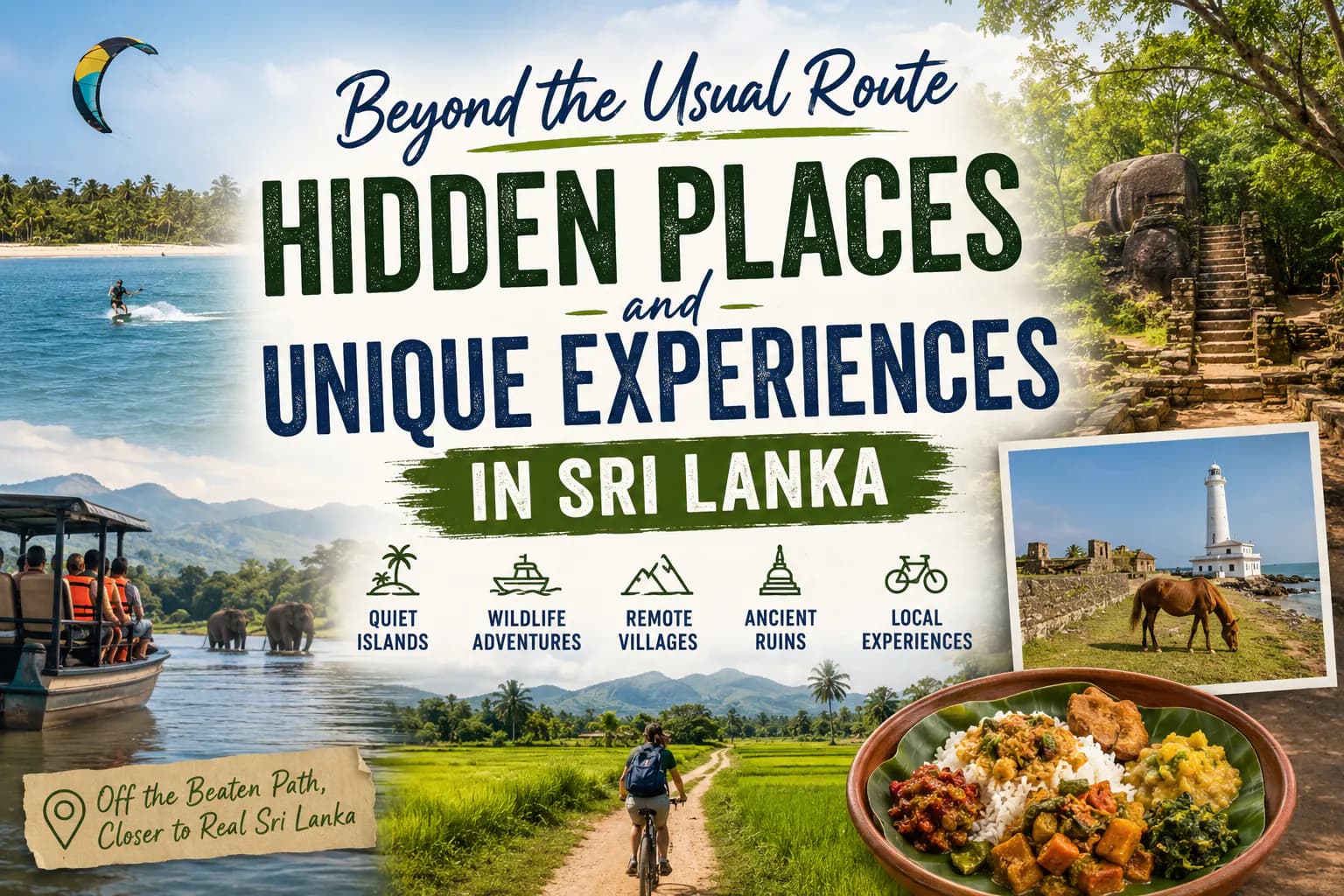
Beyond the Usual Route: Hidden Places and Unique Experiences in Sri Lanka

Sri Lanka is more than Sigiriya, Ella, Kandy, Galle, and the southern beaches. Discover lesser-visited places and authentic activities that can turn a typical holiday into a deeper island adventure.

Back to blog
Beyond the Usual Route: Hidden Places and Unique Experiences in Sri Lanka

A first trip to Sri Lanka often follows a familiar route: Sigiriya, Kandy, the hill-country train, Ella, Yala, Galle, and the southern beaches.

These destinations are popular for good reasons, but they represent only one part of the island.

Beyond the traditional tourist route, travelers can discover quiet islands, remote mountain villages, ancient forest monasteries, peaceful lagoons, local farms, traditional kitchens, and wildlife areas that receive fewer international visitors.

These places are not always completely unknown, and describing them as hidden does not mean they are secret. They are better understood as lesser-visited destinations that require more time, planning, local knowledge, and respect.

Adding even one or two unusual experiences can transform a standard holiday into a more personal journey through Sri Lanka.

Quick Summary

  • Sri Lanka offers much more than its famous tourist route
  • Lesser-visited experiences include Gal Oya, Delft Island, Meemure, Ritigala, and Kalpitiya
  • Unique activities include boat safaris, village walks, cycling, kayaking, cooking, birdwatching, and craft workshops
  • Remote destinations require more planning than popular tourist towns
  • A responsible local guide can improve safety, access, and cultural understanding

Why Go Beyond the Typical Sri Lanka Itinerary?

Popular destinations make travel easy because they offer plenty of hotels, restaurants, guides, transport services, and organized activities.

However, lesser-visited regions allow travelers to experience a quieter side of Sri Lanka. You may spend more time with local families, travel through working villages, visit uncrowded natural areas, and learn how people live outside the main tourism centers.

Off-the-beaten-path travel is often slower. Roads may be narrow, public transport may be limited, mobile coverage may be weaker, and activities may depend on weather or local conditions.

The reward is a journey that feels less rushed and more connected to the landscapes, traditions, food, wildlife, and communities of the island.

Fewer crowdsMore local interactionQuiet landscapesAuthentic regional foodSlower and more meaningful travel

Gal Oya: Explore a National Park by Boat

Most Sri Lankan wildlife itineraries focus on jeep safaris in Yala, Udawalawe, or Minneriya. Gal Oya offers a different kind of experience.

The national park surrounds the Senanayake Samudraya reservoir, creating opportunities to explore parts of the landscape by boat.

Travelers may see elephants, crocodiles, deer, water birds, and other wildlife around the reservoir and its islands. Sightings are never guaranteed, which is part of any responsible wildlife experience.

The region is quieter than Sri Lanka's most famous safari destinations and works particularly well for travelers interested in nature, birdwatching, photography, and peaceful landscapes.

Boat trips and park access should be arranged through an experienced local operator because schedules, water levels, weather, and wildlife conditions can affect the experience.

Boat-based wildlife experienceReservoir landscapesElephants and water birdsQuieter than major safari parks

Delft Island: A Different Side of Northern Sri Lanka

Delft Island, also known as Neduntheevu, lies off the Jaffna Peninsula and feels very different from Sri Lanka's southern beaches and central hills.

The island is known for its dry landscapes, coral-stone walls, historic ruins, baobab tree, coastal scenery, village life, and free-roaming horses.

Reaching Delft is part of the adventure. Travelers usually travel from Jaffna toward Kurikattuwan and continue by public or arranged boat, depending on current services.

A visit requires patience because ferry schedules may change and facilities are more limited than in major tourist towns.

Visitors should carry drinking water, sun protection, cash, and essential supplies while treating local homes, animals, religious places, and community spaces respectfully.

Island ferry journeyCoral-stone wallsHistoric fort ruinsBaobab treeFree-roaming horses

Meemure and the Knuckles Region

Meemure is a traditional village located near the Knuckles Mountain Range between the Kandy and Matale areas.

The region is known for mountain scenery, forests, streams, village paths, local agriculture, waterfalls, and a slower way of life.

Possible experiences include guided nature walks, village meals, waterfall visits, camping with an authorized operator, photography, and learning about local farming traditions.

This is not a destination to enter carelessly. Mountain weather can change quickly, trails can be confusing, and access may be restricted because of heavy rain, conservation requirements, road conditions, or official advisories.

Travel with a knowledgeable local guide, check the latest access situation, avoid leaving waste, and do not enter protected forest areas without permission.

Remote village atmosphereMountain landscapesGuided nature walksWaterfalls and streamsLocal farming culture

Ritigala: Ancient Ruins Inside a Forest

Travelers visiting the Cultural Triangle often focus on Sigiriya, Dambulla, Anuradhapura, and Polonnaruwa.

Ritigala offers a quieter historical experience where ancient monastic ruins, stone paths, steps, bridges, and meditation areas appear within a forested landscape.

The atmosphere is very different from a large archaeological city. The forest, rocks, silence, and partially hidden structures create a feeling of exploration and reflection.

Visitors should remember that Ritigala is connected to both archaeology and a protected natural environment. Remain within permitted visitor areas and do not attempt to explore restricted parts of the mountain or reserve.

A guide can add valuable context about the site's monastic history, architecture, legends, ecology, and relationship with the surrounding region.

Ancient monastic ruinsForest-covered stone pathsQuiet heritage experienceSuitable Cultural Triangle detour

Kalpitiya Beyond a Simple Beach Visit

Kalpitiya is often overlooked by travelers heading directly from Negombo to the Cultural Triangle or hill country.

The peninsula is known for lagoons, fishing communities, islands, marine life, kitesurfing, boat trips, mangrove environments, and quieter coastal landscapes.

Depending on the season and conditions, travelers can consider dolphin watching, beginner kitesurfing lessons, lagoon kayaking, stand-up paddleboarding, fishing-village visits, island trips, and birdwatching.

Marine activities should be booked through responsible operators who follow safety requirements and maintain a respectful distance from dolphins, whales, turtles, and other wildlife.

Kalpitiya can be especially appealing to travelers who prefer active coastal experiences rather than busy nightlife and resort-focused beaches.

KitesurfingDolphin watchingLagoon kayakingFishing communitiesQuiet coastal stays

Cycle Through Villages Instead of Only Visiting Landmarks

Cycling is one of the best ways to experience the areas between Sri Lanka's major attractions.

A guided village ride may pass rice fields, irrigation tanks, vegetable farms, small temples, local shops, reservoirs, forest edges, and family homes.

Cycling allows travelers to notice everyday details that are easy to miss from a car, such as farmers working in the fields, roadside fruit stalls, traditional wells, birds, and small community gatherings.

Choose quiet routes and avoid cycling on fast or heavily congested roads. Wear a helmet, carry water, use sun protection, and start early before the strongest heat.

Travelers should ask permission before photographing people, homes, schools, ceremonies, or private agricultural work.

Rice-field routesReservoir sceneryVillage marketsLocal agricultureSlow and active travel

Cook With a Local Family

Eating rice and curry in a restaurant is enjoyable, but preparing it with a local cook gives travelers a much deeper understanding of Sri Lankan food.

A home-style cooking experience may begin with a visit to a market or garden to select vegetables, coconut, herbs, spices, fish, or other ingredients.

Travelers can learn how coconut milk is prepared, how spices are roasted, how sambol is mixed, and how several curries are cooked together for one meal.

The best experiences are small, respectful, and genuinely connected to a family, village, farm, guesthouse, or community business.

Tell the host about allergies, dietary restrictions, and spice tolerance before the cooking begins.

Market visitsHome-cooked rice and currySpice preparationVegetarian-friendly experiencesDirect support for local families

Meet Local Artisans and Learn a Traditional Craft

Sri Lanka has regional traditions connected to pottery, handloom weaving, masks, wood carving, lace, brasswork, coir products, batik, and reed weaving.

Instead of only buying a souvenir from a tourist shop, travelers can visit a responsible workshop and learn how an item is designed and made.

Some artisans offer demonstrations or short hands-on sessions where visitors can try basic pottery, weaving, painting, carving, or traditional decoration.

Choose workshops that clearly benefit the maker or community. Avoid purchasing products made from protected wildlife, coral, shells collected illegally, ancient artifacts, or restricted natural materials.

PotteryHandloom weavingBatikMask carvingCommunity workshops

Try Early-Morning Birdwatching

Sri Lanka's wildlife experiences are not limited to elephants, leopards, and whales.

Wetlands, reservoirs, forests, lagoons, mangroves, farms, home gardens, and even the edges of towns can support impressive birdlife.

A guided early-morning walk can introduce travelers to kingfishers, hornbills, bee-eaters, eagles, water birds, woodpeckers, and endemic species.

Birdwatching is often quieter, less expensive, and more flexible than a major safari. It can also be added to a village stay, forest visit, lagoon trip, or cultural itinerary.

Use binoculars rather than approaching nests, avoid playing bird calls repeatedly, and never disturb animals to obtain a photograph.

Wetland birdsForest speciesEndemic wildlifeSunrise walksNature photography

How to Explore Lesser-Known Places Responsibly

A quiet place can quickly become damaged when visitors arrive without respecting its environment or community.

Do not leave plastic, food waste, cigarette ends, or disposable items on trails, beaches, islands, waterfalls, or village roads.

Avoid publishing exact locations of sensitive wildlife sites, nesting areas, sacred spaces, or places that local communities have asked visitors not to promote.

Dress respectfully near religious and rural community areas. Ask before entering private land, flying a drone, swimming in an unfamiliar location, or taking photographs of people.

Use registered or trusted guides for remote routes, wildlife trips, water activities, forest walks, and mountain hikes.

The goal is not simply to discover somewhere before other tourists. It is to visit in a way that allows the place to remain beautiful and meaningful after you leave.

Leave no wasteRespect local privacyUse trusted guidesFollow access rulesProtect wildlife and cultural sites

Travel Tips

  • Combine famous destinations with nearby lesser-known experiences
  • Stay in locally operated guesthouses and homestays
  • Travel slowly rather than changing hotels every night
  • Choose small-group activities where possible
  • Support community-run tours, cooks, farmers, boat operators, and artisans
  • Confirm what is included before booking remote activities
  • Follow local dress codes and cultural customs
  • Use licensed operators for marine and adventure activities
  • Never enter restricted forests, ruins, caves, or wildlife areas
  • Leave every destination as clean as you found it

Frequently Asked Questions

Are there really hidden places in Sri Lanka?

Yes, there are many lesser-visited places, but most are not completely secret. They may simply be outside the typical tourist route, harder to reach, seasonal, or less developed for tourism.

Are lesser-known places safe for tourists?

Many can be visited safely with proper planning. However, travelers should check current access, weather, transport, road, forest, and marine conditions and use a knowledgeable guide for remote activities.

Do I need a guide to visit these places?

A guide may not be necessary everywhere, but one is strongly recommended for mountain trails, forests, village routes, boat trips, wildlife areas, remote islands, and places with limited transport.

What is a unique alternative to a normal jeep safari?

A boat-based wildlife experience around Gal Oya can provide a different perspective, while birdwatching, lagoon trips, and guided forest walks are also good alternatives.

Which unusual place can I add to a Jaffna itinerary?

Delft Island can be added as a day trip or carefully planned island visit, depending on ferry schedules, weather, and available transport.

What unique activities are suitable for families?

Home cooking, short village cycling routes, artisan workshops, gentle birdwatching walks, farm visits, and properly organized lagoon trips can work well for families.

Can solo travelers visit remote areas?

Yes, but solo travelers should share their plans with their accommodation, avoid isolated travel after dark, use trusted guides, and confirm return transport before leaving.

How many hidden places should I include in one trip?

For a trip of one or two weeks, adding one or two lesser-visited destinations is usually enough. Trying to include too many can create long travel days and reduce the quality of the experience.

Ready to turn inspiration into a Sri Lanka trip?

Use LankaTrip to plan your journey, connect with local guides, and make this itinerary a reality.

Need help planning?

Plan your Sri Lanka adventure

Plan my trip