
LankaTrip Insights

Kandy Esala Perahera 2026: Dates, History, Culture, and Complete Travel Guide

The Kandy Esala Perahera 2026 brings ten nights of drummers, fire-dancers, and elephants parading through the hill capital in honor of the Sacred Tooth Relic. Here is the full 2026 schedule, the festival's deep history, and a practical guide for watching it.

Back to blog
Kandy Esala Perahera 2026: Dates, History, Culture, and Complete Travel Guide

Each year, as the month of Esala arrives, the hill city of Kandy transforms into the stage for one of the most important religious and cultural events in Sri Lanka.

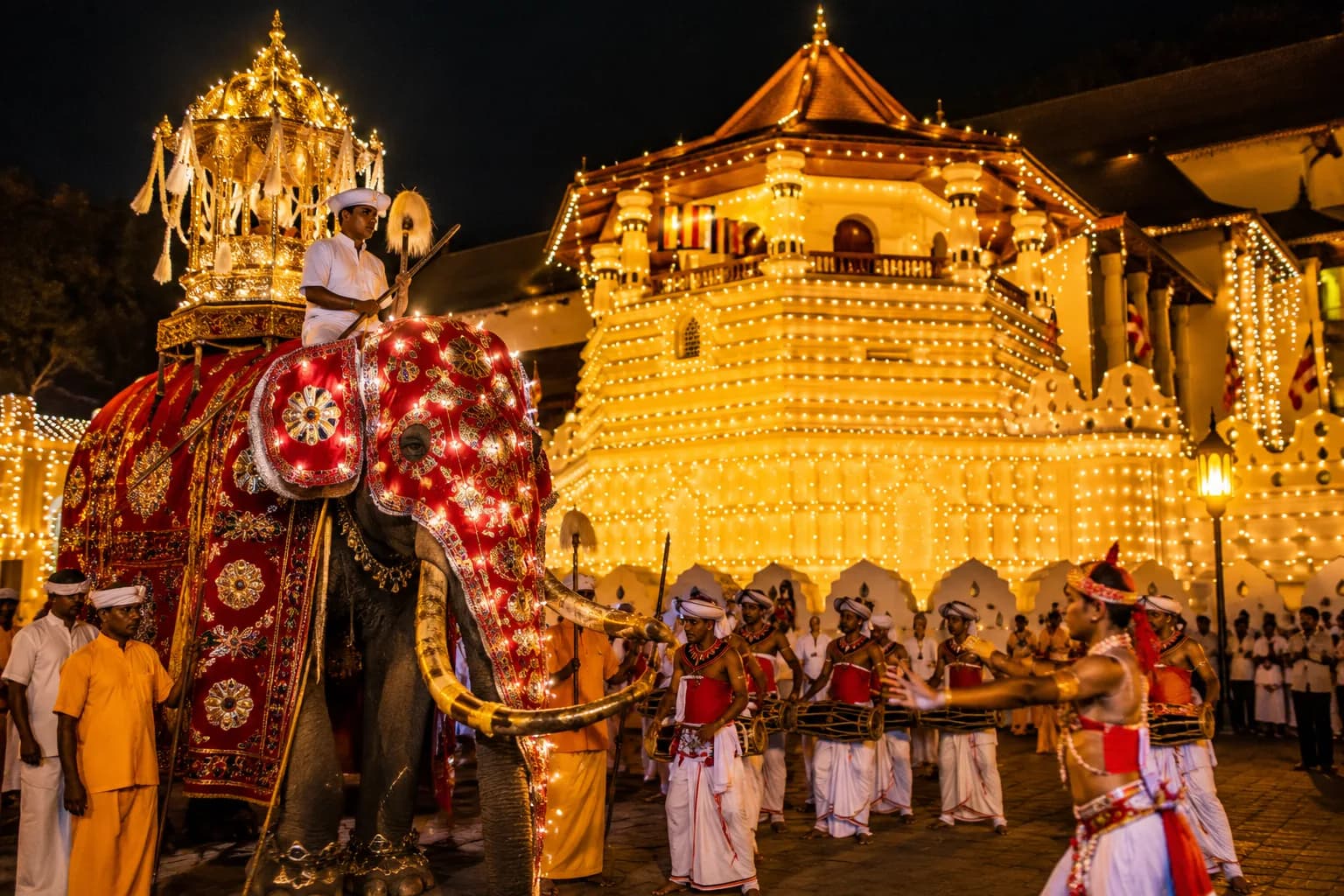
The Kandy Esala Perahera is a nightly procession of drummers, dancers, whip-crackers, fire-performers, flag bearers, and elaborately dressed elephants that moves through the streets around the Temple of the Sacred Tooth Relic.

The festival is built around the veneration of a tooth relic believed to belong to the Buddha, and it combines Buddhist ritual with the traditions of four historic Hindu-influenced shrines, or Devalas, that have been linked to the Kandyan kingdom for centuries.

For 2026, the Sri Dalada Maligawa has officially confirmed the festival dates following a media briefing held on 8 July 2026, giving travelers a clear window to plan a visit.

This guide brings together the 2026 schedule, the history behind the festival, an explanation of its key rituals, and practical advice for watching the Perahera as a visitor.

Quick Summary

  • The Kandy Esala Perahera 2026 is officially scheduled to run from 18 to 27 August
  • The Kumbal Perahera runs 18 to 22 August, followed by the Randoli Perahera from 23 to 26 August
  • The festival concludes with the Diya Kepeema water-cutting ceremony and the Day Perahera on 27 August
  • The procession honors the Sacred Tooth Relic housed at the Sri Dalada Maligawa in Kandy
  • Five processions combine in one parade: the Maligawa procession and four Devala processions for Natha, Vishnu, Kataragama, and Pattini
  • Seated viewing tickets, hotel bookings, and transport should be arranged well in advance

Kandy Esala Perahera 2026: Official Dates

According to the Sri Dalada Maligawa's official schedule announced on 8 July 2026, the festival unfolds in three stages over ten days.

The Kumbal Perahera, the first and smaller series of processions, runs from 18 to 22 August 2026.

The Randoli Perahera, the grander and more elaborate stage of the festival, follows from 23 to 26 August 2026.

The festival concludes in the early hours of 27 August with the Diya Kepeema, the sacred water-cutting ceremony, followed later that day by the Day Perahera parading through the streets in daylight.

This schedule was confirmed at a media briefing at the Sri Dalada Maligawa auditorium, presided over by the Anunayake Thera of the Asgiri Maha Vihara Chapter and attended by the Diyawadana Nilame and Basnayake Nilames of the temple.

Because auspicious timings and ritual details are set according to the traditional Kandyan calendar, travelers should reconfirm exact nightly start times closer to the festival, as small adjustments are sometimes made.

Kumbal Perahera: 18 to 22 August 2026Randoli Perahera: 23 to 26 August 2026Diya Kepeema and Day Perahera: 27 August 2026Ten nights of processions in totalDates confirmed by the Sri Dalada Maligawa

The History of the Sacred Tooth Relic

The story of the Esala Perahera is inseparable from the story of the Sacred Tooth Relic, believed to be a tooth of the Buddha preserved after his passing.

According to tradition, the relic remained in the kingdom of Kalinga in India for centuries before Princess Hemamala and Prince Dantha smuggled it to Sri Lanka, hidden in the princess's hair, during a period of conflict.

The relic arrived during the reign of King Kithsirimewan and was first enshrined at the Isurumuniya Temple in Anuradhapura, where it was honored with a procession, considered the earliest ancestor of today's Perahera.

As the seat of government moved through the centuries, from Anuradhapura to Polonnaruwa, Dambadeniya, Yapahuwa, Kurunegala, Gampola, and eventually Kotte and Kandy, the Tooth Relic and its accompanying rituals traveled with it.

Possession of the relic became closely tied to political legitimacy: a ruler was not considered a true sovereign of the island unless he held guardianship of the Tooth Relic.

When the capital finally settled in Kandy, the Sri Dalada Maligawa was built beside the royal palace to house the relic permanently, and the modern form of the procession took shape under King Kirthi Sri Rajasinghe of Kandy in the eighteenth century.

Relic linked to the Buddha's passingBrought to Sri Lanka by Princess Hemamala and Prince DanthaMoved between successive royal capitalsSymbol of sovereignty for centuriesModern Perahera shaped in 18th-century Kandy

The Perahera Through the Colonial Period

The Dalada Perahera continued in the month of Esala without interruption until the fall of the Kandyan kingdom to the British in 1815.

Following the conquest, custody of the Tooth Relic passed to the Buddhist clergy under a Diyawadana Nilame, or chief lay custodian, a position that continues to this day.

The British colonial administration permitted the Perahera and its associated rituals to continue, recognizing the relic's deep significance to the Sinhalese Buddhist population.

This continuity through a period of major political upheaval is part of why the Esala Perahera is regarded as one of the oldest unbroken religious processions in Asia.

Today, the festival is presided over by senior monks, temple officials, and is attended each year by Sri Lanka's president and other dignitaries as a mark of its national importance.

Custody passed to Buddhist clergy after 1815Diyawadana Nilame role establishedProcession preserved through colonial ruleOne of Asia's oldest continuous processionsAttended annually by national leaders

One Procession, Five Sacred Traditions

A distinctive feature of the Kandy Esala Perahera is that it is not a single procession but five combined into one spectacle.

The central procession represents the Sri Dalada Maligawa itself, carrying the golden casket believed to contain the Sacred Tooth Relic on the back of the most senior tusker elephant, known as the Maligawa Tusker.

Alongside it march four Devala processions, each representing a guardian deity associated with the protection of Sri Lanka: God Natha, God Vishnu, God Kataragama, and Goddess Pattini.

Each Devala procession has its own elephants, dancers, drummers, and flag bearers, dressed in distinct colors and styles tied to that shrine's traditions.

This structure reflects the way Buddhist and folk-religious practices have long coexisted in Kandyan culture, with the Devala gods regarded as protectors of the Buddha's teachings and of the island itself.

Maligawa procession carries the relic casketNatha Devala processionVishnu Devala processionKataragama Devala processionPattini Devala procession

Key Rituals: Kap Situweema, Kumbal, Randoli, and Diya Kepeema

The festival opens weeks before the public processions with the Kap Situweema, a ceremony in which a specially selected young jak tree is cut and planted at each of the four Devalas to mark the start of the sacred period.

The Kumbal Perahera, held on the first five nights, is the introductory stage of the festival. Processions are smaller in scale and serve as a form of preparation and purification before the grander stage.

The Randoli Perahera, held over the following four nights, is the most elaborate part of the festival. The name refers to the ceremonial palanquins historically used to carry royal consorts, which are paraded as part of the Devala processions.

During the Randoli nights, the number of elephants, dancers, and performers increases substantially, and the final two or three nights are widely considered the most spectacular and the most crowded.

The festival closes with the Diya Kepeema, or water-cutting ceremony, performed before dawn at the Mahaweli River in Getambe, where a ritual sword is used to cut the water in a symbolic renewal rite. Later that day, the Day Perahera parades through Kandy in full daylight, bringing the festival to a close.

Kap Situweema opens the ritual calendarKumbal Perahera: five introductory nightsRandoli Perahera: four grander nightsFinal nights are the busiest and most colorfulDiya Kepeema closes the festival at dawn

What You Will See on the Night

A typical Perahera night begins after dusk, once conch shells sound and the procession sets off from the Temple of the Tooth.

Whip-crackers lead the way, clearing and announcing the procession, followed by fire-dancers whose flaming performances are among the most photographed moments of the festival.

Kandyan dancers move rhythmically to drummers playing the geta bera, alongside performers carrying colorful flags representing different provinces and traditions.

Between fifty and one hundred elephants take part across the full procession, many dressed in illuminated cloths and ornaments, with the Maligawa Tusker carrying the relic casket as the most revered figure of the night.

Traditional Kandyan officials, or Nilames, dressed in ceremonial white and gold attire, walk in formal procession as custodians of the temple and Devala traditions, adding a layer of solemn ritual to the visual spectacle.

Whip-crackers and fire-dancersKandyan drumming and danceFifty to one hundred decorated elephantsThe Maligawa Tusker carrying the relic casketCeremonial Nilames in traditional dress

How to Watch the Perahera

Visitors can watch the procession either from paid seated viewing galleries along the main route or from free standing areas on the pavements, both of which are popular and fill up early.

Seated tickets are typically sold through registered agents, hotels, and official booking platforms, and should be arranged in advance for the busier Randoli nights, particularly the final two or three evenings.

Spectators are generally advised to take their seats two to three hours before the procession is due to begin, as roads close early and seating fills quickly.

The procession can last four to five hours, so carrying water, snacks, and a light layer for the evening is a practical idea, since moving around during the event is difficult once crowds settle in.

Photography is welcomed from spectator areas, but flash photography aimed directly at elephants or performers, and any attempt to step into the procession route, should be avoided for safety and respect.

Paid seated galleries and free street viewingBook seats in advance for Randoli nightsArrive two to three hours earlyProcessions last four to five hoursRespect safety distances around elephants

Where to Stay During the Festival

Kandy's hotels, guesthouses, and homestays fill up quickly during the Esala Perahera, especially for the Randoli nights and the final Day Perahera.

Staying within walking distance of the Temple of the Tooth reduces the stress of road closures, though it usually comes at a premium price during festival week.

Travelers on a tighter budget can consider accommodation slightly outside the city center, combined with an early arrival by tuk-tuk before roads close for the procession.

Booking accommodation as early as possible, ideally as soon as the official dates are confirmed, is strongly recommended, since availability drops sharply as the festival approaches.

Some properties offer rooftop or balcony views of nearby procession streets, which can be a comfortable alternative to standing or seated viewing for families and older travelers.

Book well ahead of the Randoli nightsCentral Kandy hotels sell out fastestConsider properties with procession-route viewsBudget stays outside the centre plus early arrivalExpect higher rates during festival week

Getting to Kandy for the Festival

Kandy is well connected by road and rail from Colombo, with train journeys offering scenic views and a break from festival-week road traffic.

Travelers coming from the hill country, including Nuwara Eliya, Ella, or Nanu Oya, can also reach Kandy by train, though tickets on popular hill-country lines can sell out quickly during peak season.

Road travel from Colombo typically takes around three to four hours outside festival traffic, but delays are common during Esala Perahera week due to road closures in central Kandy.

If arriving by private vehicle, confirm with your hotel or driver which roads will be closed on procession nights, since access to the city center is often restricted from late afternoon onward.

Travelers combining the Perahera with a wider hill-country trip may also enjoy Sri Lanka's scenic train journeys before or after the festival.

Direct road and rail links from ColomboHill-country train connections from Ella and Nuwara EliyaExpect traffic and road closures during the festivalConfirm access routes with your hotelCombine with a wider hill-country itinerary

Cultural Etiquette and Responsible Viewing

The Esala Perahera is a religious observance before it is a tourist spectacle, and visitors are expected to behave accordingly.

Dress modestly, particularly if visiting the Temple of the Tooth itself before or after the procession, and remove footwear where required.

Avoid loud or disruptive behavior during ritual moments such as the passing of the relic casket or the Devala processions, and follow the instructions of temple officials and police.

Do not attempt to touch the elephants, step into the procession path, or use drones without explicit permission, as strict security measures are in place throughout the festival.

Supporting local vendors, registered guides, and licensed ticket sellers helps ensure that tourism benefits the community that sustains this centuries-old tradition.

Dress and behave respectfullyFollow official and police instructionsDo not approach or touch elephantsAvoid unauthorized drone useSupport local and licensed services

Travel Tips

  • Reconfirm nightly start times close to the festival, as auspicious timings can shift slightly
  • Book seated viewing tickets and hotels as early as possible
  • Arrive two to three hours before the procession to secure a good spot
  • Carry water, snacks, and cash, as moving through crowds is difficult once seated
  • Wear comfortable, modest clothing suitable for both heat and long periods of sitting or standing
  • Expect major road closures in central Kandy from late afternoon on procession days
  • Keep a safe distance from elephants and follow all security instructions
  • Avoid flash photography directed at performers and animals
  • Plan train tickets from Colombo or the hill country well ahead, as festival-week demand is high
  • Consider watching one Kumbal Perahera night and one Randoli Perahera night to compare the festival's two stages

Frequently Asked Questions

What are the official Kandy Esala Perahera 2026 dates?

The Sri Dalada Maligawa has confirmed that the Kumbal Perahera runs from 18 to 22 August 2026, the Randoli Perahera runs from 23 to 26 August 2026, and the festival concludes with the Diya Kepeema water-cutting ceremony and Day Perahera on 27 August 2026.

What is the difference between the Kumbal and Randoli Perahera?

The Kumbal Perahera is the introductory stage of the festival, held over the first five nights with smaller processions. The Randoli Perahera, held over the following four nights, is the grander and more elaborate stage, featuring more elephants, dancers, and performers.

What does the Kandy Esala Perahera celebrate?

The festival honors the Sacred Tooth Relic of the Buddha, housed at the Sri Dalada Maligawa in Kandy, alongside four guardian deities, Natha, Vishnu, Kataragama, and Pattini, whose Devala shrines each hold their own procession within the wider festival.

Do I need tickets to watch the Perahera?

Free standing viewing is available along the streets, but seated viewing gallery tickets can be purchased through registered agents, hotels, and official platforms. Seats are recommended for comfort and are advisable to book in advance, particularly for the Randoli nights.

Which night of the Perahera is the best to watch?

The final two or three Randoli Perahera nights, along with the Day Perahera on 27 August, are generally considered the most elaborate, though they are also the most crowded and require the earliest arrival.

How long does the procession last each night?

A typical night's procession can last around four to five hours from start to finish, so visitors should be prepared to remain in place for an extended period.

Is the Kandy Esala Perahera suitable for families?

Yes, families are welcome, though the crowds, long hours, and evening timing should be considered, particularly for young children. The Day Perahera on the final day can be a more comfortable option for families who prefer daylight viewing.

How far in advance should I book a hotel in Kandy?

As early as possible. Accommodation in Kandy fills quickly for the Esala Perahera, especially for the Randoli nights and the festival finale, so booking as soon as travel dates are set is strongly recommended.

What is the Diya Kepeema ceremony?

The Diya Kepeema, or water-cutting ceremony, is performed before dawn at the Mahaweli River in Getambe on the final morning of the festival. A ceremonial sword is used to cut the water in a symbolic ritual, closing the sacred cycle of the Esala Perahera.

Reader notes

Join the conversation

Share your question, tip, or travel experience for this guide.

Comments

0 comments

Loading...

Ready to turn inspiration into a Sri Lanka trip?

Use LankaTrip to plan your journey, connect with local guides, and make this itinerary a reality.

Need help planning?

Plan your Sri Lanka adventure

Plan my trip