LankaTrip Insights

The Pekoe Trail: Walk Through Sri Lanka's Tea Country

Discover The Pekoe Trail, Sri Lanka's long-distance hiking route through the Central Highlands. Learn how its 22 stages work, which sections to choose, what to pack, when to hike, and how to travel responsibly.

Back to blog
The Pekoe Trail: Walk Through Sri Lanka's Tea Country

Sri Lanka is famous for its beaches, wildlife safaris, ancient cities, and scenic train journeys, but the island can also be explored on foot.

The Pekoe Trail is Sri Lanka's first major long-distance walking trail, stretching for more than 300 kilometres across the Central Highlands.

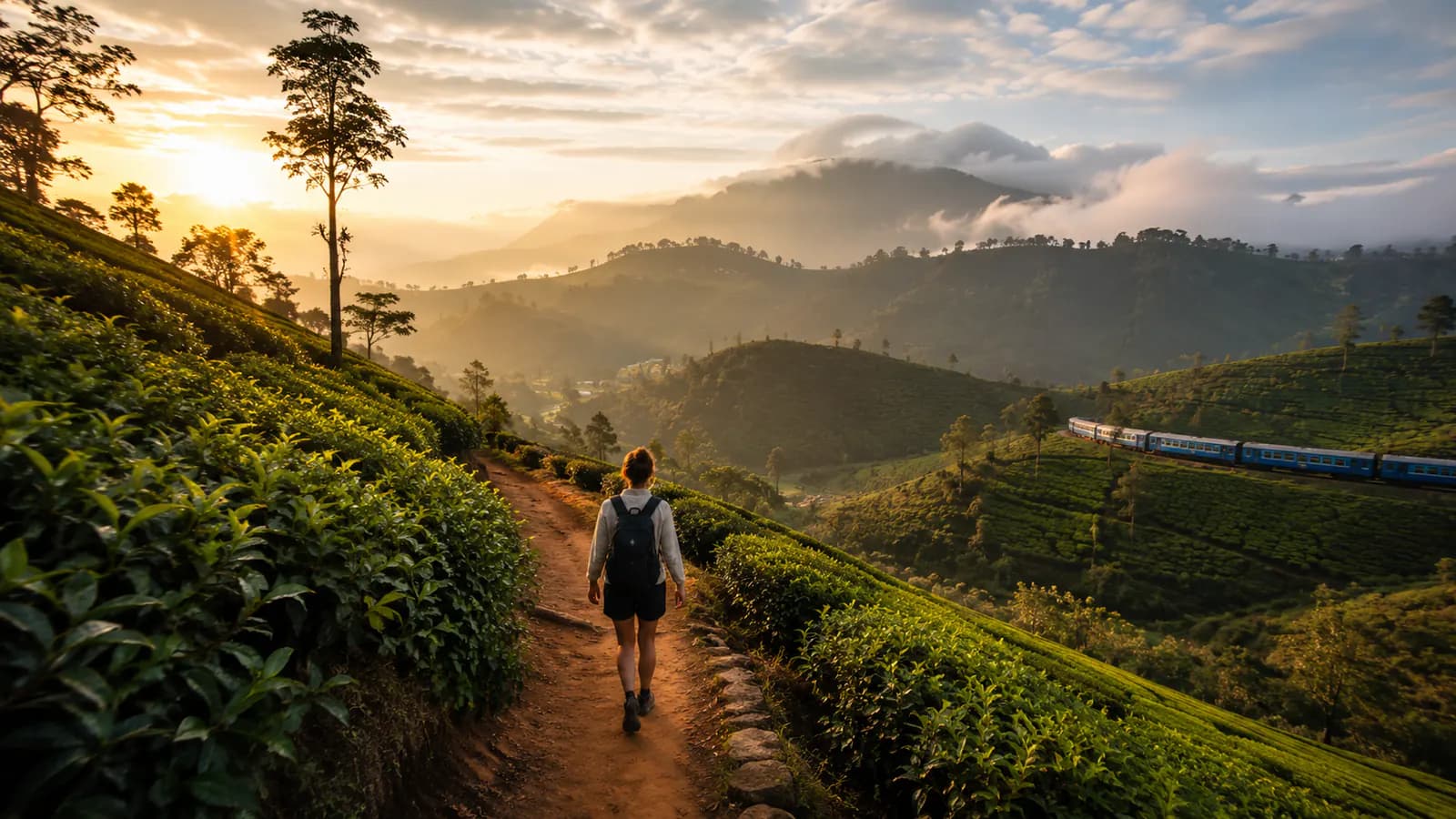
Divided into 22 stages, the trail connects tea estates, forests, railway towns, mountain villages, reservoirs, valleys, and historic pathways created long before modern tourism reached the hill country.

Travelers do not have to complete the entire route. A visitor can walk one stage as a day hike, choose two or three stages near Ella or Haputale, or build a longer walking holiday through the highlands.

The trail offers something that cannot be experienced from a train or private car: time to observe tea workers, village life, estate architecture, native plants, mountain weather, and the quiet rhythm of Sri Lanka's hill country.

Quick Summary

  • The Pekoe Trail is a 300+ kilometre route divided into 22 stages
  • Travelers can walk one stage, several stages, or plan a longer journey
  • The trail passes tea estates, forests, villages, reservoirs, and historic hill-country towns
  • A trail pass is required for each stage
  • Weather and access conditions should be checked before every hike
  • A local guide is highly recommended for remote, difficult, or poorly marked sections

What Is The Pekoe Trail?

The Pekoe Trail is a long-distance hiking route that travels through Sri Lanka's Central Highlands.

The route is divided into 22 separate stages, making it flexible for different travel styles and fitness levels.

Some travelers complete only one stage, while others combine several sections over multiple days. Experienced hikers may plan a much longer journey covering most or all of the trail.

The route follows a mixture of estate roads, village paths, forest tracks, mountain trails, public roads, old transport routes, and paths connecting tea communities.

Because conditions vary greatly between stages, travelers should study each route individually rather than treating the entire trail as having one difficulty level.

More than 300 kilometres22 individual stagesFlexible day hikesMulti-day trekking optionsTea-country scenery

Where Does The Pekoe Trail Go?

The trail begins near Kandy and winds through the heart of Sri Lanka's tea-growing highlands.

Its stages connect areas around Hanthana, Galaha, Loolkandura, Kotagala, Hatton, Norwood, Bogawantalawa, Haputale, Ella, Nuwara Eliya, Kandapola, and nearby estate regions.

The route does not simply connect major tourist towns. Many stages pass through working tea estates, small settlements, forest edges, religious places, plantations, and rural landscapes that most visitors never see.

Some stages are conveniently reached from popular bases such as Kandy, Hatton, Haputale, Ella, and Nuwara Eliya. Other stages require carefully arranged transport to the starting point and pickup from the finish.

This means hikers should plan not only the walk but also their morning transfer, accommodation, meals, and return transport.

Kandy regionHatton and tea countryBogawantalawa ValleyHaputaleEllaNuwara Eliya

Why The Pekoe Trail Is Special

The Pekoe Trail gives travelers a close look at landscapes that are often seen only through a train window.

Hikers move slowly through tea fields, forest paths, village roads, railway settlements, mountain valleys, and areas shaped by generations of estate communities.

The experience is not only about scenery. The route also reveals the history, labor, culture, and communities behind Ceylon tea.

Along the way, travelers may pass Hindu temples, Buddhist shrines, churches, old estate buildings, tea factories, colonial-era bungalows, schools, vegetable farms, and workers' settlements.

Each stage has its own character. Some are known for open mountain views, while others focus on forests, reservoirs, plantations, historic estates, or village life.

Working tea estatesEstate communitiesHistoric pathwaysMountain sceneryCultural encounters

Which Stages Are Best for First-Time Hikers?

There is no single best stage because the right choice depends on fitness, weather, accommodation, transport, and the landscapes a traveler wants to see.

Stage 1 from Hanthana to Galaha can be attractive for visitors beginning near Kandy. It starts around the Ceylon Tea Museum area and introduces hikers to estate scenery and the hill-country environment.

Stages around Hatton, Norwood, and Bogawantalawa are appealing to travelers interested in classic tea-country views, reservoirs, estate roads, and quieter plantation landscapes.

Sections near Haputale and Ella are convenient for travelers already following the traditional hill-country route and can be included as day hikes.

Stages around Nuwara Eliya and Kandapola offer high-elevation scenery and cooler conditions, although mist, rain, and strong winds can affect visibility.

Before choosing a stage, check its official distance, elevation profile, estimated duration, difficulty, current status, and transport options.

Stage 1 near KandyTea country near HattonBogawantalawa landscapesHaputale day hikesElla-area sectionsHigh-elevation Nuwara Eliya stages

Should You Walk One Stage or the Entire Trail?

Most tourists do not need to complete all 22 stages to enjoy The Pekoe Trail.

A single stage is ideal for travelers with limited time or those who want to add one active day to a traditional Sri Lanka itinerary.

Walking two or three stages provides a deeper experience and allows travelers to compare different landscapes, communities, and elevations.

A full or extended multi-stage journey requires much more planning. Hikers must arrange accommodation, baggage transfers, meals, trail passes, transport, weather alternatives, and recovery time.

Travelers should not underestimate the effect of repeated walking days. A stage that feels comfortable on the first day may feel more difficult after several consecutive days of climbing and descending.

For most visitors, selecting a few carefully chosen stages is more enjoyable than rushing to complete the entire route.

One stage for casual visitorsTwo or three stages for deeper explorationFull trail for experienced trekkersRest days are importantTransport planning is essential

How Difficult Is The Pekoe Trail?

The difficulty varies significantly between stages.

Some sections follow relatively gentle estate roads and village paths, while others involve steep climbs, slippery descents, uneven ground, overgrown vegetation, exposed ridges, or remote sections.

Distance alone does not determine difficulty. Elevation gain, heat, rain, mud, leeches, trail visibility, footwear, and a hiker's experience can make a shorter stage more challenging than expected.

Travelers should read the official stage description and elevation information before choosing a route.

Children and older travelers may enjoy easier stages, but the route should be selected carefully based on current conditions and individual fitness.

Difficulty varies by stageSteep climbs and descentsUneven estate pathsMud during rainy periodsFitness requirements differ

Best Time to Hike The Pekoe Trail

The Central Highlands experience changing weather throughout the year, and conditions can differ between stages on the same day.

January to March is often considered one of the more suitable periods for hiking because many hill-country areas experience relatively drier conditions.

However, there is no completely rain-free season in Sri Lanka's mountains. Mist, showers, wind, and sudden weather changes are possible at any time.

The southwest monsoon can bring heavy rain, slippery terrain, reduced visibility, leeches, and difficult stream crossings to parts of the trail.

Start early in the morning to reduce the risk of finishing after dark and to improve the chance of clearer views.

Always check the official trail advisory and local weather forecast shortly before departure rather than relying only on general seasonal advice.

January to March is often favorableWeather varies between stagesStart earlyExpect mist and rainCheck official advisories

Do You Need a Pekoe Trail Pass?

Yes. Official Pekoe Trail guidance states that hikers need a trail pass for each stage.

Passes can be obtained through the official Pekoe Trail app, the official online portal, or authorized resellers.

The pass system helps the trail organization understand visitor numbers, manage stages, maintain the route, and support long-term trail development.

Travelers should purchase the correct pass before beginning their selected stage and keep the pass available on their phone or as instructed by the official system.

Pass prices, membership options, rules, and availability can change, so hikers should confirm current information through the official website or app.

Pass required for each stageAvailable through the official appSupports trail managementCheck current pricingPurchase before hiking

Do You Need a Local Guide?

A guide may not be compulsory for every stage, but hiring a knowledgeable local guide is highly recommended.

A guide can help with navigation, estate access, transport coordination, weather decisions, cultural interpretation, and communication with local communities.

Guides are especially valuable on remote stages, during poor weather, where signage is limited, or when vegetation makes the route difficult to identify.

Local guides can also explain tea production, estate history, plants, wildlife, religious sites, and the lives of communities along the route.

Hiring locally helps keep more tourism income within hill-country communities.

Safer navigationLocal knowledgeCommunity supportTransport coordinationCultural understanding

Navigation and Offline Maps

Do not depend only on painted signs or mobile reception.

Vegetation, weather, trail maintenance, construction, estate work, and damaged signs can make navigation more difficult.

Download the selected stage through the official mobile app before leaving your accommodation.

Keep your phone fully charged and carry a power bank. A screenshot of the route, emergency contacts, and pickup location can also be useful.

Tell your accommodation, driver, guide, or another trusted person which stage you are walking and when you expect to finish.

If the route becomes unclear, do not continue deeper into forest, estate, or mountain terrain without confirming the correct path.

Download offline mapsCarry a power bankDo not rely only on signsShare your hiking planTurn back if uncertain

What to Pack for The Pekoe Trail

Wear proper walking shoes or trail shoes with reliable grip. Ordinary sandals are unsuitable for wet, muddy, steep, or uneven stages.

Carry enough drinking water and food for the expected duration. Small shops may appear near villages, but hikers should not depend on them being open.

Pack a lightweight rain jacket because hill-country weather can change rapidly.

Sun protection is also important. Carry sunscreen, a hat, and sunglasses for exposed tea-estate roads.

Leech socks or another suitable form of leech protection can be helpful during wet periods.

A small first-aid kit, charged phone, power bank, personal medication, tissues, hand sanitizer, and a waterproof bag for electronics are useful additions.

Good walking shoesWater and snacksRain jacketLeech protectionFirst-aid kitPower bank

Getting to and From Each Stage

Transport planning is one of the most important parts of a Pekoe Trail hike.

Many stages begin and end in different places, so leaving a vehicle at the starting point may not be practical.

Travelers can arrange a local driver, tuk-tuk, guide transfer, hotel pickup, or public transport depending on the stage.

Some trailheads are close to railway towns, while others require travel through estate roads or rural areas.

Confirm the exact pickup point before starting because phone reception may be weak near the finishing location.

For remote stages, arrange transport in advance rather than expecting to find a tuk-tuk immediately after the walk.

Different start and finish pointsArrange pickup in advanceUse local drivers or tuk-tuksConfirm the finishing locationAllow extra travel time

Where to Stay

Accommodation options depend on the stages selected.

Popular bases include Kandy, Hatton, Nuwara Eliya, Haputale, Ella, and smaller tea-country towns.

Travelers can choose budget guesthouses, homestays, estate bungalows, boutique hotels, and luxury tea-country properties.

Staying in locally operated accommodation can provide useful information about transport, weather, meals, and nearby trail access.

For multi-day hiking, choose accommodation close to the end of one stage and the beginning of the next whenever possible.

Confirm whether the property can prepare an early breakfast, packed lunch, or baggage transfer.

GuesthousesHomestaysEstate bungalowsBoutique hotelsBaggage-transfer support

Food and Water on the Trail

Bring sufficient water even when a stage passes through villages.

Shops and cafés may be limited, closed, or located away from the route.

Useful hiking food includes fruit, sandwiches, roti, nuts, biscuits, boiled eggs, and other items that can be safely carried.

Ask your accommodation to prepare a packed breakfast or lunch when starting early.

Avoid leaving food packaging, plastic bottles, tissues, or fruit waste on the trail.

Purchasing tea, snacks, or meals from genuine local businesses can help support communities along the route.

Carry enough waterPack simple foodRequest a packed lunchSupport local shopsTake all waste away

Important Safety Advice

Check the official stage status, local weather, and transport arrangements before starting.

Avoid hiking alone during severe rain, strong wind, low visibility, or when official advisories recommend extra caution.

Begin early and calculate enough time to finish well before sunset.

Be careful near steep edges, railway areas, streams, waterfalls, slippery bridges, and muddy descents.

Do not enter restricted estate buildings, forests, private homes, or agricultural areas.

Dogs may be present around estates and villages. Remain calm, avoid running, and follow the advice of your guide.

In an emergency, contact your guide, accommodation, local authorities, or emergency services and provide your stage number and approximate location.

Check official trail statusAvoid dangerous weatherFinish before darkRespect restricted areasCarry emergency contacts

How to Hike Responsibly

The Pekoe Trail passes through living communities and working tea estates, not an empty recreational landscape.

Ask permission before photographing tea workers, children, homes, ceremonies, or people in villages.

Do not block estate roads, damage tea bushes, enter workers' homes, or interrupt agricultural activity.

Dress respectfully when passing temples, churches, Hindu shrines, schools, and settlements.

Carry all rubbish out of the trail and avoid single-use plastics where possible.

Do not play loud music, fly drones without permission, disturb wildlife, collect plants, or leave markings on rocks and buildings.

Spend money with local guides, guesthouses, shops, drivers, cooks, and community businesses whenever practical.

Respect estate communitiesAsk before taking photosLeave no wasteProtect tea fieldsSupport local businesses

Travel Tips

  • Check the official status of your selected stage before departure
  • Purchase the required trail pass in advance
  • Download the official route for offline use
  • Start early and finish before dark
  • Wear shoes with good grip
  • Carry rain protection even on a clear morning
  • Bring enough water and snacks
  • Use a local guide for remote or difficult stages
  • Arrange return transport before starting
  • Carry leech protection during wet periods
  • Ask permission before photographing local residents
  • Do not leave plastic or food waste on the trail
  • Allow extra days when planning several stages
  • Avoid hiking during official weather warnings
  • Support locally operated accommodation, transport, and food businesses

Frequently Asked Questions

How long is The Pekoe Trail?

The Pekoe Trail is more than 300 kilometres long and is divided into 22 stages through Sri Lanka's Central Highlands.

Do I have to walk all 22 stages?

No. Travelers can walk one stage, combine several stages, or plan a longer journey depending on their time, fitness, and interests.

Do I need a pass to walk The Pekoe Trail?

Yes. Official guidance states that a trail pass is required for every stage. Passes are available through the official app, portal, or authorized resellers.

Can beginners walk The Pekoe Trail?

Yes, but beginners should choose an easier stage, study the elevation and current conditions, start early, and consider hiring a local guide.

Can I hike The Pekoe Trail alone?

Some experienced hikers may walk suitable stages independently, but hiking alone is not recommended during poor weather or on remote and difficult sections. A guide improves safety and navigation.

What is the best time to hike?

January to March is often considered a suitable period, but conditions vary between stages. Rain, mist, and sudden weather changes are possible throughout the year.

How long does one stage take?

The time varies according to distance, elevation, trail conditions, weather, fitness, and rest stops. Many stages require several hours and should be started early.

Are there hotels along The Pekoe Trail?

Accommodation is available in major bases and smaller tea-country towns, but availability differs by stage. Multi-day hikers should book accommodation and transfers in advance.

Can children walk The Pekoe Trail?

Children may be able to complete selected easier stages when accompanied by responsible adults. Choose the route carefully and confirm the current weather, distance, elevation, and transport.

Is the trail open throughout the year?

The overall trail operates across seasons, but individual stages can be affected by rain, landslides, overgrown vegetation, maintenance, estate access, or safety advisories. Always check official updates.

Ready to turn inspiration into a Sri Lanka trip?

Use LankaTrip to plan your journey, connect with local guides, and make this itinerary a reality.

Need help planning?

Plan your Sri Lanka adventure

Plan my trip