
LankaTrip Insights

14 min read

Sigiriya and Dambulla: Sri Lanka's Ancient Rock Fortress and Cave Temple Guide

Sigiriya's fifth-century rock fortress and Dambulla's painted cave temple sit less than 20 kilometres apart, forming the beating heart of Sri Lanka's Cultural Triangle. Here is how to visit both well.

Back to blog
Sigiriya and Dambulla: Sri Lanka's Ancient Rock Fortress and Cave Temple Guide

Rising abruptly from the flat central plains, Sigiriya Rock Fortress is one of the most recognisable images of Sri Lanka, and for good reason. It combines dramatic geology, engineering, and nearly 1,600 years of history into a single, climbable monument.

Just twenty kilometres away, the Dambulla Cave Temple tells a different but connected story: five caves carved into a granite outcrop, filled with Buddha statues and ceiling murals that have been maintained and repainted for over two thousand years.

Together, these two sites form the core of what is commonly called Sri Lanka's Cultural Triangle, a region bounded by Kandy, Anuradhapura, and Polonnaruwa that holds the island's greatest concentration of ancient heritage.

Both are UNESCO World Heritage Sites, both attract significant numbers of visitors, and both reward travelers who arrive early, take their time, and understand a little of the history before climbing the steps.

This guide covers the history, the practical logistics of visiting each site, how to combine them efficiently, and the lesser-known alternatives, like Pidurangala Rock, that can make the experience feel less rushed.

Quick Summary

  • Sigiriya and Dambulla are two of the five UNESCO World Heritage Sites within Sri Lanka's Cultural Triangle
  • Sigiriya is a fifth-century rock fortress with palace ruins, frescoes, and sweeping views from its summit
  • Dambulla is a 2,000-plus-year-old cave temple complex with five caves of Buddha statues and painted murals
  • The two sites are about 20 kilometres apart and can realistically be combined in one full day
  • Pidurangala Rock, next to Sigiriya, offers a cheaper alternative sunrise hike with views of the fortress itself
  • Minneriya and Kaudulla National Parks nearby are known for large seasonal elephant gatherings

Sigiriya and Dambulla in the Cultural Triangle

Sri Lanka's Cultural Triangle refers to the region connecting the ancient capitals of Anuradhapura and Polonnaruwa with the hill capital of Kandy, an area dense with archaeological sites spanning more than two thousand years of continuous history.

Sigiriya and Dambulla sit roughly at the centre of this triangle, making them a natural base for travelers exploring the region, whether staying one night or several.

The town of Dambulla itself is a practical hub, with a range of accommodation, restaurants, and transport connections, while Sigiriya village is smaller and more geared toward travelers visiting the rock itself.

Most visitors base themselves in either location and use a tuk-tuk, private driver, or rented vehicle to move between the two sites and any additional stops.

Because both sites involve walking in open sun with limited shade, especially at Sigiriya, most experienced visitors and guides recommend starting the day as early as possible.

Central location within the Cultural TriangleTwo UNESCO sites, twenty kilometres apartGood base for Anuradhapura and Polonnaruwa day tripsDambulla town offers more accommodation optionsEarly starts recommended for both sites

The History Behind Sigiriya's Rock Fortress

Sigiriya's fame rests largely on the story of King Kashyapa, who is believed to have ruled from the rock's summit during the late fifth century after seizing the throne from his father.

Fearing retaliation from his half-brother Moggallana, who had fled to India, Kashyapa is thought to have transformed the rock into a fortified palace complex, combining defensive engineering with landscaped gardens and elaborate artwork.

After Kashyapa's reign ended, Sigiriya reverted to use as a Buddhist monastery for many centuries before gradually being abandoned and reclaimed by jungle.

The site was rediscovered by British colonial surveyors in the nineteenth century and has since undergone extensive archaeological excavation and restoration.

Sigiriya was inscribed as a UNESCO World Heritage Site in 1982, recognised for its combination of ancient urban planning, landscape design, and surviving artwork.

Built during the reign of King Kashyapa, circa 477 to 495 CECombined royal palace, fortress, and pleasure gardensLater used as a Buddhist monasteryRediscovered by British surveyors in the 1800sUNESCO World Heritage Site since 1982

Climbing the Rock: What to Expect

The climb to Sigiriya's summit takes most visitors between one and two hours round trip, depending on fitness, crowds, and how long they pause at each level.

The route passes through the water gardens at the base, up through terraced gardens, past the Mirror Wall and frescoes, through the dramatic Lion's Paw entrance, and finally up a steep, partly open-air staircase to the summit ruins.

The final ascent involves metal stairways bolted directly onto the rock face, which can feel exposed for visitors uncomfortable with heights, though handrails are provided throughout.

Weather affects the experience significantly. Rain makes the stone and metal steps slippery, while midday heat with little shade can make the climb tiring, particularly for children, older travelers, or anyone unaccustomed to heat.

Comfortable closed-toe shoes, water, a hat, and sun protection are essential, and the site can close the summit staircase temporarily during lightning or severe weather for safety.

1 to 2 hours for the full round tripSteep metal staircases near the summitHandrails throughout, but some open exposureCloses temporarily during severe weatherBring water, sun protection, and sturdy shoes

The Frescoes and the Mirror Wall

Partway up the rock, a sheltered gallery displays a series of frescoes depicting women often interpreted as court ladies, celestial figures, or attendants, painted in mineral pigments that have survived roughly 1,500 years.

Of an estimated original 500 or more figures, only a small number remain visible today, protected from further deterioration by limits on flash photography and, at times, on photography altogether within the gallery.

Just beyond the frescoes, the Mirror Wall was once polished smooth enough to reflect the king's image as he passed, and today it is covered in centuries-old graffiti and verses left by visitors between roughly the sixth and thirteenth centuries.

These inscriptions, some referencing the frescoes directly, are considered an important source for the study of early Sinhala language and poetry.

Visitors are asked not to touch the frescoes or add any new marks to the Mirror Wall, both to preserve the artwork and comply with heritage protection laws.

Roughly 1,500-year-old mineral-pigment paintingsPhotography restrictions may apply in the galleryMirror Wall covered in ancient visitor graffiti and poetryImportant source for early Sinhala literary historyTouching the frescoes or wall is not permitted

Water Gardens, Boulder Gardens, and the Summit Ruins

Before reaching the rock itself, visitors pass through symmetrical water gardens featuring pools, fountains, and channels, considered among the oldest surviving landscaped gardens in the world.

Some of the original fountains still function during the rainy season, driven by gravity through a system of underground channels engineered over a thousand years ago.

Beyond the water gardens, the boulder gardens use natural rock formations, some with carved seats, staircases, and cave shelters that once housed monks.

At the summit, the remains of the royal palace complex include foundations, a throne, and what would have been a substantial residential and administrative structure, along with a small pool cut into the rock.

Interpretive signage across the site helps explain the layout, though hiring a licensed guide at the entrance adds considerable historical context that signage alone does not cover.

Ancient symmetrical water gardens with working fountainsBoulder gardens with carved seats and monk sheltersSummit palace foundations and rock-cut poolEngineering considered advanced for its eraLicensed guides available at the entrance

Pidurangala Rock: The Alternative Sunrise Hike

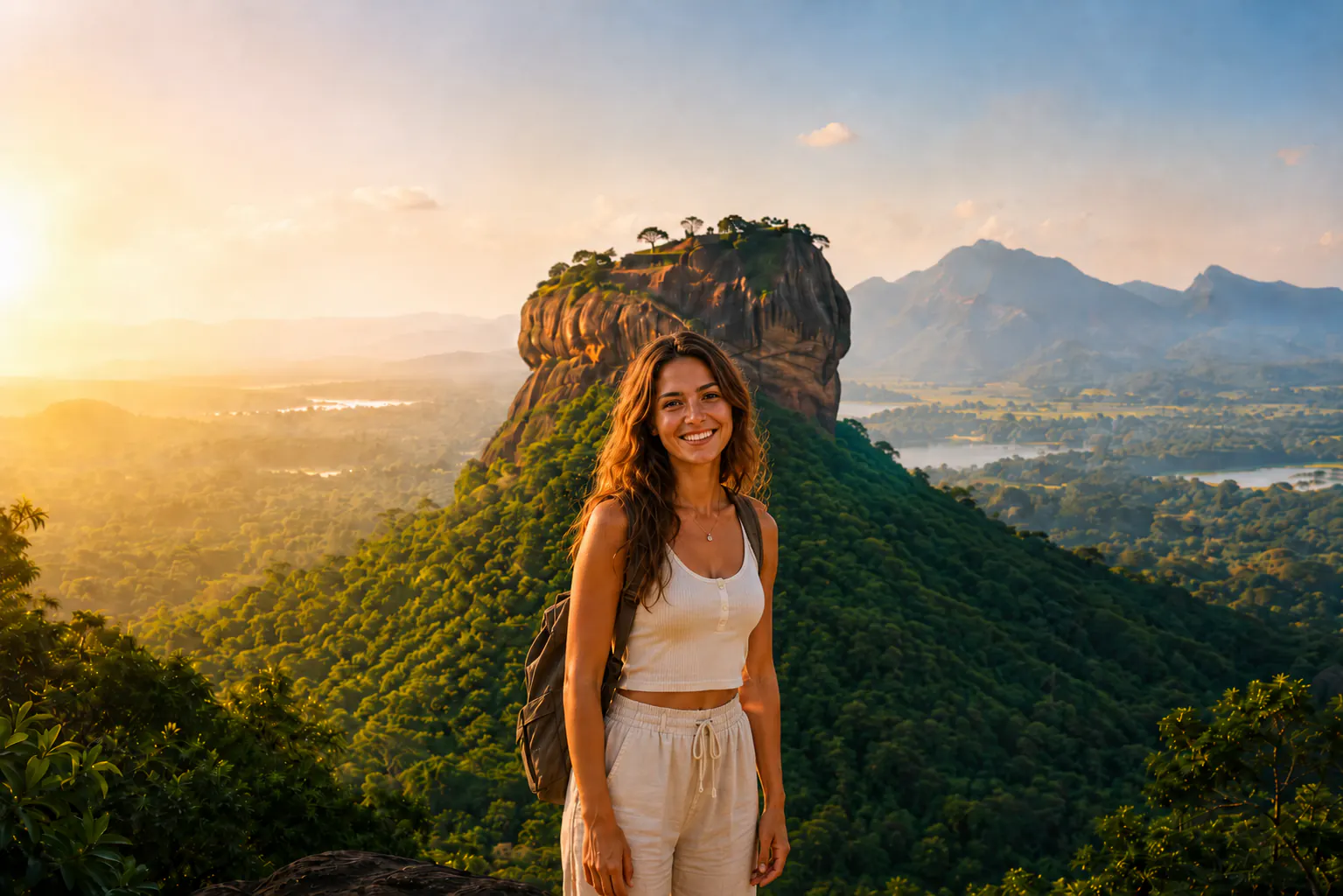
Directly across from Sigiriya, Pidurangala Rock offers a shorter, less formal climb that ends with one of the best views of Sigiriya itself, particularly at sunrise.

The site includes a cave temple with a large reclining Buddha statue partway up, followed by a rougher scramble over boulders to reach the summit.

Pidurangala's entrance fee is considerably lower than Sigiriya's, and its earlier opening hours make it popular with travelers who want to watch the sunrise with Sigiriya as the backdrop.

The final section requires scrambling over uneven boulders without the handrails found at Sigiriya, so it demands more caution, especially in low light or after rain.

Many travelers choose to climb Pidurangala at sunrise, then visit Sigiriya itself later in the morning once the light has softened and some of the earliest crowds have thinned.

Best sunrise view of Sigiriya itselfLower entrance fee than SigiriyaReclining Buddha cave temple en routeRougher boulder scramble near the summitPopular pre-dawn alternative or add-on

The History of the Dambulla Cave Temple

The Dambulla Cave Temple, also known as the Golden Temple of Dambulla, is believed to date back to the first century BCE, when King Valagamba, also referred to as Vattagamani Abhaya, took refuge in the caves during a period of exile.

After reclaiming his throne, the king is said to have transformed the caves into a temple complex in gratitude, a tradition of royal patronage and expansion that continued for many centuries afterward.

Successive kings added statues, extended the murals, and maintained the site, making it one of the longest continuously used religious sites in Sri Lanka.

The complex was inscribed as a UNESCO World Heritage Site in 1991, recognised as the best-preserved cave temple complex in the country.

Unlike Sigiriya, Dambulla remains an active place of Buddhist worship today, not solely a historical monument.

Origins traced to the first century BCEAssociated with King Valagamba's exile and returnContinuously expanded by later monarchsUNESCO World Heritage Site since 1991Still an active Buddhist worship site

Exploring the Five Caves

The Dambulla complex consists of five main caves, each with a distinct character, containing a combined total of more than 150 Buddha statues in various postures alongside statues of kings and Hindu deities.

The largest cave houses an impressive reclining Buddha statue carved directly from the rock, measuring around 14 metres in length, along with rows of seated and standing figures.

Ceiling and wall murals throughout the caves cover an estimated 2,000 square metres, depicting the life of the Buddha, historical events, and decorative patterns, with some sections dating back well over a thousand years and others restored more recently.

Reaching the caves involves a moderate uphill walk from the base of the rock, on a paved but sloped path, which is generally more manageable than Sigiriya's climb.

Shoes must be removed before entering the caves, and shoulders and knees should be covered, in keeping with temple etiquette observed across Sri Lanka.

Five caves, over 150 Buddha statues combined14-metre reclining Buddha in the largest caveRoughly 2,000 square metres of mural artModerate uphill walk on a paved pathShoes off, shoulders and knees covered

Combining Both Sites in a Single Day

Sigiriya and Dambulla are close enough, roughly twenty kilometres apart, that both can realistically be visited in one full day with an early start.

A common approach is to climb Sigiriya first thing in the morning, when temperatures are cooler and the site is less crowded, then travel to Dambulla for the early afternoon once the steepest heat has passed.

Alternatively, travelers keen on sunrise photography often climb Pidurangala at dawn, visit Sigiriya mid-morning, and finish at Dambulla in the late afternoon, when the caves are cooler and softer light suits photography inside.

A private driver or tuk-tuk hired for the full day is the most practical way to move between sites, since public transport connections are limited and timing is important.

Travelers with more flexible schedules may prefer to split the two sites across two mornings rather than combining them, allowing more time at each without feeling rushed.

Roughly 20 kilometres and 30 to 40 minutes apart by roadSigiriya best tackled early, Dambulla later in the dayPrivate driver or tuk-tuk recommended for the dayTwo-day split is a more relaxed alternativePidurangala sunrise pairs well with a Sigiriya-Dambulla day

Elephant Safaris at Minneriya and Kaudulla

For travelers with an extra day, Minneriya and Kaudulla National Parks lie within an hour's drive of Sigiriya and are known for seasonal elephant gatherings around their reservoirs.

The Minneriya gathering, sometimes called The Gathering, typically peaks during the dry season between roughly July and October, when elephants congregate around the receding reservoir to graze on exposed grasses.

Kaudulla often serves as an alternative when water levels or elephant movement patterns shift, and both parks are usually visited by open-jeep safari with a licensed park driver.

Outside the peak gathering months, smaller elephant groups and other wildlife, including deer, water birds, and occasionally leopards, can still be seen, though sightings are less predictable.

Booking a safari through a reputable operator, keeping a respectful distance from the animals, and avoiding jeeps that crowd wildlife are important for both safety and animal welfare.

Within an hour's drive of SigiriyaPeak elephant gathering roughly July to OctoberOpen-jeep safaris with licensed driversKaudulla as a seasonal alternative to MinneriyaChoose operators that keep a respectful distance

Best Time to Visit Sigiriya and Dambulla

Sigiriya and Dambulla sit in Sri Lanka's dry zone, so the region generally receives less rainfall than the hill country or south coast, though short showers remain possible throughout the year.

The drier months, broadly January to March and again around July to September, tend to offer the most comfortable climbing conditions, with clearer skies and firmer footing.

Regardless of season, the middle of the day brings strong heat and direct sun on the open rock faces at both sites, so early morning or, for Dambulla, late afternoon visits are generally more comfortable.

The northeast monsoon, roughly October to January, can bring heavier rain to this region, which may affect visibility and make the metal staircases at Sigiriya slippery.

Whatever the season, checking a short-term forecast the day before is worthwhile, since a clear morning can make a significant difference to both comfort and photography.

January to March and July to September generally drierEarly morning best for Sigiriya's climbLate afternoon can suit Dambulla wellOctober to January brings the heaviest regional rainCheck short-term forecasts before an early start

Visiting Responsibly

Both sites are protected heritage properties as well as, in Dambulla's case, an active place of worship, and visitor behaviour has a direct impact on their preservation.

Do not touch the frescoes, lean on ancient stonework, or add graffiti anywhere on site, including the historic Mirror Wall, which is already inscribed with protected centuries-old text.

At Dambulla, remove shoes before entering the caves, dress modestly with shoulders and knees covered, and keep voices low out of respect for worshippers who may be present.

Photography rules can vary and change, particularly around the frescoes and inside certain caves, so check current signage or ask staff before photographing sensitive areas.

Carry out all rubbish, avoid single-use plastic where possible, and support the local economy by using registered guides, drivers, and vendors from the surrounding communities.

Never touch frescoes or historic stoneworkShoes off and modest dress required at DambullaPhotography rules vary and can changeCarry out all rubbishUse registered local guides and drivers

Travel Tips

  • Start Sigiriya as early as possible to beat both heat and crowds
  • Buy tickets at the official counter and keep them for the full visit, as they may be checked at multiple points
  • Wear sturdy, closed-toe shoes suitable for stone and metal steps
  • Bring more water than you think you need, especially for Sigiriya's climb
  • Pack a hat and sunscreen, since much of the route has little shade
  • Remove shoes before entering any cave or shrine at Dambulla
  • Dress modestly with shoulders and knees covered for temple visits
  • Hire a licensed guide at the entrance for added historical context
  • Avoid the midday hours for climbing if possible
  • Check weather conditions before an early sunrise hike up Pidurangala
  • Carry small cash for entrance fees, guides, and local vendors
  • Combine your visit with an elephant safari if traveling between July and October

Frequently Asked Questions

How long does it take to climb Sigiriya?

Most visitors take between one and two hours for the full round trip, including time at the frescoes, Lion's Paw entrance, and summit ruins.

Is Sigiriya difficult to climb?

The climb is considered moderate. It involves steep stone steps and open-air metal staircases near the summit, which can feel exposed for those uncomfortable with heights, though handrails are provided throughout.

What is the difference between Sigiriya and Pidurangala?

Sigiriya is the historic rock fortress with palace ruins, frescoes, and a formal ticketed entrance. Pidurangala is a nearby rock with a cave temple and a rougher boulder climb, offering a lower-cost alternative and the best views of Sigiriya itself, particularly at sunrise.

How many caves are there at Dambulla?

The main complex consists of five caves, containing more than 150 Buddha statues combined, along with extensive ceiling and wall murals.

Can Sigiriya and Dambulla be visited in one day?

Yes. The two sites are roughly twenty kilometres apart, and many travelers combine them in a single day by climbing Sigiriya in the morning and visiting Dambulla in the afternoon.

What should I wear to visit Dambulla Cave Temple?

Modest clothing covering the shoulders and knees is required, and shoes must be removed before entering the caves.

Is Sigiriya suitable for children or older travelers?

Sigiriya can be manageable for many families and reasonably fit older travelers, but the steep steps and open staircases near the summit may be challenging for those with mobility concerns or a fear of heights. Dambulla's gentler uphill walk is generally more accessible.

When is the best time to see elephants near Sigiriya?

The elephant gathering at Minneriya National Park typically peaks between roughly July and October, though Kaudulla National Park can be a good alternative depending on seasonal water levels.

Do I need a guide to visit Sigiriya or Dambulla?

A guide is not mandatory at either site, but hiring a licensed guide at the entrance adds significant historical context that is not fully covered by on-site signage.

Reader notes

Join the conversation

Share your question, tip, or travel experience for this guide.

Comments

0 comments

Loading...

Ready to turn inspiration into a Sri Lanka trip?

Use LankaTrip to plan your journey, connect with local guides, and make this itinerary a reality.

Need help planning?

Plan your Sri Lanka adventure

Plan my trip