
LankaTrip 见解

15 分钟阅读

Galle Fort in 2026: The Complete Travel Guide to Sri Lanka's Coastal Colonial Gem

A UNESCO World Heritage peninsula where Portuguese, Dutch, and British history meets working homes, boutique cafés, and some of Sri Lanka's best sunset views. Here is everything to see, do, and know before visiting Galle Fort in 2026.

返回博客
Galle Fort in 2026: The Complete Travel Guide to Sri Lanka's Coastal Colonial Gem

Few places in Sri Lanka compress this much history into so small a space. Galle Fort sits on a rocky promontory at the southern tip of Galle city, enclosed by ramparts that have stood since the 17th century, and it remains one of the best-preserved examples of a European-built fortified town anywhere in South Asia.

Walk through its main gate and the atmosphere changes almost immediately. Traffic noise fades, the streets narrow, and colonial-era villas painted in faded pastels give way to courtyard cafés, jewellery ateliers, and centuries-old churches that still hold regular services.

Galle Fort was never abandoned or turned into a purely commercial attraction. Families have lived inside its walls for generations, which is part of why UNESCO inscribed it as a World Heritage Site in 1988 and why it still feels like a real town rather than a recreation of one.

This guide covers what to see and do inside the fort, how to plan your time, where to stay and eat, the best day trips nearby, and the practical details that make a visit smoother, from the best time to go to how to behave respectfully in a neighbourhood people call home.

快速摘要

  • Galle Fort is a UNESCO-listed fortified town on Sri Lanka's south coast, built by the Portuguese and expanded by the Dutch
  • Its 17th-century ramparts, bastions, and lighthouse remain remarkably intact and are free to explore on foot
  • Highlights include the lighthouse, the rampart walk, the Dutch Reformed Church, the Old Dutch Hospital, and the Maritime Museum
  • The fort survived the 2004 tsunami largely thanks to its original Dutch-built sea walls
  • It works well as a full-day stop or as a base for exploring Unawatuna, Jungle Beach, and the wider south coast
  • Galle is easily reached from Colombo by train, private driver, or the Southern Expressway in about 2 to 3 hours

A Short History of Galle Fort

Galle had been a trading port for centuries before European colonisation, appearing in Arab, Chinese, and South Asian maritime records as a stop on Indian Ocean trade routes.

The Portuguese arrived in the early 16th century and built the first fortifications on the peninsula, but it was the Dutch, who took control in 1640, who transformed Galle into the fortified town visible today.

Between the 1650s and 1730s, Dutch engineers rebuilt and extended the fort using granite and coral stone, adding the system of bastions, ramparts, and a moat that still defines the peninsula's outline.

The British took over Ceylon in 1796 and administered Galle for over a century, adding buildings such as the clock tower and All Saints Church, but they largely preserved the Dutch fortifications rather than replacing them.

In December 2004, the Indian Ocean tsunami struck Sri Lanka's coastline hard, yet the old Dutch ramparts held and shielded much of the fort's interior from the worst damage, a fact often cited as proof of how well the original engineering was built.

UNESCO inscribed the Old Town of Galle and its Fortifications as a World Heritage Site in 1988, recognising it as the best-preserved example of a fortified city built by Europeans in South and Southeast Asia.

Portuguese origins from the early 1500sMajor Dutch fortification from the 1650sBritish-era additions after 1796Survived the 2004 tsunamiUNESCO World Heritage Site since 1988

Walk the Ramparts

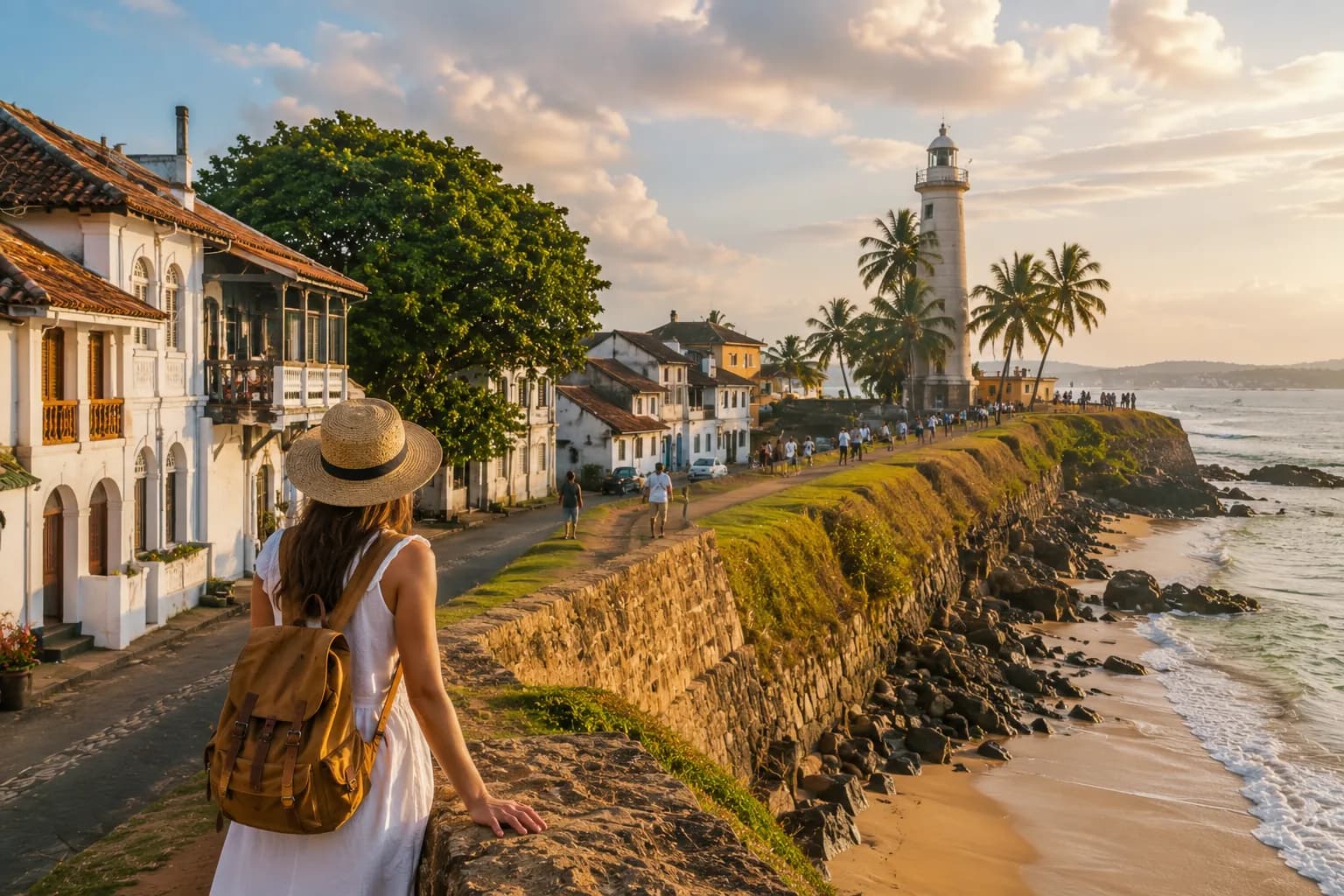
The single best way to understand Galle Fort's layout is to walk its ramparts, a roughly 2 to 3 kilometre loop along the top of the fortress walls that circles nearly the entire peninsula.

The full circuit passes a series of named bastions built by the Dutch, including Sun Bastion, Moon Bastion, Star Bastion, and Aeolus Bastion, each offering a slightly different angle over the Indian Ocean or Galle Harbour.

Flag Rock, near the fort's southern tip, was once used to signal approaching ships and today is one of the most popular sunset viewpoints on the wall.

The paths are flat and generally easy to walk, but they can be exposed with little shade, so early morning or late afternoon are far more comfortable than the midday heat.

Wear shoes with grip, since some sections narrow and drop toward the rocks below, and keep a close eye on children along the unguarded edges.

2 to 3 km loop around the fortPasses Sun, Moon, and Star BastionsFlag Rock sunset viewpointBest walked in early morning or late afternoonFlat but exposed, so bring sun protection

See the Galle Fort Lighthouse

The white lighthouse near Utrecht Bastion is the most photographed single landmark in Galle Fort and, for many visitors, the image that comes to mind when they think of the fort.

A light has guided ships into Galle Harbour from roughly this spot since the mid-1800s, though the current concrete structure dates from a 1930s rebuild after the original was damaged.

It remains an active, working lighthouse operated by Sri Lanka's port authorities, so visitors cannot go inside, but the surrounding bastion and promenade make it an easy and worthwhile stop.

Sunset is the busiest and most rewarding time to visit, when the sky over the ocean turns gold behind the tower, though a quieter early morning visit avoids the crowds entirely.

Sri Lanka's most photographed lighthouseLocated on Utrecht BastionStill an active working lighthouseBest light at sunrise or sunsetCannot be entered, viewed from outside only

Colonial Churches, the Clock Tower, and the Old Dutch Hospital

Galle Fort's interior is dense with colonial-era buildings that are still in active use rather than sitting empty as monuments.

The Dutch Reformed Church, also called Groote Kerk, dates to 1755 and stands on the highest point inside the fort, with a simple whitewashed exterior and a small, atmospheric interior containing old gravestones set into the floor.

All Saints Church, built by the British in Victorian Gothic style in 1871, adds a very different architectural mood, with pointed arches and stained glass that feel more European than tropical.

The Galle Fort Clock Tower, built in 1883 near Moon Bastion, was funded by local residents in honour of a much-loved local doctor and remains one of the fort's most recognisable landmarks.

The Old Dutch Hospital, a long colonnaded building that once treated sailors and soldiers, has been carefully restored into a shopping and dining precinct, and it is worth a stop even just to see the architecture.

The National Maritime Archaeology Museum, housed in a former Dutch warehouse, covers Galle's role in Indian Ocean trade and shipwreck archaeology, and offers useful shade and air conditioning if you need a midday break.

Dutch Reformed Church (Groote Kerk), 1755All Saints Church, Victorian Gothic, 1871Galle Fort Clock Tower, 1883Old Dutch Hospital shopping precinctMaritime Archaeology Museum in a former warehouse

Shop Along Pedlar Street and the Fort's Boutique Lanes

Galle Fort has become one of Sri Lanka's best places to shop for design-led, locally made goods rather than mass-produced souvenirs.

Pedlar Street and the surrounding lanes are lined with small boutiques selling handloom textiles, batik, silver and gemstone jewellery, leather goods, and contemporary Sri Lankan fashion.

Several shops work directly with local artisans and small workshops, so browsing here supports craftspeople in a way that buying at a mass tourist market often does not.

Prices in fort boutiques are generally fixed rather than negotiable, unlike street markets elsewhere in Sri Lanka, so budget accordingly.

Late afternoon, once the day's heat has eased, tends to be the most pleasant time to browse, with many shops staying open into the evening.

Pedlar Street boutiquesHandloom textiles and batikSilver and gemstone jewelleryMostly fixed pricingBest browsed in late afternoon

Eat Well Inside the Fort

Galle Fort punches well above its size when it comes to food, with a mix of Sri Lankan home-style kitchens, seafood restaurants, and café culture that has grown steadily over the past decade.

For Sri Lankan cuisine, look for small family-run kitchens tucked away from the main tourist streets, where rice and curry, kottu, and fresh seafood are typically better value and more authentic than fort-facing restaurants.

The Old Dutch Hospital precinct and the streets around it hold a concentration of café-style spots serving good coffee, breakfast plates, and light lunches, popular with both travelers and remote workers.

Rooftop and terrace restaurants along the ramparts are the best choice for a sunset dinner with an ocean view, though they book up quickly in peak season, so reserve ahead where possible.

As with anywhere in Sri Lanka, opt for busy, freshly cooked food over dishes that have clearly been sitting out, and drink bottled or filtered water.

Family-run local kitchens off the main streetsCafé culture around the Old Dutch HospitalRampart-side restaurants for sunset dinnersReserve ahead in peak seasonGood seafood throughout the fort

Where to Stay: Inside the Fort or Nearby

Galle Fort has some of the most distinctive boutique hotels in Sri Lanka, many set inside converted Dutch-era merchant houses with thick walls, courtyard gardens, and antique furnishings.

Staying inside the walls means you can walk everywhere, step out to the ramparts for sunrise, and enjoy the fort once the day-trip crowds have left in the evening, but rooms here are generally priced at the higher end.

Budget and mid-range travelers often base themselves just outside the fort or in nearby Unawatuna, about 15 minutes away by tuk-tuk, which also puts you closer to beach access.

Whichever option you choose, check whether the property can arrange vehicle access, since several fort streets are pedestrian-only or restrict vehicle entry at certain times.

Book well ahead for weekends, the December to April high season, and especially around the Galle Literary Festival, which typically draws international visitors and fills up fort accommodation quickly.

Boutique hotels in converted Dutch merchant housesHigher price point inside the wallsBudget options in Unawatuna, 15 minutes awayCheck vehicle access before bookingBook early for high season and festival dates

Catch the Best Sunset Spots

Sunset is arguably Galle Fort's single best daily event, when the rampart walls fill with a relaxed mix of residents, travelers, and street food vendors watching the sky change colour over the Indian Ocean.

Flag Rock and the stretch of wall near the lighthouse are the most popular spots and can get crowded, so arrive at least 30 to 45 minutes before sunset to secure a good position.

For a quieter alternative, the ramparts along the harbour side of the fort, away from the lighthouse, often offer similar views with a fraction of the crowd.

Several rooftop restaurants and cafés inside the fort also offer elevated sunset views if you would rather watch with a drink in hand than stand on the wall itself.

Flag Rock and the lighthouse walls are busiestArrive 30–45 minutes early for a good spotHarbour-side ramparts are quieterRooftop cafés offer an alternative vantage point

How Much Time Do You Need?

It is possible to see Galle Fort's main landmarks in half a day, but that pace leaves little room to enjoy the atmosphere that makes the fort worth visiting in the first place.

A full day allows time to walk the full rampart loop, visit two or three of the historic buildings, browse the boutiques, and still catch sunset without rushing.

One to two nights inside or near the fort is the sweet spot for most travelers, long enough to experience both the busy daytime energy and the calmer evening atmosphere once day-trippers head back to Colombo or Mirissa.

Longer stays of three or more nights make sense if you plan to use Galle as a base for day trips along the south coast rather than just visiting the fort itself.

Half a day covers the main landmarksA full day allows a relaxed, complete visit1 to 2 nights is ideal for most travelers3+ nights suits a south-coast base

Day Trips From Galle Fort

Galle Fort's location on the south coast makes it a convenient base for exploring the surrounding beaches, lagoons, and countryside.

Unawatuna and Jungle Beach, both a short tuk-tuk ride away, offer calmer swimming than the open ocean beside the fort itself and are popular for a half-day beach break.

Koggala Lake, just east of Galle, is known for boat tours through mangroves and small islands, including stops linked to cinnamon cultivation and local birdlife.

Travelers with a full day to spare sometimes combine Galle with a safari at Udawalawe National Park, a roughly two-hour drive that is well known for reliable elephant sightings and a quieter experience than Yala.

Between November and April, whale watching trips depart from nearby Mirissa, roughly 30 to 40 minutes from Galle, and can be combined with a Galle Fort visit on the same day with early planning.

A cinnamon plantation tour, widely available around the southern coastal belt, is a good half-day option for understanding one of Sri Lanka's signature exports up close.

Unawatuna and Jungle Beach for swimmingKoggala Lake boat toursUdawalawe elephant safaris, about 2 hours awayMirissa whale watching, November to AprilCinnamon plantation tours nearby

Best Time to Visit Galle Fort

Galle sits on Sri Lanka's south-west coast, which means its weather pattern follows the Yala monsoon, generally wettest from May to September.

December through April is the most reliable stretch for sunny days and calm seas, making it the busiest season for both the fort and the nearby beaches.

The rainy months bring fewer crowds and lower accommodation prices, and showers are typically heavy but short rather than lasting all day, so a visit during this period is still very workable.

The Galle Literary Festival, usually held in January, draws an international crowd of writers and readers and can significantly affect hotel availability and pricing inside the fort during that week.

Whatever the season, mornings and late afternoons remain the most comfortable times to walk the ramparts, since the open walls offer little shade in the middle of the day.

December to April for the driest, sunniest weatherMay to September is rainier but quieterRain tends to arrive in short, heavy burstsGalle Literary Festival, typically in JanuaryWalk the ramparts in morning or late afternoon

How to Get to Galle Fort

Galle is roughly 115 kilometres south of Colombo, and the journey takes about 2 to 3 hours depending on traffic and choice of transport.

The Southern Expressway is the fastest road option, cutting driving time significantly compared with the older coastal A2 road, and is used by most private drivers and tour vehicles.

The coastal train line from Colombo Fort to Galle is one of Sri Lanka's most scenic rail journeys, hugging the shoreline for long stretches, though trains can be crowded and delays are common, especially in peak season.

Once in Galle, the fort itself is compact and entirely walkable, and most vehicles are not permitted inside the main pedestrian lanes, so plan to park or be dropped off near one of the entrance gates.

Tuk-tuks are the easiest way to reach the fort from the New Town, the bus station, or nearby beach towns like Unawatuna.

About 115 km south of Colombo2 to 3 hours by road via the Southern ExpresswayScenic coastal train from Colombo FortFort interior is walkable, limited vehicle accessTuk-tuks for short local transfers

Visit Galle Fort Responsibly

Galle Fort is home to thousands of residents, along with active churches, mosques, temples, schools, and small businesses, so it deserves the same courtesy as any residential neighbourhood.

Dress modestly when entering religious buildings, and always ask before photographing residents, worshippers, or the interiors of private homes.

Avoid sitting on grave markers inside the Dutch Reformed Church or treating historic buildings as backdrops for disruptive photo shoots.

Do not jump or dive from the ramparts into the sea; the rocks below are uneven and currents can be strong, and this has led to serious injuries in the past.

Support the fort's small, independently owned shops, guesthouses, and family kitchens rather than only patronising large international chains, since tourism income directly sustains the community living inside the walls.

Dress modestly at religious sitesAsk before photographing residentsDo not jump from the rampartsRespect the church and its gravestonesSupport locally owned businesses

旅行贴士

  • Wear comfortable, grippy shoes for the uneven rampart paths
  • Carry water and sun protection, since the walls offer little shade
  • Dress modestly when entering churches, mosques, or temples inside the fort
  • Ask permission before photographing residents or the inside of private homes
  • Book fort accommodation early during December to April and the Galle Literary Festival
  • Fixed prices are standard in fort boutiques, unlike open-air markets elsewhere
  • Avoid the midday heat for the rampart walk; go early morning or late afternoon
  • Do not jump or dive from the ramparts into the sea
  • Reserve rooftop and rampart-side restaurants ahead for sunset dinner
  • Combine a fort visit with Unawatuna or Jungle Beach if you want to swim
  • Carry cash for smaller family-run kitchens and shops
  • Confirm whether your hotel can arrange transport, since several fort lanes restrict vehicles

常见问题

Is there an entrance fee for Galle Fort?

There is no general entrance fee to walk through Galle Fort itself or along the ramparts, since it is a living town rather than a single ticketed site. Individual attractions such as museums may charge a small admission fee.

How long does it take to see Galle Fort?

The main landmarks can be seen in half a day, but a full day allows a more relaxed visit, and 1 to 2 nights lets you experience both the busy daytime atmosphere and the quieter evenings.

Is Galle Fort worth visiting?

Yes. Galle Fort is one of the best-preserved fortified colonial towns in South Asia, combining a UNESCO World Heritage streetscape, working ramparts, historic churches, boutique shopping, and some of Sri Lanka's best ocean sunsets in a compact, walkable area.

Can you swim at Galle Fort?

Swimming directly off the fort's rocky ramparts is not recommended due to uneven rocks and currents. Nearby Unawatuna and Jungle Beach, a short tuk-tuk ride away, offer calmer, more suitable swimming beaches.

How do I get from Colombo to Galle Fort?

Galle is about 115 kilometres from Colombo, roughly 2 to 3 hours by car via the Southern Expressway, or by the scenic coastal train from Colombo Fort railway station.

Is Galle Fort safe at night?

Galle Fort is generally considered safe in the evening, with a relaxed atmosphere and many restaurants and cafés open after dark. As with anywhere, stick to well-lit main streets and take normal precautions.

Where is the best sunset spot in Galle Fort?

Flag Rock and the ramparts near the lighthouse are the most popular sunset spots, though they can get crowded. The harbour-side ramparts, away from the lighthouse, offer a quieter alternative view.

Can I combine Galle Fort with a safari?

Yes. Udawalawe National Park, known for reliable elephant sightings, is about a two-hour drive from Galle and is commonly combined with a fort visit as a full-day trip.

Do people actually live inside Galle Fort?

Yes. Galle Fort is a living UNESCO World Heritage town, with residents, active places of worship, schools, and long-standing local businesses operating inside the walls alongside hotels, cafés, and shops.

读者笔记

参与讨论

分享你对这篇指南的问题、建议或旅行经历。

评论

0 条评论

加载中...

准备把灵感变成斯里兰卡之旅了吗?

使用 LankaTrip 规划行程、联系本地向导,把这份行程变为现实。

需要规划帮助?

规划你的斯里兰卡之旅

规划我的旅程