
LankaTrip 见解

16 分钟阅读

The Ultimate Sri Lankan Food Guide: Regional Cuisines, Street Food, Sweets, and Spices

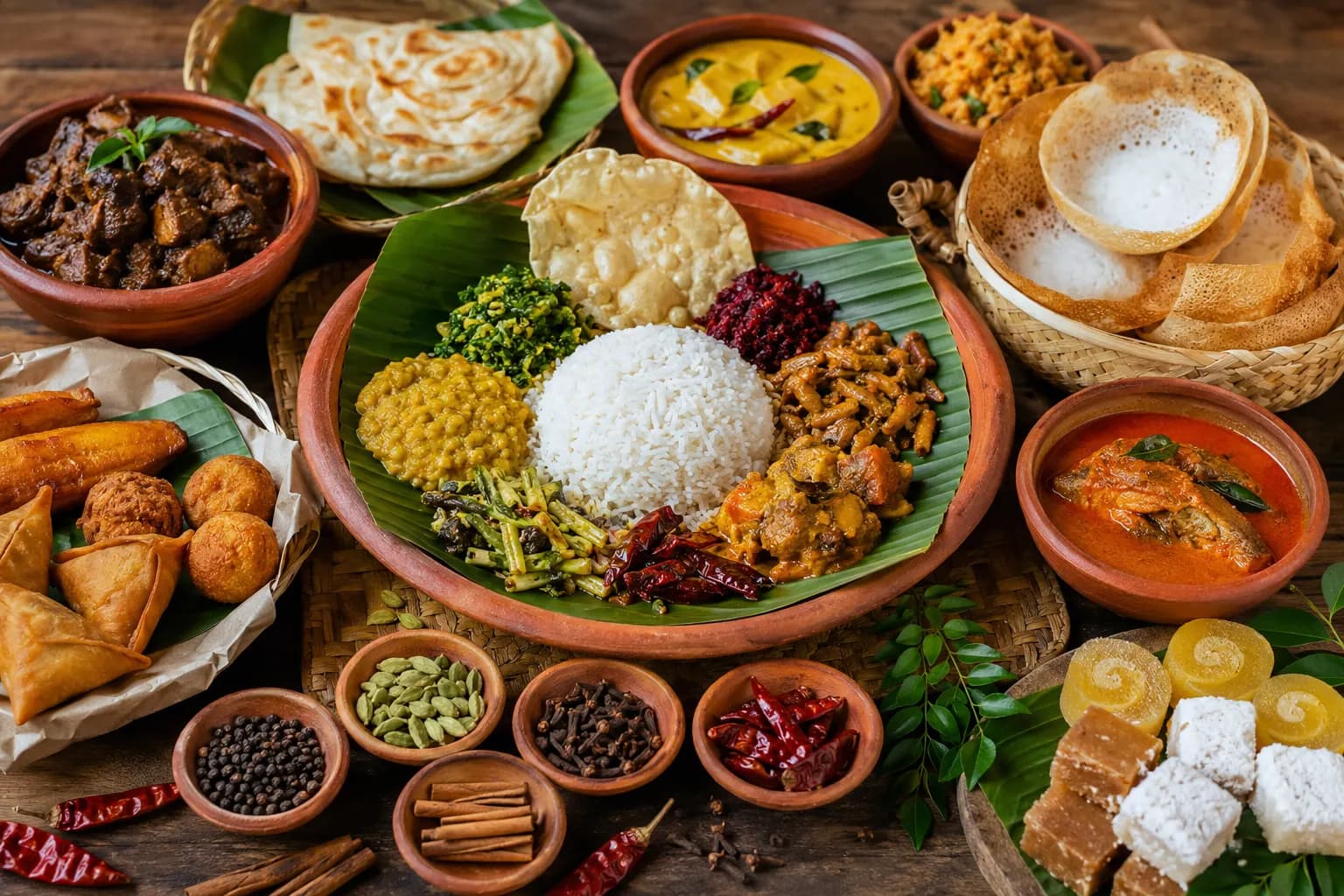
Sri Lankan food is far more than rice and curry. This deep-dive guide explores the island's regional cuisines, street food culture, traditional sweets, spice heritage, and tea traditions for travelers who want to eat like a local.

返回博客
The Ultimate Sri Lankan Food Guide: Regional Cuisines, Street Food, Sweets, and Spices

Most travelers arrive in Sri Lanka already knowing they should try rice and curry, kottu, and hoppers. These dishes are an essential starting point, but they are only the surface of a much deeper food culture.

Sri Lanka's cuisine has been shaped over centuries by Sinhalese Buddhist traditions, South Indian Tamil communities, Arab and Malay traders who brought Islam and new spices, and European colonial powers including the Portuguese, Dutch, and British.

Each of these influences settled into different regions and communities, producing distinct culinary identities. Jaffna in the north cooks differently from Kandy in the hills, which cooks differently again from the Muslim quarters of Colombo or the Burgher kitchens of the coast.

This guide moves past the introductory dishes to explore that regional depth: the sweets served at festivals, the spices that once drew European ships to the island, the tea culture built into daily life, and the etiquette that shapes how meals are shared.

Whether you have a week in Sri Lanka or a longer trip, using food as a lens can reveal a side of the island that many visitors never get to taste.

快速摘要

  • Sri Lankan food culture extends far beyond the common rice and curry introduction
  • Jaffna's Tamil cuisine, Muslim and Malay cooking, and Burgher heritage dishes each bring distinct flavors
  • Hill-country food culture is shaped by cool climate crops and tea-estate life
  • Traditional sweets such as watalappan, kokis, and kalu dodol carry deep cultural meaning
  • Sri Lanka is one of the world's great spice-producing nations, especially for cinnamon
  • Ceylon tea culture and traditional drinks add another layer to the island's food story
  • Understanding dining etiquette and food safety helps travelers explore more confidently

Why Sri Lankan Food Goes Beyond Rice and Curry

Rice and curry is often described as Sri Lanka's national meal, and rightly so. It is served in nearly every home and restaurant across the island in countless variations.

However, treating rice and curry as the whole story overlooks the island's remarkable culinary diversity. Sri Lanka is home to several distinct communities, each with its own food traditions, festival dishes, and cooking techniques.

Traveling with curiosity about these differences opens up a much richer experience. A curry in Jaffna will taste noticeably different from a curry in Galle, and a sweet served at a Muslim household during Ramadan differs from one served at a Sinhala and Tamil New Year celebration.

This depth is part of what makes Sri Lankan food genuinely fascinating rather than simply a tropical variation on South Asian cooking.

The sections below break down these regional and cultural layers so travelers can seek out dishes and experiences that go beyond the standard tourist menu.

Rice and curry is only the starting pointMultiple distinct culinary traditions coexistRegional differences are significantFestival foods add further varietyDepth rewards curious travelers

A Regional Food Map of Sri Lanka

It helps to think of Sri Lankan food as a map rather than a single cuisine. The north, centered on Jaffna, is shaped by Tamil Hindu tradition and a drier, more chili-forward, tamarind-driven style of cooking.

The west coast, including Colombo, Negombo, and the southern beach towns, blends Sinhalese cooking with strong Muslim, Malay, and Burgher influences, along with abundant seafood.

The Central Highlands around Kandy and Nuwara Eliya reflect cooler-climate agriculture, with more vegetables, dairy, and estate-worker food traditions layered over classic Kandyan Sinhalese cooking.

The south and east combine coconut-heavy Sinhalese cooking with strong Muslim communities in towns such as Kattankudy and Beruwala, and distinct Eastern-province flavors around Batticaloa and Trincomalee.

Keeping this rough map in mind while traveling can help explain why the same dish name, such as a curry or a short eat, can taste noticeably different depending on where it is served.

North: Jaffna Tamil cuisineWest: Colombo, Negombo, Muslim and Burgher influenceHills: Kandy and Nuwara Eliya cool-climate cookingSouth and East: coconut cooking and Muslim communitiesSame dish names, different regional styles

Jaffna and Northern Tamil Cuisine

Jaffna cuisine stands apart from the rest of the island. Rooted in Tamil Hindu tradition and shaped by a drier climate, it favors tamarind, curry leaves, fennel, and a distinctive spice blend often called Jaffna curry powder, which is roasted darker and more intensely than its southern counterpart.

Signature dishes include Jaffna crab curry, known for its heat and tamarind-forward sauce, as well as mutton or goat curries cooked with the same bold spice profile.

Odiyal kool, a thick seafood and palmyrah-root porridge, is a Jaffna specialty rarely found elsewhere on the island, reflecting the region's connection to the palmyrah palm, a tree so central to northern life it appears on regional emblems.

Vegetarian Hindu cooking is also prominent, with dishes built around lentils, gourds, and seasonal vegetables, especially around temple festivals and Thai Pongal, the Tamil harvest festival celebrated in mid-January.

Travelers visiting Jaffna should seek out palmyrah-based sweets and drinks as well, including palmyrah toddy-based treats and odiyal-based preparations, which are unique to the peninsula.

Tamarind-forward, spice-intense cookingJaffna crab curryOdiyal kool seafood porridgeStrong palmyrah palm influenceVegetarian temple and festival cooking

Muslim and Malay Influence on Sri Lankan Food

Sri Lanka's Muslim communities, descended partly from Arab traders and partly from Malay settlers brought by Dutch and British colonial rule, have contributed some of the island's most beloved dishes.

Sri Lankan buriyani is a standout example, layered with fragrant rice, meat, and a spice blend distinct from Indian versions, often served with a side of fiery sambol and a boiled egg.

Watalappan, a steamed coconut custard flavored with jaggery, cardamom, and cashew, has Malay origins and is now closely associated with Eid celebrations, though it is enjoyed across the island year-round.

Malay-influenced dishes such as babath curry and various achcharu-style pickles reflect a distinct blend of Southeast Asian and South Asian technique found almost nowhere else outside Sri Lanka.

Towns with significant Muslim populations, including parts of Colombo, Kandy, Beruwala, and Kattankudy, are excellent places to seek out authentic versions of these dishes, particularly during Ramadan evenings when food stalls come alive after sunset.

Sri Lankan-style buriyaniWatalappan coconut custardMalay-influenced pickles and curriesStrong presence in Colombo, Kandy, BeruwalaRamadan evening food culture

Burgher Cuisine and Colonial-Era Flavors

The Burgher community, descended from Portuguese, Dutch, and later British settlers who intermarried with local families, created a distinct fusion cuisine that survives today, especially around Colombo, Negombo, and Batticaloa.

Lamprais, the banana-leaf-wrapped rice and meat curry dish with Dutch roots, is the most famous example and remains widely available in bakeries and home-style restaurants.

Breudher, a yeasted, buttery bread traditionally baked at Christmas, and lovelace, a rich semolina and cashew sweet, both reflect the Dutch and Portuguese baking traditions passed down through Burgher households.

Frikkadels, spiced meatballs often served alongside lamprais, and various pickled achcharu preserves also carry clear Dutch influence in both name and technique.

While Burgher cuisine is a smaller part of the island's food culture numerically, its dishes have been widely adopted into mainstream Sri Lankan cooking and are worth seeking out specifically by name in Colombo's older bakeries and cafés.

Lamprais and its Dutch originsBreudher Christmas breadLovelace semolina sweetFrikkadels spiced meatballsBest found in Colombo's older bakeries

Hill Country and Tea Estate Food Culture

The cool climate of the Central Highlands, around Kandy, Nuwara Eliya, and the surrounding tea country, has shaped a food culture built around vegetables that do not grow well in the lowlands, such as leeks, carrots, cabbage, and beetroot.

Kandyan Sinhalese cooking, considered by many to be closer to the island's traditional root cuisine, favors subtle spicing, more use of curry leaves and pandan, and dishes like kola kenda, a herbal rice porridge often taken as a health tonic.

Tea-estate communities, many of Tamil descent whose ancestors were brought to Sri Lanka during British colonial rule to work the plantations, maintain their own food traditions centered on simple, hearty meals suited to plantation labor and cool mountain evenings.

Highland markets sell produce rarely seen at lower elevations, and travelers exploring tea country can often buy fresh vegetables, homemade jams, and local condiments directly from roadside stalls.

A cup of tea picked and processed within sight of where it is served is one of the most memorable food-related experiences available in the hill country.

Cool-climate vegetables like leeks and carrotsKandyan Sinhalese cooking traditionsKola kenda herbal porridgeTea-estate plantation food cultureRoadside highland produce stalls

Street Food and Short Eats Culture

Beyond kottu, Sri Lanka has a rich culture of short eats, a term used across the island for the small snacks sold in bakeries, roadside stalls, and railway platforms.

Popular short eats include isso wade, deep-fried lentil patties topped with whole prawns, cutlets made from spiced fish or meat rolled in breadcrumbs, and rolls filled with spiced vegetables or meat mixtures.

Vadai, savory lentil fritters, and patties filled with spiced potato or meat are common bakery staples, often displayed in glass cases and sold individually, making them ideal for sampling several types at once.

Railway platforms and bus stations are particularly good places to encounter authentic short eats, since vendors cater to commuters rather than tourists, keeping prices low and flavors true to local taste.

Evening food stalls, especially in towns with larger Muslim populations, add another layer of street food culture, with grilled meats, buriyani, and fresh juices sold well into the night.

Isso wade prawn lentil pattiesCutlets and savory rollsVadai lentil frittersRailway platform snack cultureEvening food stalls in Muslim towns

Traditional Sweets and Desserts

Sri Lankan sweets are deeply tied to festivals, religious occasions, and hospitality, and many are rarely found in everyday restaurant menus, making them worth actively seeking out.

Kokis, a delicate, crispy, deep-fried snack made using a decorative iron mold, is traditionally prepared for the Sinhala and Tamil New Year in April and is one of the most visually distinctive Sri Lankan sweets.

Kalu dodol, a dense, dark toffee-like sweet made from rice flour, jaggery, and coconut milk, is another New Year favorite, often prepared over many hours of slow stirring.

Aluwa, a fudge-like sweet made from rice flour and treacle, and aggala, sesame and treacle balls, round out the traditional New Year sweetmeat table alongside watalappan and various coconut-based treats.

Many of these sweets are seasonal or made mainly at home, so visiting during the April New Year period, or asking a guesthouse host or local guide where to find them, offers the best chance of trying them fresh.

Kokis crispy mold-fried sweetKalu dodol dark coconut toffeeAluwa rice flour fudgeAggala sesame treacle ballsBest found around April New Year

The Spice Story: Cinnamon, Cardamom, and Sri Lanka's Trading Past

Sri Lanka's food culture cannot be separated from its history as a spice-producing island that once drew Arab, Portuguese, Dutch, and British traders across the Indian Ocean.

True Ceylon cinnamon, prized for its delicate, sweet flavor compared to the stronger cassia sold in many other countries, remains one of the island's most important agricultural exports and a defining flavor in local cooking.

Cardamom, cloves, pepper, nutmeg, and curry leaves grow throughout the wetter and hill-country regions, and many curries derive their complexity from careful spice roasting rather than simple heat.

Spice gardens, particularly around Matale and Kandy, offer demonstrations of how cinnamon bark is peeled and rolled by hand, along with tastings of spice-based oils, teas, and remedies.

Travelers interested in food should treat a spice garden or plantation visit as seriously as a tea estate tour, since it explains the flavor foundation behind nearly every Sri Lankan dish.

True Ceylon cinnamon heritageCardamom, cloves, pepper cultivationSpice gardens near Matale and KandyHand-peeled cinnamon demonstrationsHistorical link to global spice trade

Ceylon Tea Culture

Tea is inseparable from Sri Lankan daily life, and understanding tea culture adds real depth to a food-focused trip.

Ceylon tea, grown across several distinct elevation zones, produces noticeably different flavor profiles, from the brisk, bright teas of Nuwara Eliya's high elevations to the fuller-bodied low-country teas grown near Galle and Ratnapura.

A simple cup of plain black tea, often taken strong and sweet, is a constant presence throughout the day, offered as a matter of hospitality in homes, shops, and roadside stalls alike.

Tea factory visits in the hill country typically include a tasting session, explaining the difference between orthodox and CTC processing methods and how elevation affects flavor.

Beyond plain tea, milk tea and spiced variations appear at breakfast stalls and railway platforms, making tea as much a street food experience as a plantation one.

Elevation-based flavor differencesNuwara Eliya high-grown teaTea factory tastingsTea as daily hospitalityMilk tea and spiced street variations

Traditional Drinks and Refreshments

Beyond tea, Sri Lanka offers a range of traditional drinks worth trying alongside the island's food.

King coconut water, sold fresh from roadside stalls with the top hacked open by machete, is one of the most refreshing and widely available drinks, especially useful for staying hydrated in the heat.

Faluda, a rose-syrup based drink layered with milk, basil seeds, jelly, and sometimes ice cream, reflects South Asian and Middle Eastern influence and is popular in Colombo and larger towns.

Traditional fermented palm drinks, including toddy tapped from coconut or palmyrah palms, and its distilled form, arrack, are part of the island's older beverage traditions, with arrack now produced in refined, aged versions sold in specialty shops.

Ginger beer, a locally bottled, spiced non-alcoholic drink distinct from imported versions, is another classic Sri Lankan refreshment worth trying, often served chilled alongside a spicy meal.

King coconut waterFaluda rose-milk drinkToddy and arrack traditionsLocally bottled ginger beerWidely available at roadside stalls

Dining Etiquette and Customs

Understanding a few dining customs can make meals in Sri Lanka more comfortable and respectful, particularly in local homes or traditional restaurants.

Eating rice and curry with the right hand is common practice, especially at home-style restaurants, though cutlery is always offered to travelers who prefer it and there is no expectation to eat with hands.

It is customary to wash hands before and after a meal, and many restaurants provide a small handwashing basin or wet wipes for this purpose, particularly where hand-eating is common.

When dining with a local family or host, it is polite to try a little of everything offered, and complimenting the food is generally well received, since hospitality through food is a significant part of Sri Lankan culture.

During religious fasting periods, such as Ramadan for Muslim communities or certain Poya full moon days for Buddhists, some restaurants may have modified hours or limited alcohol sales, so it is worth checking locally when traveling during these times.

Eating with the right hand is common but optionalHandwashing before and after mealsTrying a little of everything shows respectFood as a core part of hospitalityAwareness of Poya days and Ramadan schedules

Cooking Classes and Food Experiences

For travelers who want to take Sri Lankan food home with them beyond photographs, a hands-on cooking class is one of the most rewarding food experiences available on the island.

Many guesthouses, home-stays, and dedicated cooking schools in towns such as Kandy, Galle, Ella, and Colombo offer half-day classes covering rice and curry, sambols, and traditional sweets.

Market visits are often paired with cooking classes, giving travelers a chance to see how spices, vegetables, and seafood are selected before they reach the kitchen.

Some experiences extend further, including visits to a spice garden or a tea estate as part of a broader food-focused day, connecting the raw ingredients to the final dish.

Booking through a local guide or host, rather than a large tour operator, often leads to a more personal, family-style class that reflects a specific regional or family cooking style.

Hands-on rice and curry classesMarket visits paired with cookingAvailable in Kandy, Galle, Ella, ColomboCombine with spice garden or tea visitsLocal hosts offer more personal classes

Eating Responsibly: Food Safety and Practical Tips

Exploring Sri Lankan food more deeply is safe and rewarding for most travelers, provided a few practical precautions are kept in mind.

Choose stalls and restaurants with visible turnover and fresh cooking, especially for street food and seafood, and favor busy spots where locals are eating.

Drink bottled or filtered water, and be cautious with ice and fresh juices from stalls that may not use purified water, particularly early in a trip.

Spice levels can be intense even in dishes that do not look particularly hot, so travelers new to Sri Lankan food should ask about spice level before ordering rather than after the first bite.

Supporting family-run restaurants, home-stays, and small producers of spices, tea, and sweets channels tourism income directly into the communities that maintain these food traditions.

Choose busy stalls with fresh turnoverDrink bottled or filtered waterAsk about spice level before orderingBe cautious with ice and street juicesSupport family-run food businesses

旅行贴士

  • Ask about spice level before ordering, not after the first bite
  • Seek out regional dishes by name rather than relying only on hotel menus
  • Visit railway platforms and bus stations for authentic, affordable short eats
  • Try to visit during April to experience traditional New Year sweets
  • Book a cooking class with a local host for a more personal experience
  • Drink bottled or filtered water, especially early in your trip
  • Be cautious with ice and street juices until you know a stall is reliable
  • Visit a spice garden to understand the flavor foundation of Sri Lankan cooking
  • Ask your guide or host about Poya days, which may affect restaurant hours and alcohol sales
  • Try at least one Jaffna, Muslim, and Burgher dish if your itinerary allows
  • Support small, family-run restaurants and producers where possible
  • Carry cash for street stalls and small bakeries that may not accept cards

常见问题

Is Sri Lankan food the same everywhere on the island?

No. Sri Lankan food varies significantly by region and community. Jaffna's Tamil cuisine, Muslim and Malay dishes, Burgher heritage food, and hill-country cooking all have distinct flavors and specialties.

What makes Jaffna food different from the rest of Sri Lanka?

Jaffna cuisine uses a darker, more intensely roasted curry powder and relies heavily on tamarind, resulting in bolder, spicier flavors. Dishes such as Jaffna crab curry and odiyal kool are unique to the northern peninsula.

What is watalappan and where does it come from?

Watalappan is a steamed coconut custard flavored with jaggery, cardamom, and cashew. It has Malay origins and is closely associated with Eid celebrations, though it is enjoyed across Sri Lanka throughout the year.

What are Sri Lankan short eats?

Short eats is the local term for small snacks such as cutlets, rolls, patties, and vadai, typically sold in bakeries, roadside stalls, and railway stations across the island.

Is Sri Lankan cinnamon different from cinnamon in other countries?

Yes. True Ceylon cinnamon has a lighter, sweeter flavor than the stronger cassia commonly sold elsewhere. Sri Lanka is one of the world's leading producers of true cinnamon.

What traditional sweets should I try during a Sri Lanka trip?

Look for kokis, kalu dodol, aluwa, and aggala, especially around the Sinhala and Tamil New Year in April, along with watalappan, which is available year-round.

Can I take a cooking class in Sri Lanka?

Yes. Many guesthouses, home-stays, and dedicated cooking schools in towns such as Kandy, Galle, Ella, and Colombo offer hands-on classes covering rice and curry, sambols, and traditional sweets.

Is it necessary to eat with my hands in Sri Lanka?

No. While eating rice and curry with the right hand is common local practice, cutlery is always available for travelers who prefer it, and there is no expectation to eat with hands.

What should I drink alongside Sri Lankan food?

King coconut water, faluda, traditional ginger beer, and Ceylon tea are all popular options. Traditional palm-based drinks such as toddy and arrack are also part of the island's beverage culture.

Is street food safe to eat in Sri Lanka?

Street food is generally safe when chosen carefully. Favor busy stalls with visible turnover, drink bottled or filtered water, and be cautious with ice and fresh juices, particularly early in your trip.

读者笔记

参与讨论

分享你对这篇指南的问题、建议或旅行经历。

评论

0 条评论

加载中...

准备把灵感变成斯里兰卡之旅了吗?

使用 LankaTrip 规划行程、联系本地向导,把这份行程变为现实。

需要规划帮助?

规划你的斯里兰卡之旅

规划我的旅程