
LankaTrip Insights

16 min de lecture

Sri Lankan People in 2026: Why Travelers Call Them Some of the Friendliest in the World

Ask travelers what they remember most about Sri Lanka and most will mention the people before the beaches or the temples. Here is what makes Sri Lankan hospitality so distinctive, and how to receive it well.

Retour au blog
Sri Lankan People in 2026: Why Travelers Call Them Some of the Friendliest in the World

Most first-time visitors research Sri Lanka for its beaches, its leopards, its ancient cities, or its tea-covered hills.

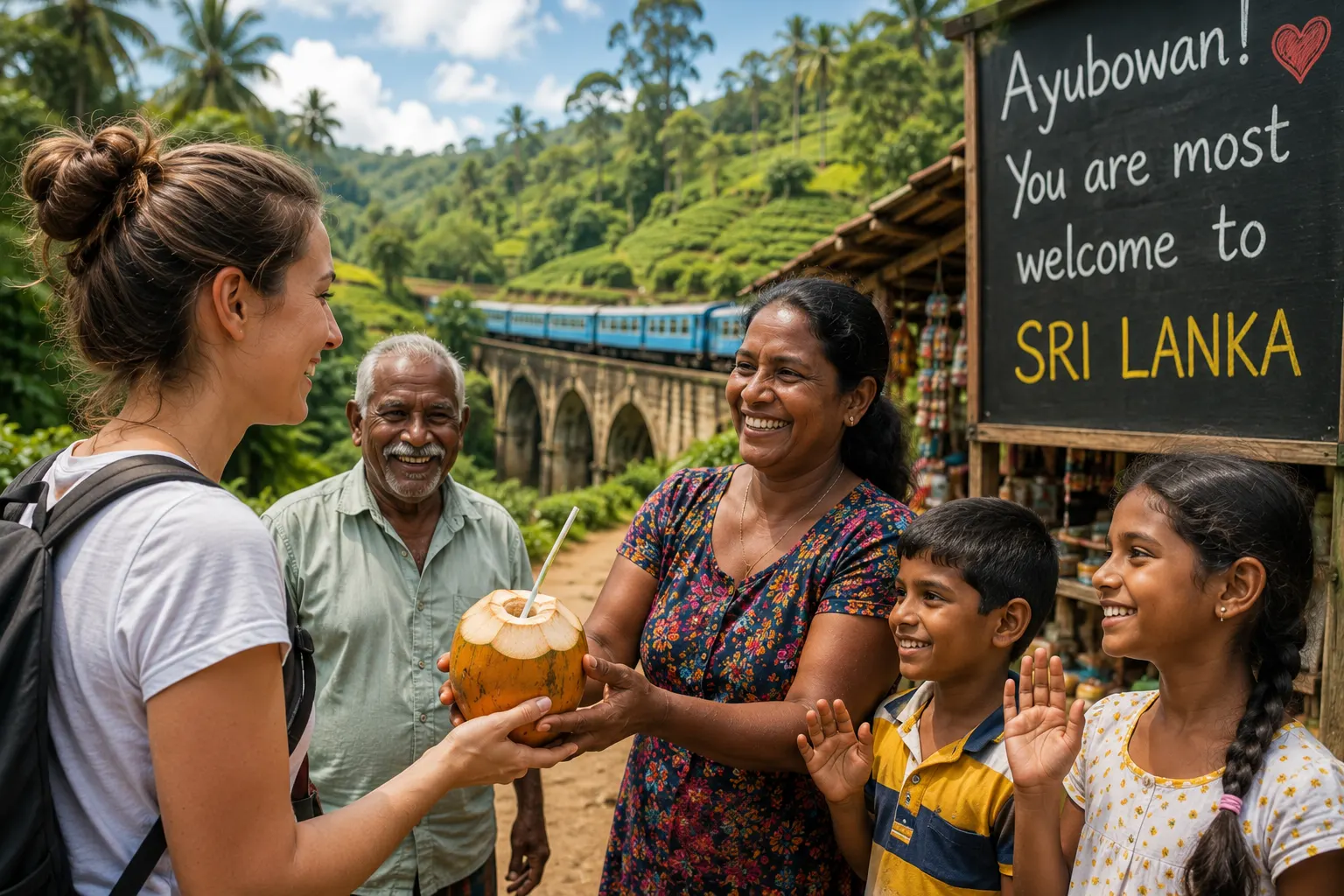
But ask travelers after they return home what they remember most, and the answer is often not a landmark at all. It is a conversation with a tuk-tuk driver, a cup of tea offered by a stranger, or a family who waved them into their home for a meal.

Sri Lanka is a small island shaped by centuries of trade, migration, and coexistence between Sinhalese, Tamil, Muslim, Burgher, and indigenous Vedda communities. That mix of backgrounds shares one consistent thread: hospitality toward guests is treated as a value, not a service.

This guide looks honestly at what that friendliness looks like in practice, where it comes from, how to greet and interact respectfully, what solo and family travelers can expect, and how to tell the difference between genuine warmth and a sales pitch dressed up as friendliness.

The goal is not to romanticize an entire nation of 22 million people, who are as individually varied as anyone else. It is to explain a cultural pattern that enough travelers report consistently that it is worth understanding before you arrive.

L'essentiel

  • Sri Lankans are consistently rated among the most welcoming hosts in Asia by travelers and travel media
  • Hospitality is rooted in Buddhist, Hindu, Islamic, and Christian values shared across the island's communities
  • Simple gestures like offering tea, giving directions, or inviting a stranger to a meal are everyday occurrences, not tourist performances
  • Greetings, dress, and dining customs matter and are easy to learn
  • Solo and female travelers frequently report feeling safe and respected
  • A small minority in busy tourist areas use friendliness as a sales approach, so balanced awareness is still useful
  • Supporting local guesthouses, drivers, and family businesses is the best way to give back to the hospitality you receive

Why Sri Lankans Are Known for Their Friendliness

Travel writers and repeat visitors frequently describe Sri Lanka's welcome as one of the most genuine they have encountered anywhere in the world.

Part of this comes from scale. Sri Lanka is a compact island where tourism, though growing quickly, has not yet reached the saturation levels of some larger destinations, so interactions with visitors often still feel personal rather than routine.

Part of it comes from culture. Across Sinhalese Buddhist, Tamil Hindu, Muslim, and Christian communities, guests are traditionally treated as a source of merit and blessing rather than an inconvenience.

Travelers frequently mention small, unprompted moments: a shopkeeper walking them to the correct bus stop, a family inviting them to share a meal despite having little to spare, or a stranger returning a forgotten phone or wallet without expecting a reward.

None of this means every interaction will be flawless. Sri Lanka has its share of ordinary daily friction like any country. But the baseline level of warmth toward outsiders is something enough visitors report that it has become part of the island's global reputation.

Consistently rated among the friendliest destinationsPersonal, unscripted interactionsHospitality shared across religions and ethnicitiesSmall daily gestures of kindnessA reputation built over decades of traveler word-of-mouth

The Cultural and Religious Roots of Sri Lankan Hospitality

Sri Lanka's hospitality is not a marketing invention. It is tied to values that predate modern tourism by centuries.

In the Buddhist majority, generosity, or dana, is considered one of the most important ways to build merit, and offering food, shelter, or assistance to a guest, even an unknown one, is treated as a meaningful act.

Hindu Tamil communities in the north and east carry a closely related concept, atithi devo bhava, the idea that a guest should be treated with the same respect given to a divine visitor.

Muslim communities across the island observe strong traditions of hospitality rooted in Islamic teaching, particularly visible during religious months when neighbors and strangers alike are welcomed to share meals.

Christian and Burgher communities, concentrated in areas like the west coast and parts of Colombo, add their own layer of warmth shaped by colonial-era mixing of European and local customs.

The result is not a single uniform culture but several overlapping traditions that all place a high value on welcoming outsiders, which helps explain why the warmth feels consistent no matter which part of the island a traveler visits.

Buddhist value of generosity (dana)Hindu tradition of honoring the guestIslamic hospitality customsChristian and Burgher influencesShared warmth across different faiths

The Classic Cup of Tea and Meal Invitation

One of the most commonly reported experiences among travelers is being offered a cup of tea, often within minutes of a conversation starting.

This is rarely a sales tactic in homes, villages, or informal settings. It is closer to a reflex, a way of making a guest feel comfortable before any conversation about directions, prices, or plans continues.

In rural areas, this hospitality can extend further. Travelers who wander off the main tourist routes sometimes find themselves invited into a family's home for a full meal, even when the household has modest means.

It is generally considered polite to accept a small offering like tea if it is genuinely offered, and equally polite to decline gently if you are unable to stay, rather than ignoring the invitation entirely.

During larger meal invitations, especially in villages, bringing a small gift such as fruit, sweets, or something for the children is a thoughtful gesture, though it is rarely expected.

Tea offered as a welcoming gestureCommon in homes, shops, and villagesRural meal invitations are genuine, not stagedPolitely accept or decline, do not ignoreA small gift is a thoughtful but optional gesture

How Locals Help Lost, Stranded, or Struggling Travelers

A recurring theme in traveler accounts is how quickly help appears when something goes wrong, whether that is a flat tire, a missed bus, or simply looking lost on a street corner.

It is common for a passerby to stop unprompted and ask if a visibly confused traveler needs directions, sometimes walking or driving them part of the way rather than just pointing.

Backpackers who hitchhike in more rural areas frequently note that drivers are curious and welcoming toward international visitors, often turning a short ride into a longer conversation about home countries and travel plans.

Lost items, from phones to wallets to bags left in tuk-tuks, are frequently returned intact, a pattern travelers often highlight as a sign of the trust that runs through daily life.

This does not mean travelers should abandon normal precautions. Keep valuables secured, use reputable transport apps or hotel-arranged drivers where possible, and treat this cultural pattern as a reassuring backdrop rather than a reason to be careless.

Unprompted help with directionsAssistance during breakdowns or delaysFriendly, curious hitchhiking culture in rural areasLost belongings often returnedStill worth taking normal safety precautions

Festivals That Show Community Generosity in Action

Certain times of year make Sri Lankan hospitality especially visible to visitors.

During Vesak, the Buddhist festival marking the birth, enlightenment, and passing of the Buddha, communities across the island set up free food and drink stalls known as dansal, open to absolutely anyone who passes by, including tourists.

Declining a dansal offering outright can seem impolite, since the act of giving is considered as spiritually significant as the act of receiving, so even accepting a small snack or drink is appreciated.

Ramadan and Eid bring similar generosity in Muslim communities, with neighbors and visitors often welcomed to share in iftar meals or festive treats.

The Kandy Esala Perahera and regional Hindu festivals such as those at Kataragama also showcase community spirit, with locals frequently explaining rituals, offering guidance, or simply striking up conversation with curious visitors watching from the roadside.

Timing a visit around one of these events, where practical, offers a deeper look at how hospitality functions as a shared community value rather than a tourism product.

Free food stalls during Vesak (dansal)Shared meals during Ramadan and EidCommunity spirit at Esala Perahera and Hindu festivalsGood etiquette to accept small offerings graciouslyA meaningful way to see hospitality as culture, not commerce

Homestays and Guesthouses: Where Hospitality Runs Deepest

Family-run guesthouses and homestays are often where travelers experience Sri Lankan hospitality most intensely, since the boundary between host and guest can blur quickly.

It is common for hosts to go beyond the basics of a booking, offering home-cooked breakfasts, personal recommendations, help arranging onward transport, or an invitation to sit and talk in the evening.

In smaller towns and villages, guests sometimes find themselves included in everyday family activities, from cooking to visiting a nearby temple, simply because the host wants to share their world rather than just rent a room.

This level of warmth tends to be strongest away from the largest resort areas, where staff-guest interactions are naturally more structured due to scale.

Choosing a family-run guesthouse over a large chain hotel, even for part of a trip, is one of the most reliable ways to experience this side of Sri Lankan culture directly.

Personal touches beyond standard hospitalityHome-cooked meals and local adviceInclusion in daily family life in smaller townsMost pronounced at family-run staysA meaningful contrast to large resort hospitality

Language, Greetings, and Everyday Communication

Sinhala and Tamil are the island's main languages, and English is widely spoken in tourist areas, hotels, and by many younger Sri Lankans, though fluency varies by region and generation.

A simple greeting goes a long way. Ayubowan, used in Sinhala, roughly wishes someone a long life and is often paired with a slight bow and palms pressed together. Vanakkam is the equivalent respectful greeting in Tamil.

Learning a handful of polite phrases such as istuti (thank you in Sinhala) or nandri (thank you in Tamil) is usually met with visible delight, even if the pronunciation is imperfect.

Because many Sri Lankans understand at least some English, it is worth remembering that comments made in English, even casual or complaining ones, are often understood, so ordinary courtesy applies just as it would at home.

Speaking slowly and clearly, rather than loudly, tends to bridge language gaps more effectively than raising your voice, which can come across as frustration or disrespect.

Sinhala and Tamil are the main local languagesEnglish is common in tourist areasAyubowan and Vanakkam as respectful greetingsLearning a few local words is warmly receivedAssume English comments may be understood

Etiquette: How to Receive Sri Lankan Hospitality Respectfully

Warm hospitality is easiest to enjoy when paired with a basic understanding of local etiquette, since Sri Lankan culture places real value on respect and modesty.

Use your right hand when giving or receiving items, including money, food, and business cards, since the left hand is traditionally considered less appropriate for this in many South Asian cultures.

Remove your shoes before entering a home, temple, or mosque, and dress modestly at religious sites by covering shoulders and knees, regardless of the weather.

Avoid touching anyone's head, including children's, as the head is considered the most sacred part of the body in Buddhist and Hindu belief.

Public displays of affection are generally frowned upon, and at Buddhist sites, never pose for photos with your back to a statue of the Buddha, since this is considered highly disrespectful.

When eating with your hands, which is common and welcomed, use only your right hand, and try a little of whatever is offered, since sharing food is often how connection is built.

None of this requires perfection. Sri Lankans are generally understanding toward visitors who make an honest effort, and small mistakes are usually met with a smile rather than offense.

Use the right hand for giving and receivingRemove shoes and dress modestly at religious sitesNever touch someone's headAvoid photos with your back to Buddha statuesEffort matters more than perfection

What Solo and Women Travelers Can Expect

Solo and female travelers frequently describe Sri Lanka as one of the more comfortable destinations in South Asia for independent travel, citing helpful hosts, active guesthouse communities, and generally respectful public interactions.

This does not mean every interaction is neutral. Like anywhere, women may occasionally receive unwanted attention, particularly in crowded areas, on public transport, or in less touristed towns, and should apply the same situational awareness they would use while traveling solo anywhere.

Dressing modestly, especially away from beach towns, tends to reduce unwanted attention and is also a sign of cultural respect.

Sticking to reputable transport, arranging airport transfers in advance, and choosing well-reviewed guesthouses with a track record of hosting solo travelers all add an extra layer of comfort.

Many solo travelers find that the same warmth extended to all visitors, being invited to a family meal, receiving directions, or being looked out for by a guesthouse host, becomes an added layer of informal support during a trip taken alone.

Generally comfortable for solo and female travelersNormal situational awareness still appliesModest dress reduces unwanted attentionReputable transport and vetted stays add safetyLocal hosts often act as informal support

Telling Genuine Friendliness Apart From a Sales Approach

It is worth being honest that in a handful of the busiest tourist areas, some individuals use the same warm, conversational style to lead into selling tours, gems, tuk-tuk rides, or souvenirs.

This is a small subset of interactions, usually concentrated around major landmarks, transport hubs, and gem-trading towns, rather than a reflection of hospitality across the island as a whole.

A useful pattern to notice is persistence after a polite decline. Genuine hospitality rarely continues pushing once you have said no thank you, while a sales approach often will.

It is entirely acceptable to enjoy a friendly conversation without feeling obligated to book anything, and a firm but polite no thank you is well understood and respected in Sri Lankan culture.

The presence of a small commercial layer in tourist zones should not overshadow the much larger and more common pattern of hospitality with no strings attached, found in homes, villages, transport, and everyday encounters across the country.

Most tourist-area sales pitches are easy to spotConcentrated near major landmarks and gem townsPersistence after a decline is the key signalA polite no is respected in local cultureDoes not reflect the wider pattern of hospitality

How Hospitality Differs Across Sri Lanka's Regions

Colombo, as the commercial capital, moves at a faster pace, and interactions there can feel more transactional simply because daily life is busier, though genuine kindness still surfaces in smaller cafes, markets, and neighborhoods.

The south coast surf and beach towns such as Weligama, Mirissa, and Hiriketiya have a social, easygoing hospitality shaped by years of backpacker and digital nomad tourism, making them especially easy places to strike up friendships with both locals and fellow travelers.

Hill-country towns like Ella, Haputale, and Nuwara Eliya combine tourist-friendly warmth with the quieter, close-knit hospitality typical of highland tea communities, where a walk through a village often leads to an unplanned conversation.

The Cultural Triangle, including areas around Sigiriya, Dambulla, Polonnaruwa, and Anuradhapura, blends hospitality with pride in sharing history, and guides and locals here often enjoy explaining heritage sites in depth.

The north and east, including Jaffna, Trincomalee, and Batticaloa, offer a distinct Tamil and Muslim hospitality tradition, less shaped by mass tourism, and travelers who venture here often describe some of the most memorable and unhurried welcomes on the island.

Faster-paced but still warm hospitality in ColomboSocial, easygoing culture on the south coastClose-knit village warmth in the hill countryHeritage pride in the Cultural TriangleDistinct Tamil and Muslim hospitality in the north and east

How to Support the Communities Behind the Hospitality

The warmth extended to travelers is not owed, and the best response is to engage with it respectfully rather than treat it as an unlimited resource.

Choosing family-run guesthouses, local drivers, small restaurants, and community-based tour operators over large international chains puts more of your travel spending directly into the households and villages providing that hospitality.

Tipping is not always mandatory in Sri Lanka, but it is increasingly appreciated in tourism-related services such as guiding, driving, and hotel staff, particularly given the economic pressures many families have faced in recent years.

Avoid treating villages, farms, or family homes as photo opportunities without permission, and always ask before photographing people, especially children, workers, or religious ceremonies.

Simple gestures, learning a few words of Sinhala or Tamil, asking genuine questions about someone's life, and expressing real gratitude, tend to be remembered and appreciated far more than a large tip handed over quickly.

Choose family-run and community-based businessesTip guides, drivers, and hotel staff where appropriateAsk permission before photographing peopleLearn a few local words as a sign of respectGenuine gratitude matters as much as money

Conseils de voyage

  • Greet people with Ayubowan or Vanakkam and a small nod or bow
  • Use your right hand to give and receive items and food
  • Dress modestly at temples, mosques, and in conservative rural areas
  • Accept a small offered tea or snack graciously, or decline politely rather than ignoring it
  • Learn a handful of local words, even if pronunciation is imperfect
  • Assume English comments may be understood by those nearby
  • Say no thank you clearly and calmly to persistent sales approaches
  • Ask permission before photographing people, homes, or ceremonies
  • Support family-run guesthouses, drivers, and small businesses where possible
  • Carry small cash for tips to guides, drivers, and hotel staff
  • Avoid public displays of affection in public spaces
  • Keep normal travel precautions in place even when hospitality feels effortless

Questions fréquentes

Are Sri Lankan people friendly to tourists?

Yes. Sri Lanka is consistently described by travelers and travel media as one of the friendliest destinations in Asia, with hospitality rooted in Buddhist, Hindu, Islamic, and Christian traditions across the island's communities.

Is it normal for strangers to invite you for tea or a meal in Sri Lanka?

Yes. Offering tea or a meal to a guest, including a foreign visitor, is a common and genuine gesture rather than a tourist performance, especially in homes, villages, and small shops.

Is Sri Lanka safe for solo and female travelers?

Many solo and female travelers describe Sri Lanka as comfortable and welcoming, though normal travel precautions such as using reputable transport, dressing modestly, and staying aware in crowded areas are still recommended.

Do Sri Lankans expect tips from tourists?

Tipping is not always mandatory but is increasingly appreciated for guides, drivers, and hotel staff, particularly given economic pressures many families have faced in recent years.

What language should I use to communicate with locals?

Sinhala and Tamil are the main local languages, but English is widely understood in tourist areas, hotels, and among younger Sri Lankans. Learning a few basic Sinhala or Tamil phrases is warmly received.

What does Ayubowan mean?

Ayubowan is a traditional Sinhala greeting that roughly means may you live long, often said with palms pressed together and a slight bow as a sign of respect.

How do I tell genuine friendliness apart from a sales pitch?

Genuine hospitality rarely continues after a polite decline, while a sales approach often persists. This pattern is mostly concentrated near major landmarks and tourist hubs rather than being typical of everyday interactions.

What etiquette should I follow to respect Sri Lankan culture?

Use your right hand for giving and receiving items, remove shoes before entering homes and religious sites, dress modestly at temples and mosques, avoid touching anyone's head, and never pose with your back to a Buddha statue.

Is it rude to decline a homestay or meal invitation?

It is not rude to decline, but it is best to do so politely and with thanks rather than ignoring the invitation, since the offer itself is considered a meaningful gesture.

Notes des lecteurs

Rejoignez la conversation

Partagez votre question, astuce ou expérience de voyage pour ce guide.

Commentaires

0 commentaires

Chargement...

Prêt à transformer l'inspiration en voyage au Sri Lanka ?

Utilisez LankaTrip pour planifier votre voyage, contacter des guides locaux et concrétiser cet itinéraire.

Besoin d'aide pour planifier ?

Planifiez votre aventure au Sri Lanka

Planifier mon voyage