
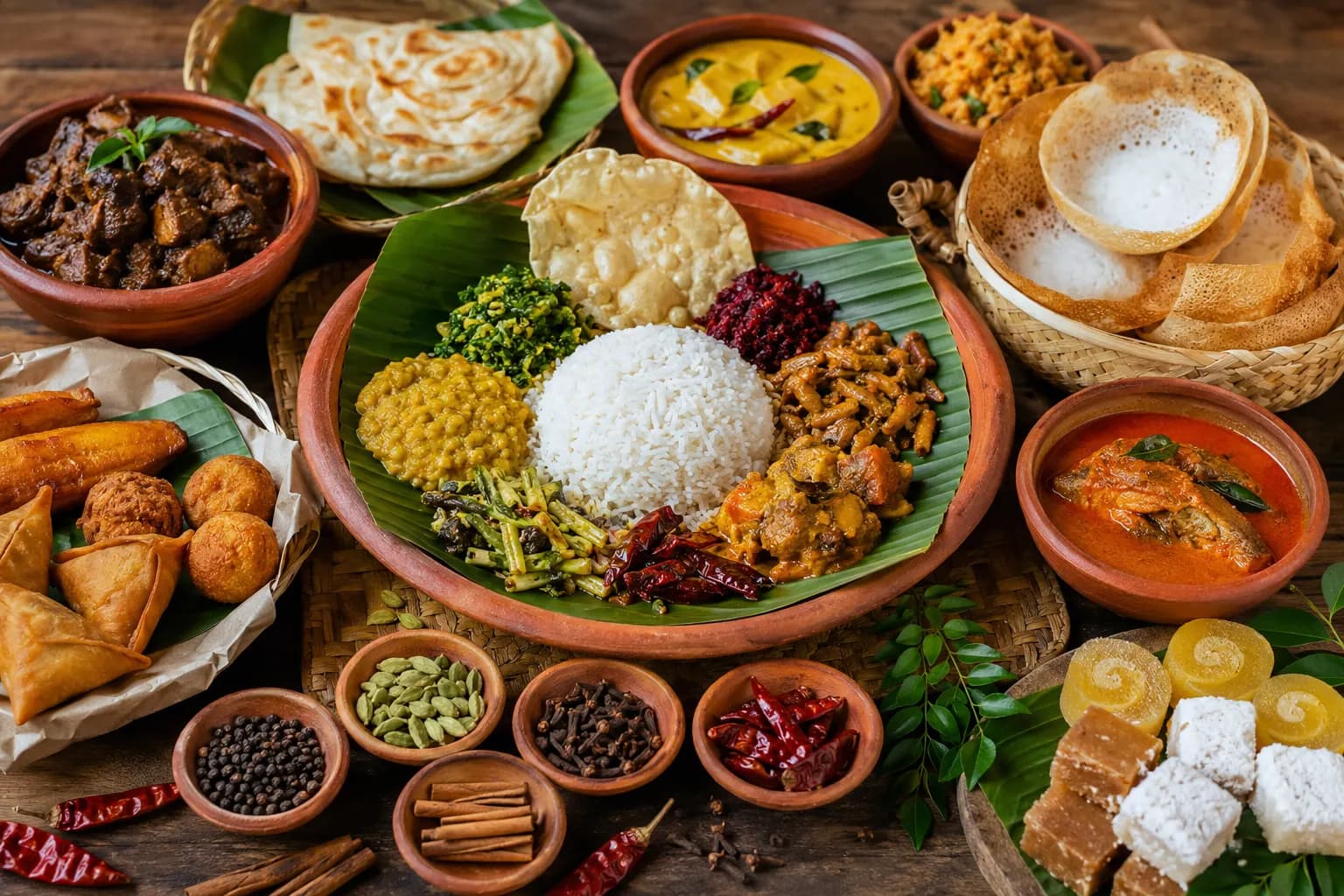
Most travelers arrive in Sri Lanka already knowing they should try rice and curry, kottu, and hoppers. These dishes are an essential starting point, but they are only the surface of a much deeper food culture.
Sri Lanka's cuisine has been shaped over centuries by Sinhalese Buddhist traditions, South Indian Tamil communities, Arab and Malay traders who brought Islam and new spices, and European colonial powers including the Portuguese, Dutch, and British.
Each of these influences settled into different regions and communities, producing distinct culinary identities. Jaffna in the north cooks differently from Kandy in the hills, which cooks differently again from the Muslim quarters of Colombo or the Burgher kitchens of the coast.
This guide moves past the introductory dishes to explore that regional depth: the sweets served at festivals, the spices that once drew European ships to the island, the tea culture built into daily life, and the etiquette that shapes how meals are shared.
Whether you have a week in Sri Lanka or a longer trip, using food as a lens can reveal a side of the island that many visitors never get to taste.
L'essentiel
- Sri Lankan food culture extends far beyond the common rice and curry introduction
- Jaffna's Tamil cuisine, Muslim and Malay cooking, and Burgher heritage dishes each bring distinct flavors
- Hill-country food culture is shaped by cool climate crops and tea-estate life
- Traditional sweets such as watalappan, kokis, and kalu dodol carry deep cultural meaning
- Sri Lanka is one of the world's great spice-producing nations, especially for cinnamon
- Ceylon tea culture and traditional drinks add another layer to the island's food story
- Understanding dining etiquette and food safety helps travelers explore more confidently