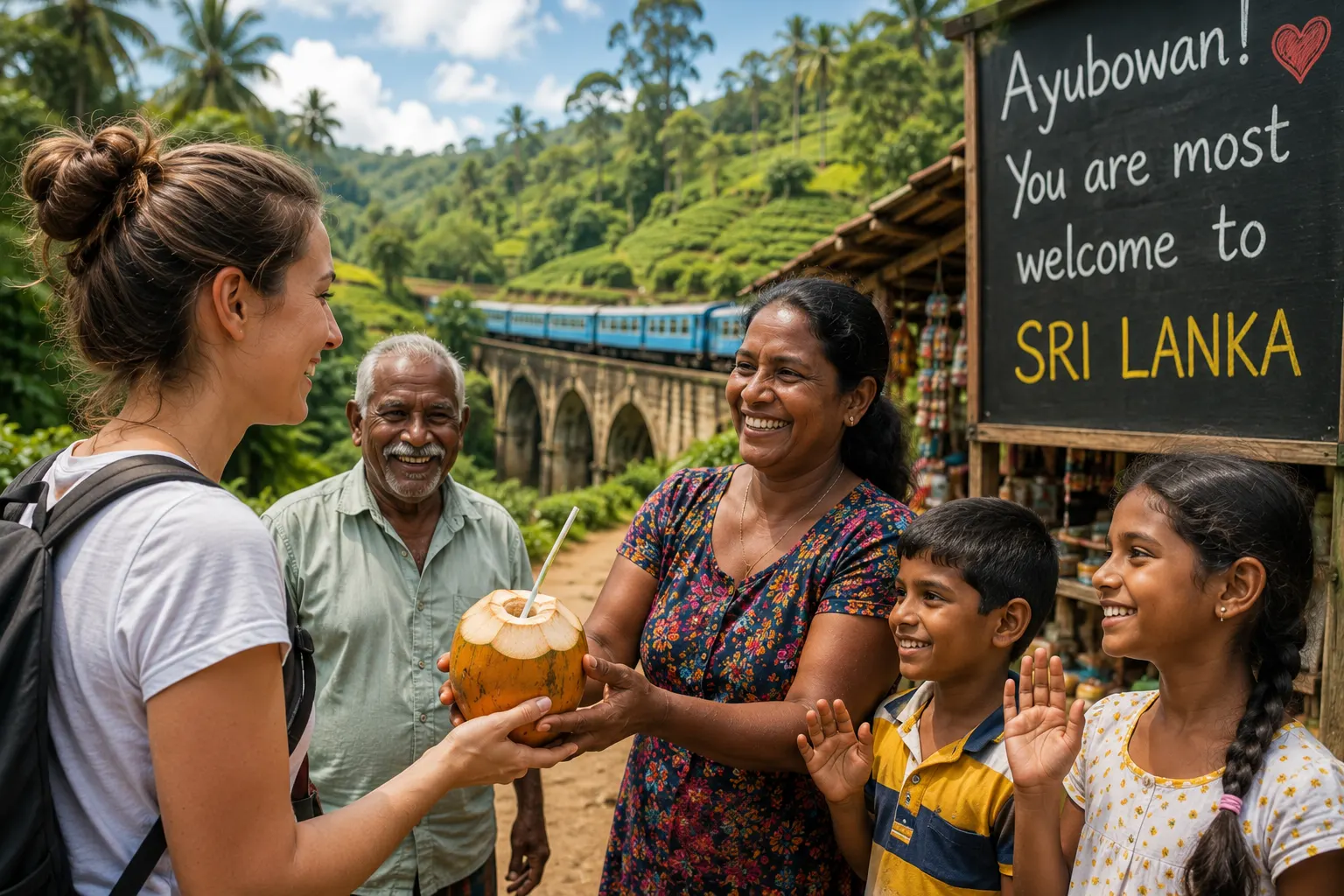
Most first-time visitors research Sri Lanka for its beaches, its leopards, its ancient cities, or its tea-covered hills.
But ask travelers after they return home what they remember most, and the answer is often not a landmark at all. It is a conversation with a tuk-tuk driver, a cup of tea offered by a stranger, or a family who waved them into their home for a meal.
Sri Lanka is a small island shaped by centuries of trade, migration, and coexistence between Sinhalese, Tamil, Muslim, Burgher, and indigenous Vedda communities. That mix of backgrounds shares one consistent thread: hospitality toward guests is treated as a value, not a service.
This guide looks honestly at what that friendliness looks like in practice, where it comes from, how to greet and interact respectfully, what solo and family travelers can expect, and how to tell the difference between genuine warmth and a sales pitch dressed up as friendliness.
The goal is not to romanticize an entire nation of 22 million people, who are as individually varied as anyone else. It is to explain a cultural pattern that enough travelers report consistently that it is worth understanding before you arrive.
त्वरित सारांश
- Sri Lankans are consistently rated among the most welcoming hosts in Asia by travelers and travel media
- Hospitality is rooted in Buddhist, Hindu, Islamic, and Christian values shared across the island's communities
- Simple gestures like offering tea, giving directions, or inviting a stranger to a meal are everyday occurrences, not tourist performances
- Greetings, dress, and dining customs matter and are easy to learn
- Solo and female travelers frequently report feeling safe and respected
- A small minority in busy tourist areas use friendliness as a sales approach, so balanced awareness is still useful
- Supporting local guesthouses, drivers, and family businesses is the best way to give back to the hospitality you receive