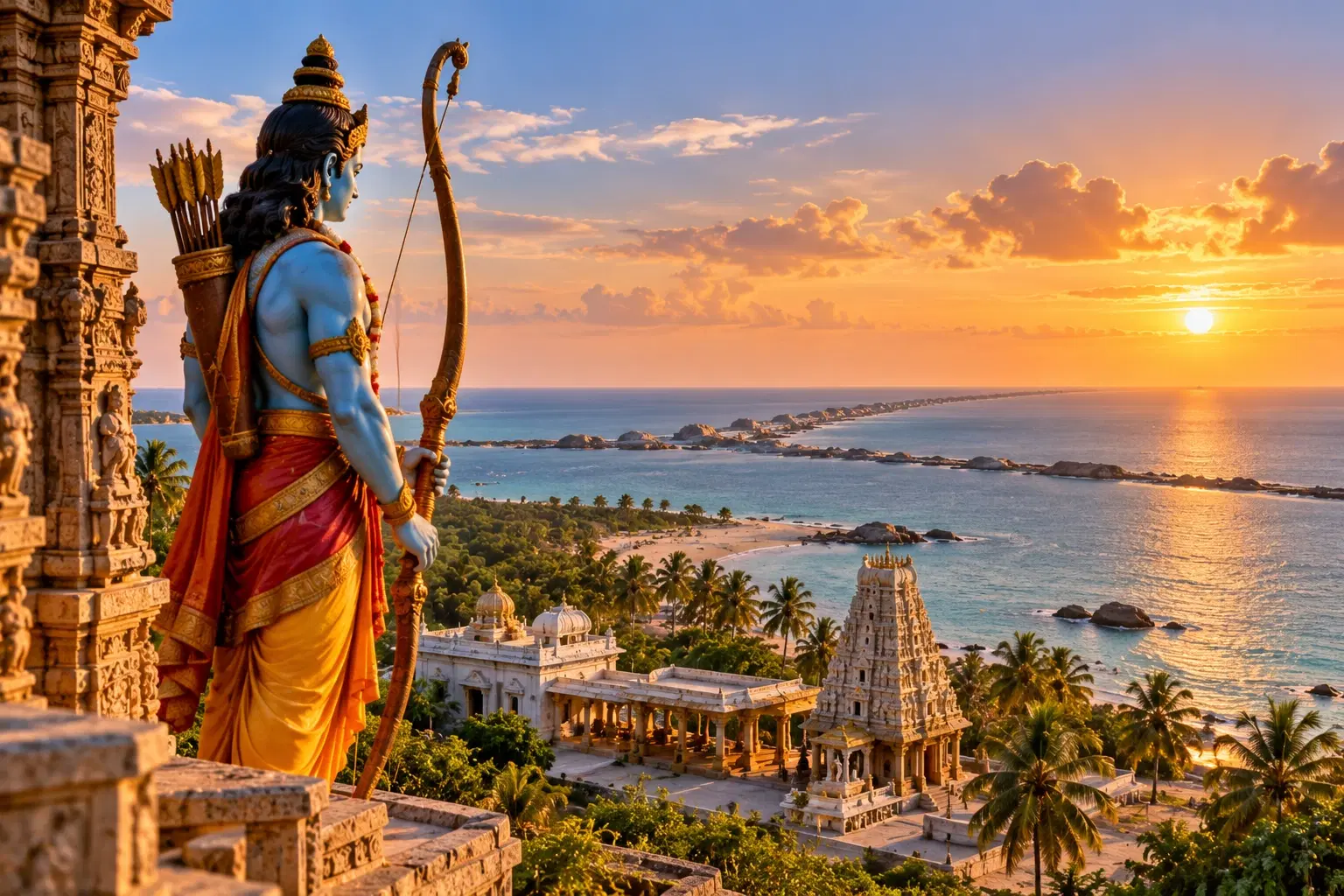
India is now Sri Lanka's largest source of visitors — more than 531,000 Indian travellers came in 2025 — and for many of them, the island is not simply a holiday destination. It is Lanka of the Ramayana: the kingdom of Ravana, the place where Sita was held, where Hanuman leapt and burned, and where Rama fought and won.
Sri Lanka Tourism promotes a Ramayana Trail of dozens of sites across the island. Some are major Hindu temples with centuries of worship behind them. Some are Buddhist temples with a Ramayana story attached. Some are waterfalls, caves, gardens and hills where local tradition places an episode from the epic. Together they make one of the most distinctive pilgrimage and cultural routes in South Asia.
This guide is written for Indian travellers, and for anyone else following the Ramayana in Sri Lanka. It covers the key sites region by region, with honest notes on what each place actually is today. It covers the island's great Shiva temples and Hindu festivals, which many Indian visitors want to combine with the trail. And it covers the practical questions that come up most often from India: the free visa and ETA rules, the ferry, UPI, vegetarian food, and how to get around while parts of the railway are still being rebuilt.
One perspective to carry with you. In India, Ravana is the antagonist of the Ramayana. In Sri Lanka, many people — particularly many Sinhala Buddhists — regard him as a great and learned indigenous king, a skilled ruler, physician and devotee of Shiva. Sri Lanka's first satellite, launched in 2019, was named Raavana-1. Neither view needs to be argued on the trail. Being aware of both will make your conversations with Sri Lankans richer and your visit more respectful.
A note on history. The associations in this guide come from faith, tradition and oral history. Where a site has a separate, documented archaeological history — Sigiriya is the clearest example — we say so. That is not a comment on anyone's beliefs; it simply helps you understand what you are looking at.
Кратко
- Since 25 May 2026, Indian nationals get a free 30-day, double-entry tourist ETA — but Sri Lanka's Department of Immigration says the ETA must still be obtained before arrival
- Earlier 2026 social media claims that Indians need no ETA at all are out of date; apply at the official ETA site before you fly
- The core Ramayana sites cluster around Nuwara Eliya and Ella; allow at least two days there
- Hakgala Botanic Garden, associated with Ashok Vatika, charges all foreign visitors LKR 3,540, with no separate SAARC rate listed
- The Temple of the Tooth in Kandy does offer a SAARC rate: LKR 2,500 against LKR 3,000 for other foreign visitors
- The Nagapattinam to Kankesanthurai passenger ferry operates, with Indian government support extended in September 2026, but has paused in past northeast monsoon seasons
- UPI works in Sri Lanka by scanning LankaQR codes, but acceptance is still limited; carry cash
- Colombo to Kandy and Kandy to Nanu Oya trains are not running after Cyclone Ditwah; plan hill-country travel by road
- Pure vegetarian food is easy to find, but ask about Maldive fish in curries and sambols
- Deepavali falls on 8 November 2026; Thai Pongal on 15 January 2027 and Maha Shivaratri on 6 March 2027