LankaTrip 见解

14 分钟阅读

Deepavali in Sri Lanka 2026 and 2027: The Gazetted Dates, Where to Celebrate, What Closes, and How It Differs From Diwali in India

Deepavali in Sri Lanka falls on Sunday 8 November 2026 and Thursday 28 October 2027, according to the government's holiday gazettes. It is a public and bank holiday, but it is a quieter, more family- and temple-centred festival than Diwali in much of India. Here is where to experience it, what to expect, and what Indian travellers should know before they book.

返回博客
Deepavali in Sri Lanka 2026 and 2027: The Gazetted Dates, Where to Celebrate, What Closes, and How It Differs From Diwali in India

For many Indian travellers, Diwali is one of the best-loved holidays of the year, and a growing number are choosing to spend it in Sri Lanka. For visitors from elsewhere, Deepavali is a chance to see a side of the island that most itineraries miss.

Sri Lanka's Hindu Tamil communities have celebrated Deepavali for centuries, especially in Jaffna and the north, along the east coast, in Colombo and among the Tamil communities of the hill-country tea estates.

The government's holiday gazettes set the dates: Sunday 8 November 2026 and Thursday 28 October 2027. Both are public and bank holidays.

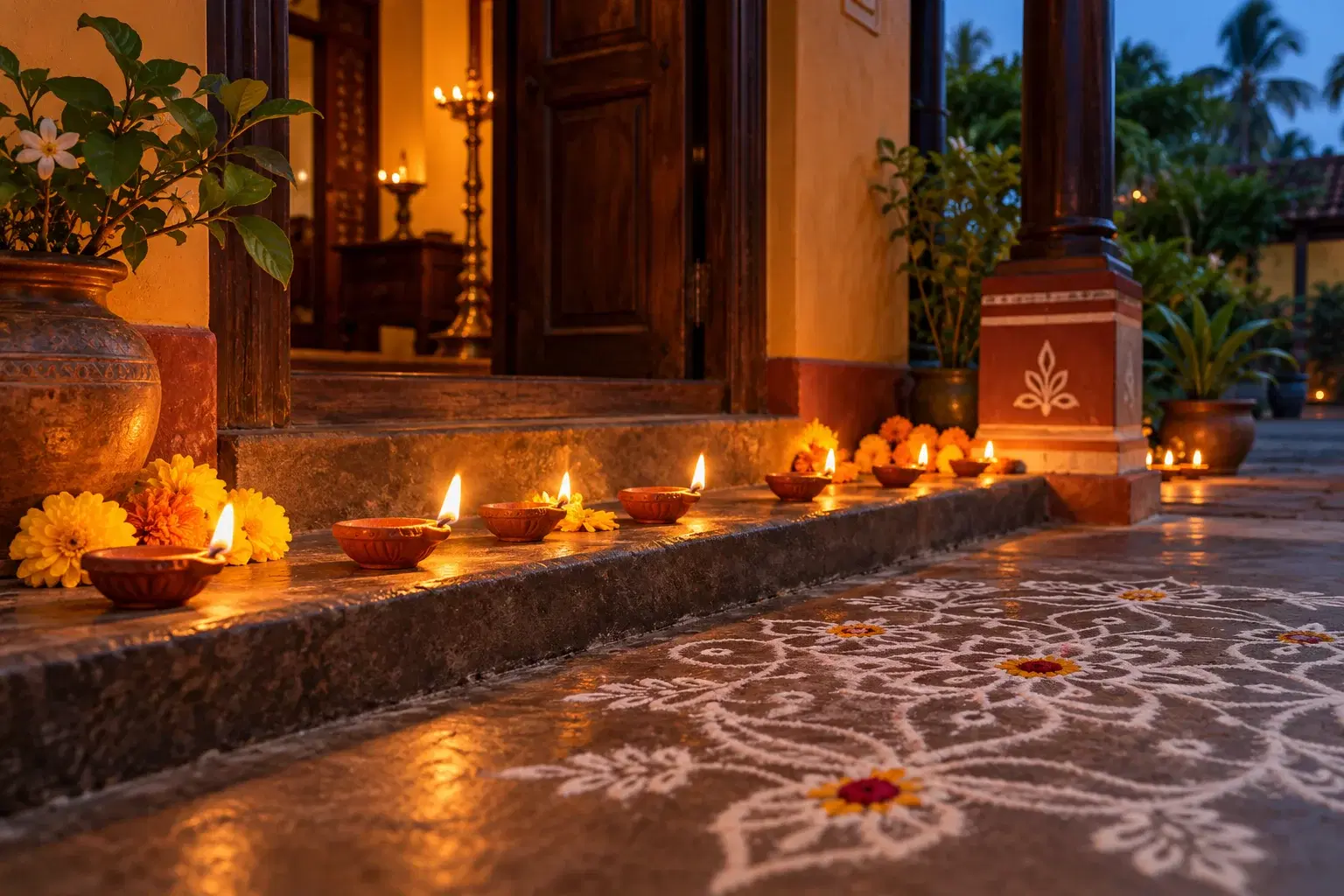
What surprises many first-time visitors is the feel of the festival. In Sri Lanka, Deepavali is centred on the kovil, the family home and the kitchen. You will see oil lamps, kolam patterns, new clothes, temple crowds and plenty of sweets, but generally not the citywide light displays or long public celebrations seen in some Indian cities.

This guide explains the dates, where to go, how to visit a kovil respectfully, what closes, and what to plan around, including the monsoon and the India–Jaffna ferry.

快速摘要

  • Deepavali 2026 in Sri Lanka is Sunday 8 November, according to Gazette Extraordinary No. 2438/22
  • Deepavali 2027 is listed as Thursday 28 October in the 2027 holiday gazette
  • It is a public and bank holiday; government offices, schools and banks close
  • Some families may begin observances on Saturday 7 November 2026, the date Hindu calendars give for Naraka Chaturdashi
  • Jaffna is the heart of the festival, but Colombo, Trincomalee, Batticaloa and the hill country also celebrate
  • Expect temples, lamps, sweets and family gatherings rather than India-style city light shows
  • Early November falls in the north-east monsoon, so plan northern and eastern travel and sea crossings carefully
  • Indian travellers still need an ETA before arrival, though it is currently free

Deepavali Dates in Sri Lanka: 2026 and 2027

Sri Lanka's public holidays are published in advance by Gazette Extraordinary under the Holidays Act.

For 2026, Gazette Extraordinary No. 2438/22, dated 27 May 2025, lists Deepavali on Sunday 8 November 2026 as both a public holiday and a bank holiday.

For 2027, published copies of the 2027 holiday gazette, reported as Gazette Extraordinary No. 2493/05, list Deepavali on Thursday 28 October 2027, again as a public and bank holiday. Sri Lankan media reported that the 2027 holidays had been gazetted in mid-2026.

Because 8 November 2026 falls on a Sunday, there is no extra weekday off in Sri Lanka in 2026. In 2027, the Thursday holiday sits close to a weekend, so expect more domestic travel if people take Friday off.

Hindu calendar calculations can differ from the gazetted public holiday. Some Hindu calendars place Naraka Chaturdashi, the day many Tamil families observe as Deepavali, on Saturday 7 November 2026, with North Indian Lakshmi Puja on 8 November. In practice, some families and temples may begin observances on 7 November 2026. Ask locally if you want to attend a specific puja.

Sunday 8 November 2026 (gazetted)Thursday 28 October 2027 (gazetted)Public and bank holidayNo extra weekday off in 2026Some observances may start 7 November 2026

How Deepavali in Sri Lanka Differs From Diwali in India

If you are travelling from India, expect familiar rituals but a smaller, quieter public scale.

Most Sri Lankan Hindus are Tamil, so the festival follows South Indian and Sri Lankan Tamil traditions. Many families begin the day with a pre-dawn oil bath, wear new clothes, visit the family kovil, and spend the rest of the day visiting relatives and sharing food.

Homes are cleaned in the days before, doorways are decorated with kolam patterns made from rice flour and coloured powder, and oil lamps are lit at dusk.

Firecrackers are part of celebrations in some areas, especially in Jaffna, but you should not expect large public fireworks shows or citywide illuminations.

Sri Lanka is a majority-Buddhist country, so outside Tamil-majority areas the festival can be easy to miss. In much of the south and west, life carries on much as it does on any other public holiday.

That is part of the appeal. Deepavali in Sri Lanka is less a spectacle and more a chance to see how a community celebrates at home and at the temple.

Tamil and South Indian traditionsOil bath, new clothes and kovil visitKolam and oil lampsSome firecrackers, no big public showsQuiet outside Tamil-majority areas

Jaffna: The Heart of Deepavali in Sri Lanka

Jaffna, in the Northern Province, is where the festival feels most alive.

Many families who live elsewhere in Sri Lanka return to Jaffna for Deepavali, turning it into a reunion as well as a religious festival. Shops and markets are busy in the days before, as people buy clothes, sweets and gifts.

Nallur Kandaswamy Kovil, dedicated to Lord Murugan, is Jaffna's best-known temple and draws large numbers of worshippers on festival days. Locals often say the Nallur Festival in the Esala season is the city's biggest event, but Deepavali is still an important day there.

Other important temples in the north include Maviddapuram Kandaswamy Kovil.

Jaffna is a long journey from Colombo by road or rail, so plan to arrive at least a day early. Accommodation can fill with returning families and domestic visitors, so book in advance.

Early November falls in the north-east monsoon season, so expect heavy showers and allow extra time for travel.

Island's most festive DeepavaliNallur Kandaswamy KovilBusy markets before the festivalBook accommodation earlyMonsoon showers likely

Celebrating Deepavali in Colombo

Colombo has a large, long-established Tamil Hindu community, and the city is the easiest place for most visitors to experience Deepavali.

In the days before the festival, shopping areas such as Pettah and the Tamil neighbourhoods of Kotahena and Wellawatte become busy with people buying clothes, sweets and puja items.

Well-known Colombo kovils include Sri Ponnambalawaneswaram Kovil in Kotahena, Sri Kailawasanathan Swami Devasthanam, often called the Captain's Garden Kovil, and the Kadireshan Kovil in Bambalapitiya.

Visit a kovil around dawn or dusk on Deepavali day to see it at its busiest. Arrive early, follow the crowd and step aside for worshippers.

If you are staying elsewhere on the west coast, Munneswaram Temple near Chilaw, north of Negombo, is another important Hindu temple that can be visited as a day trip.

Easiest place for most visitorsFestive shopping in Pettah, Kotahena and WellawattePonnambalawaneswaram and Captain's Garden KovilKovils busiest at dawn and duskMunneswaram near Chilaw as a day trip

Trincomalee and Batticaloa on the East Coast

The Eastern Province, including Trincomalee and Batticaloa, has large Tamil Hindu communities, and Deepavali is widely observed there.

Trincomalee is home to Koneswaram Temple, set on a headland above the sea, which many visitors combine with the town's beaches and fort area.

Be aware that early November is the start of the north-east monsoon on the east coast. The beach season there usually runs from around April to September, so November is wetter, seas can be rough and some beach businesses may be closed.

If your main reason for going east is the beach, Deepavali is not the ideal time. If your reason is the festival and the temples, it can still be rewarding with flexible plans.

Strong Hindu communitiesKoneswaram Temple in TrincomaleeNorth-east monsoon beginsNot the best beach seasonGood for temple-focused trips

Deepavali in the Hill Country Tea Districts

The Tamil communities of the hill country, often called the Malaiyaha Tamils, many of whom have worked on the tea estates for generations, also celebrate Deepavali.

Around Nuwara Eliya, Hatton and Badulla, you may see families in new clothes heading to small estate kovils, and festive shopping in town markets.

Sri Muthumariamman Thevasthanam in Matale, north of Kandy, is a well-known temple for visitors travelling through the region.

Seetha Amman Temple near Nuwara Eliya, linked to the Ramayana tradition, is a popular stop for Indian travellers and can be combined with a Deepavali visit to the hill country.

Estates and estate housing are private, working communities. Do not walk into homes or estate lines uninvited, and ask before photographing people.

Malaiyaha Tamil communities celebrateEstate kovils and town marketsMuthumariamman Temple in MataleSeetha Amman Temple near Nuwara EliyaRespect private estate communities

How to Visit a Kovil Respectfully During Deepavali

Most kovils welcome respectful visitors of any faith, but festival days are busy and religious, so a little preparation goes a long way.

Dress modestly, covering shoulders and knees. Remove your shoes before entering; many temples have an area to leave them.

At some kovils, including Nallur, men are expected to remove their shirts before entering the inner area. Watch what local men do or ask at the entrance.

Walk clockwise around shrines, do not touch deities or offerings, and do not stand between worshippers and the inner shrine.

Many temples restrict photography inside, especially near the main shrine. Ask before taking photos and never photograph people praying without permission.

If you are offered vibhuti (sacred ash), prasadam or a blessing, it is polite to accept with your right hand.

Cover shoulders and kneesRemove shoesMen may need to remove shirts at some kovilsAsk before photographingAccept offerings with the right hand

Deepavali Sweets and Foods to Try

Food is at the centre of Deepavali in Sri Lanka, and families prepare sweets and savouries to share with relatives and neighbours.

Common favourites include murukku, a crunchy spiral snack; athirasam, a sweet fried cake; payasam, a milk or rice pudding; and laddu and mysore pak.

In Jaffna, milk toffee and arisi thengai payasam, made with rice and coconut, are among the sweets exchanged as gifts.

Sweet shops in Tamil neighbourhoods of Colombo and in Jaffna are busy in the days before the festival. It is a good time to try and buy sweets fresh.

Many families keep festival meals vegetarian, so vegetarian food is easy to find around kovils and in Tamil restaurants during this period.

Murukku and athirasamPayasam and milk toffeeLaddu and mysore pakBusy sweet shops before the festivalEasy vegetarian food

What Is Open and Closed on Deepavali

Deepavali is a public and bank holiday. Government offices, schools and banks close.

Private businesses, shops and restaurants decide for themselves. Many in Tamil-majority areas close or reduce hours, while much of the south and west operate as normal.

Major tourist attractions usually stay open on public holidays, but some sites in Tamil-majority areas may have reduced staffing. Check ahead if a specific visit matters.

Deepavali is not a Poya day, so the Poya-day closures covered in our Poya guide are a separate matter. The next Poya after Deepavali 2026 is Il Poya on Tuesday 24 November 2026.

Transport can be busy in the days before and after the holiday as families travel home, especially on routes to Jaffna and the east. Book trains and long-distance transport early.

Indian travellers who may need consular help should note that Indian missions in Sri Lanka keep their own holiday calendars around Deepavali.

Government offices, schools and banks closePrivate businesses varyAttractions usually openNot a Poya dayBusy transport around the holiday

Planning a Diwali Trip to Sri Lanka From India

Indian passport holders are on Sri Lanka's free tourist visa list, but must still obtain an ETA before arrival through the official website, eta.gov.lk.

Sri Lanka's gazetted date can differ from the date your family or home state observes. In 2026, the Sri Lankan holiday is Sunday 8 November, while some calendars place Naraka Chaturdashi on 7 November.

Indian visitors can pay at many merchants using UPI through LankaQR, and can pay for PickMe rides with UPI.

The Nagapattinam–Kankesanthurai passenger ferry, linking Tamil Nadu with the Jaffna peninsula, has been suspended during the north-east monsoon in previous years. In 2024, operators halted sailings in November and said services would resume in January. Confirm the current schedule with the operator before planning around it.

If you plan to combine Deepavali with the Ramayana trail, Seetha Amman Temple in the hill country and Munneswaram near Chilaw are both popular with Indian pilgrims.

ETA required, currently freeSri Lankan date may differ from yoursUPI accepted at many merchantsFerry often paused in monsoonCombine with the Ramayana trail

Weather and Planning Tips for Deepavali Travel

Deepavali falls during the inter-monsoon and north-east monsoon transition, when heavy showers are possible in many parts of the island.

The north and east are often wetter at this time of year, while the hill country can be misty and cool.

Carry an umbrella or light rain jacket, and allow extra time for road and rail journeys.

Some hill-country rail sections were still affected by Cyclone Ditwah damage in October 2026. Check our hill-country train update before planning around rail travel.

If you are flexible, Colombo is the most reliable place to experience Deepavali without depending on long journeys in uncertain weather.

Showers likelyNorth and east often wetterHill country cool and mistyCheck rail statusColombo is the easiest option

Who Should Not Plan a Trip Around Deepavali

If you are expecting large public light shows, fireworks displays or festival parades, you may be disappointed. Deepavali in Sri Lanka is mostly private and religious.

If your main goal is an east-coast beach holiday, early November is the wrong time; the east coast season usually runs from around April to September.

If you have no interest in temples or local culture, the festival will not change much about your trip outside Tamil-majority areas.

If you want to experience a community festival respectfully, see temples at their busiest and try festival foods, Deepavali is a rewarding time to visit, especially in Jaffna and Colombo.

Not a public spectacleWrong time for east-coast beachesLittle impact outside Tamil areasRewarding for culture and foodBest in Jaffna and Colombo

旅行贴士

  • Use the gazetted dates: Sunday 8 November 2026 and Thursday 28 October 2027
  • Ask locally if you want to attend a specific puja, as some may begin on 7 November 2026
  • Dress modestly and remove shoes at kovils
  • Ask before photographing worshippers or temple interiors
  • Visit kovils at dawn or dusk for the busiest atmosphere
  • Book accommodation in Jaffna early
  • Allow extra travel time for monsoon showers
  • Check the India–Jaffna ferry schedule before relying on it
  • Indian travellers still need an ETA before arrival
  • Carry cash for small sweet shops and temple offerings
  • Expect banks and government offices to be closed
  • Do not expect large public fireworks or light shows

常见问题

When is Deepavali in Sri Lanka in 2026?

Sunday 8 November 2026, according to Gazette Extraordinary No. 2438/22. It is a public and bank holiday. Some Hindu calendars place Naraka Chaturdashi on 7 November, so some families may begin observances a day earlier.

When is Deepavali in Sri Lanka in 2027?

Thursday 28 October 2027, as listed in the 2027 public and bank holiday gazette.

Is Deepavali a public holiday in Sri Lanka?

Yes. It is gazetted as both a public holiday and a bank holiday. Government offices, schools and banks close, while private businesses decide their own hours.

Where is the best place to celebrate Deepavali in Sri Lanka?

Jaffna has the most festive atmosphere. Colombo is the easiest for most visitors, with large kovils in Kotahena, Bambalapitiya and other areas. Trincomalee, Batticaloa and the hill country also celebrate.

Is Deepavali in Sri Lanka like Diwali in India?

The rituals are similar, but the public scale is smaller. Expect kovil visits, lamps, kolam, sweets and family gatherings rather than large public light shows.

Can tourists visit kovils during Deepavali?

Yes, most kovils welcome respectful visitors. Dress modestly, remove your shoes, follow temple rules and ask before taking photographs.

Is alcohol banned on Deepavali in Sri Lanka?

Deepavali is not a Poya day, so it is not covered by the Poya-day alcohol closures. The next Poya after Deepavali 2026 is Il Poya on Tuesday 24 November.

Can I take the ferry from India to Jaffna for Deepavali?

Possibly not. The Nagapattinam–Kankesanthurai ferry has been suspended during the north-east monsoon in previous years. Confirm the current schedule with the operator before planning around it.

Do Indian travellers need a visa for Deepavali in Sri Lanka?

Indian nationals currently get a free tourist ETA, but must still apply for it before arrival through eta.gov.lk.

What sweets are made for Deepavali in Sri Lanka?

Murukku, athirasam, payasam, laddu, mysore pak and, in Jaffna, milk toffee and rice and coconut payasam are among the most common.

读者笔记

参与讨论

分享你对这篇指南的问题、建议或旅行经历。

评论

0 条评论

加载中...

准备把灵感变成斯里兰卡之旅了吗?

使用 LankaTrip 规划行程、联系本地向导,把这份行程变为现实。

需要规划帮助?

规划你的斯里兰卡之旅

规划我的旅程