
LankaTrip 见解

25 分钟阅读

Sri Lanka's Hill Country in 2026 and 2027: The Train Is Still Broken, and Other Things Nobody Updated

The single most photographed train journey in Asia has not run end to end since Cyclone Ditwah in November 2025, and a large amount of live commercial content is still selling it. This guide covers the current position, the towns, the tea, the cold nobody packs for, and the people whose work makes the view.

返回博客
Sri Lanka's Hill Country in 2026 and 2027: The Train Is Still Broken, and Other Things Nobody Updated

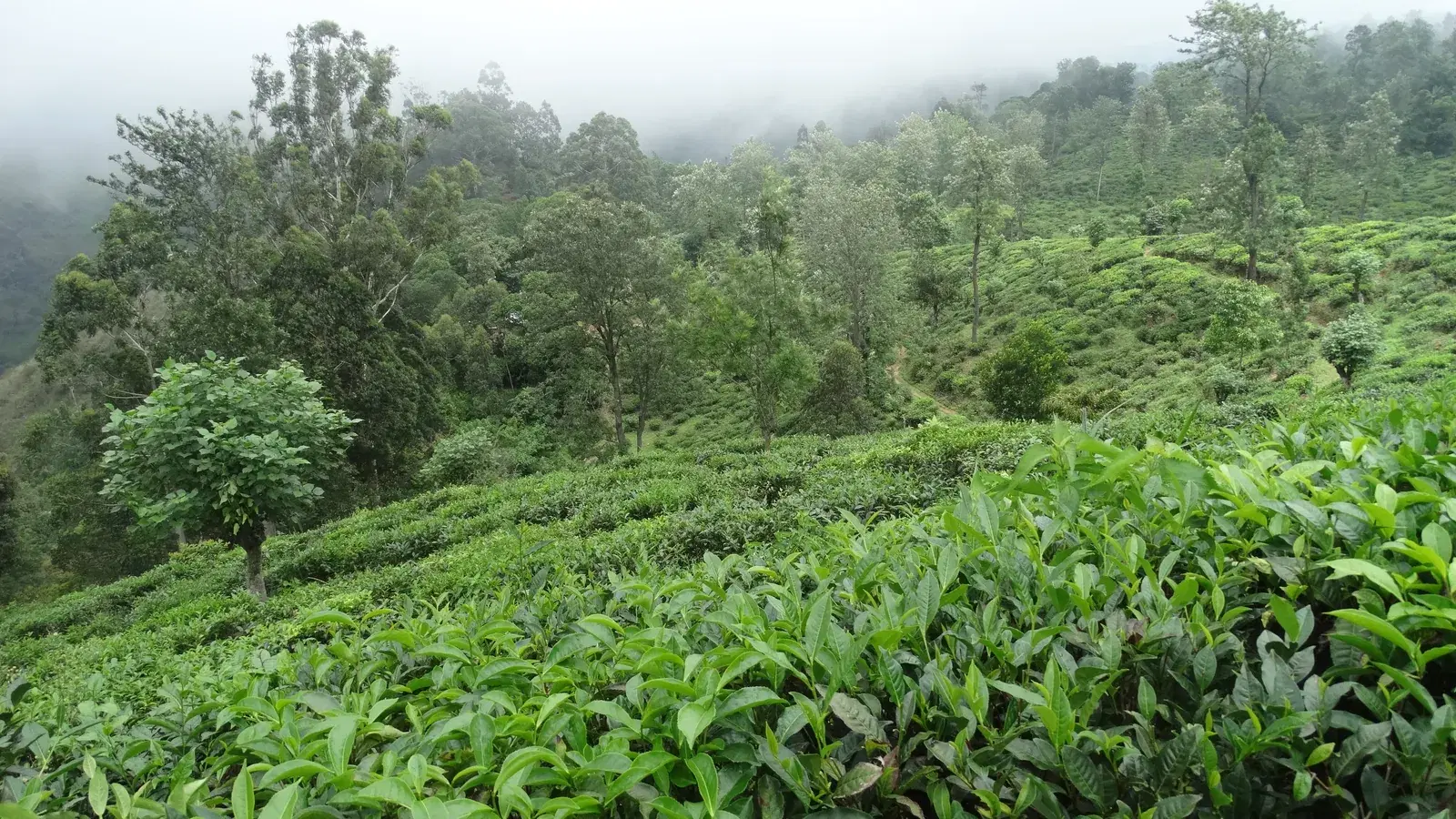
The hill country is the part of Sri Lanka that most people picture before they arrive: tea terraces folding over ridge after ridge, mist moving through valleys, a blue train easing along an escarpment. It is also, right now, the part of the country where the gap between published information and reality is widest.

The famous train has not run from Kandy to Ella since November 2025, when Cyclone Ditwah damaged the Main Line at hundreds of separate locations. Services have been restored in stages. The most scenic stretch is back. The Kandy end is not. And a great deal of live commercial content — guidebooks, blogs, booking platforms — is still selling a journey that cannot currently be taken.

That is the headline, but it is not the only thing worth knowing. Horton Plains, which a large number of itineraries treat as a fixed highlight, is a viewpoint over a sheer drop whose entire value depends on visibility — and which frequently delivers a wall of white. Adam's Peak, which people arrive hoping to climb, is closed for most of the year. And the highland cold catches out almost everybody, because nothing about a tropical island prepares you for needing a jacket.

None of this makes the hill country less worth visiting. It is the most beautiful part of Sri Lanka and the part most travellers remember. It just rewards a certain amount of adjustment — to the transport, to the weather, and to what the photographs are actually showing you.

This guide covers the current transport position, the towns and what each is good for, the walks and viewpoints and their honest odds, what to pack, and the thing that sits underneath all of it: the tea industry, and the people whose work produces the landscape you came to photograph.

快速摘要

  • The Kandy to Ella train does not run end to end; the Kandy to Nanu Oya section is still closed
  • Nanu Oya to Ella and Badulla resumed in mid-2026, with reported departures from Nanu Oya at 9:00 and 14:30
  • Sources conflict on the full reopening: end of 2026 or not before early 2027
  • Reach Nanu Oya by road from Kandy, then take the train south — that is the current workaround
  • Horton Plains depends entirely on visibility and frequently gives you nothing; only attempt it with a spare morning
  • Adam's Peak's pilgrimage season runs from Unduvap Poya in December to Vesak Poya in May
  • The 2026-27 season opens around 23 December 2026
  • Highland nights fall into single figures Celsius and most guesthouses have no heating
  • January to April offers the clearest conditions; mist is possible in any month
  • Tea estate labour conditions are a documented issue and worth understanding before a plantation tour

The Train: Where It Actually Stands

This is the most important planning fact in the highlands, and it is the one most likely to be out of date wherever else you read it.

Cyclone Ditwah struck in late November 2025 and caused the most severe damage in Sri Lanka Railways' history, with the Colombo to Badulla line damaged at 223 separate locations. Restoration has proceeded in stages rather than all at once.

What is running: the Nanu Oya to Badulla section, which includes Ella, the Nine Arch Bridge and the Demodara loop, resumed passenger services in mid-2026. One widely cited date is 20 June 2026, another gives 18 July; either way it has been operating for some months. Reported departures from Nanu Oya are at 9:00 and 14:30, with the journey to Ella taking around two hours fifteen to two hours thirty.

What is not running: the Kandy to Nanu Oya section, which includes Hatton, Kotagala, Talawakele and Watagoda. Sources conflict on the reopening. Some report Sri Lanka Railways targeting full restoration by the end of 2026. Others report that full reinstatement is not expected before early 2027. Earlier deadlines have already slipped. We cannot resolve this, so we are naming the conflict rather than picking the more optimistic figure.

There was also a development in September 2026: the Railway Department's chief engineer indicated that Colombo Fort to Kandy services via Peradeniya were expected to resume during October, as reconstruction between Rambukkana and Kadugannawa neared completion. That would restore Colombo to Kandy by rail. It does not get you to Ella — Kandy would remain the end of the line southbound.

The workaround, which is what almost everyone is doing: reach Nanu Oya by road from Kandy, and take the train from there. The road transfer takes roughly three and a half to five hours depending on conditions, and highland rain can extend it considerably.

Practical notes on the running section. Tickets are sold at the station on the day and can also be reserved in advance, reportedly up to thirty days. Reserved seats sell out, and the section has been busy since reopening because it is carrying demand that used to be spread across the whole line. The morning departure is generally recommended for light and temperature.

One thing worth saying plainly: do not book a Kandy to Ella train ticket, and be suspicious of any platform that offers you one. Verify that any ticket you buy starts from Nanu Oya. And confirm the current position with Sri Lanka Railways or your accommodation before building a fixed itinerary around this journey, because it is changing.

Kandy to Ella does not run end to endNanu Oya to Ella and Badulla resumed in mid-2026Reported Nanu Oya departures: 9:00 and 14:30Full reopening: end 2026 or early 2027, sources conflictReach Nanu Oya by road, then take the train

What the Hill Country Actually Covers

The highlands rise from around 500 metres at Kandy to 2,524 metres at Pidurutalagala, the island's highest point, across a relatively compact area. That compression is why the landscape changes so fast and why the weather is so local.

The Central Highlands of Sri Lanka were inscribed by UNESCO in 2010, covering the Peak Wilderness Protected Area, Horton Plains National Park and the Knuckles Conservation Forest.

The main stops, roughly south-east along the railway: Kandy at the northern gateway, then Hatton and Nallathanniya for Adam's Peak, Nanu Oya for Nuwara Eliya, Pattipola at the railway's summit of 1,898 metres, Haputale, Bandarawela, Ella, and Badulla at the end of the line.

The Knuckles Range sits to the north-east of Kandy and is covered separately in our rainforest and nature guide, since it belongs with Sinharaja as a conservation forest rather than with the hill stations.

Distances are short and journey times are not. Roads are narrow, steep and winding, and a map distance of fifty kilometres can take two and a half hours. This is the single most common planning error in the highlands after the train: itineraries built on distance rather than on time.

A useful mental model: Kandy is a functioning city at the edge of the hills. Nuwara Eliya is a cold colonial-era town at altitude. Ella is a small backpacker-oriented village with big views. Haputale and Bandarawela are working towns where fewer visitors stop. And in between all of them is tea.

500 metres at Kandy to 2,524 metres at PidurutalagalaUNESCO-inscribed in 2010 as the Central HighlandsPattipola is the railway summit at 1,898 metresShort distances, long journey timesPlan by hours, never by kilometres

Kandy: The Gateway That Is Not Quite the Hill Country

Kandy is where most highland trips begin and it is worth understanding what it is and is not.

It sits at around 500 metres, which makes it pleasantly cooler than the coast but nothing like the highlands proper. It is a working city of some size rather than a hill station, and the tea-terrace scenery people associate with the hill country starts well beyond it.

What it has: the Temple of the Tooth, one of the most significant Buddhist sites in the world and a living place of worship rather than a monument. The Royal Botanical Gardens at Peradeniya. A lake, a decent food scene, and the Kandy Esala Perahera in July or August, which is among the great religious processions in Asia.

What it is good for logistically: it is the natural staging point between the Cultural Triangle and the highlands, and the road hub for onward travel. With Colombo to Kandy rail services expected to resume, it may again be a reasonable rail arrival point.

What it is not good for: it is not a base for the Cultural Triangle, which is two and a half to three hours away on mountain roads, and it is not a base for Nuwara Eliya or Ella either. Kandy earns one or two nights of its own and then you move on.

Temple etiquette matters here as much as anywhere in the country. Shoulders and knees covered, shoes and hats off, no photographs with your back to a Buddha image, and an awareness that the evening puja is worship rather than a performance laid on for visitors. Dress appropriately and the experience is considerably better.

Around 500 metres — cooler than the coast, not highlandTemple of the Tooth and Peradeniya gardensEsala Perahera in July or AugustA staging point, not a base for anywhere elseOne or two nights, then move on

Nuwara Eliya: Cold, Odd and Worth a Night

Nuwara Eliya sits at around 1,900 metres and is unlike anywhere else in Sri Lanka — a colonial-era hill station built by the British to feel like home, with mock-Tudor buildings, a racecourse, a golf course, hedgerows and genuine cold.

Reactions are polarised. Some travellers find it charming and strange; others find it a slightly shabby imitation of an English town in the middle of a tropical island. Both readings are defensible. What is not in doubt is that it is the coldest place most visitors will experience in Sri Lanka.

What to do: Gregory Lake for a walk and boating, Victoria Park, the post office building, a tea factory tour, and Single Tree Hill or Lover's Leap for walking. Hakgala Botanical Garden and the Seetha Amman Temple are a short drive away. Moon Plains offers grassland and views without the Horton Plains gamble.

It is also the base for Horton Plains, at roughly an hour and a half by road, and for Ambewela and Pattipola.

The railway station for Nuwara Eliya is Nanu Oya, around eight kilometres out, which is the detail that matters most now that Nanu Oya is where the running train begins.

How long: one or two nights is usually right. It is a base rather than a destination in its own right for most people, and the surrounding countryside is more appealing than the town centre.

One seasonal warning: the April holiday season is Nuwara Eliya's peak, when domestic tourism fills the town, accommodation prices rise sharply and traffic becomes difficult. If you are travelling in April, book well ahead or go elsewhere.

Around 1,900 metres and genuinely coldGregory Lake, Victoria Park, tea factories, Single Tree HillNanu Oya, eight kilometres out, is the railway stationThe base for Horton Plains and AmbewelaApril is peak domestic season — book ahead or avoid

Ella and Haputale: The Views and the Crowds

Ella has gone from a quiet village to the highlands' busiest visitor town in about fifteen years, and it now has the food, the bars and the crowds that go with that. Whether this is a problem depends entirely on what you wanted.

What it has that justifies the popularity: Ella Gap, a genuine cleft in the mountains with a view south toward the coastal plain. Little Adam's Peak, an easy walk of around an hour with a disproportionate payoff. Ella Rock, a harder two to three hour walk that people regularly get lost on without a guide. The Nine Arch Bridge, a colonial-era viaduct that is genuinely handsome and now genuinely crowded. Ravana Falls and the Demodara loop.

A practical note on the Nine Arch Bridge: it is a working railway line. People stand on the track for photographs, trains do come, and this is a real hazard rather than an abstract one. Check the train times, get off the track, and do not encourage anyone in your group to linger for a better shot.

Haputale, twenty-odd kilometres west, is the alternative for travellers who want the views without the scene. It is a working town strung along a ridge with drops on both sides, and on a clear day the view extends a very long way south. Lipton's Seat, reached by a road and walk through tea estates above Dambatenne, is the classic viewpoint and is generally quieter than anything around Ella. Go at dawn; it clouds over.

Bandarawela sits between them and is primarily a market town, useful as a base if Ella is full.

Which to choose: Ella if you want company, food, bars and easy walks. Haputale if you want tea country, wide views and considerably fewer people. Both if you have the time — they are close enough that one can day-trip to the other.

Ella: busiest highland town, good food, real crowdsLittle Adam's Peak is an hour and worth it; Ella Rock needs a guideThe Nine Arch Bridge is a live railway — get off the trackHaputale is the quieter alternative with bigger viewsLipton's Seat at dawn before the cloud arrives

Horton Plains: An Honest Assessment of the Odds

Horton Plains National Park sits at over 2,000 metres and contains World's End, an escarpment with a drop of several hundred metres, plus Baker's Falls and a circular walking route of around nine kilometres.

It is also the single most likely item on a hill country itinerary to disappoint, and the reason is simple: World's End is a viewpoint, and its entire value is visibility.

Cloud typically fills the escarpment from mid-morning onward, which is why the standard advice is to be at the gate at opening and to complete the loop early. That advice is correct and it is still not a guarantee. In wetter months the cloud is frequently there at dawn too, and travellers who make the pre-dawn journey and find white in every direction are a routine occurrence rather than an unlucky minority.

Our recommendation: attempt Horton Plains only if you have a spare morning to try again, and skip it if you do not. If it is your one shot and the forecast is poor, Moon Plains near Nuwara Eliya offers grassland scenery and views for a fraction of the effort and cost.

Practicalities. It is administered by the Department of Wildlife Conservation as a national park, which means a park entry fee plus service charge and VAT rather than a single headline figure. Published totals vary considerably between sources and we could not establish a current verified figure, so confirm at the gate and carry cash. Plastic is restricted at the entrance and bags are checked.

The walk itself is straightforward — around three to four hours on a defined loop, with some uneven ground. It is cold at dawn at that altitude, often close to freezing in the coldest months, and visitors regularly arrive in shorts and regret it.

Getting there: roughly an hour and a half by road from Nuwara Eliya, with most people arranging a pre-dawn taxi or hotel transfer. Some travellers take the train to Ohiya and walk in, which is a longer and more committed option.

What it is genuinely good for, cloud or no cloud: the plains themselves are unlike anything else on the island — montane grassland and cloud forest, with sambar deer commonly seen. Go for the landscape and treat the view from World's End as a bonus, and you will enjoy it regardless.

World's End depends entirely on visibility and often gives noneBe at the gate at opening; it is still not a guaranteeOnly attempt it with a spare morning in reserveDWC fee plus service charge and VAT — confirm at the gateGo for the grassland; treat the view as a bonus

Adam's Peak: When You Can Actually Climb It

Adam's Peak, or Sri Pada, is a 2,243-metre mountain sacred to Buddhists, Hindus, Muslims and Christians, and climbing it through the night to reach the summit for sunrise is one of the defining experiences available in Sri Lanka.

It is also closed to practical climbing for roughly half the year, which a great many travellers do not discover until they arrive.

The pilgrimage season runs from Unduvap Poya, the December full moon, to Vesak Poya in May. Because both are lunar dates they shift each year. During the season the steps are lit, tea shops along the route are open, the summit temple is active and the route is staffed. Outside it the steps are unlit, facilities are closed, the route is frequently wet and a guide becomes essential.

For the coming season, the December 2026 Poya falls on or about 23 December, which is when the 2026-27 season opens.

On the closing date we have to be careful, and we would rather say so than give you a number we cannot stand behind. Vesak 2027 is the season's end, and the published dates for 2027 Poya days disagree between sources by a day or two — we found 2027 lists that differ from each other across several months. Sri Lanka's public holidays are set by government gazette, and the 2027 gazette is typically published late in the preceding year. Until it appears, treat any specific 2027 Vesak date you see, including in travel articles, as unverified. If you are planning a late-season climb, confirm against the gazette before booking.

Within the season, January to March generally offers the best combination of weather and manageable crowds. Poya days, weekends and the April school holidays produce genuine congestion — queues on the steps that can make reaching the summit by dawn impossible.

The climb itself: the Hatton or Nallathanniya route is the standard one, around five to six thousand steps, typically three to five hours up and two to four down. Most people start around two in the morning. It is free to climb. Base yourself in Nallathanniya or Hatton.

What to bring: warm layers, because the summit drops to single figures and you will be standing still waiting for sunrise after sweating on the way up. Grip on your shoes, water, and a torch even in season.

Season runs Unduvap Poya in December to Vesak Poya in MayThe 2026-27 season opens around 23 December 20262027 Poya dates are not yet reliably confirmable — check the gazetteJanuary to March is the best window within the seasonFree to climb; start around 2am from Nallathanniya

Tea, and the People Who Pick It

The landscape you came to photograph is an industrial monoculture maintained by hand, and it is worth knowing something about that before you tour a plantation.

The scenery is genuine and so is the craft. A factory tour is one of the better hill country activities — it is entirely indoor, so it works in any weather, and understanding withering, rolling, oxidation and grading changes how you drink the product afterwards. A proper tasting will teach you more about grades than any amount of reading. Nuwara Eliya, Hatton, Haputale and the estates around Ella all offer them.

The uncomfortable part is the labour. Sri Lanka's plantation workforce is largely made up of Malaiyaha Tamils, descendants of workers brought from South India under British rule in the nineteenth century. Their conditions — wages, housing in estate line rooms, and historical questions around citizenship and political rights — are a long-running and well-documented issue in Sri Lanka, and wage disputes in the plantation sector recur regularly.

We are not going to tell you to boycott tea tourism. Tea is central to the Sri Lankan economy, the tours support estate employment, and disengaging helps nobody. But there is a meaningful difference between visiting as someone who understands what they are looking at and visiting as someone who treats pluckers as scenery.

In practice that means: ask before photographing workers, and accept a refusal without argument. Do not stage photographs with borrowed baskets. Do not enter estate land or walk between bushes without permission — it is private working land and it damages easily. Buy tea from the factory where the value stays closer to the estate. And if a guide is willing to talk about pay and conditions, listen, because that conversation is more interesting than the factory tour.

One practical note for buyers: Ceylon cinnamon and tea bought at a factory or ordinary market cost a fraction of what tourist-oriented outlets charge, and the product is generally the same or better.

Factory tours are indoor and weather-proofThe plantation workforce is largely Malaiyaha TamilWages, housing and rights are a long-running documented issueAsk before photographing workers; never stage with a basketBuy at the factory rather than a tourist outlet

The Cold, and When to Come

Almost nobody packs correctly for the hill country, because nothing about arriving in Colombo at thirty degrees suggests you will be cold four hours later.

At Nuwara Eliya's altitude, night temperatures fall into single figures Celsius, and Horton Plains at dawn in the coldest months can approach freezing. Most guesthouses and small hotels have no heating. Hot water is not universal and is not always reliable.

Pack a genuinely warm layer — a fleece or light down jacket, not a hoodie — plus a hat for early starts, and a waterproof jacket rather than a shower-resistant one. Footwear with grip matters on wet stone and mud.

When to come: January to April generally offers the clearest conditions in the highlands. Mist is possible in any month, and the southwestern slopes of the hill country are among the wettest places in Sri Lanka, taking very substantial rainfall in the second inter-monsoon.

October and November are the wettest period island-wide and the highlands get the worst of it, with the additional complication that sustained rain raises landslide risk on mountain roads. Roads do close, and there is rarely a quick detour.

What the wet months give you in exchange is considerable: waterfalls across the highlands at volumes dry-season visitors never see, tea estates at maximum green, and mist that many travellers find more atmospheric than clear skies. Ravana, Diyaluma, St Clair's, Devon and Bambarakanda are all at their best when it has been raining.

Come for the panoramas and pick January to April. Come for the mood and the waterfalls and the wet months are not a compromise.

One current consideration: a strong El Niño is in place, with a drier signal for January to April 2027, which would favour the conventional highland season. Check landslide advisories from the Disaster Management Centre before travelling into the hills during any sustained wet period.

Nights fall into single figures; most guesthouses have no heatingPack a real warm layer, not a hoodieJanuary to April for clear conditionsOctober and November are wettest, with landslide riskWaterfalls are at their best in the wet months

Getting Around the Highlands

With the railway partly out, road transport is doing more work in the hill country than usual, and it pays to plan around that.

By car and driver: the most flexible option and the one that makes dawn starts realistic, which matters enormously at Horton Plains and Lipton's Seat. Expect slow going — highland roads are narrow and winding, and a driver who knows them is worth more than one who is cheap.

By bus: extensive, frequent and very cheap. Buses connect all the highland towns and reach places the train never did. The limitations are the usual ones — essentially no luggage storage, and a dawn departure is harder to arrange than by car. On winding mountain roads, bus travel is also not for anyone prone to motion sickness.

By train, on the running section: Nanu Oya to Ella and Badulla, with reported departures from Nanu Oya at 9:00 and 14:30. Book ahead where you can; the section is busy.

By tuk-tuk: fine for short hops within a town or to a nearby viewpoint, uncomfortable and cold over longer highland distances.

Approximate road times for planning: Kandy to Nanu Oya three and a half to five hours. Nuwara Eliya to Horton Plains about an hour and a half. Nuwara Eliya to Ella two to three hours. Ella to Haputale under an hour. Kandy to Colombo three to four hours, or by train if services have resumed.

Coming from the Cultural Triangle, Kandy is the natural entry point. Leaving the highlands, Ella and Badulla connect south toward Tissamaharama and the Yala area, or you can return west toward Colombo.

A general principle: build more time into highland transfers than any map suggests, and do not schedule a mountain transfer on the morning of an international flight.

A driver makes dawn starts realistic — that is its real valueBuses are cheap and frequent but poor with luggageNanu Oya to Ella: reported 9:00 and 14:30 departuresKandy to Nanu Oya: three and a half to five hours by roadNever put a mountain transfer before a flight

Travelling Well in the Highlands

A few things that matter more here than elsewhere in the country.

Stay off the railway tracks. The Nine Arch Bridge and the line around Ella are working railway, trains run on them, and the photograph is not worth it. This has caused serious injuries.

Respect estate boundaries. Tea estates are private working land. Do not walk between bushes, do not pick leaves, and do not enter without permission or a guide who has it.

Ask before photographing people, particularly estate workers. A camera in the face of someone doing hard physical work for low pay is an imposition, however beautiful the light.

Take your waste with you, including on walks. Litter on highland trails and around viewpoints is a visible and worsening problem, and there is often no collection.

Do not use drones over estates, temples or the railway without permission. At heritage sites this requires prior written approval, and over private estate land it is simply intrusive.

Be careful at waterfalls. The highlands' falls are at their most spectacular and most dangerous in the same conditions. Do not climb wet rock, do not swim in a pool below a fall during or after heavy rain upstream, and take local warnings seriously.

Support small local operators. Guesthouses, drivers, guides and family restaurants in the hill country operate on thin seasonal margins and have had several difficult years between the pandemic, the economic crisis and now the railway damage. Money spent with them goes further than money spent through intermediaries.

And hire a guide for Ella Rock and for any unfamiliar highland walk. People get lost on these routes regularly, mist arrives fast, and the cost of a local guide is small against the alternative.

Stay off the railway tracks — trains do comeTea estates are private working landAsk before photographing estate workersWaterfalls are most dangerous when most spectacularHire a guide for Ella Rock and unfamiliar walks

旅行贴士

  • Do not book a Kandy to Ella train ticket — verify any ticket starts from Nanu Oya
  • Confirm the current rail position with Sri Lanka Railways before fixing an itinerary
  • Reach Nanu Oya by road from Kandy, allowing three and a half to five hours
  • Book the Nanu Oya to Ella section ahead; it is busy since reopening
  • Plan highland journeys by hours, never by kilometres
  • Pack a genuinely warm layer — nights fall into single figures
  • Expect no heating in most guesthouses; confirm hot water before booking
  • Only attempt Horton Plains with a spare morning in reserve
  • Be at Horton Plains and Lipton's Seat at dawn; both cloud over
  • Adam's Peak is December to May only — the route is unlit outside the season
  • Confirm 2027 Poya dates against the government gazette before planning around them
  • Stay off the railway tracks at the Nine Arch Bridge
  • Hire a guide for Ella Rock; people get lost on it regularly
  • Ask before photographing tea estate workers
  • Check Disaster Management Centre landslide advisories in wet periods
  • Book well ahead for April — it is peak domestic season in Nuwara Eliya

常见问题

Is the Kandy to Ella train running in 2026?

Not as a through journey. The Nanu Oya to Ella and Badulla section resumed in mid-2026, but the Kandy to Nanu Oya stretch remains closed after Cyclone Ditwah damage. Sources conflict on whether it reopens by the end of 2026 or not before early 2027, and earlier deadlines have already slipped.

How do I get from Kandy to Ella then?

Travel by road from Kandy to Nanu Oya, which takes roughly three and a half to five hours depending on conditions, then take the train from Nanu Oya to Ella. Reported departures from Nanu Oya are at 9:00 and 14:30, with the journey taking around two hours fifteen to two hours thirty.

Can I still do the famous scenic train ride?

Yes — the section that reopened is the most scenic part, taking in Ambewela, Haputale, the Demodara loop and the approach to Ella. You simply board further up the line than you would have before. Verify that any ticket you buy starts at Nanu Oya, not Kandy, as some platforms still list the full route.

Is Horton Plains worth it?

Only if you have a spare morning to try again. World's End is a viewpoint over an escarpment and its value is entirely visibility — cloud typically fills it from mid-morning and in wetter months is frequently there at dawn too. The grassland and cloud forest are genuinely worth seeing regardless, so go for the landscape and treat the view as a bonus.

When can I climb Adam's Peak?

The pilgrimage season runs from Unduvap Poya, the December full moon, to Vesak Poya in May. The 2026-27 season opens around 23 December 2026. Outside the season the steps are unlit, facilities are closed and the route is often wet, so it is not a realistic climb for most visitors.

When exactly does the 2027 Adam's Peak season end?

We are not able to confirm it. Sri Lanka's public holidays are set by government gazette, typically published late in the preceding year, and the 2027 Poya date lists currently circulating disagree with each other by a day or two across several months. Treat any specific 2027 Vesak date you see as unverified until the gazette appears.

How cold does the hill country get?

Colder than almost anyone expects. Night temperatures at Nuwara Eliya's altitude fall into single figures Celsius, and Horton Plains at dawn in the coldest months can approach freezing. Most guesthouses have no heating and hot water is not always reliable, so pack a real warm layer rather than a hoodie.

Ella or Haputale?

Ella if you want food, bars, company and easy walks — Little Adam's Peak, the Nine Arch Bridge, Ravana Falls. Haputale if you want tea country, enormous ridge views and far fewer people, with Lipton's Seat as the highlight. They are close enough to day-trip between.

When is the best time to visit the hill country?

January to April generally gives the clearest conditions. Mist is possible in any month, and October and November are the wettest period with real landslide risk on mountain roads. The wet months do deliver the waterfalls at their best, so the right answer depends on whether you came for panoramas or atmosphere.

How many days do I need?

Four to six nights covers Kandy, a highland base and Ella comfortably. Add nights if you want Adam's Peak, serious walking, or a second attempt at Horton Plains. Remember that highland transfers take far longer than the distances suggest.

Is a car and driver worth it in the hill country?

More than anywhere else in the country, because it makes dawn starts realistic — and Horton Plains, Lipton's Seat and Adam's Peak all depend on them. Buses are cheap, frequent and reach everywhere, but they are poor with luggage and hard to use for a pre-dawn departure.

Are tea factory tours worth doing?

Yes, and they are entirely indoor, which makes them the ideal wet-afternoon activity. Understanding withering, rolling, oxidation and grading genuinely changes how you drink the product. Buy your tea at the factory rather than a tourist outlet — it costs a fraction and is generally better.

Is it safe to walk on the Nine Arch Bridge?

It is a working railway line and trains do run on it. People stand on the track for photographs and this has caused serious injuries. Check the train times, take your photograph from beside the line, and get off the track.

读者笔记

参与讨论

分享你对这篇指南的问题、建议或旅行经历。

评论

0 条评论

加载中...

准备把灵感变成斯里兰卡之旅了吗?

使用 LankaTrip 规划行程、联系本地向导,把这份行程变为现实。

需要规划帮助?

规划你的斯里兰卡之旅

规划我的旅程