
LankaTrip 见解

16 分钟阅读

Sri Lankan Snacks and Sweets 2026–2027: 30 to Try, When Each Is in Season, and Which Ones You Can Actually Take Home

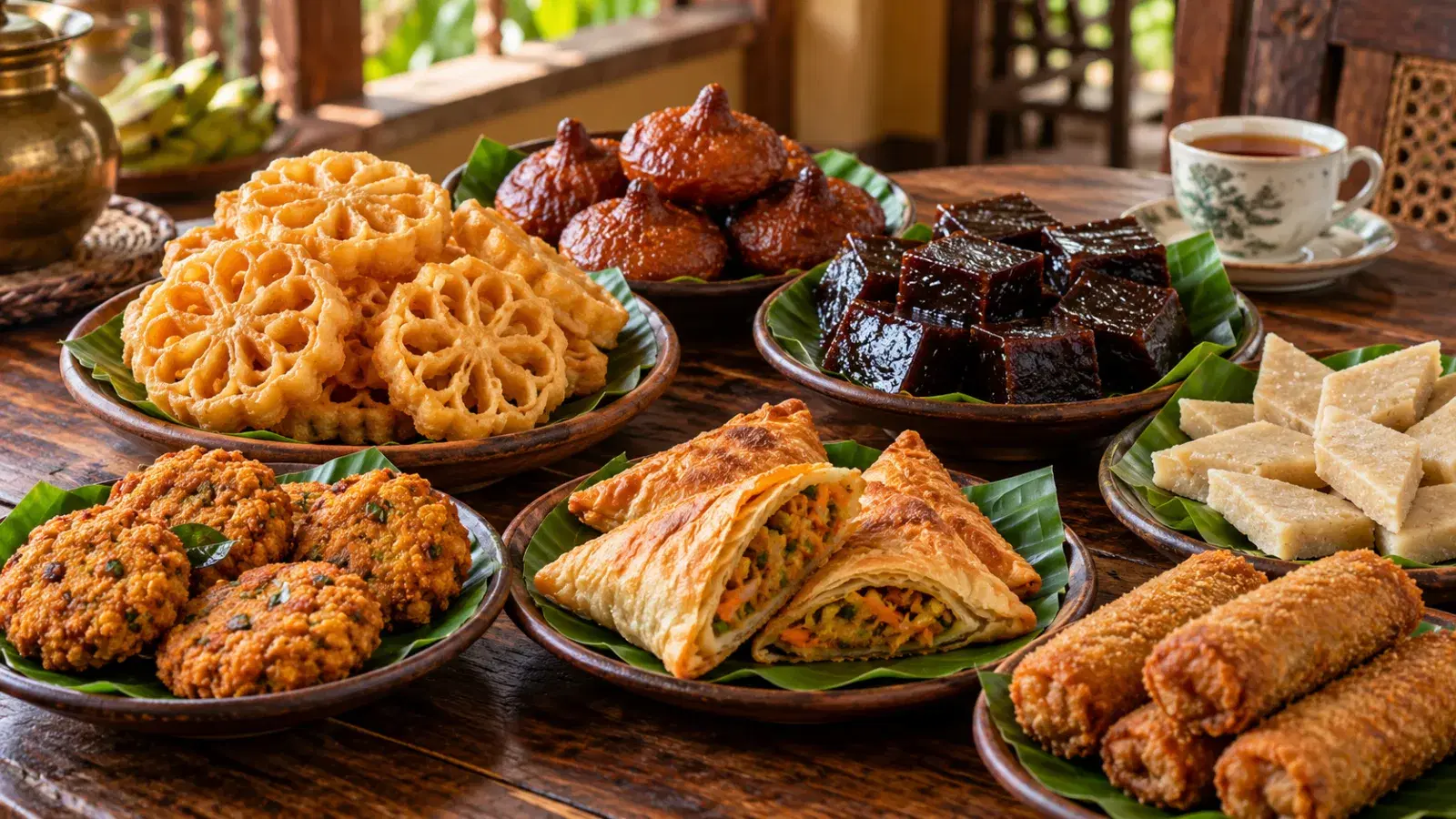
Sri Lanka's snacks are some of the best food on the island, and some of the easiest to get wrong. The bakery plate isn't free, many 'vegetable' snacks contain fish, and several sweets you'd love to take home contain dairy that the UK bans from Sri Lanka outright. Here is what to eat, when, and what to pack.

返回博客
Sri Lankan Snacks and Sweets 2026–2027: 30 to Try, When Each Is in Season, and Which Ones You Can Actually Take Home

Ask Sri Lankans what they miss most when they live abroad and many will not say rice and curry. They will say a fish bun from the corner bakery, a paper cone of spicy mixture, a slice of their grandmother's love cake, or kavum still warm from the oil at Avurudu.

Snacks are where much of Sri Lankan food culture lives. They are what people eat at four o'clock with tea, on the bus, at the beach, at office meetings, at funerals and at every festival. They are also cheap, everywhere, and one of the easiest ways for visitors to taste the island's mix of Sinhala, Tamil, Muslim, Burgher, Dutch, Portuguese and Malay influences.

They also come with a few things nobody tells you. In many tea shops, a plate of snacks you did not order arrives at your table; you are not expected to eat it all. Plenty of snacks that look vegetarian contain fish. And some of the sweets you will most want to carry home contain ingredients your own country's border officers will take off you.

This guide covers thirty savoury snacks and sweets worth trying, how and where to eat them, which ones belong to which festival — useful with Deepavali on 8 November 2026 and Christmas coming up — and what you can realistically pack for home. We do not name individual shops or bakeries, and we do not quote prices, which vary widely by place.

快速摘要

  • 'Short eats' are Sri Lanka's savoury snacks: patties, rolls, cutlets, buns and vadai, sold in bakeries and tea shops
  • In many tea shops a plate of assorted short eats is brought to the table; you pay only for what you eat
  • Many 'vegetable' snacks contain Maldive fish, shrimp or egg — ask specifically
  • Isso vadai (prawn lentil fritters) from the Galle Face Green carts are a Colombo classic
  • Kavum, kokis, aluwa and athirasa are the sweets of the Sinhala and Tamil New Year in April, but sold all year
  • Kalu dodol, a dark jaggery and coconut milk sweet, is the south coast's most famous edible souvenir
  • Deepavali (8 November 2026) and Christmas (love cake, breudher) bring their own sweets
  • UK rules ban meat and dairy products from Sri Lanka, so milk-based sweets like milk toffee shouldn't go in your luggage
  • Australia requires you to declare all food; dairy-based sweets are flagged as risk items
  • Sealed, labelled, shelf-stable sweets such as kalu dodol, kokis and coconut-based sweets travel best

What 'Short Eats' Means, and How the Plate Works

'Short eats' is the Sri Lankan English name for savoury snacks: small, often fried or baked items eaten between meals. The term covers everything from a Chinese roll to a fish bun to a vadai.

You will find them in glass display cases in bakeries, in tea shops called 'hotels' (a Sri Lankan English word for a small eatery, not a place to stay), at railway stations, on long-distance bus stops and in office canteens. They are at their best in the late afternoon, around tea time, when fresh batches come out.

In many tea shops and small eateries, the server will bring a plate with a selection of short eats to your table as soon as you sit down. You eat what you want and pay only for what you have eaten; the rest goes back. This is normal, not a scam.

Some visitors prefer to choose individual items from the display case instead, partly because uneaten items from the shared plate are commonly returned to the counter. If that bothers you, simply point at what you want and ask for it to be served fresh.

Short eats are usually eaten by hand, often with a squeeze of chilli sauce or a dip in ketchup. Use your right hand where you can.

They pair best with plain tea or milk tea, usually served very sweet. Ask for 'less sugar' if you prefer.

Savoury snacks between mealsBest fresh in the late afternoonA shared plate arrives automaticallyPay only for what you eatChoose from the case if you preferAsk for less sugar in your tea

The Classic Short Eats

Fish bun (malu paan): a soft, triangular bread bun filled with a spicy fish and potato mixture. The quintessential Sri Lankan bakery snack.

Chinese roll: a pancake wrapped around a filling of fish, meat or vegetables with potato, rolled, coated in breadcrumbs and deep-fried. Despite the name, it is a Sri Lankan invention.

Patty (pattis): a half-moon of short pastry filled with spiced fish, chicken or vegetables and fried. Often made at home for celebrations.

Cutlet: a small breaded ball of spiced fish (usually tinned mackerel) and potato, deep-fried. A Burgher and Sinhala favourite.

Egg roll: a Chinese roll with a boiled egg inside. Filling and popular on the road.

Seeni sambol bun: a sweet-spicy bun filled with caramelised onion relish. Often contains Maldive fish.

Pastries and sausage rolls: Sri Lankan bakeries also sell flaky pastries filled with chicken or fish curry, and sausage rolls, reflecting a British bakery heritage.

Roast paan: a crusty, square-ended loaf, not a snack exactly, but often eaten torn with curry or dhal as a light meal.

Fish bunChinese rollPattyFish cutletEgg rollSeeni sambol bun

Vadai, Isso Vadai and Fritters

Parippu vadai: a crunchy fritter of split lentils, onion, green chilli and curry leaf. Sold everywhere, from station platforms to roadside stalls, and one of the best vegetarian snacks on the island.

Ulundu vadai: a doughnut-shaped fritter made from black gram (urad dal) batter, soft inside and crisp outside. Common in Tamil and Muslim eateries, often served with coconut chutney or sambar.

Isso vadai (prawn vadai): a parippu vadai topped with whole prawns, fried until crisp. The carts along Galle Face Green in Colombo are famous for them at sunset, often served with a spoonful of chilli and onion. Note the shellfish if you have an allergy.

Samosa: triangular pastry filled with spiced potato, vegetables or meat, sold in many bakeries and Muslim-run eateries.

Bonda and bajji: battered and fried potato, chilli or vegetables, more common in the Tamil north and in Colombo's Tamil neighbourhoods.

Vadai is best eaten hot. A vadai that has sat in a glass case all afternoon is a lesser thing; ask whether a fresh batch is coming.

Parippu vadai: lentil fritterUlundu vadai: black gram doughnutIsso vadai: prawn-topped, Galle FaceSamosaBest eaten hot

Street, Beach and Bus-Stand Snacks

Mixture: a spicy mix of fried lentil noodles, chickpeas, peanuts, cashews, curry leaves and chilli, sold in paper cones and packets. Highly addictive. Contains nuts.

Kadala: boiled chickpeas tempered with onion, chilli, mustard seeds and coconut, sold warm from carts and on trains in paper cones.

Achcharu: a sweet, sour and fiery pickle of raw fruit — mango, pineapple, ambarella or lovi — with chilli, salt and vinegar, sold in bags from beach carts and outside schools. Take a small amount first; it is often very hot.

Boiled or roasted corn (bada iringu): sold by the roadside, often with chilli and salt.

Kurakkan rotti and pol rotti: flatbreads made with finger millet or grated coconut, eaten with lunu miris (chilli and onion relish). Hearty more than snacky, but sold in the same places.

Wood apple: a hard-shelled fruit with brown pulp, eaten as a juice or with jaggery. An acquired taste worth trying once.

Thambili: the orange king coconut, cut open at the roadside for its water. The best drink on a hot day.

Mixture: spicy, contains nutsKadala: tempered chickpeasAchcharu: fiery fruit pickleRoadside cornPol rotti with lunu mirisKing coconut water

The Avurudu Sweets: Kavum, Kokis, Aluwa and Friends

The Sinhala and Tamil New Year in April is the great sweet-making festival. Families fill a table with traditional sweets to share with neighbours. In 2027, the holidays fall on 13 and 14 April. Most of these sweets are also sold year-round in sweet shops and supermarkets.

Kavum (oil cakes): small domed cakes of rice flour and kithul treacle or jaggery, deep-fried so the edges frill. The defining Avurudu sweet.

Mung kavum: diamond-shaped sweets of mung bean flour and rice flour, dipped in batter and fried.

Kokis: lacy, crunchy rosettes of rice flour and coconut milk, fried on a patterned iron mould. Lightly sweet or almost savoury, Dutch in origin.

Aluwa: firm, diamond-cut squares of roasted rice flour, sugar or treacle and cashew, often flavoured with cardamom.

Athirasa: a flat, round fried cake of rice flour and jaggery, sticky and dense.

Aasmi: a delicate, coloured lattice of rice flour batter drizzled with syrup.

Thala guli: small balls of sesame seeds and jaggery, chewy and nutty.

Undu walalu (pani walalu): rings of black gram batter fried and soaked in treacle.

Because these are made with rice flour, coconut, treacle and oil, many are naturally free of wheat and dairy — but check, as recipes vary and cross-contamination is common.

Kavum: oil cakesKokis: crunchy rosettesAluwa and mung kavumAthirasa, aasmi, thala guliAvurudu 2027: 13–14 AprilMany are wheat- and dairy-free, but check

Kalu Dodol and the Sweets of the South

Kalu dodol is a dark, glossy, chewy sweet made by slowly cooking rice flour, coconut milk and kithul jaggery for hours until it thickens, sometimes with cashews. It is associated with the south and west coasts, particularly the Hambantota area, and with towns along the Galle and Matara roads.

It is the most popular edible souvenir from Sri Lanka, sold wrapped and boxed in sweet shops and roadside stalls on the southern roads. Look for packs with a manufacturer's name, ingredients and a date; homemade versions are delicious but shorter-lived.

Kithul treacle and jaggery come from the sap of the kithul palm and are a speciality of the hill and wet zones. Genuine kithul is more expensive than cane-sugar imitations; buy from a trusted shop.

Curd and treacle: buffalo curd set in clay pots and drizzled with kithul treacle is sold along the Tissamaharama, Hambantota and Kandy roads. A dessert, not a snack to carry — it needs to be eaten fresh.

Kalu dodol: jaggery and coconut milkSouthern specialityBuy labelled, dated packs to carryKithul treacle and jaggeryCurd and treacle: eat fresh

Watalappan, Love Cake and Other Community Sweets

Watalappan: a steamed custard of coconut milk, kithul jaggery, eggs and spices such as cardamom and nutmeg, associated with Sri Lanka's Muslim community. Served at weddings and especially during Ramadan and Eid. It contains egg.

Love cake: a rich, crumbly cake of semolina, cashews, pumpkin preserve, rose water, honey and spices, from the Portuguese and Burgher tradition. A Christmas essential in Burgher homes, it contains egg and butter.

Breudher: a yeasted Dutch Burgher Christmas bread, often served with cheese.

Bibikkan: a dark coconut and jaggery cake with spices and dried fruit, another Burgher favourite.

Kiri toffee (milk toffee): squares of condensed milk, sugar and cashew, beloved by children and given at celebrations. Contains dairy.

Coconut toffee (pol toffee): a dairy-free alternative made with grated coconut and sugar.

Jaffna sweets: the Tamil north has its own range, including palmyra-based products such as palmyra jaggery and odiyal flour, and festival sweets such as laddu and murukku around Deepavali.

Bombai motai: Sri Lankan candyfloss, often sold at temple festivals and fairs.

Watalappan: Muslim community custardLove cake and breudher: Burgher ChristmasBibikkanKiri toffee contains dairyPol toffee: dairy-freeJaffna palmyra sweets

The Sweets Calendar: When to Find What

Deepavali — Sunday 8 November 2026. Tamil and Hindu households and sweet shops prepare laddu, murukku, athirasam, payasam and other festival sweets. Look in Colombo's Tamil neighbourhoods, the hill country and the north. In 2027, the gazetted Deepavali holiday is 28 October.

Christmas — 25 December 2026. Love cake, breudher, Christmas cake and rich fruit cakes appear in bakeries and homes, especially in Colombo, Negombo and other areas with large Christian communities.

Thai Pongal — 15 January 2027. The Tamil harvest festival is marked with pongal, sweet rice cooked with milk, jaggery and lentils.

Sinhala and Tamil New Year — 13 and 14 April 2027. Kavum, kokis, aluwa, athirasa and the whole Avurudu table. Many shops close for a few days, so stock up beforehand.

Ramadan and Eid — Eid ul-Fitr is listed as 10 March 2027, subject to moon sighting. Watalappan is at its most abundant during Ramadan and Eid.

Vesak — 19 May 2027. Dansal stalls give out free food and drinks, from ice cream to kadala and rice and curry.

Poya days — every full moon. Some shops close, and meat and fish sales are restricted, so vegetarian snacks and sweets are often easier to find than usual.

Deepavali: 8 November 2026Christmas: love cake and breudherThai Pongal: 15 January 2027Avurudu: 13–14 April 2027Eid ul-Fitr 2027: subject to moon sightingVesak dansal: 19 May 2027

Vegetarian, Vegan and Allergy Notes

Fish is hidden in plain sight. Maldive fish — dried, cured tuna — is used in seeni sambol, many sambols and some vegetable fillings. Fish, egg and shrimp also appear in fillings that look like vegetables. Ask: 'Does this have fish or Maldive fish?'

Reliably vegetarian options include parippu vadai, ulundu vadai, kadala, pol rotti (without lunu miris made with Maldive fish), most Avurudu sweets, kokis and thala guli. Even these can vary; ask if it matters.

Vegans should note that many bakery items use butter, milk or egg, and watalappan and love cake contain egg.

Nuts: mixture, aluwa, kiri toffee, love cake and many sweets contain cashews or peanuts. If you have a nut allergy, be very cautious with snacks and sweets from open displays, and carry your own medication.

Shellfish: isso vadai and some rolls contain prawns or shrimp.

Gluten: rice-flour sweets are often wheat-free, but frying oil and preparation surfaces are shared.

Food hygiene: choose busy places with high turnover and freshly fried batches. Fried items served hot are generally the safer choice.

Ask about Maldive fishParippu vadai and kadala are good veg choicesMany bakery items contain egg and dairyNuts are commonShellfish in isso vadaiChoose busy places and fresh batches

What You Can (and Can't) Take Home

Sri Lankan sweets are a popular gift, but your home country's biosecurity and food import rules decide what gets through. Always check your country's official guidance before you fly; the summaries below are not exhaustive.

United Kingdom: for personal imports from non-EU countries such as Sri Lanka, GOV.UK states that meat and meat products, and milk and milk-based products, are not allowed (with narrow exceptions for infant and special medical food). Fish and fish products, including dried fish, are allowed up to 20kg per person, and honey up to 2kg. That means milk toffee, and anything filled with meat, should stay in Sri Lanka.

Australia: the Department of Agriculture says you must declare any food you bring. Declaring does not automatically mean confiscation; low-risk goods are released after inspection. Its guidance lists chocolate, confectionery and commercially packaged cooked cakes and biscuits without meat as generally permitted, while dairy-based sweets, meat, eggs, seeds, fresh fruit, raw nuts and rice are risk items. Failing to declare can lead to a fine of up to AUD 7,280 and other consequences.

Other countries, including the United States, Canada and New Zealand, have their own rules, and most require food to be declared. When in doubt, declare.

What travels best: commercially packed, labelled, shelf-stable sweets such as kalu dodol, kokis, coconut toffee and packaged mixture, plus tea, spices and kithul treacle in sealed bottles. Liquids such as treacle must go in checked baggage under airline liquid rules.

What doesn't: anything homemade and unlabelled, fresh curd, cream or milk-based sweets, anything with meat, fresh fruit, and short eats of any kind.

UK: no meat or dairy products from Sri LankaUK: dried fish up to 20kgAustralia: declare all foodAustralia: dairy sweets are risk itemsPack labelled, sealed, shelf-stable sweetsTreacle in checked baggage

Where to Find the Best Snacks

Neighbourhood bakeries: for fish buns, rolls, patties and pastries, especially in the late afternoon.

Tea shops and small 'hotels': for the shared plate of short eats with milk tea.

Railway stations and bus stands: vadai, kadala and mixture sold by vendors, sometimes on board.

Galle Face Green, Colombo: isso vadai and other snacks from carts at sunset.

Beaches and school gates: achcharu, corn and ice cream carts.

Sweet shops and supermarkets: packaged Avurudu sweets, kalu dodol, mixture and toffee, the easiest place to buy gifts with labels.

The southern roads: kalu dodol and curd and treacle stalls on the way to Galle, Matara, Hambantota and Tissamaharama.

Pettah and Wellawatte in Colombo: Tamil and Muslim sweet shops and eateries, especially around Deepavali and Ramadan.

Cooking classes: many include how to make vadai, rotti or a sweet. Our cooking classes guide covers what to look for.

Bakeries at tea timeTea shops for short eats platesGalle Face for isso vadaiSweet shops for labelled giftsSouthern roads for kalu dodolPettah and Wellawatte at festivals

旅行贴士

  • Short eats on a shared plate: pay only for what you eat
  • Choose from the display case if you'd rather have fresh, untouched items
  • Ask 'Does this have fish or Maldive fish?' if you're vegetarian
  • Watch for nuts in mixture, aluwa, toffee and love cake
  • Eat vadai hot from a fresh batch
  • Ask for less sugar in your tea
  • Buy labelled, dated packs of sweets to take home
  • Leave milk toffee and meat-filled snacks behind if flying to the UK
  • Declare all food when arriving in Australia
  • Pack treacle in checked baggage
  • Stock up before the April New Year, when many shops close
  • Look for Deepavali sweets around 8 November 2026

常见问题

What are short eats in Sri Lanka?

Short eats are Sri Lankan savoury snacks such as fish buns, Chinese rolls, patties, cutlets and vadai, sold in bakeries, tea shops and stations and usually eaten with tea.

Do I have to pay for the whole plate of short eats?

No. In many tea shops a plate of assorted short eats is brought to the table, and you pay only for what you eat.

Are Sri Lankan snacks vegetarian?

Some are, such as parippu vadai, ulundu vadai and kadala, but many contain fish, Maldive fish, shrimp or egg even when they look vegetarian. Ask specifically.

What is isso vadai?

A crunchy lentil fritter topped with whole prawns, famously sold from carts at Galle Face Green in Colombo.

What are kavum and kokis?

Traditional sweets made for the Sinhala and Tamil New Year. Kavum are fried oil cakes made with rice flour and treacle; kokis are crisp rice flour and coconut milk rosettes.

What is the best Sri Lankan sweet to take home?

Kalu dodol is the most popular, along with kokis and coconut toffee. Buy commercially packed versions with labels and dates, and check your home country's food import rules.

Can I take Sri Lankan sweets to the UK?

Sweets without meat or dairy are generally fine, but GOV.UK says meat and milk-based products from non-EU countries like Sri Lanka are not allowed, so leave milk toffee and meat-filled snacks behind. Dried fish is allowed up to 20kg.

Can I take Sri Lankan food to Australia?

You must declare all food. Commercially packaged cakes, biscuits and confectionery without meat are generally permitted after inspection, while dairy sweets, meat, eggs, seeds and some nuts are risk items.

What is watalappan?

A steamed custard of coconut milk, kithul jaggery, eggs and spices, associated with Sri Lanka's Muslim community and especially popular during Ramadan and Eid.

What sweets are made for Deepavali in Sri Lanka?

Tamil and Hindu households prepare sweets such as laddu, murukku, athirasam and payasam. Deepavali falls on 8 November 2026.

Are Sri Lankan sweets gluten-free?

Many traditional sweets use rice flour rather than wheat, but recipes vary and frying oil and surfaces are shared. Ask if you are coeliac.

读者笔记

参与讨论

分享你对这篇指南的问题、建议或旅行经历。

评论

0 条评论

加载中...

准备把灵感变成斯里兰卡之旅了吗?

使用 LankaTrip 规划行程、联系本地向导,把这份行程变为现实。

需要规划帮助?

规划你的斯里兰卡之旅

规划我的旅程