
LankaTrip Insights

13 min read

Sri Lanka Metro Bus Guide 2026: All Seven Colombo Routes (CM01–CM08), How to Pay, What It's Like, and Is It Useful for Visitors?

On 29 September 2026, Sri Lanka's Metro Bus service expanded from two routes to seven, with 122 air-conditioned, low-floor buses across Greater Colombo. It is not a train metro, it does not go to the airport, and there is no published fare table yet — but for some trips it is now the most comfortable public transport in the city.

Back to blog
Sri Lanka Metro Bus Guide 2026: All Seven Colombo Routes (CM01–CM08), How to Pay, What It's Like, and Is It Useful for Visitors?

Colombo has never had a metro. For decades, getting around the city meant crowded private buses, tuk-tuks, or a car stuck in traffic. In 2026, the government began trying to change that with something it calls the Metro Bus.

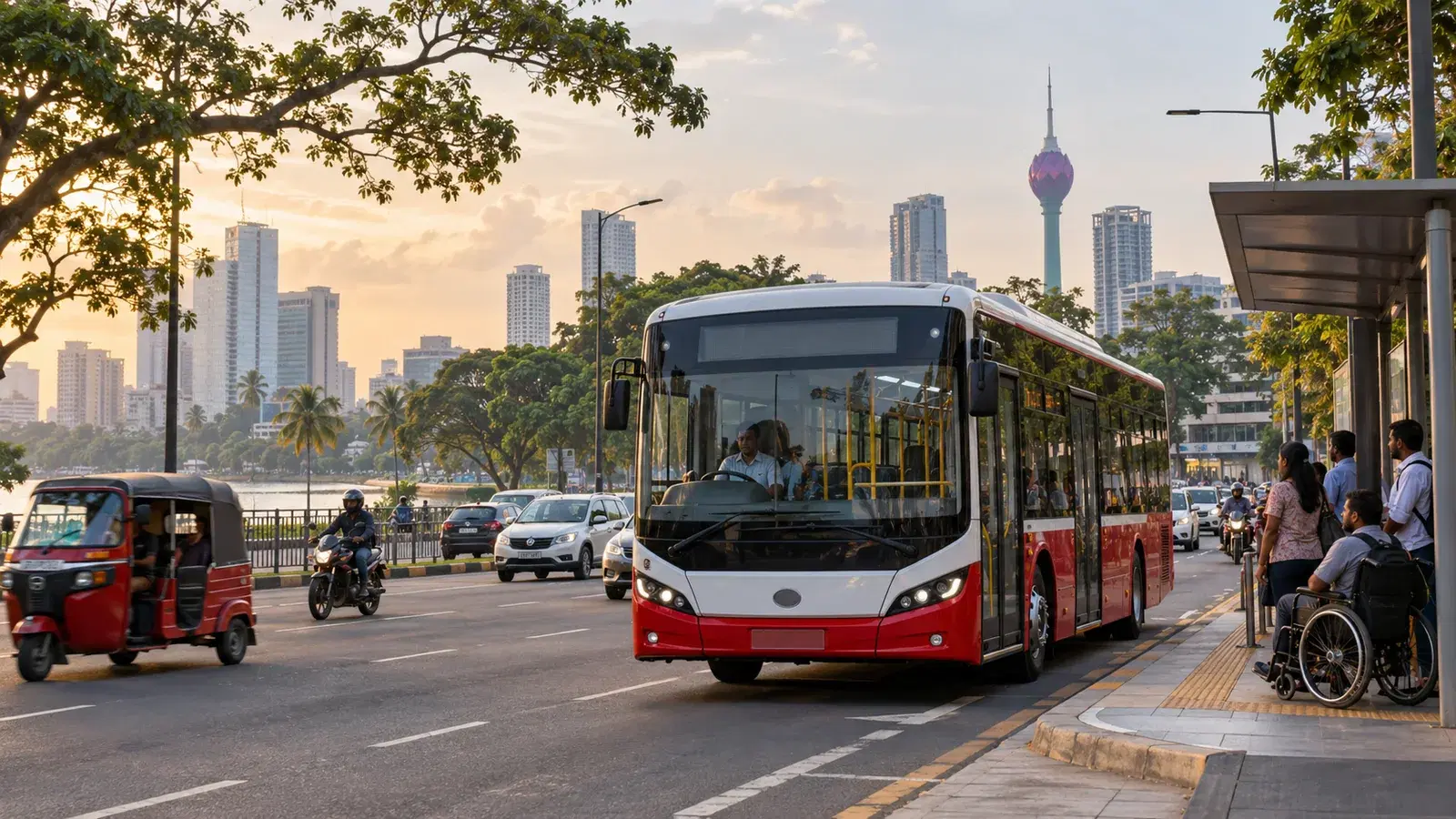
Run by Lanka Metro Transit, a new state-owned company, the Metro Bus uses modern air-conditioned, low-floor buses on fixed, numbered routes with app-based tracking and cashless ticketing. It started in April 2026 as a small accessible service of ten buses on two routes. On 29 September 2026, it expanded to seven routes and a fleet of 122 buses, launched by President Anura Kumara Dissanayake at the Thalangama depot.

Most of the coverage so far has been written for Sri Lankan commuters. This guide is for both residents and visitors. It explains where each route goes, how paying works, what the buses are like, and which routes are actually useful if you are travelling. We also flag what we could not confirm, because a service this new still has gaps in its published information.

If you remember one thing: this is a bus, not a train. It is far more comfortable than a regular Colombo bus, but it still sits in the same traffic for most of its journey.

Quick Summary

  • Metro Bus is run by Lanka Metro Transit (LMT), a government-owned company under the transport ministry
  • Seven routes have operated since 29 September 2026: CM01, CM02, CM03, CM04, CM05, CM06 and CM08
  • The fleet reached 122 buses on launch day, all air-conditioned and low-floor
  • Buses have wheelchair ramps and priority seating; the service began in April 2026 as an accessible pilot
  • Pay by tapping the LMT Touch card or scanning a QR ticket in the LMT GO app; LMT describes 'stage fares'
  • We could not find an official published fare table at the time of writing
  • There is no Metro Bus route to Bandaranaike International Airport
  • The operator says buses run every 5 to 10 minutes at peak; this is the operator's claim, not our measurement
  • At least one unofficial website styled as an 'official' Metro Bus hub uses outdated pilot route codes and timetables
  • Expansion to Kandy, Galle and Jaffna was announced for the end of 2026, with 50 more buses approved

What the Metro Bus Is

Lanka Metro Transit (Pvt) Ltd is a government-owned company operating under the Ministry of Transport, Highways and Urban Development. Its Cabinet approval came in 2025, and the Metro Bus programme was funded through the 2025 Budget.

The aim is to give people in Greater Colombo a public transport option comfortable enough to leave the car at home. Officials have specifically mentioned reducing the number of private vehicles entering Colombo with only one person inside.

The buses are air-conditioned and low-floor, with ramps for wheelchair users and dedicated priority seating. LMT says the fleet is Euro 6 standard, with CCTV, next-stop displays in English, Sinhala and Tamil, and live GPS tracking.

Each route has a 'CM' code and a colour. Routes run on fixed stops and schedules, rather than the stop-anywhere, leave-when-full approach of many private buses.

It is not a bus rapid transit system with separate lanes and stations along its whole length. Colombo has introduced priority bus lanes on some roads, but for most of their routes Metro buses share the road with everyone else.

Government-owned Lanka Metro TransitAir-conditioned, low-floor busesWheelchair ramps and priority seatingFixed stops and schedulesColour-coded CM routesShares the road with other traffic

How It Got Here: April to September 2026

21 April 2026: the pilot launched from the Makumbura Multimodal Centre with ten air-conditioned, low-floor buses designed for passengers with disabilities, on two routes — Makumbura to Colombo Fort and Makumbura to Kadawatha. The routes were planned to serve major hospitals, including Apeksha Hospital in Maharagama and the National Hospital in Colombo.

July 2026: a shipment of 104 new low-floor buses arrived at Colombo port, and refurbished low-floor buses arrived from Japan under a grant.

4 August 2026: Lanka Metro Transit published the seven-route network map, and the Cabinet approved 50 additional buses.

September 2026: new depots opened at Thalangama, Kadawatha and Ekala.

29 September 2026: the network expanded to seven routes. 112 new buses entered service — 104 under the Metro Bus programme and eight provided by the Government of Japan — bringing the fleet to 122.

Pilot: 21 April 2026, 10 buses, 2 routesRoute map published: 4 August 2026Expanded: 29 September 2026Fleet: 122 buses8 buses from Japan

The Seven Routes

These are the routes announced by Lanka Metro Transit, with distances from its official route presentation. Route endpoints and intermediate areas are as published; individual stops can change, so check the LMT GO app before you travel.

CM01 (Blue) — Makumbura to Pettah/Colombo Fort, 23.3 km, via Pannipitiya, Rajagiriya and Borella.

CM02 (Yellow) — Millennium City (Athurugiriya) to Colombo Fort/Pettah, 22.3 km, via Athurugiriya, Malabe and Borella.

CM03 (Indigo) — Kadawatha to Makumbura, 34.8 km. This descends from the original pilot route serving Apeksha Hospital, Nugegoda, Borella and Kiribathgoda.

CM04 (Orange) — Dematagoda to Panadura, 28.7 km, running south along the coast through areas including Dehiwala and Moratuwa.

CM05 (Purple) — Battaramulla (Thalangama depot) to Ekala, 29.9 km, with 21 stops including Sethsiripaya, Rajagiriya, Borella, Wattala, Kandana and Ja-Ela.

CM06 (Light Green) — Kollupitiya Circular Route, 14 km, a loop around central Colombo.

CM08 (Dark Green) — Kesbewa to Pettah, 35.7 km. One September report described this route as Kahathuduwa to Pettah/SLIIT; most reports and the official presentation use Kesbewa. Check the app.

There is no CM07 at present. The numbering suggests more routes are planned.

CM01 Makumbura – Pettah (23.3 km)CM02 Millennium City – Fort (22.3 km)CM03 Kadawatha – Makumbura (34.8 km)CM04 Dematagoda – Panadura (28.7 km)CM05 Battaramulla – Ekala (29.9 km)CM06 Kollupitiya Circular (14 km)CM08 Kesbewa – Pettah (35.7 km)

Tickets and Fares: How Paying Works

LMT promotes cashless travel. Its website describes two main methods: tapping an 'LMT Touch' card, or scanning a mobile QR ticket from the LMT GO app. The app is available on Google Play and the Apple App Store.

LMT describes its fares as 'transparent stage fares', meaning the fare depends on how far you travel, as on regular Sri Lankan buses.

Fare table: we could not find an official published fare table on LMT's website or in announcements at the time of writing. Check fares in the LMT GO app or ask the conductor.

Cash: reports from the April pilot said passengers could also pay the conductor in cash or by card. We could not confirm whether cash is accepted on every route after the expansion. If you do not have the app or a card, carry small notes and ask before boarding.

Where to get an LMT Touch card: we could not find published details. Ask at the Makumbura Multimodal Centre or on board.

For short-term visitors, the simplest approach is likely to be downloading LMT GO before your trip, then confirming payment options on your first ride.

Tap the LMT Touch cardOr scan a QR ticket in LMT GODistance-based 'stage fares'No official fare table found yetCash: reported at pilot stage, confirmDownload LMT GO before you go

The LMT GO App and Live Tracking

LMT GO is the official Metro Bus app. LMT says it offers live GPS bus tracking, stop arrival alerts, audio announcements, digital passes and timetables.

LMT's website also has a live bus map and a journey planner where you choose an origin and destination stop.

Use only the official app and lankametro.lk. At least one unofficial website presents itself as an 'official' Metro Bus information hub, but uses route codes and timetables from the pilot phase that do not match the current network — for example, labelling the Makumbura to Colombo Fort service with a different CM number. Information on such sites may be out of date.

LMT GO: official appLive GPS tracking and alertsJourney planner on lankametro.lkBeware unofficial 'official' sitesPilot-era timetables are outdated

Frequency, Hours and Journey Times

LMT's website advertises departures every 5 to 10 minutes during peak commuting hours. That is the operator's stated target; we have not measured it, and the network has only just expanded.

Operating hours for each route were not published in a form we could verify. On the pilot Makumbura to Colombo Fort route, the first morning departure was reported at 5.30 am, but timetables may have changed with the expansion.

Journey times depend heavily on traffic. A full run on the longer routes, such as Makumbura to Kadawatha or Kesbewa to Pettah, can take well over an hour at busy times.

Check live arrivals in LMT GO rather than relying on fixed times.

Operator claims 5–10 min at peakHours not yet published in fullLong routes can exceed an hourCheck live arrivals in the app

Accessibility

Accessibility is where the Metro Bus is genuinely different from almost every other bus in Sri Lanka.

The service began as an accessible pilot. The buses are low-floor, with manually deployed ramps for wheelchair users and dedicated wheelchair spaces. Each of the original pilot buses was described as carrying up to 80 passengers, with 33 seats.

Drivers and conductors were reported to receive special training covering passenger safety, passenger care and basic sign language.

For visitors with reduced mobility, older travellers and parents with pushchairs, this is currently the most accessible scheduled public transport in Colombo.

Stops themselves may not all be step-free or have smooth pavements. Check your boarding and alighting stops in advance if you use a wheelchair.

Low-floor with wheelchair rampsDedicated wheelchair spacesTrained staffBest accessible option in ColomboStops may not be step-free

Is the Metro Bus Useful for Visitors?

Honestly: for many tourist trips within central Colombo, a tuk-tuk or ride-hailing car will still be quicker and simpler. The Metro Bus was designed mainly for commuters travelling between the suburbs and the city. But several routes are useful.

CM06, the Kollupitiya Circular Route, runs around central Colombo and is the route most likely to suit visitors staying in the city centre. Check the live map for current stops.

CM04, Dematagoda to Panadura, runs south along the coast through Dehiwala and Moratuwa. It may be useful if you are staying in the Mount Lavinia and Dehiwala area.

CM01 and CM03 connect with the Makumbura Multimodal Centre, the terminal for expressway buses to Galle, Matara and the south. If you are heading south by highway bus, a Metro Bus to Makumbura is a comfortable way to reach it from Pettah or Borella.

CM01, CM02 and CM05 pass through Battaramulla and Sethsiripaya, near the parliament area and Diyatha Uyana park.

There is no Metro Bus route to Bandaranaike International Airport. CM05 runs to Ekala and Ja-Ela, which are north of Colombo but still short of the airport at Katunayake. Use the airport express bus, a taxi or a ride-hailing car.

Luggage: these are city buses with standing room and no luggage hold. They are not designed for large suitcases, especially at peak times.

CM06: central Colombo loopCM04: coastal south via DehiwalaCM01/CM03: Makumbura for southern highway busesNo airport routeNot built for big luggage

Metro Bus vs Regular Colombo Buses

Comfort: Metro buses are air-conditioned, newer, and designed to run to scheduled stops. Many regular buses are not air-conditioned and can be very crowded.

Reliability: Metro buses run to schedules with GPS tracking. Regular private buses often wait to fill up and compete for passengers.

Accessibility: Metro buses are low-floor with ramps. Most regular buses have high steps.

Coverage: Regular buses cover far more of the city and country. The Metro network is seven routes.

Cost: we could not confirm Metro fares. Regular bus fares in Sri Lanka are set by the national transport authorities, with the minimum fare raised to LKR 30 in 2026. Expect Metro fares to be higher than regular non-AC buses, as AC services usually are, but confirm.

Metro: AC and scheduledMetro: low-floor and accessibleRegular buses: far wider coverageFares: confirm Metro pricesRegular minimum fare LKR 30

What's Next: Kandy, Galle, Jaffna and More Buses

In August 2026, the Cabinet approved the purchase of 50 more low-floor buses, and the transport minister said the Metro Bus service would expand to Jaffna and Kandy by the end of 2026, with Galle also named for the next phase.

Lanka Metro Transit's website already refers to corridors in Kandy and Galle. As far as we could find, no Metro Bus routes outside Greater Colombo were operating at the time of writing.

Further depots, including in Ratmalana and Homagama, were planned for the Western Province, and the minister has said the private sector could operate Metro services under contract in future.

The long-term ambition stated in late 2025 was to serve eight major cities within three years.

50 more buses approvedKandy and Jaffna targeted for end of 2026Galle named for the next phaseNo routes outside Colombo yetEight cities in three years: stated goal

Tips for Your First Ride

Download LMT GO before you go and check live arrivals.

Board at the stop, not anywhere along the road; Metro buses stop at designated stops.

Avoid peak hours if you have bags or want a seat.

Give priority seats to older passengers, pregnant women, people with disabilities and clergy. On Sri Lankan buses, front seats are traditionally reserved for Buddhist monks.

Keep valuables secure, as on any crowded transport.

If you have a problem or a lost item, LMT lists phone numbers and a WhatsApp contact on its website.

Download LMT GO firstBoard only at designated stopsAvoid peak hours with bagsRespect priority seatingContact LMT via its website

Travel Tips

  • Metro Bus is a bus, not a train — it still sits in traffic
  • Download the official LMT GO app before your trip
  • Use only lankametro.lk and LMT GO for timetables
  • There is no Metro Bus to the airport
  • Confirm fares and cash acceptance on your first ride
  • Avoid peak hours with luggage
  • Board only at designated stops
  • CM06 is the most useful route for central Colombo
  • CM01 and CM03 reach Makumbura for southern highway buses

Frequently Asked Questions

What is the Sri Lanka Metro Bus?

It is a government-run, air-conditioned, low-floor bus service operated by Lanka Metro Transit in Greater Colombo, with fixed routes, scheduled stops, live tracking and cashless ticketing. Despite the name, it is not a rail metro.

Which Metro Bus routes are running?

Since 29 September 2026: CM01 Makumbura–Pettah, CM02 Millennium City–Colombo Fort, CM03 Kadawatha–Makumbura, CM04 Dematagoda–Panadura, CM05 Battaramulla–Ekala, CM06 Kollupitiya Circular and CM08 Kesbewa–Pettah.

How much does the Metro Bus cost?

LMT describes distance-based stage fares, but we could not find an official fare table at the time of writing. Check in the LMT GO app or ask the conductor.

How do I pay for the Metro Bus?

LMT promotes tapping an LMT Touch card or scanning a QR ticket in the LMT GO app. During the pilot, cash and card payment to the conductor were also reported; confirm on board whether cash is accepted on your route.

Does the Metro Bus go to the airport?

No. None of the seven routes serve Bandaranaike International Airport. CM05 runs north to Ekala and Ja-Ela but stops short of Katunayake.

Is the Metro Bus wheelchair accessible?

Yes. The buses are low-floor with manually deployed ramps and wheelchair spaces, and the service began as a pilot for passengers with disabilities. Stops may not all be step-free.

How often do Metro buses run?

LMT advertises departures every 5 to 10 minutes at peak times. Check live arrivals in the LMT GO app.

Is there a Metro Bus in Kandy or Galle?

Not yet, as far as we could find. Expansion to Kandy and Jaffna was announced for the end of 2026, and Galle has been named for the next phase.

Which route is best for tourists?

CM06, the Kollupitiya Circular Route, is the most useful for central Colombo. CM04 runs south along the coast, and CM01 and CM03 reach the Makumbura Multimodal Centre for expressway buses to the south.

Is metrobus.lk the official website?

The official operator website is lankametro.lk, and the official app is LMT GO. Use these for current routes and timetables; some other sites show outdated pilot-era information.

Reader notes

Join the conversation

Share your question, tip, or travel experience for this guide.

Comments

0 comments

Loading...

Ready to turn inspiration into a Sri Lanka trip?

Use LankaTrip to plan your journey, connect with local guides, and make this itinerary a reality.

Need help planning?

Plan your Sri Lanka adventure

Plan my trip