
LankaTrip Insights

24 min read

The Cultural Triangle in 2026 and 2027: How Many Days, Where to Base Yourself, and What It Really Costs

Sigiriya, Dambulla, Anuradhapura and Polonnaruwa cost around USD 95 in tickets before anyone buys a bottle of water, and the combined round ticket that half the internet still sells does not appear on the Central Cultural Fund's own price table. Here is the honest cost, the right number of days, and where to sleep.

Back to blog
The Cultural Triangle in 2026 and 2027: How Many Days, Where to Base Yourself, and What It Really Costs

The Cultural Triangle is the region bounded by Anuradhapura in the north, Polonnaruwa in the east and Kandy in the south, with Sigiriya and Dambulla sitting in the middle. It contains five UNESCO World Heritage Sites and around two thousand years of continuous history, and it is the single densest concentration of things worth seeing in Sri Lanka.

It is also the part of a Sri Lankan itinerary that people most often get structurally wrong — not by choosing bad sites, but by choosing the wrong number of days, the wrong base, and the wrong order.

The common failure looks like this. Three nights in Kandy, day trips to Sigiriya and Polonnaruwa, and a rushed morning at Dambulla on the way somewhere else. That itinerary involves roughly eleven hours in a vehicle, hits the two biggest climbs in the heat of the day, and skips Anuradhapura entirely because there was no time. It is also, more or less, what a great many tour operators sell.

We have written separate guides to Sigiriya and Dambulla, and to Anuradhapura and Polonnaruwa. This one sits above them and answers the questions that come first: how many days you actually need, where to sleep, what order to go in, how to get between the sites, and what the whole thing costs.

On that last point, we checked the Central Cultural Fund's published price table rather than copying figures from other travel articles, and the numbers differ from most of what is circulating. The combined round ticket that a large number of sites still sell does not appear on the Fund's table at all.

Quick Summary

  • The four major sites cost around USD 95 per adult in tickets: Sigiriya USD 35, Polonnaruwa USD 30, Anuradhapura USD 30, plus Dambulla separately in rupees
  • The USD 50 combined round ticket does not appear on the Central Cultural Fund's own price table, though third-party sites still advertise it
  • Every ticket is single-entry, valid on one day only — there is no multi-day pass
  • Four days is the realistic minimum for the four major sites; five or six is better
  • Sigiriya, Dambulla and Habarana are the three sensible bases; Habarana is the most central
  • Anuradhapura and Polonnaruwa sit on opposite sides of the triangle and cannot share a base comfortably
  • Do Dambulla and Polonnaruwa before Anuradhapura — they build the vocabulary that makes Anuradhapura legible
  • Two major sites in one day is the ceiling, and one is usually better
  • Everything depends on starting at dawn; by ten in the morning the heat and crowds have both arrived
  • Pidurangala costs around Rs 1,000 and gives you the view of Sigiriya rather than the view from it

What the Cultural Triangle Actually Contains

The name is a tourism construct rather than an administrative region, and it is worth knowing what it covers before planning around it.

The three corners are Anuradhapura, Polonnaruwa and Kandy — the three historical capitals. Sigiriya and Dambulla sit inside the triangle, roughly in the middle, which is why almost everyone bases there.

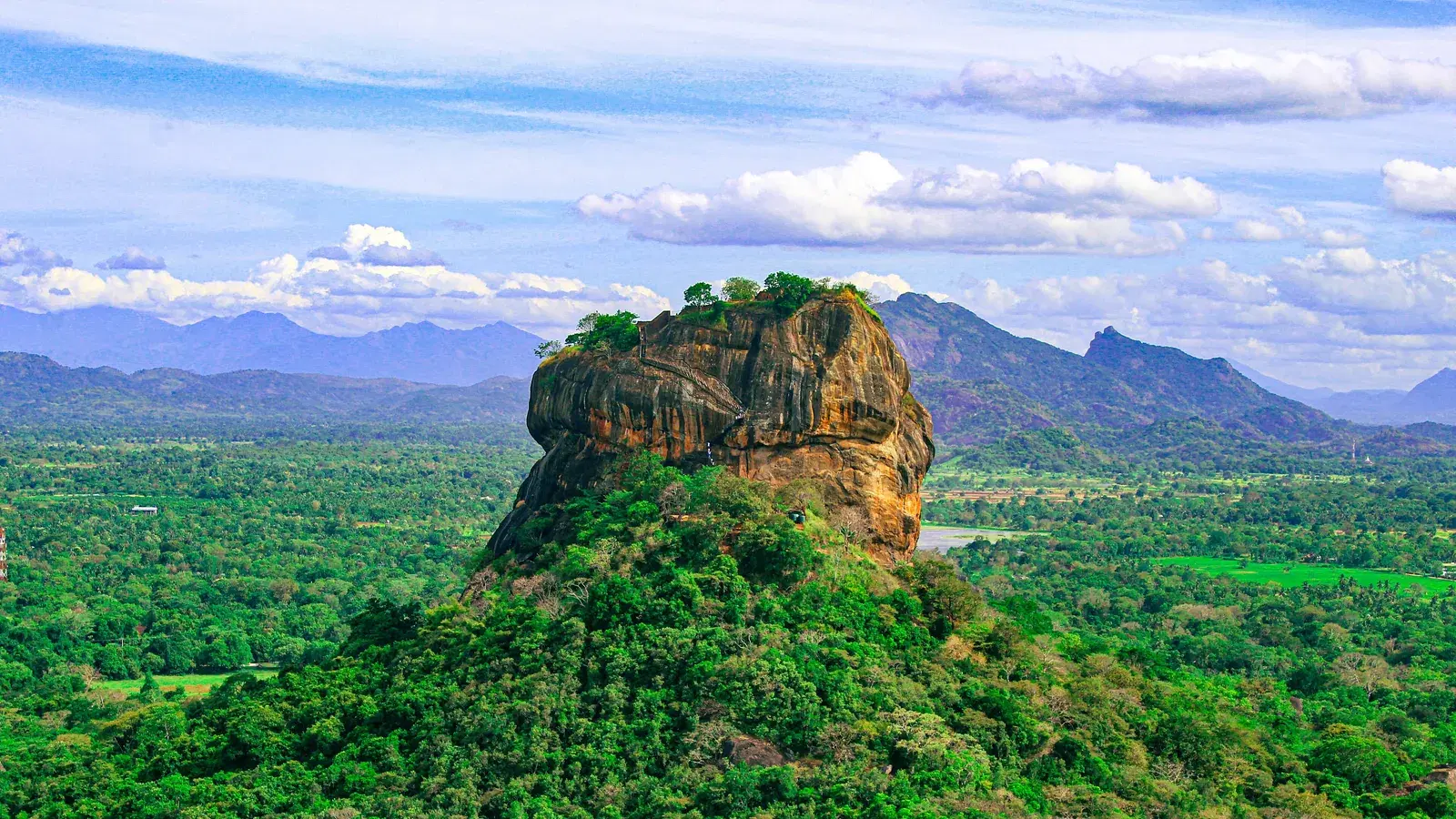
The four sites nearly everyone visits: Sigiriya, the fifth-century rock citadel with its frescoes and mirror wall. Dambulla, five cave temples cut into a rock overhang and painted across their entire surface. Anuradhapura, the capital for roughly 1,300 years and the largest and most dispersed of the sites. Polonnaruwa, the compact medieval capital that succeeded it, with Gal Vihara's rock-cut Buddhas as its centrepiece.

Kandy is the fifth point and belongs to a different kind of trip. It is a functioning modern city in the hills rather than an archaeological site, its major draw is the living Temple of the Tooth rather than ruins, and it sits at the gateway to the hill country. Most itineraries treat Kandy as a separate leg rather than part of the Triangle proper, and we think that is right.

Then there are the secondary sites, which are genuinely good and almost entirely uncrowded: Mihintale, where Buddhism arrived in Sri Lanka. Ritigala, a forest monastery ruin. Pidurangala, the rock beside Sigiriya. Nalanda Gedige, a small stone temple with unusual architecture. Avukana, a colossal standing Buddha carved from a rock face. Medirigiriya's circular vatadage. Yapahuwa, a rock fortress that gets a fraction of Sigiriya's visitors. And Ibbankatuwa, a prehistoric burial site.

A useful way to think about the region: two enormous dispersed sites you need a full day each for, two compact ones you can do in half a day each, and a long tail of smaller places that fill gaps and are almost always empty.

Corners: Anuradhapura, Polonnaruwa, KandyCentre: Sigiriya and Dambulla, where most people baseKandy is best treated as a separate legSecondary sites are good and nearly emptyTwo big dispersed sites, two compact ones

What It Actually Costs

These figures come from the Central Cultural Fund's own published price table, which carries a timestamp and the exchange rate applied that day. They are not copied from other travel articles, and they do not match most of them.

Sigiriya: USD 35 full ticket, USD 20 half. The Sigiriya Museum is USD 6 if bought separately.

Polonnaruwa: USD 30 full, USD 15 half.

Anuradhapura: USD 30 full, USD 15 half.

Smaller CCF sites: Ritigala USD 6, Dambulla Museum USD 3, Ibbankatuwa USD 3, and a number of others in the USD 1.50 to USD 6 range.

Sites administered outside the Fund and priced in rupees: Dambulla's cave temples, Mihintale, Pidurangala, the Temple of the Tooth in Kandy, Yapahuwa. Published figures for these vary considerably between sources — Dambulla's caves in particular are quoted at Rs 1,500, Rs 3,000 and various dollar equivalents across different sites, and we could not establish which is current. Budget the higher end and carry cash.

The half ticket applies to children aged six to twelve, and to SAARC nationals with a passport to prove it. Under six is free.

So the realistic total for two non-SAARC adults doing the four major sites: USD 190 in Central Cultural Fund tickets for three of them, plus Dambulla in rupees, plus any secondary sites. Call it comfortably over USD 200 before transport, food or accommodation. This surprises people and it is better to know now.

Now the round ticket question, because it matters. A combined Cultural Triangle round ticket priced at USD 50 for two months, or fourteen days depending on which source you read, is still advertised across a large number of travel sites and booking pages. It does not appear on the Central Cultural Fund's published price table, which lists individual site prices only. Reporting from within Sri Lanka has described the Fund as having discontinued the all-inclusive ticket in favour of individual site tickets. We were unable to find any official current offer of a round ticket.

Treat it as not available and budget per site. If it turns out to exist and you can buy one, that is a pleasant surprise rather than a broken plan. Planning the other way round leaves you USD 140 short at a ticket counter.

One more constraint that shapes itineraries: tickets are valid for a single entry on one day only. There is no multi-day pass at any of these sites. Two days at Anuradhapura means two full-price tickets.

Sigiriya USD 35, Polonnaruwa USD 30, Anuradhapura USD 30Dambulla, Mihintale, Pidurangala and Kandy are priced separately in rupeesTwo adults doing all four: comfortably over USD 200 in ticketsThe USD 50 round ticket is not on the CCF price table — do not plan around itEvery ticket is single-entry, one day only

How Many Days You Actually Need

The honest answer, working from what each site demands rather than from what fits a two-week itinerary.

Sigiriya: half a day, but it must be the first half. The climb is roughly 1,200 steps with almost no shade, and it becomes genuinely unpleasant after about nine in the morning. Two to three hours at the site.

Dambulla: two to three hours, including the climb to the caves. Works well in the late afternoon, when the light in the caves is at its best and the tour buses have gone.

Polonnaruwa: half a day for the highlights, a full day to do it properly with the museum. Best by bicycle.

Anuradhapura: a full day at a reasonable pace, and two days to do it well. It is vast and dispersed and it does not reward rushing.

Add those up and the arithmetic is straightforward. Four days is the realistic minimum to see the four major sites without compressing any of them. Five gives you a secondary site or a rest day. Six lets you give Anuradhapura the two days it deserves.

Three days is possible if you pair Sigiriya and Dambulla on one day, which works well, and accept a rushed single day at each of the other two. Two days means choosing two sites and skipping the others, and that is a legitimate choice — better to see two properly than four badly.

The hard ceiling worth internalising: two major sites in one day is the maximum, and the only pairing that genuinely works is Sigiriya in the morning with Dambulla in the late afternoon, because they are fifteen kilometres apart and complement each other. Anuradhapura and Polonnaruwa cannot be paired — they are around 100 km apart on opposite sides of the triangle, and attempting both in a day means several hours driving and two hours at each in peak heat, after paying USD 60 in tickets.

A note on heat, because it is the real constraint here rather than distance. The Cultural Triangle sits in the dry zone and the sites are largely unshaded. The difference between arriving at seven and arriving at ten is not marginal — it is the difference between a pleasant morning and an ordeal. Every itinerary in this article assumes dawn starts, and none of them work without them.

Sigiriya half a day, and it must be the morningDambulla two to three hours, good in late afternoonPolonnaruwa half to full day, best by bicycleAnuradhapura a full day minimum, two to do it wellFour days minimum for all four; five or six is better

Where to Base Yourself

This is the decision that most affects how much of your time you spend looking at things versus sitting in a vehicle, and it is the question people most often get wrong.

Habarana is the most central option. It sits roughly between Sigiriya, Dambulla, Polonnaruwa and the road north to Anuradhapura, which makes it the shortest average transfer to everything. It is a small town with limited atmosphere of its own — you are there for the logistics rather than the place. Around 35 km from Polonnaruwa and around 60 km from Anuradhapura.

Sigiriya village is the most pleasant base. Quiet, rural, close enough to the rock to be at the gate at opening without an early drive, and with the best concentration of good small accommodation in the region. Slightly further from Polonnaruwa and Anuradhapura than Habarana, but not meaningfully so. For most travellers this is the right choice.

Dambulla is the most practical for transport. It sits on the main road junction, has the best bus connections, and is convenient if you are moving by public transport rather than with a driver. The town itself is functional rather than charming.

Kandy as a base for the Triangle is the mistake to avoid. It is around 90 km to Sigiriya on mountain roads, which is two and a half to three hours each way in practice. Day-tripping from Kandy to Sigiriya means leaving before dawn, and day-tripping to Anuradhapura or Polonnaruwa from Kandy is simply not sensible. Kandy is worth visiting; it is not a Cultural Triangle base.

The alternative approach, which suits some people better: stay in each place. A night in Polonnaruwa town, two in Anuradhapura, two in Sigiriya. You spend less time in transit, you can do dawn and dusk at each site, and Anuradhapura in the evening is one of the best experiences in the region. The cost is more packing and unpacking, and generally less good accommodation in Anuradhapura and Polonnaruwa than around Sigiriya.

Our recommendation for most people: base in Sigiriya village or Habarana for three to four nights, and add one night in Anuradhapura if you want to give that site the two days it deserves. That combination minimises transfers without trapping you in a logistics town.

Habarana: most central, least atmosphericSigiriya village: most pleasant, best accommodationDambulla: best for public transportKandy: not a Cultural Triangle base, despite being sold as oneBest hybrid: Sigiriya or Habarana, plus one night in Anuradhapura

The Order Matters More Than You Would Expect

There is a sequencing argument here that almost nobody makes, and it materially changes how much you get out of the region.

Start with Dambulla. The cave temples are visually immediate — painted ceilings, rows of Buddha images, nothing requiring background knowledge to appreciate. They also introduce the iconography you will see everywhere afterwards.

Then Polonnaruwa. It is compact and coherent, built quickly by a small number of kings with a plan, and it survives as a comprehensible medieval city. Crucially, it teaches you the vocabulary: stupa, vatadage, moonstone, guardstone, image house. The museum's scale models of the buildings as they originally stood do more for comprehension than any amount of reading.

Then Anuradhapura. Vast, dispersed, accumulated over more than a millennium with no single plan, and much harder to read. Arriving here already knowing what a moonstone is and what a vatadage was for is the difference between a meaningful day and a hot one spent among large white domes.

Sigiriya fits anywhere, because it is unlike everything else in the region and does not depend on context. Put it wherever the weather and your energy suit — though always in the morning.

Doing it in the reverse order, which is what a north-to-south itinerary produces, wastes some of Anuradhapura on you. If you are travelling from Colombo, you will pass Dambulla first anyway, so the natural geography and the right pedagogy align.

One further sequencing note: if you are also visiting Mihintale, do it after Anuradhapura rather than before. It is where Buddhism arrived in Sri Lanka, and it lands far harder once you have seen what that arrival eventually built.

Dambulla first — visually immediate, no background neededPolonnaruwa second — teaches you the vocabularyAnuradhapura third — needs that vocabulary to make senseSigiriya anywhere, but always in the morningMihintale after Anuradhapura, not before

Getting There and Getting Around

The Cultural Triangle is the part of Sri Lanka where hiring a driver makes the most sense, and it is worth being clear about why.

The sites are dispersed across a large area with no useful rail links between them, the roads are decent but the distances are real, and the single most valuable thing you can buy here is the ability to leave at six in the morning. A driver who agrees to a dawn departure is worth more than one who charges less.

By public transport it is entirely doable and considerably cheaper. Dambulla is a major bus junction with good connections in every direction. Anuradhapura is on the restored northern railway line and reachable from Colombo by train, which is both faster and more comfortable than the bus on that corridor. Polonnaruwa is on the slow Batticaloa line and most people reach it by road. Within the region, buses run frequently between the main towns, and tuk-tuks cover the last mile to the sites.

The public transport catch is the same one that applies everywhere in Sri Lanka: buses have essentially no luggage storage, and a dawn start by bus is harder to arrange than a dawn start by car.

Within individual sites, the answer differs. Polonnaruwa is best by bicycle — flat, compact, about four kilometres end to end, with hire available at the museum. Anuradhapura is too spread out and too unshaded for most people to cycle comfortably; a tuk-tuk hired for the day is the realistic choice unless you start at seven and finish by mid-morning. Sigiriya and Dambulla are walk-in sites once you arrive.

Approximate distances for planning: Colombo to Dambulla around 150 km. Dambulla to Sigiriya around 20 km. Habarana to Polonnaruwa around 35 km. Habarana to Anuradhapura around 60 km. Anuradhapura to Polonnaruwa around 100 km. Sigiriya to Kandy around 90 km on mountain roads, which takes far longer than the distance suggests.

Getting in and out: most people arrive from Colombo or Negombo and leave toward Kandy and the hill country, or toward Trincomalee on the east coast. Both work. The Kandy leg is the one to allow extra time for.

A driver's real value is enabling dawn startsDambulla is the public transport hub; Anuradhapura has railCycle Polonnaruwa; take a tuk-tuk at AnuradhapuraSigiriya to Kandy is 90 km but two and a half to three hoursAllow extra time for the Kandy leg specifically

Sigiriya or Pidurangala, and Why Not Both

This question comes up constantly and deserves a direct answer rather than the usual fence-sitting.

Sigiriya is USD 35 and is the site itself — the water gardens, the frescoes, the mirror wall, the lion's paws, the summit palace ruins. It is one of the great archaeological sites in Asia and the ticket price reflects that.

Pidurangala is a neighbouring rock, temple-administered, at around Rs 1,000. The climb is shorter, rougher and involves a scramble over boulders near the top. What it gives you is the view of Sigiriya, which Sigiriya itself obviously cannot.

They are not substitutes. Pidurangala is the better photograph; Sigiriya is the better experience. If your interest is a sunrise picture of a rock rising out of jungle, Pidurangala at dawn delivers it for a fraction of the price. If your interest is the fifth-century citadel — the engineering, the frescoes, the audacity of building a palace on top of that — only Sigiriya delivers it.

Doing both is entirely reasonable and many people do: Pidurangala at sunrise, Sigiriya later the same morning. The physical demand of two climbs before ten in the morning is real, so be honest about your fitness.

Skipping Sigiriya purely on cost is a decision we would gently push back on. It is the most expensive ticket in the country and it is also the thing most people remember from their trip. If the budget is genuinely tight, skip a national park instead.

One practical note on Sigiriya: the climb involves narrow metal staircases at the upper sections, and congestion on them is the defining memory for many peak-season visitors. Being at the gate at opening is not an optimisation here, it is the whole strategy. It also matters for anyone uneasy with heights or enclosed queuing.

Sigiriya USD 35 is the site; Pidurangala around Rs 1,000 is the view of itThey are complements, not substitutesPidurangala at sunrise, Sigiriya after, is a common and good planDo not skip Sigiriya purely on costBe at the Sigiriya gate at opening — the staircases congest badly

The Sites Almost Nobody Visits

If you have five or six days, the secondary sites are where the region gets genuinely rewarding, largely because you will often have them to yourself.

Mihintale, around 13 km east of Anuradhapura, is where Buddhism arrived in Sri Lanka in the third century BC. A long granite stairway of roughly 1,840 broad, shallow steps rises through terraces to the Ambasthala Dagoba and a view across the plain toward Anuradhapura's stupas. Ticketed separately at around Rs 1,000. Two to three hours.

Ritigala is a ruined forest monastery on a mountainside, reached through jungle, with stone pathways and meditation platforms rather than dramatic monuments. It is atmospheric in a way none of the big sites are, and it costs USD 6. Go for the quiet.

Avukana is a colossal standing Buddha, around twelve metres tall, carved from a granite rock face and considered one of the finest sculptures in the country. It sits by the Kala Wewa reservoir and receives a small fraction of the visitors it deserves.

Nalanda Gedige is a small stone temple between Dambulla and Kandy with unusual architecture that draws on both Hindu and Buddhist traditions. Twenty minutes, but an interesting twenty minutes and it is on the road you will be driving anyway.

Medirigiriya has a circular vatadage comparable to Polonnaruwa's, set in open countryside with almost nobody there.

Yapahuwa is a rock fortress with a spectacular ornamental staircase, roughly on the route between Colombo and Anuradhapura. It gets a tiny fraction of Sigiriya's visitors and is ticketed separately in rupees.

Ibbankatuwa is a prehistoric burial site, which sounds dry and is genuinely interesting if you want a reminder that the island had a long history before any of the capitals.

A realistic approach: pick one or two of these rather than trying to add them all. Ritigala and Avukana are our picks if you only have room for two, and Mihintale is close to essential if you are giving Anuradhapura two days.

Mihintale: where Buddhism arrived, around Rs 1,000Ritigala: ruined forest monastery, USD 6, atmospheric and emptyAvukana: a twelve-metre standing Buddha, badly under-visitedNalanda Gedige: twenty minutes on a road you are driving anywayPick one or two rather than trying to add them all

The Mistakes That Cost People Their Cultural Triangle

Drawn from what consistently goes wrong, and all of them avoidable.

Basing in Kandy. The most common structural error, and the most expensive in time. Two and a half to three hours each way to Sigiriya on mountain roads, and Anuradhapura effectively out of reach.

Starting at ten. The heat and the crowds arrive together and both are worse than people expect. Every site in this region is a different place at seven in the morning.

Trying to pair Anuradhapura and Polonnaruwa. They are around 100 km apart. It is sold as a day trip and it is a poor use of USD 60 in tickets.

Assuming the round ticket exists. It is not on the Central Cultural Fund's price table and planning around it leaves you significantly short at a counter.

Assuming a ticket covers two days. It does not. Single entry, single day, every site.

Assuming one ticket covers everything at Anuradhapura. It does not — Isurumuniya charges separately, Mihintale is a different site entirely, and sources disagree about several others. Carry small rupee notes.

Underestimating Anuradhapura and overestimating Sigiriya. Sigiriya is two to three hours. Anuradhapura is a day, or two. Itineraries are routinely built the other way round.

Skipping the Polonnaruwa museum. Its scale models are what turn brick foundations into buildings you can picture. Forty-five minutes, and it should come before you ride rather than after.

Going without a guide at Anuradhapura. It is the one site in the region that genuinely does not explain itself, and the difference a licensed guide makes there is larger than anywhere else in the country.

Booking dinner after a big site day. You will be exhausted, sunburnt and in no state for a set menu at seven.

Do not base in KandyDo not start at tenDo not pair Anuradhapura with PolonnaruwaDo not assume a round ticket or a two-day ticket existsDo not skip the Polonnaruwa museum or a guide at Anuradhapura

Visiting Considerately

These are living religious sites as much as archaeological ones, and a handful of conventions matter more here than almost anywhere else in the country.

Cover shoulders and knees at every site, not just the obviously religious ones. Carry a sarong or scarf. White is customary and always appropriate at Anuradhapura.

Shoes and hats come off at sacred precincts, and the stone becomes too hot to walk on barefoot from mid-morning. Socks in your bag solve this.

Never photograph yourself with your back to a Buddha image. This is enforced, it causes genuine offence, and foreign visitors have been detained and deported over it. The same applies to posing beside, touching, sitting on or climbing any Buddha image. Visible Buddha tattoos have led to people being refused entry to the country.

Drones require prior written approval from the Central Cultural Fund. Flying without it at a heritage site is prohibited and this is stated plainly in the Fund's own ticket terms.

Do not climb on structures, remove anything, or touch frescoes. Damaging archaeological structures at a World Heritage site is a criminal offence in Sri Lanka.

Keep your voice down near active worship. At Sri Maha Bodhi and Ruwanwelisaya you will often be metres from people engaged in something significant to them.

Hire licensed guides rather than whoever offers at the gate. Licensed guides have been trained and examined, the difference in what you learn is substantial, and it is a livelihood that has had several difficult years.

Buy water, food and souvenirs from the small stalls around the sites rather than bringing everything from a hotel. The margins are thin and the season is short.

And tip the shoe-minders a small note. It is a real service, it is expected, and it costs almost nothing.

Cover shoulders and knees at every siteCarry socks — stone terraces burn by mid-morningNever photograph with your back to a Buddha imageDrones need prior written CCF approvalHire licensed guides and buy from the local stalls

Travel Tips

  • Budget around USD 95 per adult in tickets for the four major sites
  • Do not plan around a combined round ticket; it is not on the CCF price table
  • Every ticket is single-entry, one day only — two days means two tickets
  • Check the CCF price page on the day; USD figures are stable but rupee amounts move
  • Carry cash — card machines at ticket counters frequently fail
  • Carry small rupee notes for separately-ticketed sites at Anuradhapura
  • Base in Sigiriya village or Habarana, never in Kandy
  • Start every site day at dawn; this matters more than any other decision
  • Do Dambulla and Polonnaruwa before Anuradhapura
  • Never try to pair Anuradhapura and Polonnaruwa in one day
  • Cycle Polonnaruwa, take a tuk-tuk at Anuradhapura
  • Do the Polonnaruwa museum before you ride, not after
  • Hire a licensed guide at Anuradhapura specifically
  • Carry socks — stone terraces are too hot to walk on barefoot by mid-morning
  • Cover shoulders and knees, and carry a sarong or scarf
  • Never photograph yourself with your back to a Buddha image
  • Allow two and a half to three hours for the Sigiriya to Kandy transfer

Frequently Asked Questions

How many days do I need for the Cultural Triangle?

Four days is the realistic minimum for Sigiriya, Dambulla, Polonnaruwa and Anuradhapura without compressing any of them. Five gives you a secondary site or a rest day, and six lets you give Anuradhapura the two days it deserves. Three is possible if you pair Sigiriya and Dambulla on one day and accept rushing the other two.

How much does the Cultural Triangle cost in tickets?

Around USD 95 per non-SAARC adult for the four major sites: Sigiriya USD 35, Polonnaruwa USD 30, Anuradhapura USD 30, plus Dambulla's caves separately in rupees. Two adults will spend comfortably over USD 200 before transport, food or accommodation. Children aged six to twelve pay half; under six is free.

Is there still a combined Cultural Triangle ticket?

Not as far as we can establish. The USD 50 round ticket is still advertised on many travel sites, but it does not appear on the Central Cultural Fund's own published price table, which lists individual site prices only. Budget per site rather than planning around a bundle you may not be able to buy.

Where should I stay for the Cultural Triangle?

Sigiriya village for the nicest experience and the best small accommodation, Habarana for the most central location, or Dambulla if you are travelling by public transport. Add a night in Anuradhapura if you want two days there. Do not base in Kandy — it is two and a half to three hours to Sigiriya on mountain roads.

Can I do the Cultural Triangle as a day trip from Kandy?

You can reach Sigiriya and Dambulla in a very long day, leaving before dawn and spending five to six hours in a vehicle. Polonnaruwa is a stretch and Anuradhapura is not sensible. If the Cultural Triangle matters to you, stay in it.

What order should I visit the sites in?

Dambulla, then Polonnaruwa, then Anuradhapura, with Sigiriya wherever it fits — always in the morning. Polonnaruwa is compact and teaches you the architectural vocabulary that makes the vast, dispersed Anuradhapura legible. Doing it in reverse wastes some of Anuradhapura on you.

Can I visit Anuradhapura and Polonnaruwa on the same day?

Physically yes, sensibly no. They are around 100 km apart on opposite sides of the triangle, so a combined day means hours of driving and roughly two hours at each site in the worst heat, after paying USD 60 in tickets.

Is Sigiriya worth USD 35, or should I just climb Pidurangala?

They are not substitutes. Pidurangala, at around Rs 1,000, gives you the view of Sigiriya. Sigiriya gives you the site — water gardens, frescoes, mirror wall, summit palace. Many people do both: Pidurangala at sunrise, Sigiriya after. If budget is genuinely tight, we would skip a national park before skipping Sigiriya.

Do I need a guide?

At Anuradhapura, strongly yes — it is the one site in the region that does not explain itself. At Polonnaruwa the museum's scale models do most of the work. At Sigiriya and Dambulla a guide adds value but is not essential. Hire licensed guides rather than whoever offers at the gate.

Can I use one ticket across two days at the same site?

No. Every Central Cultural Fund ticket is valid for a single entry on one day only. Two days at Anuradhapura means two full-price tickets.

What is the best time of year to visit?

The Cultural Triangle sits in the dry zone and works year-round, but the time of day matters far more than the time of year. The sites are largely unshaded and become punishing after mid-morning in every month, so dawn starts are non-negotiable regardless of season.

Is Kandy part of the Cultural Triangle?

It is one of the three corners historically, but it functions differently on a trip — a modern city in the hills whose main draw is the living Temple of the Tooth rather than archaeological ruins. Most itineraries treat it as a separate leg on the way to the hill country, and we think that is right.

Which lesser-known sites are worth adding?

Mihintale if you are giving Anuradhapura two days — it is where Buddhism arrived in Sri Lanka. Ritigala, a ruined forest monastery at USD 6, for atmosphere and quiet. Avukana, a twelve-metre standing Buddha carved from rock, which is badly under-visited. Pick one or two rather than trying to add them all.

Reader notes

Join the conversation

Share your question, tip, or travel experience for this guide.

Comments

0 comments

Loading...

Ready to turn inspiration into a Sri Lanka trip?

Use LankaTrip to plan your journey, connect with local guides, and make this itinerary a reality.

Need help planning?

Plan your Sri Lanka adventure

Plan my trip