
LankaTrip Insights

17 min read

10 Hidden Gems in Sri Lanka Most Tourists Never Visit in 2026

Sigiriya, Ella, and Mirissa deserve their fame, but Sri Lanka's most memorable moments often happen far from the crowds. These 10 hidden gems — from Blue Beach Island to Gal Oya, Mannar, and Riverston — show you a side of the island most travelers never see in 2026.

Back to blog
10 Hidden Gems in Sri Lanka Most Tourists Never Visit in 2026

Ask most travelers what they plan to see in Sri Lanka and the answers are consistent: Sigiriya Rock, the Ella train, Kandy's Temple of the Tooth, Galle Fort, Mirissa's whales, and a safari at Yala. These places are popular for good reasons, and they belong on many first-time itineraries.

But Sri Lanka is a far bigger island than the classic loop suggests. Beyond the well-worn southern and central circuit are tied islands you can walk to across the ocean, national parks where safaris happen by boat, northern towns where the food and culture feel like a different country, and waterfalls taller than anything on the standard route.

In 2026, with visitor numbers around the famous attractions continuing to climb, going slightly off the main trail is one of the easiest ways to transform a good trip into an unforgettable one. Many of these places sit only an hour or two from destinations you were already planning to visit.

This guide covers 10 hidden gems most tourists never visit, chosen from every corner of the island. For each one, you'll find what makes it special, the best season, honest practical notes, and how to fit it into a realistic itinerary.

You don't need to skip the famous sights. The best approach is to combine a few classics with two or three of these quieter places, so you experience both the Sri Lanka everyone photographs and the Sri Lanka most visitors never see.

Quick Summary

  • Sri Lanka's famous highlights are worth visiting, but the island's quietest corners often leave the deepest impression
  • Blue Beach Island near Nilwella is a tied island reached on foot across a sandbank at low tide
  • Gal Oya is the only national park in Sri Lanka where safaris happen by boat, with elephants sometimes seen swimming between islands
  • Mannar and Jaffna reward travelers who head north with baobab trees, flamingos, island culture, and Tamil cuisine
  • Riverston, Bambarakanda, and Heel Oya offer hill-country beauty without Ella-level crowds
  • Different gems peak in different seasons, so at least one is always in season no matter when you visit in 2026
  • Combining 2 or 3 hidden gems with the classic route creates a far more balanced Sri Lanka itinerary

1. Blue Beach Island, Nilwella: Walk Across the Ocean

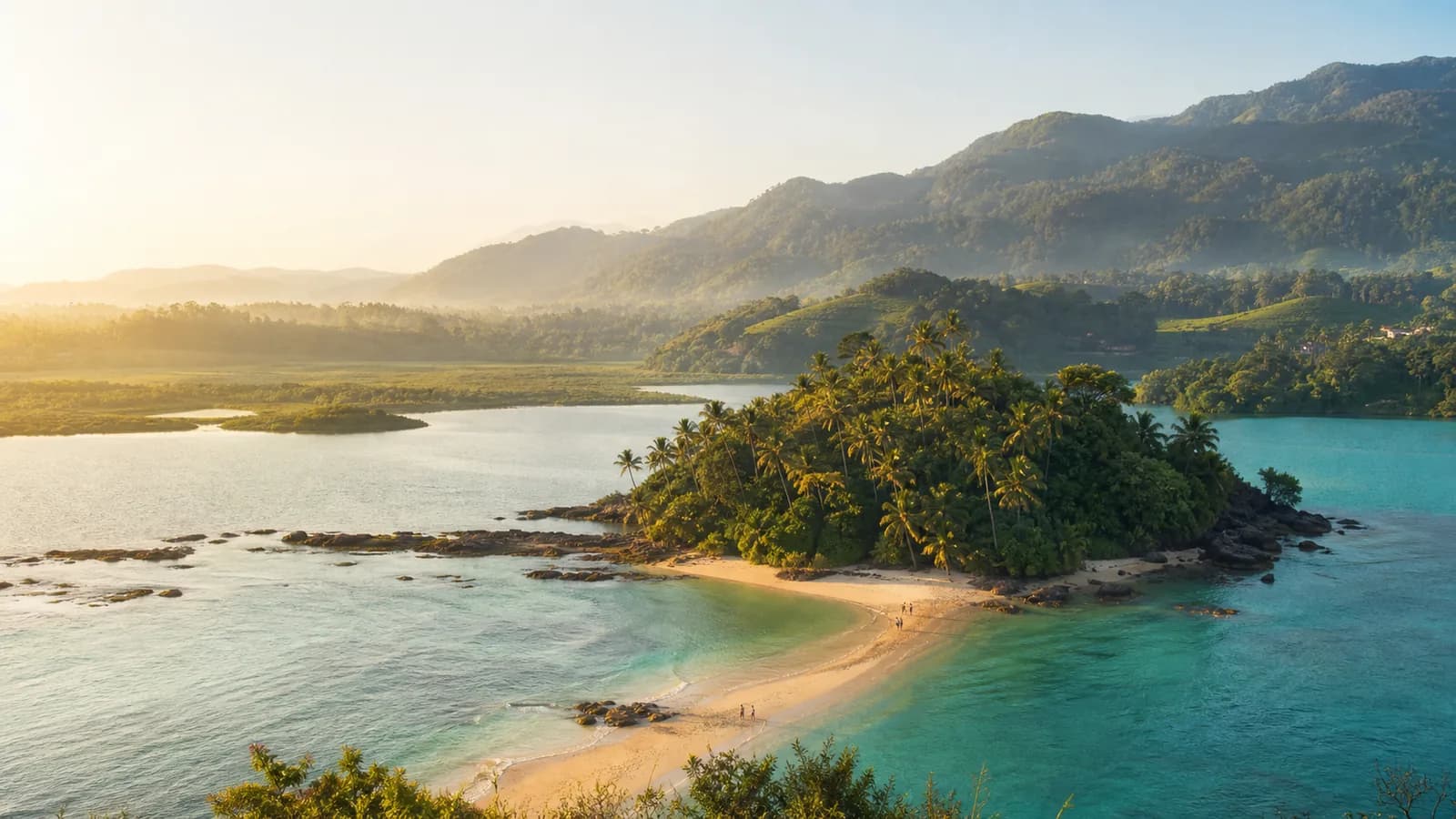
Just off the coast at Nilwella, between Dikwella and Tangalle on the south coast, Blue Beach Island is one of Sri Lanka's rare tied islands: a small rocky island connected to the mainland by a narrow sandbank that appears at low tide.

Walking the sandbank with waves breaking gently on both sides is a genuinely surreal experience, and a short rocky climb to the island's highest point rewards you with 360-degree views over the Nilwella fishing harbour, the Dikwella coastline, and the open Indian Ocean.

The island is private land managed by local operators, so day access and overnight beach camping are arranged for a small fee, typically in the range of a few hundred to a couple of thousand rupees per person depending on whether you camp and rent equipment. Contact details are usually available near the Nilwella fishery harbour.

Timing is everything here. The crossing is easiest around low tide, becomes knee-deep at mid-tide, and is not recommended at high tide when currents strengthen. Check tide times with your accommodation or a tide app before you go.

Snorkeling in the clear turquoise water, sunset from the summit, and a night camping under the stars make this one of the most memorable stops on the entire south coast, and it is still far quieter than the surf beaches nearby at Hiriketiya and Dikwella.

Best time to visit: November to April, when the southern sea is calmest.

Walkable low-tide sandbank crossing360-degree summit viewpointSnorkeling in clear waterOvernight beach campingQuieter than nearby surf beaches

2. Heel Oya Village: The Ella Almost No One Sees

Thousands of travelers photograph Nine Arch Bridge every day, yet very few make the short journey into the valley below Ella Rock to Heel Oya, a traditional farming village stretched along a green valley of rice fields, tea plots, and small streams.

The walk to the village is an experience in itself, passing tea plantations, paddy terraces, river crossings, and viewpoints over the valley, with the small Heel Oya waterfall making a beautiful stop along the way.

In the village, life continues much as it has for generations. You may pass families harvesting tea, children playing cricket, and farmers working the paddy fields, and several households welcome visitors for a home-cooked Sri Lankan lunch, which is often the highlight of the entire visit.

Because paths cross private farmland and can be confusing, going with a local guide is strongly recommended. It also means your visit directly benefits the community rather than passing it by.

If Ella's main street has started to feel like a backpacker high street, Heel Oya is the antidote: the same landscape, none of the crowds, and a genuine connection with hill-country village life.

Best time to visit: December to April, when trails are driest.

Traditional village life near EllaRice field and tea plantation walksHeel Oya waterfallHome-cooked village lunchBest visited with a local guide

3. Bambarakanda Falls: Sri Lanka's Tallest Waterfall

At 263 metres, Bambarakanda is the tallest waterfall in Sri Lanka, plunging in a single dramatic ribbon down a forested cliff near Kalupahana, between Haputale and Belihuloya.

Despite its record-holding status, it receives a fraction of the visitors of far smaller falls like Ravana Falls near Ella, simply because it sits a few kilometres off the main A4 road up a narrow mountain lane.

The setting is part of the reward: pine forests, cool mountain air, terraced farmland, and walking trails that lead to the base of the falls and to viewpoints above. Fit hikers can continue on routes toward Ohiya and the wider Horton Plains escarpment.

The waterfall's power changes dramatically with the seasons. After rains it thunders; in dry months it narrows to an elegant thread. Either way the height is astonishing in person.

Combine it with a stay in Haputale or Belihuloya, or visit as a half-day detour when traveling between Ella and the south coast. Wear proper shoes, as paths near the falls can be slippery.

Best time to visit: December to April for hiking conditions, with stronger water flow in the weeks following rain.

Tallest waterfall in Sri Lanka at 263 mPine forest and mountain sceneryWalking trails to base and viewpointsFew visitors compared to famous fallsEasy detour from the Ella to south coast route

4. Kudawa Beach, Kalpitiya: Sunsets Without the Crowds

The Kalpitiya peninsula on the northwest coast is known among kitesurfers and for its dolphin-watching boat trips, yet its long, empty beaches remain almost untouched by mainstream tourism.

Kudawa Beach is the pick of them: a wide, quiet stretch of golden sand facing the open ocean, backed by a laid-back scattering of kite camps and small guesthouses rather than resort walls.

Mornings here belong to the fishing community hauling in nets, and between roughly November and April the seas off Kalpitiya host large pods of spinner dolphins, with boat trips heading out in the early morning when sightings are most likely.

Kitesurfing has two seasons on the peninsula, with the main wind season running from around May to October and a second season from December to March, which means there is action on the water for much of the year even if you only want to watch.

For travelers, the appeal is simple: this is what the south coast felt like decades ago. Come for the dolphins or the wind, stay for sunsets you will likely have almost to yourself.

Best time to visit: November to April for calm seas and dolphin watching.

Wide, empty golden-sand beachSpinner dolphin boat tripsKitesurfing hub with two wind seasonsAuthentic fishing village atmosphereSpectacular west-facing sunsets

5. Gal Oya National Park: Safari by Boat, Not Jeep

While convoys of jeeps queue at Yala's gates, Gal Oya National Park in the southeast interior offers something no other Sri Lankan park can: safaris by boat across the vast Senanayake Samudraya reservoir.

Gal Oya's signature sight is elephants swimming between the reservoir's islands, sometimes crossing up to a kilometre of open water to reach fresh grazing. It is one of the most extraordinary wildlife spectacles in Asia, and very few travelers ever witness it.

The boat safari itself is peaceful in a way jeep safaris rarely are. You drift past islands alive with cormorants, eagles, and herons, watch deer and buffalo on the shorelines, and often have the entire lake to yourselves.

The park borders traditional Vedda territory, home to Sri Lanka's indigenous forest community, and respectful guided cultural visits can be arranged alongside wildlife trips, adding a dimension no other park experience offers.

Boat safaris are best in the drier months when falling water levels concentrate wildlife around the reservoir and encourage elephants to swim between islands, with roughly March to September offering the best chances. Access is via the Inginiyagala entrance near Ampara, and the park combines naturally with an east coast beach stay at Arugam Bay or Pasikudah.

Best time to visit: March to September, with the dry mid-year months especially good for swimming elephants.

Sri Lanka's only boat safari parkElephants swimming between islandsExcellent birdwatching on the reservoirVedda indigenous cultural encountersFar quieter than Yala or Udawalawe

6. Mannar: Baobab Trees, Flamingos, and Adam's Bridge

Mannar, in Sri Lanka's far northwest, feels like nowhere else on the island. Connected to the mainland by a 3-kilometre causeway, this arid, windswept island of salt flats and scrubland is home to sights you simply won't find in the south.

Its most famous resident is a giant baobab tree at Pallimunai, believed to be roughly 700 to 800 years old with a trunk circumference of nearly 20 metres, thought to have been introduced centuries ago by Arab traders. Around 30 baobabs grow on Mannar Island, more than anywhere else in the country.

At Talaimannar, the island's western tip, you can look out over the beginning of Adam's Bridge, the chain of limestone shoals and sandbanks stretching toward India that features in the Ramayana epic. The windswept beaches here feel like the edge of the world.

Mannar is also one of Asia's great birding destinations. From roughly November to March, wetlands like the Vankalai Sanctuary fill with tens of thousands of migratory birds, including large flocks of greater flamingos, while feral donkeys and even wild horses roam the island year-round.

Infrastructure is simpler than in the south, which is exactly why Mannar still feels genuinely undiscovered. Bring sun protection, carry water, and plan accommodation ahead, as options are limited but growing.

Best time to visit: May to September for dry, settled weather, or November to March for flamingos and migratory birds.

Ancient giant baobab treeAdam's Bridge viewpoints at TalaimannarFlamingos and huge migratory bird flocksFeral donkeys and wild horsesOne of Sri Lanka's least-visited regions

7. Madu River: Mangrove Safari Minutes From Bentota

Thousands of visitors stay in Bentota's beach hotels every week, yet many never discover that one of Sri Lanka's richest wetland ecosystems begins just 20 minutes down the coast at Balapitiya.

The Madu River is a Ramsar-listed wetland of open lagoon and 64 islands, wrapped in dense mangrove forest. A boat safari here glides through tight green mangrove tunnels, past prawn traps, island monasteries, and cinnamon plantations.

Wildlife is everywhere once you slow down: water monitors, crocodiles, monkeys, kingfishers, cormorants, and storks. Stops typically include Cinnamon Island, where families demonstrate traditional cinnamon peeling, and the island temple of Kothduwa, reachable only by boat.

Standard boat safaris run 1.5 to 2 hours, with foreign visitors typically paying around USD 20 to 35 per person depending on the operator and group size, plus small optional fees at temple and fish-therapy stops. Booking through your accommodation or a registered Balapitiya operator is straightforward.

It is a gentler, slower experience than a national park safari, ideal for families, older travelers, and anyone wanting to see the living side of Sri Lanka's coast without straying far from the classic west coast route.

Best time to visit: November to April, avoiding boat trips on heavy rain days.

Ramsar-listed mangrove wetlandBoat tunnels through dense mangrovesCinnamon Island and island templesCrocodiles, monitors, and abundant birdlifeEasy half-day trip from Bentota or Galle

8. Riverston: The Knuckles Range's Mini World's End

Around 30 kilometres from Matale, the road climbs into the UNESCO-listed Knuckles Mountain Range and reaches Riverston, a highland area of cloud forest, grassland plateaus, and viewpoints that rival anything in Ella, minus the crowds.

The star attraction is Pitawala Pathana, a rare montane grassland plateau ending abruptly at the Mini World's End cliff, where the land drops away to reveal an enormous sweep of valleys and ridgelines. The walk from the entrance is short, gentle, and spectacular, with only a small entrance fee.

Nearby, the Riverston Gap ('the gap between the mountains') funnels powerful winds through a mountain pass with panoramic views on both sides, and the surrounding area hides waterfalls like Sera Ella and Bambarakiri Ella along quiet forest trails.

The Knuckles Range is a biodiversity hotspot, sheltering endemic lizards, birds, and plants found nowhere else on Earth, which makes walking here with a knowledgeable local guide especially rewarding.

Riverston works beautifully as a day trip from Kandy or Matale, or as an overnight stay for hikers who want misty mornings and starlit skies. Mist can close in quickly, so start early for the clearest views.

Best time to visit: January to April for the most reliable visibility.

Mini World's End cliff viewpointPitawala Pathana montane grasslandUNESCO Knuckles Range biodiversityHidden waterfalls and forest trailsDay trip distance from Kandy

9. Jaffna: A Different Sri Lanka in the Far North

Most itineraries never reach the Jaffna peninsula, and that is exactly why the far north remains one of the most rewarding journeys on the island. Culturally Tamil and historically distinct, Jaffna feels in many ways like visiting a second country within Sri Lanka.

The city itself offers the star-shaped Jaffna Fort, the towering gopuram of Nallur Kandaswamy Kovil with its colourful festivals, bustling markets stacked with palmyrah products, and a food scene famous for fiery Jaffna crab curry, dosai, and palmyrah-based sweets.

Beyond the city, causeways and small ferries connect a scatter of low-lying islands. Delft Island is the most memorable, with its wild ponies, coral-stone walls, and baobab tree, while Casuarina Beach on Karainagar offers shallow, calm swimming.

Nearby, the Nagadeepa temple island draws Buddhist and Hindu pilgrims alike, and the peninsula's kovils, churches, and war-era history give travelers a deeper understanding of modern Sri Lanka than any beach resort can.

The train from Colombo runs all the way to Jaffna, making the journey itself part of the experience. Give the north at least two nights; it deserves far more time than a rushed day trip.

Best time to visit: May to September, when the north is at its driest.

Distinct Tamil culture and cuisineNallur Kandaswamy KovilJaffna Fort and vibrant marketsDelft Island's wild poniesDirect train from Colombo

10. Silent Beaches of the South Coast

Mirissa, Unawatuna, and Hiriketiya earn their popularity, but the southern coastline is over 150 kilometres long, and between the famous names lie quiet coves and long empty stretches that never appear on itineraries.

Areas around Talalla, Dickwella's quieter ends, Rekawa, Kalametiya, and the coast east of Tangalle hide beaches where your only company may be fishing boats and hermit crabs. Rekawa is also one of Sri Lanka's most important sea turtle nesting beaches, with community-run night observation programs.

The trick to finding them is refreshingly analog: ask your guesthouse host, tuk-tuk driver, or a local guide where they would swim on their day off. Some of the best beaches simply have no signposts and no names on travel maps.

Swim with care on unfamiliar beaches, as currents on the open south coast can be strong and unguarded. If locals aren't swimming somewhere, treat that as advice.

The reward is the increasingly rare feeling that made Sri Lanka's coast famous in the first place: a palm-lined bay, golden light, and nobody else in the frame.

Best time to visit: November to April for the calmest southern seas.

Empty coves between famous beachesRekawa turtle nesting beachLocal knowledge finds the best spotsGolden-hour photographySwim safety awareness needed

Why Hidden Gems Belong on Your 2026 Itinerary

Choosing lesser-known places is not just about avoiding crowds, although waking up to an empty beach or having a viewpoint entirely to yourself is a genuine luxury in 2026.

Your money also travels further and does more good. In small villages and less-visited regions, spending on guesthouses, local guides, home-cooked meals, and boat operators flows directly into communities that see little benefit from mainstream tourism.

Hidden gems also spread tourism's footprint. Popular sites like Sigiriya and the Ella trails face real pressure from visitor numbers, and every traveler who adds Gal Oya instead of a third Yala safari, or Riverston instead of a second Ella hike, eases that pressure slightly.

Practically, these places often deliver better value: quieter accommodation is cheaper, entrance fees are lower, and experiences like the Gal Oya boat safari or a Heel Oya village lunch cost less than their famous equivalents while feeling far more personal.

The best itineraries are not either-or. Keep the classics that excite you, then weave in two or three of these quieter stops. That balance is what turns a checklist trip into the kind of journey you talk about for years.

Escape rising crowds at famous sitesDirect support for local communitiesLower costs and better valueReduced pressure on over-visited attractionsA more personal, memorable trip

Travel Tips

  • Check tide times before walking to Blue Beach Island and never cross at high tide
  • Hire local guides in villages like Heel Oya so paths are clear and your visit benefits residents
  • Book Gal Oya boat safaris in advance, as boats and lodges are limited
  • Match regions to seasons: south and hill country from December to April, north and east from May to September
  • Carry cash in remote areas like Mannar, Riverston, and Gal Oya, where ATMs and card payments are scarce
  • Pack strong sun protection for the arid north and rain protection for the hills, whatever the month
  • Download offline maps before heading to areas with patchy mobile coverage
  • Ask permission before photographing people, farms, and fishing activities in small communities
  • Swim only where locals swim on unfamiliar beaches, as south coast currents can be strong
  • Leave no waste at camping spots, waterfalls, and grasslands, and carry your rubbish out
  • Allow more travel time than maps suggest, as rural roads are slow and winding
  • Combine hidden gems with nearby classics rather than building an entirely separate trip

Frequently Asked Questions

What are the best hidden gems in Sri Lanka in 2026?

Standout hidden gems include Blue Beach Island near Nilwella, Heel Oya Village near Ella, Bambarakanda Falls, Kudawa Beach in Kalpitiya, Gal Oya National Park, Mannar, the Madu River wetlands, Riverston in the Knuckles Range, Jaffna, and the quiet beaches scattered along the south coast.

Is it safe to visit off-the-beaten-path places in Sri Lanka?

Yes, these regions are generally safe and welcoming. The main precautions are practical: check tides before island crossings, use guides on unfamiliar trails, swim cautiously on unguarded beaches, and carry water and sun protection in dry regions like Mannar.

How do I see the swimming elephants at Gal Oya?

Take a boat safari on the Senanayake Samudraya reservoir from the Inginiyagala side of Gal Oya National Park. The best chances are during the drier months from roughly March to September, when elephants swim between islands to reach fresh grazing. Sightings are never guaranteed, but the boat safari is spectacular regardless.

Can I walk to Blue Beach Island?

Yes, at low tide a sandbank connects the island to the mainland at Nilwella and you can walk across. The island is private land, so a small access or camping fee applies, and crossing at high tide is not recommended due to deeper water and stronger currents.

When is the best time to visit Mannar and Jaffna?

The north is driest from May to September, which is ideal for general travel. Birdwatchers should consider November to March instead, when flamingos and tens of thousands of migratory birds arrive in Mannar's wetlands.

How much does a Madu River boat safari cost?

Foreign visitors typically pay around USD 20 to 35 per person for a 1.5 to 2 hour boat safari, depending on the operator and group size. Optional stops such as the island temple or fish therapy carry small additional fees.

Do I need a car and driver to reach these places?

A private driver is the most flexible option, but not essential everywhere. Jaffna has a direct train from Colombo, buses reach Kalpitiya, Mannar, and Balapitiya, and places like Riverston, Heel Oya, and Bambarakanda can be arranged as guided day trips from Kandy, Ella, or Haputale.

Are these hidden gems suitable for families?

Many are. The Madu River safari, Kudawa Beach, Gal Oya boat trips, and Riverston's short Mini World's End walk suit most ages. Blue Beach Island camping and longer hikes around Bambarakanda are better for families with older children.

Should I skip famous places like Sigiriya and Ella for these?

No. The famous highlights are popular for good reason. The best approach is to combine them: keep the classics that excite you and add two or three hidden gems that fit your route and season, so you experience both sides of the island.

Reader notes

Join the conversation

Share your question, tip, or travel experience for this guide.

Comments

0 comments

Loading...

Ready to turn inspiration into a Sri Lanka trip?

Use LankaTrip to plan your journey, connect with local guides, and make this itinerary a reality.

Need help planning?

Plan your Sri Lanka adventure

Plan my trip