
LankaTrip Insights

28 min read

Kandy to Ella by Train in 2026 and 2027: What Is Actually Running After Cyclone Ditwah

Almost every guide still tells you to book the Kandy to Ella train. That train does not exist right now. Cyclone Ditwah cut the Main Line in late 2025 and the Rambukkana to Nanu Oya section is still under repair. Here is the honest 2026 and 2027 picture, including the good news that the most beautiful stretch reopened in June.

Back to blog
Kandy to Ella by Train in 2026 and 2027: What Is Actually Running After Cyclone Ditwah

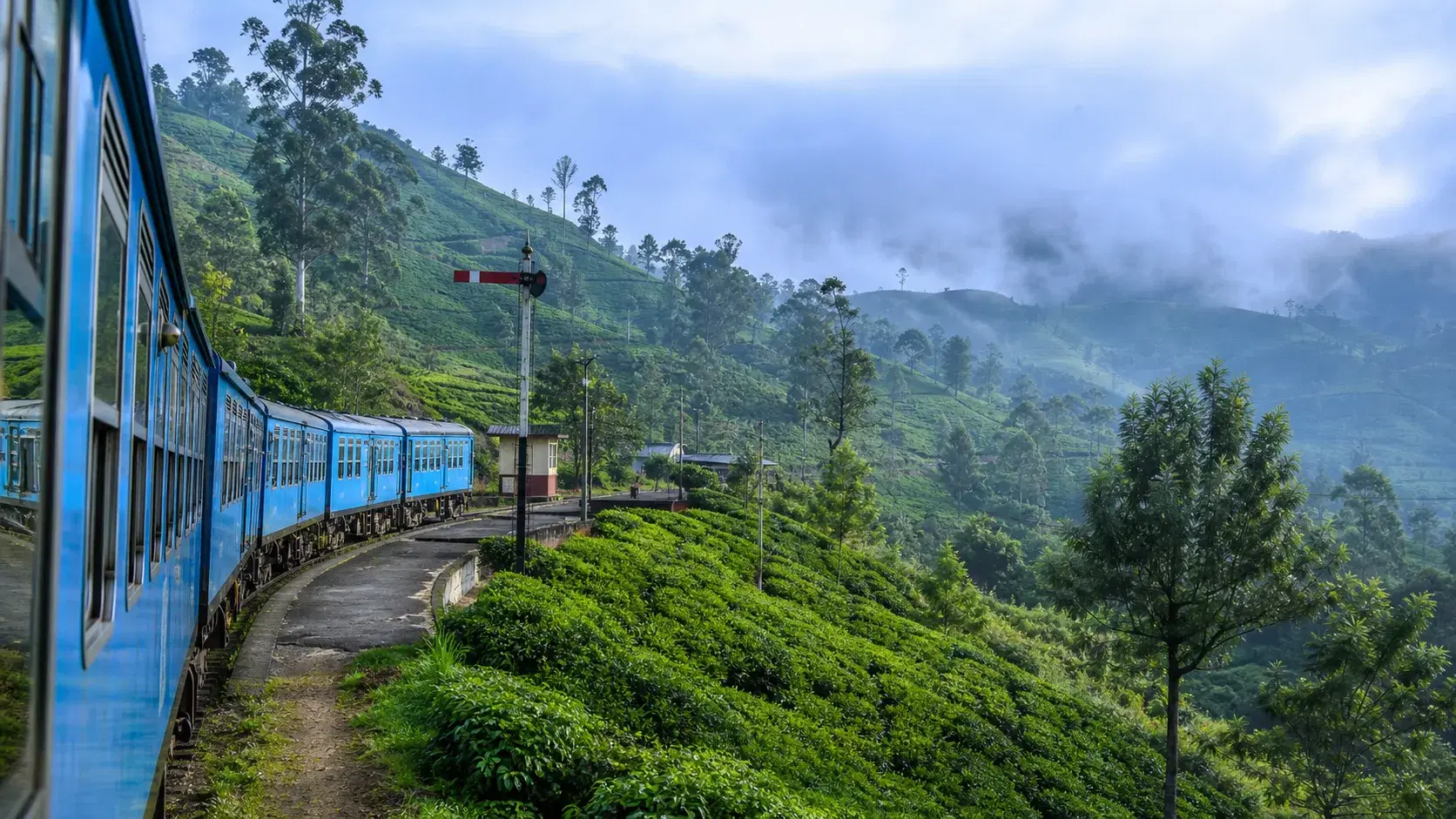
If you have spent any time planning a Sri Lanka trip, you have seen the photograph. A blue train curves across a stone viaduct, tea bushes falling away below, someone leaning out of an open doorway. It is the single image that sells the island to first-time visitors, and the journey behind it is usually described as Kandy to Ella.

That journey is not currently possible. It has not been possible since late November 2025, when Cyclone Ditwah moved across Sri Lanka and did more damage to the railway network than any weather event in living memory. The Main Line, which climbs from Colombo through Kandy and the tea country to Badulla, was hit hardest of all.

Nine months later the line is still broken in the middle. Trains from Colombo reach Rambukkana and stop. The section from there up through Kadugannawa, Kandy, Peradeniya, Nawalapitiya and Hatton to Nanu Oya is under repair, and the completion date has already moved twice.

This is not, however, a guide telling you to abandon the hill country. Something important happened in June 2026: the Nanu Oya to Ella and Badulla section reopened. That is the stretch with the Nine Arches Bridge, the Demodara spiral, Summit Level at Pattipola and the ridge views at Idalgashinna. The part everybody actually came for is running. What you have lost is the connecting journey, and that is replaceable by road.

We wrote this guide because almost nothing else online reflects the current position. Guidebooks printed before the cyclone, tour operator pages last touched in 2024, and a large number of travel blogs still describe the full Kandy to Ella train as a routine booking. Travellers are arriving at Kandy station to find no service and no explanation, or paying for hotel bookings built around a train that will not come.

Below is the honest picture as of August 2026: what runs, what does not, what the alternatives genuinely cost in time and money, and how to check the situation yourself before you commit to anything.

Quick Summary

  • Cyclone Ditwah cut the Main Line in late November 2025 and the damage was severe
  • As of August 2026 trains from Colombo run only as far as Rambukkana on this line
  • Kandy cannot be reached by train from Colombo on the Main Line while the Rambukkana to Kadugannawa section is under repair
  • The scenic Nanu Oya to Ella and Badulla section reopened in June 2026 and is running
  • That reopened section contains the Nine Arches Bridge, the Demodara loop, Summit Level and the tea country everybody photographs
  • The practical answer is a road transfer to Nanu Oya, then the train onward to Ella
  • Full restoration is currently expected around the end of 2026 or early 2027, but this timeline has already slipped twice
  • Most published guides, guidebooks and booking pages have not been updated and still describe the full route as operating

What Is Actually Running: The Short Answer

As of August 2026, the position on the Main Line is as follows.

Colombo Fort to Rambukkana is open and operating normally. Rambukkana sits roughly 85 kilometres from Colombo, in the lowlands, before the climb into the hills begins.

Rambukkana through Kadigamuwa, Ihalakotte, Balana, Kadugannawa, Peradeniya, Kandy, Nawalapitiya and Hatton to Nanu Oya is the closed section. This is where the landslides and subsidence were concentrated. It is under active repair and there is no through passenger service.

Nanu Oya to Ambewela, Pattipola, Ohiya, Idalgashinna, Haputale, Bandarawela, Ella, Demodara and Badulla reopened in June 2026 and is running. The Railway Department announced services resuming from 20 June 2026 under a special timetable, with further normalisation reported the following month.

In practical terms this means three things. You cannot take a train from Colombo to Kandy on the Main Line. You cannot take a train from Kandy to Ella. But you can take a train from Nanu Oya, the station for Nuwara Eliya, all the way down to Ella and Badulla.

Sri Lanka's other lines have largely recovered. The Coastal Line to Galle, Matara and Beliatta, the Northern Line to Jaffna, the Batticaloa and Trincomalee lines and the Puttalam and Kelani Valley lines have all been restored to passenger service at various points during 2026. If your itinerary is coastal or northern rather than upcountry, the cyclone has almost certainly stopped affecting you.

Colombo to Rambukkana: openRambukkana to Nanu Oya: closedNanu Oya to Ella and Badulla: openKandy unreachable by Main Line trainCoastal, Northern and Eastern lines running

What Cyclone Ditwah Did to the Railway

Cyclone Ditwah reached Sri Lanka in late November 2025 and is widely described as one of the most destructive weather events to strike the country in decades. The railway network absorbed an extraordinary share of the damage.

Sri Lanka Railways reported that lines across the network were affected by more than 159 landslides and 95 washouts, alongside track subsidence, bridge and culvert damage, flooding, fallen trees and over 286 further weather-related incidents.

The Department's own preliminary estimate put total damage at approximately Rs. 341 billion, with roughly Rs. 128 billion identified as the requirement for rehabilitation and reconstruction work. Different figures have circulated in news reporting since, some considerably lower, which usually reflects a narrower definition of what is being counted rather than a correction.

The 292 kilometre Colombo to Badulla line, engineered by the British in the nineteenth century, was the worst affected single route. Reporting in early 2026 put the number of damaged locations along it at 223.

The reason repairs have taken so long is geological rather than bureaucratic. The section between Rambukkana and Kadugannawa is where the railway begins its steepest climb, cutting across hillsides that are prone to sliding. Each damaged site requires an individual engineering plan prepared with the National Building Research Institute, and crews often cannot reach the work face except along the railway itself. That forces the repairs to happen sequentially rather than in parallel.

It is worth understanding this because it explains why the timeline keeps moving. This is not a case of a washed-out culvert that can be replaced in a fortnight. Several sites required slope stabilisation before track could be relaid at all.

Late November 2025 cyclone159 landslides and 95 washouts network-wide223 damaged locations on the Main LineRs. 341 billion preliminary damage estimateSlope stabilisation required before track relaying

The Good News Nobody Is Reporting: The Best Part Is Open

Here is the point most coverage of this closure misses entirely. When travellers say they want the Kandy to Ella train, what they almost always mean is the scenery in the photographs. Nearly all of that scenery is on the section that has reopened.

The Nine Arches Bridge sits between Ella and Demodara. The Demodara spiral loop, where the line corkscrews under itself to lose height, is at the Badulla end. Summit Level near Pattipola, the highest point on the entire Sri Lankan network at roughly 1,898 metres, is between Ambewela and Ohiya. The long open ridge at Idalgashinna, where you can see down both sides of the island's spine on a clear day, is between Ohiya and Haputale. The tea estates that fill the frame in most photographs run from Nanu Oya southward.

Every one of those is on the Nanu Oya to Badulla section, which is running.

What the closed section contains is different in character. Kandy to Nanu Oya climbs through Kadugannawa, past Nawalapitiya and up to Hatton and the Castlereagh and Maskeliya country. It is genuinely beautiful, and the Hatton stretch has its admirers, but it is not where the iconic images come from.

So the accurate framing is this. You have lost a connecting journey and gained a road transfer. You have not lost the experience. A traveller who takes a car from Kandy to Nuwara Eliya and boards the train at Nanu Oya sees essentially the postcard, and does so on a train that is currently less crowded at its origin station than the through service ever was.

We say all of this with one honest caveat. If your interest is the full-length ride itself, the eight to ten hours of slow climbing from the lowlands to the highlands as a single continuous experience, then that is genuinely gone until the line reopens and no road transfer replaces it. That is a real loss for rail enthusiasts. It is a much smaller loss for most other travellers.

Nine Arches Bridge: on the open sectionDemodara loop: on the open sectionSummit Level at Pattipola: openIdalgashinna ridge views: openThe closed stretch is scenic but less iconic

Getting From Colombo to Kandy Without the Train

Kandy is roughly 115 kilometres from Colombo and, in the absence of the Main Line train, is reached entirely by road. Realistic journey time is three to four and a half hours depending on traffic, the day of the week and where in Colombo you start.

Air-conditioned intercity buses run frequently from Colombo towards Kandy and are by a wide margin the cheapest option. Fares for a reserved air-conditioned seat have generally been in the region of a few hundred rupees, with ordinary non-air-conditioned services cheaper again. Departures are frequent enough that advance booking is rarely essential, though the buses fill on Friday afternoons and Sunday evenings.

Shared shuttle minivans operate the same route and sit between the bus and a private car in both price and comfort. They offer a guaranteed seat, limited stops and door-to-door or near door-to-door service, typically for a few thousand rupees per person.

Ride-hailing apps will price a car from central Colombo to Kandy, and the figure is usually somewhere in the middle five figures in rupees. This is convenient and transparent, though drivers sometimes decline long intercity trips at peak times.

A hired car with driver for the day is the option most families and couples end up choosing, and it is the one we would suggest if the cost splits across two or more people. The advantage is not the seat. It is that the Colombo to Kandy road passes the Pinnawala elephant area, the Peradeniya botanical gardens and the spice garden corridor near Kegalle, and a driver lets you turn a dead transfer into a day of sightseeing.

One thing to plan for: the Kandy end. Kandy's main bus stand and the railway station are close but not adjacent, and the city's one-way system around the lake is confusing on arrival. Confirm with your accommodation exactly where your bus or van terminates before you set off.

Three to four and a half hours by roadIntercity AC buses are cheapestShared vans offer guaranteed seatsHired car allows Pinnawala and Peradeniya stopsConfirm your arrival point in Kandy

Kandy to Nuwara Eliya and Nanu Oya by Road

This is the leg that replaces the closed railway section, and it is the one worth planning properly because the road is slow.

Kandy to Nuwara Eliya is roughly 75 kilometres but takes three to four hours. The A5 climbs through Gampola, Pussellawa and Ramboda, gaining more than a kilometre of altitude through continuous hairpins. Do not assume the distance predicts the time. This is the single most common itinerary error travellers make in the Sri Lankan highlands.

Nanu Oya station sits roughly eight kilometres beyond Nuwara Eliya town, around fifteen to twenty-five minutes by tuk-tuk or car depending on traffic near the town centre.

Public buses run the route and are cheap, but they are slow, crowded and not comfortable with luggage on a mountain road. Shared shuttle vans are the middle option and generally run daily. A private car with driver takes the same three to four hours but stops where you want.

If you take a car, the road itself compensates for the lost train. Ramboda Falls is directly beside it. The tea country between Pussellawa and Nuwara Eliya includes several estates with visitor-facing factory tours. The Labookellie and Ramboda stretches produce views the train never had access to, because the railway runs on a different alignment entirely.

A specific piece of scheduling advice: if you intend to catch a morning train from Nanu Oya toward Ella, do not attempt the Kandy transfer on the same morning. The early train departs Nanu Oya well before a car leaving Kandy at a civilised hour could arrive. Stay a night in Nuwara Eliya, or in the quieter countryside around Blackpool between the town and the station, and start from there.

75 kilometres takes three to four hoursContinuous hairpins on the A5Nanu Oya is 8 km beyond Nuwara EliyaRamboda Falls and tea estates en routeSleep near Nanu Oya before a morning train

Riding the Section That Is Open: Nanu Oya to Ella

This is the journey to build your hill-country plan around.

From Nanu Oya the line climbs through Great Western and Ambewela, crosses Summit Level near Pattipola, drops to Ohiya, runs the exposed ridge at Idalgashinna, reaches Haputale and Bandarawela, and then descends through Ella, over the Nine Arches Bridge, around the Demodara loop and into Badulla. Scheduled running time for the full Nanu Oya to Badulla stretch has generally been in the region of three to four hours.

Ella is the usual destination and is roughly three-quarters of the way along. Many travellers get off there. Continuing to Badulla adds the Demodara spiral, which is the more interesting piece of engineering on the whole line and is missed by almost everyone.

On seating, the widely repeated advice is to sit on the right-hand side when travelling from Nanu Oya toward Ella. Treat that as a rule of thumb rather than a guarantee. The line curves constantly and the best view switches sides more than once. On a busy service the difference between a window seat and a doorway is larger than the difference between left and right.

Second class reserved is, in our view, the better choice over first class air-conditioned on this section, for one reason: the windows open. Air-conditioned first class carriages have sealed glass, which is a problem when the entire point of the journey is looking out of it. Third class unreserved is cheapest and often the most sociable, but you may stand.

A safety point that has become unavoidable. Sitting or hanging out of open doorways is the defining image of this railway and it is genuinely dangerous. There have been serious injuries and deaths on the hill-country line involving people leaning from moving trains, and the sections through tunnels and rock cuttings leave very little clearance. Take the photograph from inside the doorway with a hand on a grab rail, not from the step with your body outside the carriage.

Also worth knowing: the reopened service has run under a special or revised timetable rather than the standard pre-cyclone schedule. Do not plan around a timetable you found on a page that has not been updated since 2024.

Roughly three to four hours Nanu Oya to BadullaSummit Level, Idalgashinna, Nine Arches, DemodaraSecond class reserved has opening windowsRight-hand side is a rule of thumb onlyDo not hang out of moving doorways

The Ella Odyssey in 2026: What to Expect

The Ella Odyssey is Sri Lanka Railways' tourist-oriented service, introduced in 2022. It runs deliberately slowly, pauses at viewpoints and stops for photographs at the Nine Arches Bridge, which no ordinary service does.

Before the cyclone the headline Ella Odyssey ran the full length between Colombo Fort and Badulla on selected days. A shorter Nanu Oya to Badulla version was also introduced, departing Nanu Oya in the morning and returning from Badulla in the early afternoon.

With the Main Line broken above Rambukkana, the full-length Colombo service cannot operate as originally scheduled. The shorter upcountry version is the one relevant to travellers now, and it runs on the reopened section.

Fares quoted for the Ella Odyssey vary considerably across sources and have changed more than once. Figures in the range of several thousand rupees per person per class have been reported at different times, with first class air-conditioned priced highest. We are deliberately not publishing a single figure, because every number we could find conflicts with another and pricing on this service has moved. Check the official reservation portal or ask at a station.

Whether it is worth the premium over an ordinary reserved seat is a fair question. You are paying several times the standard fare for slower running and a stop at the Nine Arches Bridge. If photography is the point of the trip, that stop is genuinely valuable, because the alternative is walking to the bridge from Ella and photographing trains from outside. If you simply want to travel between two places and see tea country, an ordinary reserved seat gives you almost the same views for a fraction of the price.

One practical note: because the Ella Odyssey is heavily marketed to visitors, it sells out faster than ordinary services on the same route.

Tourist service with viewpoint stopsFull Colombo route not operating normallyShorter upcountry version runs the open sectionFares reported inconsistently across sourcesOrdinary reserved seats see nearly the same scenery

How to Book, and Why Nanu Oya Tickets Now Sell Out Faster

Reserved seats on Sri Lankan express trains open for booking a set period before departure, commonly quoted as 30 days. This window has been described as subject to change without notice, so verify rather than assume.

Bookings can be made through the official Sri Lanka Railways seat reservation portal, or in person at any station offering reservation services. Buying at a station counter is straightforward and avoids booking fees, but requires you to be there.

There is a specific problem worth flagging. Before the cyclone, demand on the hill-country line was spread across the whole route. Travellers boarded at Colombo, Kandy, Hatton and Nanu Oya. With the upper sections closed, everyone heading for Ella is now boarding at essentially one place. Nanu Oya has become a bottleneck, and reserved seats departing from it have been reported selling out very quickly after reservations open.

The practical implication: book as early as your dates allow. If you are travelling between December and March, or during April, or in the July to August period, treat 30 days ahead as the target rather than a suggestion.

Numerous third-party agencies will book Sri Lankan train tickets for a markup. That service has real value if you cannot navigate the official portal from abroad or your card is being declined. It is not necessary if you are already in the country and can visit a station.

A caution about unofficial ticket sales. Around busy stations you may be approached by people offering seats on sold-out services. Buy from station counters or the official portal. If someone offers you a confirmed seat on a train that the official system shows as full, something is wrong with the transaction.

Finally, if reserved seats are gone, unreserved third class is almost always available on the day. It is not comfortable, you may stand for part of it, and on this particular section that is a more reasonable trade than it sounds, because the journey is only a few hours and the views do not care what class you paid for.

Reservations commonly open 30 days aheadOfficial portal or any reservation-enabled stationNanu Oya is now a demand bottleneckBook early for December to March and July to AugustUnreserved third class is a workable fallback

How to Rebuild a Hill-Country Itinerary Around the Closure

Most pre-cyclone Sri Lanka itineraries follow the same shape: Colombo, Kandy, train to Nuwara Eliya or Ella, then south to the coast. That shape still works. It just needs one substitution.

The standard fix is to travel Colombo to Kandy by road, Kandy to Nuwara Eliya by road, then take the train from Nanu Oya to Ella, and continue from Ella to the south coast by road. You keep the train segment that matters and replace the two connecting legs.

A second option, which suits travellers short on time, is to skip Kandy entirely on the way up. Go directly from Colombo or the airport to Nuwara Eliya by road, ride the train to Ella, and visit Kandy on the way back down toward Colombo at the end of the trip. This avoids doubling back through the mountains and is often faster overall.

A third option is worth considering for anyone whose plans are driven mainly by the train. Because the eastern lines have been restored, a Colombo to Batticaloa or Trincomalee rail journey is fully available and almost nobody does it. It is a very different landscape, flat and open rather than mountainous, but it is a real long-distance Sri Lankan train experience with none of the crowding.

What we would advise against is building a tight itinerary that depends on any single train departure. While the network is in this state, cancellations and timetable changes at short notice are more likely than usual. Leave a buffer night rather than connecting a train arrival directly to an international flight.

One more scheduling reality: the road journey Kandy to Nuwara Eliya plus the train Nanu Oya to Ella is not a single day unless you start very early and accept a rushed afternoon. Split it across two days with a night in the Nuwara Eliya area.

Substitute road for the two closed legsConsider visiting Kandy on the return insteadEastern line trains are fully restored and uncrowdedDo not connect a train directly to a flightSplit the Kandy to Ella move over two days

What the Closure Actually Costs You in Time and Money

It is worth being honest about the scale of the inconvenience, because it is smaller than the alarm in some forum threads suggests.

On money: the two road legs you are adding will cost more than the train tickets they replace. Sri Lankan train fares are extremely low by international standards, and road transport is not. For a couple splitting a hired car the difference across the whole hill-country section is likely to be meaningful but not trip-altering. For a solo traveller using buses and shared vans, the difference is small.

On time: this is closer to a wash than most people expect. The full Colombo to Ella train, when it operated, took the better part of a day. Road transfers over the same ground, split across two days with an overnight in the highlands, are not obviously slower and involve considerably less sitting still.

On experience: you lose the continuity of the climb and you gain stops the train could never make. Ramboda Falls, the tea factories on the A5, and the ability to stop when the light is good are not available from a railway carriage.

We are not going to publish precise figures for buses, vans, cars and tickets in this guide. Sri Lankan transport pricing has moved repeatedly through 2025 and 2026, bus fares have been revised, and a specific number published in August will mislead someone reading in March. Ask at your accommodation, check the official reservation portal for train fares, and use ride-hailing apps to sanity-check what a private car should cost before negotiating one.

The one genuine additional cost is planning effort. This itinerary requires more decisions than it did two years ago. That is the real price of the closure.

Road legs cost more than the train faresTime difference is smaller than expectedRoad stops the train could not makeFares have moved repeatedly, so verify locallyThe main cost is planning effort

When Will the Full Line Reopen? An Honest Answer

The current expectation is around the end of 2026 or early 2027, with January to February 2027 mentioned for the remaining sections.

That expectation should be held loosely, and we would rather say so plainly than repeat a date with false confidence.

The history is instructive. Sri Lanka Railways published a phased recovery programme in December 2025 which targeted substantial restoration through the first half of 2026. In the spring of 2026 the target for the upcountry line was described as the end of June. That date passed with the Nanu Oya to Badulla section reopened but the Rambukkana to Nanu Oya stretch still closed. In July 2026 the Transport Minister told Parliament that a small number of critical locations between Rambukkana and Kadugannawa remained under repair and that full restoration was now expected by the end of 2026 or early 2027.

So the target has moved from mid-2026 to late 2026 or early 2027, and the reason each time has been the engineering difficulty of the same short, steep, unstable section rather than a lack of effort or funding.

What this means for you depends on when you are travelling. If your trip is in the remainder of 2026, plan on the closure being in place. If your trip is in the first half of 2027, plan on the closure being in place and treat a reopening as a pleasant surprise. If your trip is in the second half of 2027 or later, the line will very probably be open, but check anyway.

There is a broader point here that applies beyond this one railway. Sri Lanka's hill-country infrastructure sits on steep, wet, landslide-prone terrain, and the Main Line has been disrupted by weather before, including for shorter periods in 2025. Even after full restoration, short closures during heavy monsoon rain remain a normal feature of this route. Build a little flexibility into any highland itinerary regardless of what this guide says about the current position.

Current target: late 2026 to early 2027The target has already moved twiceCause is engineering difficulty, not fundingAssume closure for any 2026 tripWeather closures are normal on this line even when open

How to Check the Line Status Yourself Before You Book

Because this situation changes, the most useful thing this guide can give you is a method rather than a fact.

Start with Sri Lanka Railways directly. The Department's website carries restoration status updates and its official social media accounts have carried service announcements more quickly than the website during 2026. Announcements are frequently published in Sinhala first.

Test the official seat reservation portal. This is the single most reliable practical check available to you from abroad. Try to book a reserved seat on your route for your date. If the system will not sell you a ticket from Kandy to Ella, there is no train from Kandy to Ella. A booking system that offers you a seat is stronger evidence than any blog post, including this one.

Cross-check with Sri Lankan news outlets. Service resumptions are reported quickly by local English-language news sites and are usually accurate on the direction of travel, though specific dates sometimes differ between outlets by a few weeks.

Ask a person on the ground. Your accommodation in Kandy, Nuwara Eliya or Ella knows the current position better than any published source, because their guests are affected by it daily. A message a week before arrival is worth more than an hour of searching.

Be sceptical of dated content. A large proportion of the pages ranking for Sri Lankan train queries were written before November 2025 and have never been revised. Look for an explicit update date on any guide you rely on, this one included. If a page describes the Kandy to Ella train as running normally and carries no reference to the cyclone at all, it is out of date and everything else on it should be treated with the same suspicion.

Be equally sceptical of pages that carry a recent update date but only changed a line at the top. Several guides we reviewed while writing this had added a 2026 status note while leaving an unrevised timetable and fare table below it.

Check Sri Lanka Railways directlyTest the official reservation portal for your dateCross-check Sri Lankan news outletsAsk your accommodation the week beforeDistrust guides with no cyclone reference

Who This Actually Changes Plans For, and Who It Does Not

Not everyone reading this needs to change anything.

If your trip is coastal, this barely touches you. The Colombo to Galle, Matara and Beliatta coastal line is running, and it is a genuinely good rail journey in its own right with the sea beside the track for long stretches.

If your trip is northern or eastern, this does not affect you. The Jaffna, Batticaloa and Trincomalee services have been restored.

If you were planning a cultural triangle route through Anuradhapura, Polonnaruwa and Sigiriya, you were almost certainly travelling by road anyway.

If you are travelling with young children or elderly parents, the closure may actually simplify your trip. A private car with a driver, stopping when people need to stop, is easier than an eight-hour train with fixed departure times and platform luggage.

The travellers genuinely affected are those whose entire itinerary was designed around the full-length hill-country rail journey, rail enthusiasts who wanted the complete climb, and anyone who has already booked accommodation on the assumption that a Kandy to Ella train would move them between two hotels on a specific day. If that last description fits you, contact both properties now rather than closer to the date.

And if you are choosing between Sri Lanka and somewhere else because of this, we would say the closure is not a reason to change destination. The single most photographed section of the railway is open, the alternatives are workable, and the country is otherwise operating normally.

Coastal itineraries unaffectedNorthern and eastern lines restoredCultural triangle was always road-basedFamilies may find road transfers easierRail-focused itineraries need real rework

Practical Notes for Travelling the Open Section

A few things that are easy to get wrong on this particular journey.

Nanu Oya is not Nuwara Eliya. The station is several kilometres from the town and there is very little at the station itself. Arrange your onward transport in advance if you are arriving in the evening.

Highland weather does not follow the coastal seasons. Mist can close in at any time of year and will simply erase the view for stretches of the journey. This is not bad luck, it is normal, and it is one reason we suggest not building an entire trip around a single train ride.

It is cold. Nuwara Eliya and the Pattipola area sit well above 1,800 metres and evening temperatures drop sharply. Travellers arriving from a beach on the same day are routinely caught out. Carry a warm layer in your hand luggage, not in the bag on the rack.

Luggage space on Sri Lankan trains is limited and the racks are small. Large suitcases are awkward. If you are moving between hotels with a driver anyway, consider sending the heavy bag by road and travelling with a day pack.

Toilets on ordinary services are basic. Eat and use facilities before boarding rather than counting on the journey.

Vendors pass through the carriages selling tea, snacks and short eats, and this is one of the pleasures of Sri Lankan rail travel. Carry small notes.

Finally, be considerate at the Nine Arches Bridge. It is a working railway structure, not a viewing platform, and it now attracts very large numbers of visitors at train times. Follow whatever local guidance is in place on the day and do not stand on the track.

Nanu Oya station is far from Nuwara Eliya townMist can erase views in any monthHighland evenings are genuinely coldLuggage space is limitedThe Nine Arches Bridge is a live railway

Travel Tips

  • Verify the line status within a week of travel because it has changed repeatedly
  • Try to book your exact route on the official reservation portal as a live test of what is running
  • Book Nanu Oya departures as early as the reservation window allows
  • Choose second class reserved over first class air-conditioned so the windows open
  • Do not sit or hang out of open doorways on a moving train
  • Allow three to four hours for Kandy to Nuwara Eliya despite the short distance
  • Do not connect a hill-country train arrival directly to an international flight
  • Carry a warm layer in hand luggage, not in checked bags
  • Keep small notes for onboard vendors and station tuk-tuks
  • Arrange transport from Nanu Oya station in advance if arriving after dark
  • Send large suitcases by road if a driver is already moving between your hotels
  • Ignore any guide that describes the Kandy to Ella train as running normally
  • Contact your accommodation if a booking assumed a train that no longer operates
  • Expect mist in any month and treat a clear day as a bonus

Frequently Asked Questions

Is the Kandy to Ella train running in 2026?

No. As of August 2026 there is no through train between Kandy and Ella. The section of the Main Line between Rambukkana and Nanu Oya, which includes Kandy, remains closed for repairs following Cyclone Ditwah in November 2025.

Can I take a train from Colombo to Kandy?

Not on the Main Line. Trains from Colombo Fort currently run only as far as Rambukkana. Kandy must be reached by road while the Rambukkana to Kadugannawa section is under repair. Check the official reservation portal for your travel date, as this may change.

Which part of the hill-country railway is open?

The section from Nanu Oya through Ambewela, Pattipola, Ohiya, Idalgashinna, Haputale, Bandarawela, Ella and Demodara to Badulla reopened in June 2026 and is operating. This includes the Nine Arches Bridge, Summit Level and the Demodara loop.

So can I still get the famous Nine Arches Bridge train experience?

Yes. The Nine Arches Bridge is on the reopened section between Ella and Demodara. You can ride over it, and you can also walk to it from Ella and photograph trains crossing.

How do I get from Kandy to Ella now?

By road to Nuwara Eliya and Nanu Oya, then by train from Nanu Oya to Ella. Alternatively, travel the whole way by road. The road journey Kandy to Ella takes roughly five to six hours depending on the vehicle and stops.

When will the full Colombo to Kandy to Ella line reopen?

The current expectation is around the end of 2026 or early 2027. This target has already moved twice, so treat it as provisional. Assume the closure is still in place for any trip before mid-2027 and verify before booking.

Is it still worth visiting the Sri Lankan hill country during the closure?

Yes. The most scenic and most photographed section of the railway is operating, and the road alternatives for the closed legs pass waterfalls and tea estates the train never reached. The closure adds planning work rather than removing the experience.

Are Sri Lanka's other railway lines affected?

The coastal line to Galle and Matara, the northern line to Jaffna, and the Batticaloa and Trincomalee lines have all been restored to passenger service during 2026. The upcountry Main Line is the significant remaining gap.

How far in advance should I book train tickets?

Reservations commonly open around 30 days before departure, though this has been described as subject to change. Because everyone heading for Ella now boards at Nanu Oya, that station has become a bottleneck and reserved seats can sell out quickly. Book as early as the window allows.

Which class should I book for the scenic section?

Second class reserved is generally the better experience because the windows open. First class air-conditioned carriages have sealed glass, which works against the purpose of the journey. Third class unreserved is cheapest but you may have to stand.

Is the Ella Odyssey tourist train running?

The shorter upcountry version operating on the reopened section is the one relevant to travellers now. The original full-length Colombo to Badulla service cannot run its complete route while the line is broken. Confirm the current schedule and fare with Sri Lanka Railways.

Why do so many websites still say the Kandy to Ella train is running?

Most were written before November 2025 and have not been revised. Guidebooks, tour operator pages and travel blogs frequently go years without updating transport sections. Always check for an explicit update date and test the official booking portal for your own route.

Could the line close again after it reopens?

Short closures during heavy rain are a normal feature of this route because it crosses steep, landslide-prone terrain. Even after full restoration, it is sensible to keep some flexibility in a highland itinerary rather than depending on a single train departure.

Reader notes

Join the conversation

Share your question, tip, or travel experience for this guide.

Comments

0 comments

Loading...

Ready to turn inspiration into a Sri Lanka trip?

Use LankaTrip to plan your journey, connect with local guides, and make this itinerary a reality.

Need help planning?

Plan your Sri Lanka adventure

Plan my trip