LankaTrip Insights

16 min read

Madu River Safari in 2026 and 2027: A Ramsar Wetland, a Great Boat Trip, and the Operator Choices That Decide Which One You Get

The same river produces two completely different trips. One is a quiet dawn glide through mangrove tunnels with the engine cut. The other is a loud midday run with a hard-sell shopping stop and someone handing you a small crocodile. Here is how to make sure you get the first.

Back to blog
Madu River Safari in 2026 and 2027: A Ramsar Wetland, a Great Boat Trip, and the Operator Choices That Decide Which One You Get

The Madu River boat safari is one of the most popular half-day excursions on Sri Lanka's southwest coast, and with good reason. Madu Ganga is a wetland estuary of mangrove forest, open water and scattered islands, designated a Ramsar Wetland of International Importance in 2003, and gliding through its mangrove tunnels in the early morning is genuinely memorable.

It is also a trip where two people can visit the same river on the same day and come away with entirely different experiences.

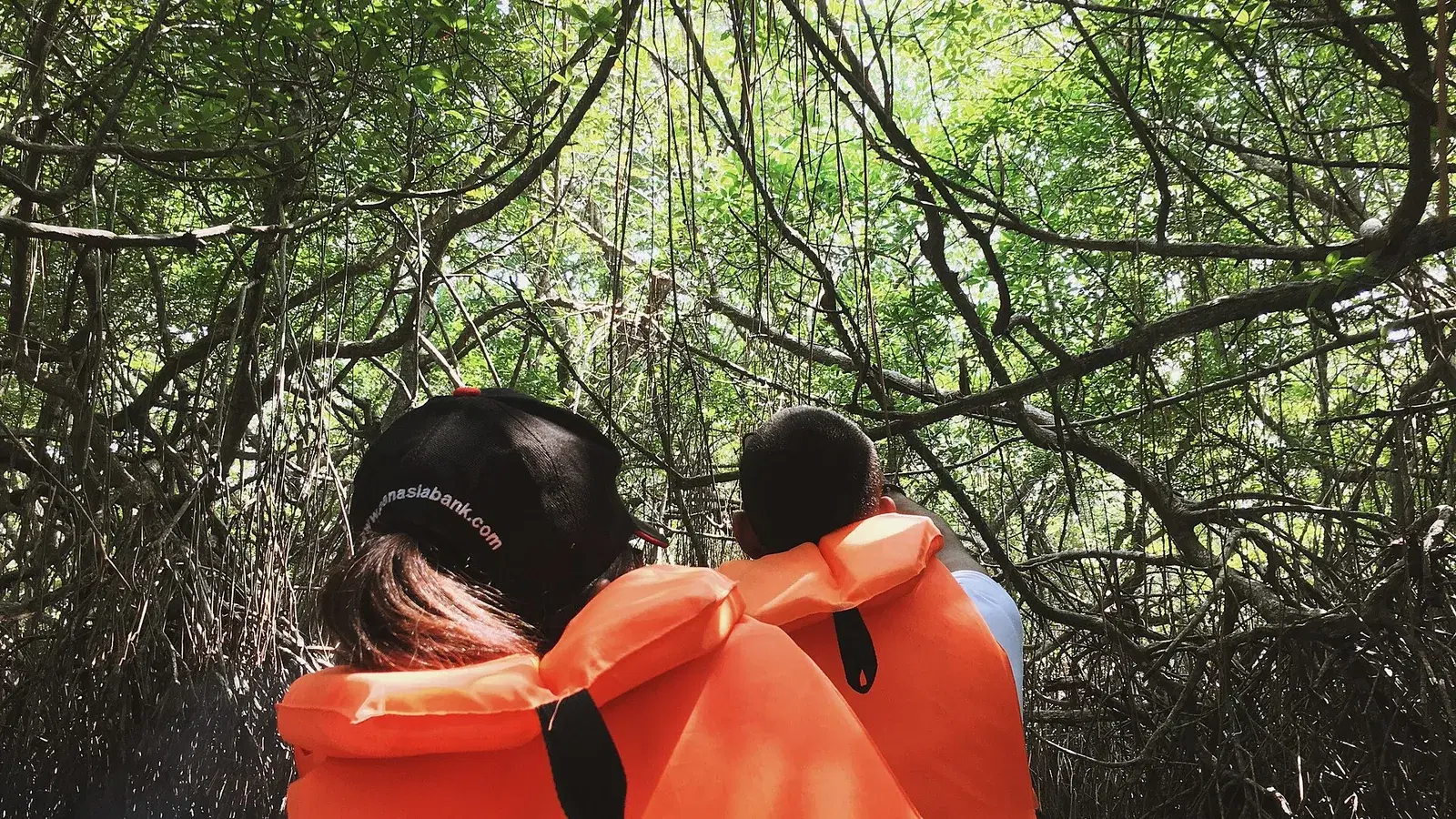
One version: a small boat at dawn, the engine cut as you enter the mangrove tunnels, kingfishers flashing past, a monitor lizard sliding off a root, the boatman naming the mangrove species and explaining why they matter, a quiet half hour at a temple island, and back before the heat.

The other version: a large boat with an oversized outboard at eleven in the morning, engine running throughout, a fast run between stops, a hard sell at a shop, and at some point a man producing a small crocodile for you to hold while someone takes a photograph.

Both happen on Madu Ganga. The difference is almost entirely the operator, and the visitor has more influence over that than they realise.

This guide covers what the trip involves, what the wetland actually is, the documented pressures it faces, the specific questions worth asking before you book, and the two or three elements of the standard itinerary that deserve more thought than they usually get.

Quick Summary

  • Madu Ganga was designated a Ramsar Wetland of International Importance in 2003
  • It sits near Balapitiya, around 85 km and 1.5 to 2 hours south of Colombo
  • Published island counts vary between 28 and around 64 depending on the source
  • The standard trip runs 2 to 3 hours and includes mangrove tunnels, a temple island and a cinnamon stop
  • Early morning is dramatically better than midday — calmer water, more birds, fewer boats
  • Large engines, jet skis and banana boats are documented problems in this ecosystem
  • Ask for a small, quiet boat and an operator who cuts the engine in the mangrove tunnels
  • Wildlife handling happens here; do not accept a crocodile or any animal being brought to you
  • The fish spa is optional and worth thinking about before agreeing to it
  • The cinnamon island stop is genuinely interesting and ends in a shop — know that going in

What Madu Ganga Actually Is

Madu Ganga is a coastal wetland estuary on the southwest coast near Balapitiya, formed by the Madu river and Randombe Lake connected by two channels, and opening to the Indian Ocean.

It was designated a Ramsar Wetland of International Importance in 2003, which places it in the same international framework as the world's most significant wetlands and carries obligations around conservation and wise use.

It holds one of Sri Lanka's most significant remaining mangrove systems. Mangroves matter disproportionately: they are nursery grounds for fish, crabs and prawns, they stabilise coastline against erosion and storm surge, and they sequester carbon at rates well above most terrestrial forest.

On island count, sources disagree — published figures range from 28 to around 64, with several giving the higher number. The discrepancy probably reflects whether very small islets are counted. We are quoting the range rather than picking one.

The biodiversity is real but understated in tour marketing. Over a hundred bird species have been recorded, alongside more than thirty reptile species including monitor lizards and crocodiles, dozens of butterfly species, and a range of molluscs. What you will reliably see is birds — kingfishers, herons, cormorants, egrets — plus water monitors and, in fruiting trees, large flying foxes.

What you will probably not see is a great deal of dramatic wildlife. Crocodile sightings happen but are not the norm. This is a place to appreciate an ecosystem rather than to tick off species, and travellers who arrive expecting safari-style encounters tend to leave underwhelmed while travellers who arrive expecting mangroves leave delighted.

The islands are inhabited and worked. There is cinnamon cultivation, fishing with traditional prawn and shrimp traps, and small settlements. Kothduwa Rajamaha Viharaya, on its own island, is a functioning temple with a significant history rather than a photo stop.

Ramsar Wetland of International Importance since 2003One of Sri Lanka's largest remaining mangrove systemsIsland count given as anywhere from 28 to around 64Over 100 bird species; crocodiles present but not commonly seenThe islands are worked and inhabited, not scenery

The Documented Pressures, and Why Your Operator Choice Matters

This section exists because the conservation issues here are specific and well documented, and because a visitor genuinely can make things better or worse.

Motorboat engines. Large outboards pollute the water with oil and fuel, generate noise that disturbs birds and other wildlife, and produce wash that accelerates erosion of the riverbanks and mangrove root systems. In a shallow, narrow, sensitive system this is not a marginal effect.

Water sports. Some operators have introduced jet skiing and banana boat rides on the wetland. These are straightforwardly incompatible with a protected mangrove estuary and there is no version of them that is not damaging here.

Development. Illegal construction along the banks, clearing of mangroves for building, and improper waste disposal have all been documented as contributing to habitat loss and water pollution.

Litter. Discarded bottles, wrappers and fishing gear accumulate in the water and among the mangrove roots.

Against that, there are real conservation efforts — mangrove replanting, community-based ecotourism, low-emission boat initiatives and education work aimed at operators and visitors alike.

The visitor's leverage is simple and underused. Operators respond to what customers ask for and reward. If enough visitors specifically request small quiet boats and refuse jet ski add-ons, that changes the economics. If enough visitors book the cheapest fastest loudest option, that does too.

So the practical instruction is: choose deliberately, and say why. Telling an operator you booked them because they use a small engine and cut it in the tunnels is worth more than a review.

Large engines cause oil pollution, noise and bank erosionJet skis and banana boats are incompatible with a Ramsar wetlandMangrove clearing and waste dumping are documented problemsConservation efforts exist — replanting, low-emission boats, educationOperators respond to what customers ask for; use that

How to Choose a Boat

We do not recommend named operators, because staffing and standards change and we cannot verify them on any given day. What we can give you is the checklist.

Ask about boat size and engine. A smaller boat with a modest engine does less damage, reaches the narrow mangrove tunnels that larger boats cannot enter, and gives a better experience. If the answer is a large boat with a big outboard, that is a different trip.

Ask whether the engine is cut in the mangrove tunnels. This is the single best indicator of an operator who understands what they are showing you. Drifting silently through a mangrove tunnel is the highlight of the whole trip and it is impossible over an idling outboard.

Ask whether they offer jet skis or banana boats. If they do, book someone else. It tells you what they think the river is for.

Ask whether the boatman can name what you are seeing. The good ones can identify mangrove species, explain the prawn trap system, and talk about how the wetland works. The difference between that and a taxi ride between stops is enormous and costs little more.

Ask about group size and whether the boat is shared or private. Some travellers report being pushed toward private hire; decide what you want rather than being upsold into it.

Ask what the stops are and whether any involve a shop. The cinnamon island stop generally does, and that is fine as long as you know before you are standing in it.

State clearly, before departure, that you do not want any animal handled, caught or brought to the boat for photographs. Say it at the start rather than when it is happening.

Agree the price and duration before boarding. Confirm whether stops, temple donations and the fish spa are included or extra. Prices vary considerably by booking channel and we could not verify a reliable current range, so compare locally rather than relying on a published figure.

And go at dawn. It is the single change that most improves the trip and it also reduces the number of boats on the water at once.

Small boat, modest engine — better trip, less damageAsk whether the engine is cut in the tunnelsAvoid operators offering jet skis or banana boatsSay up front that you do not want wildlife handledAgree price, duration and what is included before boarding

What the Standard Trip Includes

Most trips run two to three hours and follow a broadly similar route, with variations.

The mangrove tunnels. Narrow channels roofed by mangrove canopy, navigable only by smaller boats. This is the best part of the trip and the reason to insist on a small boat and a cut engine.

The open lagoon. Wide water with fish traps, prawn nets and working boats, ringed by mangrove. Good for birds and for understanding the scale of the system.

Kothduwa Rajamaha Viharaya, the temple island. A functioning Buddhist temple with a long history and a connection to the Sacred Tooth Relic in its tradition. Treat it as a temple — cover shoulders and knees, remove shoes, keep your voice down, and make a donation if you have found it worthwhile.

Cinnamon island. A demonstration of traditional cinnamon peeling, which is genuinely skilled work and interesting to watch — Ceylon cinnamon is a distinct product from the cassia sold as cinnamon in most countries, and seeing it prepared explains why. The stop typically ends at a shop. Buying is entirely optional, prices are usually above market, and cinnamon bought at an ordinary market costs a fraction. Watch the demonstration, tip the demonstrator, buy if you want to.

The fish spa. Floating platforms where small fish nibble at your submerged feet. It is popular and most people enjoy it. Two things worth knowing before you agree: the hygiene of shared open-water fish spas is not regulated in any way you can verify, and anyone with broken skin, diabetes or a compromised immune system should skip it. It is also entirely optional and skipping it does not shorten the trip meaningfully.

Bird island and roosting sites. In the late afternoon, birds return to roost in numbers, which is the one argument for a dusk trip over a dawn one.

Flying foxes. Large fruit bats hanging in riverside trees, usually seen at close range. Do not let a boatman disturb them to make them fly for a photograph — this is a real and common request and it should not be made.

What should not be on the itinerary: any animal caught, held, or brought to the boat. Traveller accounts include being handed a small crocodile to hold. This is bad for the animal, it is not a wild encounter, and paying for it creates the demand.

Mangrove tunnels are the highlight — insist on a small boatKothduwa is a working temple; dress and behave accordinglyThe cinnamon demonstration is genuinely interesting; the shop is optionalThe fish spa is optional and unregulated — skip it with broken skinNever accept an animal being handed to you for a photograph

When to Go and How to Fit It In

Madu Ganga works year-round, which makes it one of the more weather-resistant options on the southwest coast.

Time of day matters far more than time of year. Early morning gives calm water, mist rising off the surface, the highest bird activity, the softest light and the fewest boats. Sunrise departures are available and worth the alarm.

Late afternoon is the second-best option, particularly if you want to see birds returning to roost. Midday is the worst — hot, bright, busy and with the most engine traffic on the water.

Seasonally, the southwest coast runs November to April as its main season, with the southwest monsoon bringing rain from roughly May to September. The river is still navigable and pleasant in the wetter months, and rain on mangroves is genuinely atmospheric, but bring a waterproof and a dry bag.

Where it fits. Balapitiya sits around 85 km south of Colombo, roughly one and a half to two hours by road, and it is very close to Bentota, Ambalangoda and Hikkaduwa. It works naturally as a half-day from any southwest coast base and as a morning stop on the drive between Colombo and Galle.

Sensible combinations: the Kosgoda turtle area is close by, though standards at hatcheries vary considerably and we would rather see wild nesting than a tank; Ambalangoda's mask-carving tradition is nearby; and Galle Fort is under an hour further south.

If you are arriving by public transport, Balapitiya is on the coastal railway line and on the main coastal bus route, both of which are straightforward from Colombo or Galle.

One planning note: two to three hours on the water is the standard, and it is enough. Longer trips tend to add stops rather than river, and the river is the point.

Time of day matters more than season — go at dawnMidday is hot, bright, busy and loudWorks year-round; bring a waterproof in the wetter monthsAround 85 km and 1.5 to 2 hours from ColomboTwo to three hours on the water is enough

Visiting a Protected Wetland Well

A short list, most of which follows from the fact that this is a designated wetland of international importance with people living in it.

Refuse wildlife handling, clearly and at the start. No crocodiles, no snakes, no monkeys, nothing caught or brought to the boat. If it is offered anyway, decline and do not pay for it.

Do not ask for birds or bats to be disturbed into flight for a photograph. A boatman will often do it if asked, which is exactly why you should not ask.

Do not feed any animal, including monkeys on the islands. Fed monkeys become aggressive and dependent, and it is a problem the community lives with long after you have gone.

Take every piece of waste off the boat with you. Litter in a mangrove system does not go away.

Do not touch or break mangrove roots as you pass through the tunnels. They are structural and slow-growing.

Respect the temple island properly — shoulders and knees covered, shoes off, no photographs with your back to a Buddha image, and quiet near anyone at prayer.

Ask before photographing people on the islands or fishermen at their traps. They are working and they are not part of the scenery.

Spend locally. Tip the cinnamon demonstrator whether or not you buy, buy a drink at an island stop, and pay your boatman properly. The wetland's protection depends heavily on whether the surrounding community can make a living from it intact.

And tell your operator why you chose them. If a small-engine, quiet, knowledgeable operator hears that this is why they got the booking, that information travels.

Refuse wildlife handling at the start of the tripNever ask for birds or bats to be disturbed for a photoDo not feed monkeys on the islandsTake all waste off the boatTell your operator why you chose them

Travel Tips

  • Go at sunrise — it is the single best decision available here
  • Ask for a small boat with a modest engine
  • Ask whether the engine is cut in the mangrove tunnels
  • Avoid operators who also offer jet skis or banana boats
  • Say at the start that you do not want any animal handled or caught
  • Agree price, duration and inclusions before boarding
  • Ask whether stops involve a shop, so you are not surprised
  • Buy cinnamon at an ordinary market rather than the island shop if price matters
  • Skip the fish spa if you have broken skin, diabetes or immune issues
  • Dress for a temple — shoulders and knees covered, shoes off at Kothduwa
  • Carry cash in rupees for donations, tips and small purchases
  • Bring a dry bag, sun protection and a hat; there is little shade on open water
  • Bring binoculars — the birds are the wildlife here
  • Take every piece of waste off the boat
  • Never ask for birds or bats to be disturbed into flight
  • Tell your operator why you chose them

Frequently Asked Questions

What is the Madu River safari?

A two to three hour boat trip through Madu Ganga, a coastal wetland estuary near Balapitiya designated a Ramsar Wetland of International Importance in 2003. The route typically covers mangrove tunnels, open lagoon, a temple island and a cinnamon demonstration, with birds, water monitors and flying foxes along the way.

Where is Madu Ganga and how do I get there?

At Balapitiya on the southwest coast, around 85 km and one and a half to two hours south of Colombo. It is close to Bentota, Ambalangoda and Hikkaduwa, and sits on both the coastal railway line and the main coastal bus route.

When is the best time to go?

Time of day matters more than season. Sunrise gives calm water, mist, the most bird activity, the best light and the fewest boats. Late afternoon is second best, particularly for roosting birds. Midday is hot, bright, crowded and loud.

How do I choose a good operator?

Ask four questions: how big is the boat and engine, is the engine cut in the mangrove tunnels, do you offer jet skis or banana boats, and can the boatman name what we are seeing. A small quiet boat with a knowledgeable boatman and no water sports on the menu is the trip worth having.

Will I see crocodiles?

Possibly, but sightings are not the norm. What you will reliably see is birds — kingfishers, herons, cormorants, egrets — plus water monitors and flying foxes. Come for the mangrove ecosystem rather than for dramatic wildlife encounters and you will enjoy it far more.

Someone offered to let me hold a crocodile. Is that normal?

It happens, and it should not. Handling wild animals for tourist photographs is harmful to the animal and is not a wild encounter. Say clearly at the start of your trip that you do not want any animal caught, handled or brought to the boat, and decline and do not pay if it is offered anyway.

Is the fish spa safe?

It is popular and most people enjoy it. Two caveats worth knowing: the hygiene of shared open-water fish spas is not regulated in any way a visitor can verify, and anyone with broken skin, diabetes or a compromised immune system should skip it. It is entirely optional.

Is the cinnamon island stop worth it?

The demonstration genuinely is — Ceylon cinnamon is a distinct product from the cassia sold as cinnamon in most countries, and the peeling is skilled work. The stop typically ends at a shop where prices are usually above market. Watch, tip the demonstrator, and buy only if you want to; ordinary markets sell the same thing for less.

How much does it cost?

Prices vary considerably between booking channels and we could not establish a reliable current range, so compare locally rather than relying on a published figure. Agree the price and the duration before boarding, and confirm whether stops, temple donations and the fish spa are included or extra.

Is it suitable for children and older travellers?

Yes — it is calm, flat water with no physical demands, which makes it one of the more accessible nature experiences in the country. Bring sun protection and hats, since there is little shade on the open lagoon.

How many islands does the Madu River have?

Sources disagree, giving figures from 28 to around 64. The difference probably reflects whether very small islets are counted. Several of the islands are inhabited and worked, with cinnamon cultivation, fishing and small settlements.

Can I do it in the rainy season?

Yes. The river is navigable and pleasant year-round, and rain on the mangroves is genuinely atmospheric. Bring a waterproof and a dry bag. This makes it one of the better options on the southwest coast during the May to September monsoon.

Is the Madu River trip environmentally responsible?

It depends entirely on the operator. Documented pressures on the wetland include oversized engines causing oil pollution, noise and bank erosion, plus jet skis and banana boats operating in a protected ecosystem. Choosing a small quiet boat, refusing wildlife handling and telling your operator why you chose them are the ways a visitor actually makes a difference here.

Reader notes

Join the conversation

Share your question, tip, or travel experience for this guide.

Comments

0 comments

Loading...

Ready to turn inspiration into a Sri Lanka trip?

Use LankaTrip to plan your journey, connect with local guides, and make this itinerary a reality.

Need help planning?

Plan your Sri Lanka adventure

Plan my trip