
LankaTrip Insights

24 min read

Sinharaja, Knuckles and Kitulgala in 2026 and 2027: Sri Lanka's Rainforests, and Why They Are Not National Parks

We found Sinharaja's foreign entry fee quoted at LKR 500, LKR 644, LKR 2,700 and LKR 3,800 across different current sources. That spread is not a rounding error, and it tells you something important about how these places are administered — and why they reward a completely different approach from a safari park.

Back to blog
Sinharaja, Knuckles and Kitulgala in 2026 and 2027: Sri Lanka's Rainforests, and Why They Are Not National Parks

Most Sri Lankan wildlife itineraries go to Yala, Udawalawe or Minneriya — open dry-zone parks where you sit in a jeep and look for large mammals. The rainforests work nothing like that, and travellers who arrive expecting a green version of a safari are reliably disappointed.

At Sinharaja you walk. There are no vehicles inside, a registered guide is compulsory, and the wildlife is subtle rather than dramatic: mixed-species feeding flocks moving through the canopy, endemic birds that exist nowhere else on earth, lizards, amphibians, and the occasional purple-faced langur. You will not see an elephant. You will, if you go with the right expectations and the right guide, see things a great many naturalists travel a long way for.

The Knuckles is different again — a mountain range of cloud forest, grassland and villages, inscribed by UNESCO in 2010 as part of the Central Highlands of Sri Lanka, and one of the few places in the country where multi-day trekking is genuinely the point.

Kitulgala is the third piece and the easiest to fit into an itinerary: a rainforest river valley two hours from Colombo where the Kelani River runs Grade 2 and 3 rapids, and where a great deal of Sri Lanka's adventure tourism happens.

Two things make this group of destinations harder to plan than they should be. The first is administrative: these are conservation forests rather than national parks, they answer to a different authority, and almost no travel writing explains what that means in practice. The second is that the published fee information is in a genuinely poor state — we found Sinharaja's foreign entry fee quoted at LKR 500, LKR 644, LKR 2,700 and LKR 3,800 across current sources, alongside various dollar figures. That is not a rounding error.

This guide covers what we could verify, what we could not, and how to visit these places well — including an honest section about leeches, which is the thing most people actually want to know about.

Quick Summary

  • These are conservation forests, not national parks — different authority, different permits, no jeeps
  • A registered guide is compulsory at both Sinharaja and the Knuckles
  • Published Sinharaja fees range from around LKR 500 to LKR 3,800 across current sources; we could not establish which is correct
  • Sinharaja has several entrances — Kudawa is the main one and the easiest; visitors have reported guide problems at Pitadeniya
  • The Knuckles Conservation Forest was inscribed by UNESCO in 2010 as part of the Central Highlands of Sri Lanka
  • Corbett's Gap is roughly 35 to 40 km from Kandy, around 1.5 to 2 hours by road
  • Kitulgala's Kelani River runs Grade 2 and 3 rapids over roughly a 5 km course, suitable for beginners and families
  • Rafting operator prices range from around USD 16 to USD 80 for broadly the same run — check what is included
  • Unlike surfing, white water rafting does have a published SLTDA operator safety guideline to check against
  • Leeches are not a minor inconvenience here; they are the defining practical feature of a wet-season visit

Why These Are Not National Parks, and Why It Matters

Sri Lanka's protected areas are split between two authorities, and travellers are almost never told this.

The Department of Wildlife Conservation runs the national parks — Yala, Udawalawe, Wilpattu, Minneriya, Bundala and the rest. These are the jeep-safari destinations, ticketed through the Department, with trackers assigned at the gate and a structure most visitors recognise.

The Forest Department administers conservation forests, and this is where Sinharaja and the Knuckles sit. The model is entirely different: entry on foot, permits issued at the entrance office, a compulsory registered guide, and no vehicle access into the reserve at all.

The practical consequences are worth spelling out. Your national park experience does not transfer. There is no jeep to hire, no tracker system as you know it from Yala, and no online booking portal comparable to the parks. You turn up at an entrance office, present identification, buy a permit and a ticket, and are assigned or hire a guide.

Identification matters. A passport or ID card is required to obtain entry at Sinharaja, which catches out people who left their documents at the hotel.

Payment is in cash. These are small forest offices in rural areas and you should not assume a card machine exists or works.

One point of genuine confusion worth flagging: sources disagree about which authority administers the Knuckles. Some describe it as a Forest Department conservation forest, which is consistent with its formal designation and with the permit being issued by forest officials; at least one describes it as managed by the Department of Wildlife Conservation. We could not resolve this from primary sources. In practice it does not change what you do — you obtain a permit and a registered guide at the entry point either way — but it means you should not rely on any single published account of the process.

The broader point: approach these places as a hiker or a naturalist rather than as a safari-goer. That mental shift does more for the experience than any amount of planning.

Conservation forests, administered separately from national parksEntry on foot only — no jeeps insideRegistered guide compulsory at both Sinharaja and KnucklesPassport or ID required for permitsBring cash; do not rely on card payment

Fees: What We Could Verify, and What We Could Not

We have been able to publish verified figures for the Cultural Triangle sites and the expressway bus network because both authorities maintain live public price tables. No comparable current published table for these reserves surfaced in our research, and the result is the widest spread of quoted figures we have encountered.

For Sinharaja's foreign adult entry, current and recent sources give: around LKR 500, around LKR 644, a range of roughly LKR 750 to LKR 1,500 depending on route, around LKR 2,700 described as including the compulsory guide, and around LKR 3,800 attributed to Forest Department rates. Separately, several operator-facing sources quote USD 15 to USD 25. Some of these figures clearly include the guide and some clearly do not, which explains part but not all of the spread.

Compulsory guide fees are variously quoted from around LKR 1,000 per group to around LKR 2,500 per day for up to six people. Camera charges appear in some accounts and not others.

What this means practically: budget generously, carry cash in rupees, and expect to pay a permit fee plus a guide fee as separate items. Confirm the current figures at the Forest Department office at the entrance, which is the only reliable source. If a tour operator quotes you an all-in price, ask specifically what the permit, guide and any camera fee components are.

We would rather tell you the information is unreliable than pick the most convenient number and present it as fact. If you have recently paid at Kudawa or Deanston and can confirm the current rates, we would be glad to update this.

One structural note that does appear consistent: visitor numbers at Sinharaja are limited by permit, which is part of why the process is manual and why arriving early matters. Entrance hours are generally around 6:00 or 6:30 in the morning until early evening, and the forest is best in the first few hours regardless.

Sinharaja fees quoted between roughly LKR 500 and LKR 3,800 across sourcesGuide fees quoted from around LKR 1,000 per group to LKR 2,500 per daySome quoted figures include the guide and some do notConfirm at the Forest Department office; carry cashAsk operators to itemise permit, guide and camera components

Sinharaja: What It Is and How to Visit

Sinharaja is Sri Lanka's last substantial stand of lowland tropical rainforest and a UNESCO World Heritage Site. It matters disproportionately to the island's biodiversity: a very high proportion of Sri Lanka's endemic species occur here, and for serious birders it is one of the significant destinations in South Asia.

The entrances. Kudawa on the northern side is the main one and the easiest, with gentler slopes and the main Forest Department office. Pitadeniya is the second significant entrance. Deniyaya, with a ticket office at Deodawa a few kilometres out on the Matara road, serves the southern side. Morningside is the least used and the most remote.

A note worth taking seriously: visitors have reported problems with guides at the Pitadeniya entrance. We are reporting this as documented traveller experience rather than as a verified systemic issue, but if you have a choice of entrance and no specific reason to use Pitadeniya, Kudawa is the more straightforward option.

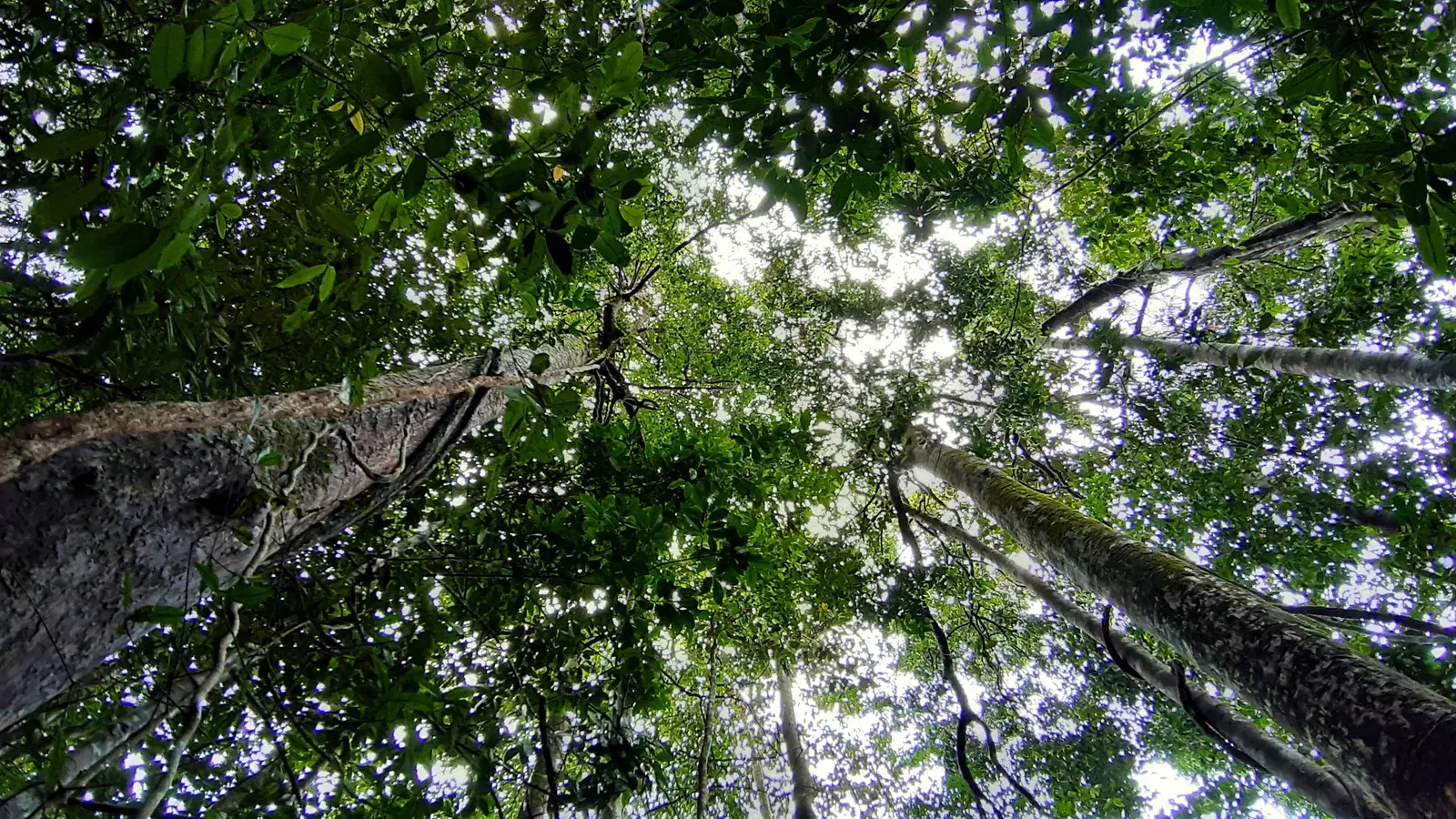
What you actually see. This is the expectation-setting section, because it determines whether people enjoy Sinharaja or feel cheated by it. The wildlife is subtle: mixed-species feeding flocks, which are one of the genuine spectacles here when you hit one — a moving wave of a dozen species travelling together through the understorey. Endemic birds including the Sri Lanka blue magpie, red-faced malkoha, green-billed coucal and ashy-headed laughingthrush. Endemic lizards, frogs and snakes. Purple-faced langurs. Enormous trees, epiphytes, and the structure of a genuine rainforest.

What you do not see: large mammals, in any reliable sense. Leopards exist here and are essentially never seen. If your trip needs an elephant, go to Udawalawe.

Timing. A morning walk of three to four hours from around six is the standard half-day option, and morning is when bird activity is highest. Full-day treks of six to eight hours go deeper. The forest is dark and dense, which means photography is difficult and binoculars matter more than a long lens for most visitors.

The guide question is more important here than almost anywhere in Sri Lanka. In dense forest with subtle wildlife, the difference between a guide who knows the calls and one who does not is the difference between seeing twenty species and seeing four. If birds are your reason for coming, say so explicitly when arranging a guide and ask for someone who specialises — the general forest guides and the birding specialists are not the same people.

Best time: January to March and August to September are generally described as the drier windows. But see the section below on why wet is not the same as bad here.

Kudawa is the main and easiest entranceTraveller reports of guide problems at PitadeniyaSubtle wildlife: feeding flocks, endemic birds, amphibiansNo large mammals in any reliable senseAsk specifically for a birding guide if that is why you came

The Knuckles Range: Sri Lanka's Real Trekking Country

The Knuckles Conservation Forest, known in Sinhala as the Dumbara mountain range, was inscribed by UNESCO in 2010 as part of the Central Highlands of Sri Lanka, alongside the Peak Wilderness Protected Area and Horton Plains. It takes its English name from the resemblance of its five main peaks to a clenched fist.

What distinguishes it from the rest of Sri Lanka's hill country is the range of habitats compressed into a small area — cloud forest at altitude, montane grassland, dry scrub on the eastern slopes, river valleys, and a scatter of remote villages. Meemure, one of the most isolated villages in Sri Lanka, sits within the range.

This is the best multi-day trekking in the country. The Peak Wilderness and Horton Plains are dramatic but comparatively short and structured; the Knuckles has actual route choice, and it is possible to trek for several days.

Access points. Deanston, where the Knuckles Conservation Centre sits, is the main administrative entrance. Corbett's Gap is roughly 35 to 40 km from Kandy, around 1.5 to 2 hours by road, and is the most popular entry. Riverston and the Pitawala Pathana area on the Matale side offer more accessible walking, including a short trail to a well-known viewpoint. Meemure is the base for the remotest routes.

Permits and guides. An entry permit is required and is typically purchased at the entry point, and trekkers are required to hire a registered guide for most trail areas. Guides can be arranged at Deanston or at Corbett's Gap.

Do not walk the Knuckles unguided. This is not a formality. Weather changes fast at altitude, cloud can reduce visibility to nothing within minutes, trails are not consistently waymarked, and people do get lost here. The guide requirement exists for a reason.

Difficulty ranges widely by route. The five-peaks traverse is a serious full-day undertaking with substantial ascent. Riverston and Pitawala Pathana can be done as a gentle half-day. Longer routes toward Meemure or Kalupahana are demanding full-day walks through remote terrain. Be honest with a guide about your fitness rather than aspirational.

Best conditions are generally January to April. The range sits in the path of both monsoons to differing degrees, which is part of why its habitats are so varied and why it rains there a great deal.

UNESCO-inscribed in 2010 within the Central HighlandsThe best multi-day trekking country in Sri LankaDeanston, Corbett's Gap, Riverston and Meemure are the access pointsPermit and registered guide required — do not walk it unguidedRiverston and Pitawala Pathana suit gentler half-day walking

Kitulgala: Rafting, and the One Activity With a Published Standard

Kitulgala sits on the Kelani River around 90 km from Colombo, in rainforest on the western approach to the hill country. It is best known as the filming location for The Bridge on the River Kwai in 1957, and now primarily as Sri Lanka's white water rafting centre.

The rafting. The standard run covers roughly 5 km, taking in around five major and four minor rapids, graded mostly 2 and 3 — which places it firmly in the beginner and family bracket rather than the serious whitewater category. Experienced rafters should calibrate expectations accordingly; this is a fun introduction rather than a technical challenge.

Water levels vary, and the strongest flow is generally described as running from around May to December, though trips operate year-round depending on conditions.

Now the useful part, and it connects to something we wrote about surfing. When researching surf schools we found that Sri Lanka's Tourism Development Authority publishes detailed operator safety guidelines for a range of water-based adventure activities but, as far as we could establish, not for board surfing. White water rafting is in the published set. That means there is an actual standard to check an operator against here, which is a meaningful advantage.

The guidelines in that family require documented instructor certifications, valid first aid and CPR credentials, written standard operating procedures, emergency action plans, pre-activity weather checks, documented safety briefings, and appropriate equipment. Ask whether the operator is registered with the Authority, and what safety equipment and briefing are included.

On price, the spread is instructive. Published operator prices for broadly the same run range from around USD 16 to USD 80 per adult. Some of that is genuine difference in inclusions — safety lead kayaker, self-bailing rafts, transport, lunch, waterproof bags, guides trained in CPR and lifesaving — and some of it is simply what different channels charge. The cheapest option is not automatically inadequate and the most expensive is not automatically better, but you should know what you are buying. Ask what is included before booking rather than comparing headline numbers.

Common operator exclusions worth noting: rafting is typically not recommended for pregnant travellers, those with spinal injuries, or those with cardiovascular conditions, and some operators set a minimum age of around ten. Check if any of these apply to your group.

Beyond rafting, Kitulgala has good rainforest birding, waterfalls, canyoning and confluence swimming, and the Belilena cave, an important prehistoric archaeological site. It works well as a one-night stop between Colombo and the hill country rather than as a destination in itself.

Grade 2 and 3 rapids over roughly 5 km — beginner and family levelStrongest flow generally May to December; runs year-roundRafting does have a published SLTDA operator guideline to check againstOperator prices range from around USD 16 to USD 80 — ask what is includedNot recommended in pregnancy, or with spinal or cardiovascular conditions

The Leeches: An Honest Section

Every article about these places mentions leeches in passing. Almost none tells you what it is actually like, and the result is people arriving genuinely unprepared.

In wet conditions in Sinharaja or the Knuckles, land leeches are abundant. Not occasional — abundant. They sense you approaching and move toward you, they climb, and they get through sock tops, bootlaces and trouser gaps with remarkable competence. On a wet-season walk you may pick up dozens.

Here is the reassuring part, and it is genuinely reassuring: Sri Lankan land leeches are harmless. They do not transmit disease, the bite is painless — you generally will not feel it — and the only real consequences are a small wound that bleeds for a while because of the anticoagulant, and some itching afterwards. It is an unpleasantness, not a danger.

What actually works: leech socks, which are tightly woven fabric socks worn over your trousers and up the calf, are by far the most effective defence and can usually be hired or bought locally at the reserve entrances. Tuck trousers into socks. Apply a repellent — locally, a soap or salt solution rubbed onto socks and boots is the standard method, and it works. Check yourself at intervals rather than at the end.

How to remove one: do not pull, burn or apply salt directly to a leech attached to your skin, all of which can cause it to regurgitate into the wound. Slide a fingernail sideways under the narrow end to break the seal, then flick it off. Or simply leave it — a feeding leech drops off by itself once full, usually within twenty to thirty minutes.

After removal, clean the bite properly with antiseptic and cover it. The bleeding can be surprisingly persistent and looks worse than it is. The genuine risk is secondary infection in a tropical environment, not the leech itself, so treat the wound seriously even though the bite was not.

Your guide will handle all of this matter-of-factly and will usually spot them on you before you do. Follow their lead.

And the perspective worth holding: the leeches are abundant because the forest is wet, and the forest is wet because it is a functioning rainforest. They come with the thing you came to see.

Abundant in wet conditions — expect dozens, not a fewHarmless: no disease transmission, painless biteLeech socks are the single most effective defenceDo not pull, burn or salt an attached leech — slide it off sidewaysClean and cover the bite; infection is the only real risk

When to Go, and Why Wet Is Not the Same as Bad

The conventional advice is to visit Sinharaja in the drier windows of January to March and August to September, and the Knuckles from January to April. That advice is sound if your priority is comfortable walking and a reasonable chance of views.

But there is a counter-argument worth making, because it is almost never made.

These are rainforests. A rainforest in dry conditions is a rainforest operating below capacity. In the wet, the streams run, the amphibians and reptiles are active, the fungi appear, the mist moves through the canopy, and the forest looks and sounds like the thing it actually is. Photographers and naturalists frequently prefer these conditions, and for herpetologists the wet season is straightforwardly better.

The trade-offs are real and should not be minimised: leeches in far greater numbers, slippery trails, reduced visibility in the Knuckles where views matter, occasional trail or road closures, and a genuine landslide risk in the hills during sustained rain.

Which means the honest recommendation is conditional. If you want views from the Knuckles peaks or comfortable walking, go in the drier window. If you want the rainforest as an ecosystem rather than as scenery, the wet months are not a compromise — they are the point.

There is a further consideration for the coming season. A strong El Niño is currently in place, with a wetter signal for October and November and a drier one for January to April 2027. For these destinations, a drier early 2027 would favour the conventional walking season, while a wetter late 2026 favours the rainforest-at-its-best argument. Either way, build flexibility in and check landslide advisories before travelling into the hills.

One timing point that holds in every season: start early. Bird activity peaks in the first hours after dawn, cloud builds through the morning in the Knuckles, and afternoon thunderstorms are common across all three destinations for much of the year.

Conventional advice: Jan–Mar and Aug–Sep for Sinharaja, Jan–Apr for KnucklesWet conditions are when a rainforest is most itselfWet trade-offs: leeches, slippery trails, lost views, landslide riskChoose by priority — views and comfort, or ecology and atmosphereStart early in every season

Getting There, Staying, and What to Bring

Sinharaja is the most awkward of the three to reach. From Colombo the approach is via Ratnapura and Kalawana to Kudawa on the northern side, or via Matara and Deniyaya to the southern entrances. Public transport is possible but involves several bus changes and is slow; most visitors arrive by car or arrange transport with their accommodation. Buses to the area are patchy enough that you should confirm schedules rather than assume.

The Knuckles is easiest from Kandy. Corbett's Gap is around 35 to 40 km and 1.5 to 2 hours. Riverston is approached from the Matale side. Accommodation exists in and around the range, and staying inside rather than day-tripping from Kandy makes a substantial difference to what you can walk.

Kitulgala is the most accessible: around 90 km from Colombo on the A7, roughly two to two and a half hours, and directly on the road between Colombo and Kandy or the hill country. It is the natural one-night stop.

Accommodation near all three tends toward small eco-lodges, guesthouses and homestays rather than hotels. Many sit on unsealed access roads. Confirm the exact location, the access road condition, whether meals are provided — options are often limited nearby — and whether there is hot water and reliable power.

What to bring: leech socks, or the budget to hire them at the entrance. Boots with genuine grip, not trainers. A waterproof jacket that actually works, not a shower-resistant one. Dry bags for cameras and phones — humidity alone will do damage over several days. Binoculars, which matter more than a long lens in dense forest. Antiseptic and plasters. Insect repellent. A head torch. And more cash than you think you need, in rupees.

What not to bring: expectations of connectivity. Coverage is patchy to absent in both reserves, which is part of the appeal but means downloading maps and telling someone your plans.

Fitness: Sinharaja's main trails are moderate and manageable for most reasonably mobile people. The Knuckles ranges from gentle to genuinely demanding depending on route. Kitulgala's rafting requires no fitness but does require the ability to follow instructions and stay calm if you go in the water.

Sinharaja is the hardest to reach; confirm transport in advanceThe Knuckles is 1.5 to 2 hours from Kandy via Corbett's GapKitulgala is 90 km from Colombo — the natural one-night stopBring leech socks, real boots, dry bags and binocularsCarry cash and download offline maps

Visiting These Places Responsibly

These are among the most ecologically significant places in Sri Lanka and among the most vulnerable to visitor pressure, so a few things carry more weight here than elsewhere.

Stay on the trails. In a rainforest, leaving the path damages understorey plants that take years to recover and disturbs ground-nesting species. Your guide will keep you on route; do not push them to go off it for a photograph.

Do not handle wildlife. Amphibians in particular are extremely sensitive to handling — the oils and salts on human skin damage them, and this region's endemic frogs are precisely the species least able to absorb losses. If a guide offers to catch something for a photograph, decline.

Do not play bird calls to draw birds in. Call playback stresses territorial birds and is increasingly frowned upon at heavily visited sites. A good guide will not do it; if yours does, ask them to stop.

Take everything out with you, including organic waste. Fruit peel is not biodegradable in any meaningful timescale in a way that helps, and it attracts animals to trails.

Keep noise down. Sound carries, and the difference between a quiet group and a chatty one is the difference between seeing a feeding flock and hearing one leave.

Hire local registered guides rather than bringing a guide from elsewhere. The guide fee is a direct economic link between the forest's protection and the livelihoods of the villages around it, which is the mechanism by which these reserves stay protected.

Buy food, accommodation and transport locally. The villages around Sinharaja and in the Knuckles are among the more economically marginal parts of the country, and tourism money that stays there is what makes conservation locally viable rather than locally resented.

And respect the permit system rather than looking for ways around it. Visitor numbers are limited deliberately. The queue and the paperwork are the point.

Stay on the trails — understorey damage is slow to recoverNever handle amphibians or reptilesDo not use call playback to draw birdsHire local registered guides; the fee is the conservation linkRespect the permit limits rather than working around them

Travel Tips

  • Carry your passport or ID — it is required to obtain a permit
  • Bring cash in rupees; card payment at forest offices is unreliable
  • Budget generously for fees; published figures vary enormously
  • Ask operators to itemise permit, guide and camera fees separately
  • Hire or buy leech socks at the entrance — they are the single best defence
  • Do not pull, burn or salt an attached leech; slide it off sideways
  • Clean and cover every leech bite properly — infection is the real risk
  • Wear boots with genuine grip, not trainers
  • Bring binoculars rather than relying on a long lens in dense forest
  • Ask specifically for a birding guide if birds are why you came
  • Start at dawn — bird activity peaks early and cloud builds through the morning
  • Never walk the Knuckles unguided; weather and visibility change fast
  • Check landslide advisories before travelling into the hills in wet periods
  • Download offline maps; coverage is patchy to absent
  • Confirm accommodation access roads, meals, hot water and power before booking
  • Do not handle amphibians or reptiles under any circumstances

Frequently Asked Questions

How much does it cost to enter Sinharaja?

We could not establish a reliable current figure, which is unusual enough to state plainly. Published sources give roughly LKR 500, LKR 644, LKR 750 to 1,500, LKR 2,700 and LKR 3,800 for foreign adult entry, plus various dollar equivalents. Some figures include the compulsory guide and some do not. Budget generously, carry cash, and confirm at the Forest Department office at the entrance.

Do I need a guide for Sinharaja or the Knuckles?

Yes, at both. A registered guide is compulsory. At Sinharaja guides are arranged at the entrance; in the Knuckles they can be arranged at Deanston or Corbett's Gap. This is not a formality — in dense forest and fast-changing mountain weather the guide requirement exists for good reasons.

Are these national parks?

No, and the distinction matters. Sri Lanka's national parks are run by the Department of Wildlife Conservation and are jeep-safari destinations. Sinharaja and the Knuckles are conservation forests: entry on foot, permits at the entrance office, compulsory registered guide, no vehicle access inside.

What wildlife will I actually see at Sinharaja?

Subtle rainforest wildlife rather than safari drama. Mixed-species feeding flocks, endemic birds including the Sri Lanka blue magpie and red-faced malkoha, endemic lizards, frogs and snakes, and purple-faced langurs. You will not reliably see large mammals — leopards exist there and are essentially never seen.

How bad are the leeches really?

In wet conditions, abundant — you may pick up dozens on a walk. But they are harmless: no disease transmission, a painless bite, and only persistent bleeding and itching afterwards. Leech socks are the most effective defence and can usually be hired at the entrance. Do not pull, burn or salt an attached leech; slide a fingernail sideways under the narrow end.

When is the best time to visit Sinharaja?

Conventionally January to March and August to September, which are the drier windows. But these are rainforests, and wet conditions are when they are most themselves — active amphibians, running streams, mist in the canopy. If you want comfortable walking, go dry. If you want the ecosystem, the wet months are the point rather than a compromise.

Which Sinharaja entrance should I use?

Kudawa on the northern side is the main entrance, has the main Forest Department office and gentler slopes, and is the most straightforward. Deniyaya serves the southern side, Morningside is remote and little used. Visitors have reported guide problems at the Pitadeniya entrance, so if you have a free choice we would use Kudawa.

Can I trek the Knuckles without a guide?

You are required to hire a registered guide for most trail areas, and you should not attempt it without one regardless. Cloud can reduce visibility to nothing within minutes, trails are not consistently waymarked, and people do get lost there.

How hard is the rafting at Kitulgala?

Not very. The standard run covers around 5 km with roughly five major and four minor rapids, graded mostly 2 and 3 — beginner and family territory. Experienced rafters should treat it as a fun introduction rather than a technical challenge.

Why do rafting prices vary so much?

Published operator prices range from around USD 16 to USD 80 for broadly the same run. Some of that is genuine difference in inclusions — safety lead kayaker, self-bailing rafts, transport, lunch, guides trained in CPR — and some is simply channel pricing. Ask what is included rather than comparing headline numbers, and ask whether the operator is registered with the Tourism Development Authority.

Is rafting safe for children or older travellers?

Grade 2 and 3 water is widely run by families, but operators commonly set a minimum age around ten and advise against it in pregnancy or with spinal injuries or cardiovascular conditions. Unlike some water sports here, white water rafting does have a published SLTDA operator safety guideline, so asking about registration and safety procedures is a question with a real answer behind it.

How many days do I need?

Two nights minimum at Sinharaja to get a proper dawn walk and a full trek. Two to three nights in the Knuckles if you want real trekking rather than a viewpoint stop. One night at Kitulgala is plenty, and it fits naturally between Colombo and the hill country.

Can I combine all three?

Yes, and it makes a good eight-day loop: Colombo to Kitulgala, up to Kandy and into the Knuckles, down through the hill country to Sinharaja, then out to the south coast. Build in a buffer day, because mountain roads and heavy rain do not cooperate.

Reader notes

Join the conversation

Share your question, tip, or travel experience for this guide.

Comments

0 comments

Loading...

Ready to turn inspiration into a Sri Lanka trip?

Use LankaTrip to plan your journey, connect with local guides, and make this itinerary a reality.

Need help planning?

Plan your Sri Lanka adventure

Plan my trip