
LankaTrip Insights

36 min read

Sinharaja and the Knuckles Range in 2026: Sri Lanka's Two Great Rainforest Treks

Everyone hikes Adam's Peak and Little Adam's Peak. Almost nobody walks Sri Lanka's two UNESCO rainforests properly. Sinharaja and the Knuckles Range reward the effort enormously, but the permit systems contradict each other, the seasons run opposite, and one of them has no views at all. This is the honest 2026 guide.

Back to blog
Sinharaja and the Knuckles Range in 2026: Sri Lanka's Two Great Rainforest Treks

Sri Lanka has a hiking problem, and it is a problem of popularity rather than shortage. Adam's Peak, Little Adam's Peak and Ella Rock absorb the overwhelming majority of foreign trekkers, largely because they are easy to reach, easy to photograph and easy to fit into a two-week route.

Meanwhile, two of the most biologically extraordinary places in South Asia sit a few hours away, receiving a tiny fraction of that traffic.

Sinharaja Forest Reserve is the last substantial stretch of primary lowland rainforest left in Sri Lanka, a UNESCO World Heritage Site saved from commercial logging by a public campaign in the late nineteen-seventies. The Knuckles Conservation Forest, part of the Central Highlands World Heritage listing, is a thirty-four-peak massif of cloud forest, hidden waterfalls, high grassland and villages that were genuinely remote within living memory.

They are frequently mentioned in the same breath and almost never explained together, which is a shame, because understanding them as a pair is the key to planning either one well. Their seasons run close to opposite. Their permit systems work differently. One is about looking down through a canopy at things most people never notice; the other is about standing on an escarpment with a thousand metres of air in front of you.

This guide covers both honestly, including the parts that tend to get left out of promotional writing: the fact that Sinharaja has essentially no views, the genuine confusion about whether you legally need a guide in the Knuckles, the leeches, and the routes that are described online as day walks but are not.

None of this is meant to put you off. Both places are worth rearranging an itinerary for. But the travelers who enjoy them are almost always the ones who arrived knowing what they were walking into.

Quick Summary

  • Sinharaja and the Knuckles are Sri Lanka's two UNESCO-listed forest trekking areas and are almost nothing like each other
  • Sinharaja is a dense lowland rainforest with essentially no panoramic views. If you go expecting a viewpoint hike you will be disappointed
  • The Knuckles Range is a mountain massif with dramatic escarpments, cloud forest, waterfalls and genuine multi-day routes
  • A local guide is compulsory in Sinharaja. In the Knuckles the rules are inconsistent, with permits always required and guides mandatory for certain protected zones
  • Their best seasons are close to opposite, which makes them useful complements rather than alternatives
  • Leeches are abundant in both. This is the single most common reason visitors cut a walk short
  • Both are managed by the Forest Department, so fees and procedures differ from national parks
  • Access to the Knuckles usually runs through Kandy, and the hill-country railway to Kandy is currently closed

Why These Two Forests Are Different From Everything Else You Will Hike Here

The first thing to understand is administrative, and it explains almost every practical difference you will encounter.

Sri Lanka's famous safari destinations, including Yala, Udawalawe, Wilpattu and Horton Plains, are national parks administered by the Department of Wildlife Conservation. They have standardised foreign ticket pricing, published gate procedures and vehicle-based access.

Sinharaja and the Knuckles are not national parks. Both are forest reserves managed by the Forest Department. That single distinction is why the fees are structured differently, why the guiding arrangements are local rather than centralised, why the published information is patchier, and why online sources contradict each other so persistently. You are dealing with a different agency operating under a different framework.

The second difference is that both are walked, not driven. There is no jeep circuit, no elevated viewing platform and no guaranteed sighting. What you see depends on your patience, the weather, the hour and, more than anything, the quality of the person walking in front of you.

The third difference is that both sit inside living landscapes. Sinharaja is ringed by buffer-zone villages whose residents supply its guides. The Knuckles contains working villages, terraced paddy and cardamom plots, and the trails pass through them. You are not visiting an enclosure. You are walking through somewhere people live.

This makes both forests genuinely rewarding and slightly harder work than the island's headline hikes. It also means the ordinary tourist assumptions do not transfer. Turning up at midday expecting to buy a ticket and stroll is how most disappointing visits begin.

Forest Department, not Wildlife DepartmentDifferent fees and procedures from national parksWalked, not drivenLiving landscapes with resident communitiesPublished information is inconsistent by nature

Sinharaja: What It Actually Is, and What It Is Not

Let us handle the disappointment in advance, because it is entirely avoidable.

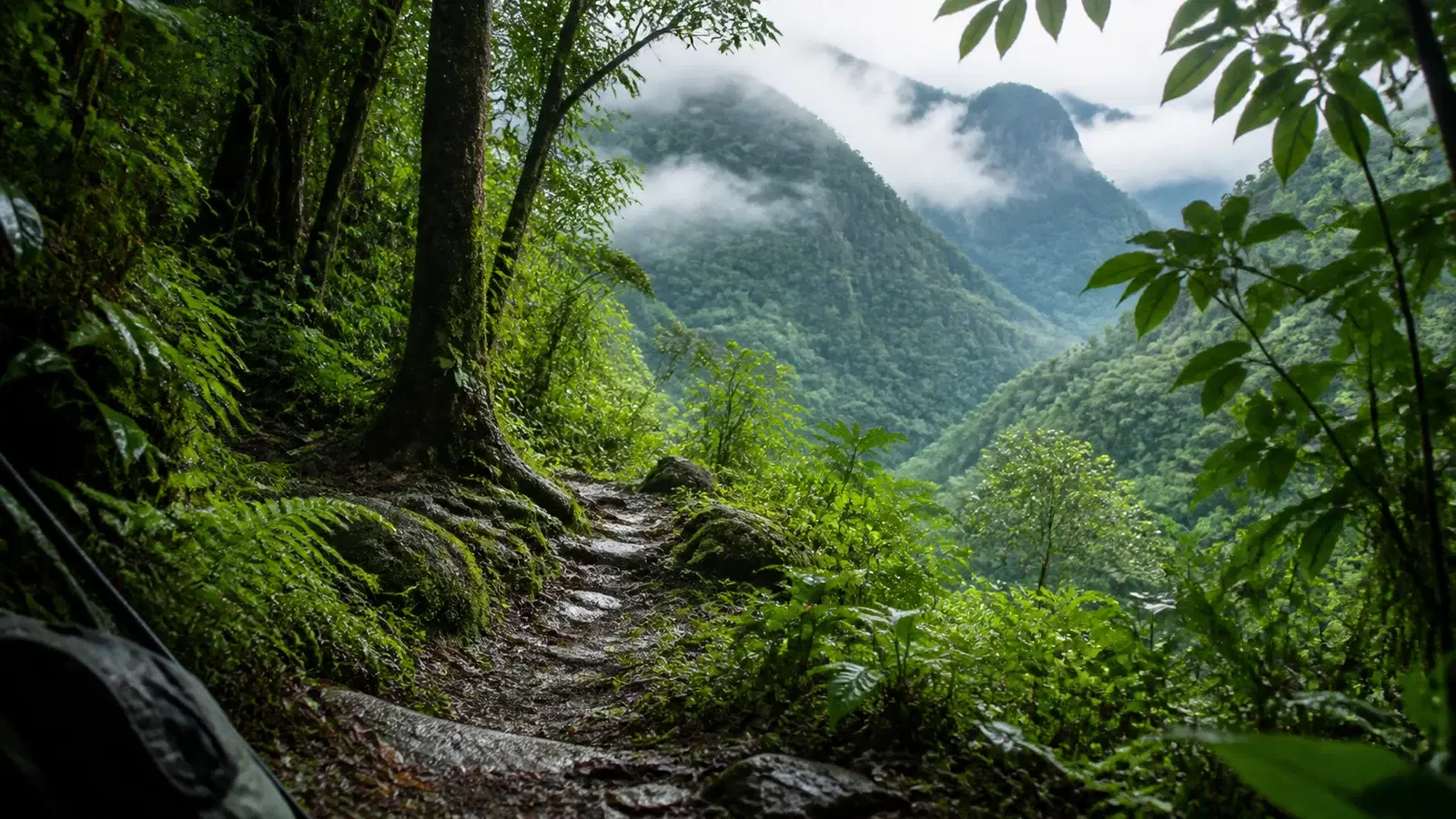
Sinharaja has essentially no panoramic views. It is a dense, closed-canopy lowland rainforest. You walk beneath a green ceiling for hours. The occasional gap or ridge offers a glimpse, and some of the higher trails on the eastern side open up more, but if your mental image involves standing on a rock with mountains stretching to the horizon, that image belongs to the Knuckles, not here.

There is also no large-mammal drama. You will not see elephants. Leopards are present in the wider ecosystem but sightings are vanishingly rare. Purple-faced langurs, giant squirrels and the occasional sambar are the realistic mammal expectations.

What Sinharaja offers instead is density and endemism. This is the single best birding site in Sri Lanka, and it is not close. The forest holds the overwhelming majority of the island's endemic bird species, along with an extraordinary concentration of endemic amphibians, reptiles, trees and invertebrates. More than half the tree species here are found nowhere else.

The defining spectacle is the mixed-species feeding flock, locally and internationally known as a bird wave. Twenty to forty birds of many different species move through the forest together in a loose cooperative group, and when one passes through your position the forest goes from apparently empty to overwhelming in about ninety seconds. Sinharaja's bird waves are among the most studied and most reliable in the world.

The other pleasure is scale of a different kind. A good guide will stop you every few minutes for something the size of a fingernail: an endemic frog in a leaf axil, a pit viper coiled at eye level, a stick insect you would have walked into. Sinharaja rewards slowness more than any other place in the country.

So the honest framing is this. If you want views, go to the Knuckles. If you want the richest three hours of natural history available in Sri Lanka, come here, walk slowly, and accept that the ceiling stays green.

Closed canopy, essentially no panoramasNo large-mammal safari dramaThe island's best endemic birdwatchingBird waves are the defining spectacleRewards slowness above everything

Sinharaja's Entrances, and Which One to Choose

Sinharaja has several access points, and choosing the wrong one for your route is a common and expensive mistake because they sit on opposite sides of a large forest with no through road.

Kudawa, on the northwestern side near Weddagala and approached via Ratnapura, is the most established and most used entrance. It has the best-developed trail network, the most experienced guiding community and the most straightforward logistics. From Colombo, expect roughly three and a half to four hours by road. If this is your first visit and you are coming from the west or from Colombo, this is the default choice.

Pitadeniya, on the southern side and reached through Deniyaya, is the main southern gateway and the practical choice for anyone travelling up from the south coast. It has a conservation centre, a hanging bridge and access to several waterfalls including Kekuna Ella. Trails here are lush from the moment you enter.

Kurulugala, also near Deniyaya, sits at higher elevation close to the Rakwana hills. Its altitude and position produce excellent butterfly and bird diversity, and it is the newest of the main entrances.

Lankagama, on the southern boundary, is popular with birdwatchers and gives access to a cluster of waterfalls in a short distance.

Morningside, on the northeastern side at higher elevation, is the specialist's entrance. Serious birders often rate the early-morning birding here above Kudawa, particularly for higher-elevation endemics, but reaching it means basing yourself in that area rather than making a day trip.

The practical rule is simple. Coming from Colombo or the west, use Kudawa. Coming from Galle, Mirissa or the south coast, use one of the Deniyaya-side entrances. Do not plan to enter one side and exit another; the road journey between them is long.

Whichever you choose, the ticket office hours matter. Gates typically operate from early morning until early evening, with last tickets sold in the mid to late afternoon. Since the best wildlife activity is at dawn, aiming to be at the gate as it opens is not a preference but the entire point.

Kudawa for access from Colombo and the westPitadeniya and Kurulugala from Deniyaya and the southLankagama for waterfalls and birdingMorningside for serious high-elevation birdersNo practical through route between sides

Sinharaja Permits, Compulsory Guides and What It Costs

Entry to Sinharaja requires a ticket, and a locally trained guide is compulsory. There is no independent walking option, and this is not a rule that gets bent for confident hikers.

The guide requirement deserves proper context rather than an eye-roll, because it is one of Sri Lanka's more successful conservation arrangements. Guides are drawn from the buffer-zone villages surrounding the forest. Turning residents of those villages into stakeholders in the forest's survival demonstrably reduced encroachment and poaching pressure. When you pay a Sinharaja guide, you are funding the mechanism that keeps the forest standing.

On cost, we are going to be deliberately imprecise, because precision here would be false. Published figures vary widely depending on the source and the year, ranging from a modest entrance fee plus a separate guide charge, to bundled all-in figures several times higher, to tour-operator packages higher again. Camera and video charges have historically applied on top. Foreign and local pricing differ substantially.

What you can plan around is the shape rather than the number. Budget for a per-person entrance charge plus a guide charge, expect the guide charge to be levied per person rather than per group at some entrances, bring cash because card facilities cannot be relied on, and ask for a printed ticket. Some visitors report being charged without receiving one, and asking politely for a ticket is both reasonable and worth doing.

Expect to be assigned a guide from a roster rather than choosing one. Quality varies considerably. Many are exceptional spotters with decades of forest knowledge. Others speak limited English, carry no binoculars, and will occasionally tell you something that is not correct. This is a genuine and widely reported inconsistency, and pretending otherwise would not help you.

If birding is your actual purpose rather than a pleasant side effect, arrange a specialist bird guide in advance through your accommodation rather than relying on the gate roster. The difference between a general forest guide and a specialist birder is the difference between seeing a bird wave and understanding it.

Standard walks run about three hours. Longer options of five to seven hours go deeper and are worth it if your legs and the weather allow. Multiple mornings beat one long day, since dawn activity is the whole game.

Guide compulsory, no independent accessGuiding funds a genuine conservation mechanismCosts vary widely, so carry cash and confirm at the gateAsk for a printed ticketBook a specialist bird guide if birding is the goal

What You Can Realistically Expect to See in Sinharaja

Managing expectations here is not pessimism. It is the difference between a great morning and a vaguely disappointing walk.

Birds are the headline, and the star is the Sri Lanka blue magpie, an improbably coloured endemic that ranks among the most striking birds in Asia. Other regularly encountered endemics include the red-faced malkoha, ashy-headed laughingthrush, white-faced starling, Sri Lanka scimitar-babbler, chestnut-backed owlet, Sri Lanka scaly thrush and a range of flycatchers, babblers and sunbirds.

Whether you see many of them in one burst or a handful across three hours depends almost entirely on whether a bird wave passes your position. This is partly luck and substantially about being in the forest early and staying still. Visitors who walk briskly to a waterfall and back generally see very little.

Reptiles and amphibians are Sinharaja's quiet superpower. The green pit viper is regularly spotted, often at eye level beside the trail, and is a genuinely beautiful animal that you should photograph from a respectful distance rather than approach. Hump-nosed lizards, endemic geckos and an exceptional diversity of endemic frogs are all present, with many species restricted to this forest and nowhere else on earth.

Mammals are modest. Purple-faced langurs, giant squirrels, and occasional sambar or barking deer are realistic. Anything more is a bonus rather than an expectation.

Invertebrates are extraordinary if you have any interest at all: butterflies in numbers, spiders including some spectacular orb-weavers, and endemic land crabs in the streams.

One reliable pleasure is water. Depending on the entrance and trail, many walks end at a stream or waterfall where swimming is possible, and after three humid hours this is more welcome than it sounds.

A note on photography. Sinharaja is dark. The canopy blocks most light, and much of what you want to photograph is small, fast and in deep shade. A fast lens and a willingness to push your camera's sensitivity are far more useful here than a long zoom, and phone cameras will struggle with everything except the landscape and the leeches on your socks.

Sri Lanka blue magpie is the headline endemicBird waves are the difference between a good and great visitExceptional endemic frogs and reptilesModest mammal expectationsVery low light for photography

The Knuckles Range: Sri Lanka's Most Underrated Trekking Country

If Sinharaja is about looking closely, the Knuckles is about looking outward.

The range takes its English name from the resemblance of its peaks to a clenched fist. In Sinhala it is Dumbara Kanduvetiya, the mist-laden mountain range, which is the more accurate description. Thirty-four peaks, several above eighteen hundred metres, are spread across a conservation area of roughly two hundred and thirty square kilometres, and the range forms part of the Central Highlands of Sri Lanka World Heritage listing alongside Peak Wilderness and Horton Plains.

What makes the Knuckles remarkable ecologically is compression. Within a short distance the landscape moves through dry-zone scrub, riverine forest, submontane forest, cloud forest and high grassland known as pathana. That gradient produces an unusual concentration of microclimates and endemic species, and it is why the range feels like several different countries stitched together over the course of a single day's walk.

What makes it remarkable for trekkers is variety of commitment. You can do a well-marked hour-long walk to a cliff edge with a car waiting at the trailhead, or you can commit to a two-day traverse with a night in a cave behind a waterfall. Very few places offer both ends of that range within the same permit area.

It is also, by Sri Lankan standards, quiet. The trails that see genuine crowds are the short, accessible ones. Go deeper and you will often see nobody at all, which is both the attraction and the reason the safety section of this guide is not decorative.

The human landscape matters as much as the natural one. Villages inside and around the range farm terraced paddy, cardamom and pepper. Meemure, on the eastern side, is the best known and was accessible only on foot within recent memory. It remains a working village rather than an attraction, and visitors are guests in it.

Thirty-four peaks in a compact massifPart of the Central Highlands World Heritage listingDry scrub to cloud forest in a single dayOptions from one hour to multiple daysGenuinely quiet away from the short trails

The Knuckles Trails, From One Hour to Two Days

The range has many more routes than can be listed here, but these are the ones most visitors will actually consider, arranged roughly by commitment.

Mini World's End is the accessible headline. Starting from the Knuckles Conservation Centre at Deanston, the trail runs around one and a half kilometres to an escarpment at roughly twelve hundred metres, where the land simply stops. On a clear day you look down on villages in the valleys below. The comparison to Horton Plains' World's End is obvious and fair. There are no barriers at the edge, so mind your footing, and take the warning literally rather than decoratively.

The Dothalugala nature trail, also from the Deanston side, is a moderate forest climb to an observation point. It is more strenuous than Mini World's End and passes through better forest, and it is one of the routes commonly walked without a guide.

Riverston and the Pitawala Pathana grassland, on the Matale side, offer some of the most accessible high scenery in the country. The terrain is comparatively flat, the views are enormous, and the road access is good, which makes this the practical choice for families, older travellers or anyone short on time.

Corbett's Gap sits at around twelve hundred metres and is a viewpoint in its own right as well as a trailhead. The route from here to the Nitro Caves, a large bat-inhabited cave system, runs roughly eleven kilometres and takes most of a day.

Duwili Ella is the range's serious prize and the route most often misrepresented online. Starting from the Pitawala side, the full round trip is commonly quoted at around thirty-two kilometres through thick jungle and montane forest, taking in several waterfalls and a cave campsite behind falling water. This is an overnight expedition requiring a guide, proper equipment and genuine fitness. It is not a day hike, whatever a search result may imply.

The Five Peaks route and various multi-day traverses are the domain of organised trekking with experienced guides and pre-arranged permits. If this is your ambition, arrange it properly and in advance rather than turning up hoping to improvise.

Village walks around Meemure sit at the gentle end and offer something the summits do not: an understanding of how people actually live in this landscape. These are commonly walked without a guide, though hiring a local one costs little and changes the experience entirely.

Mini World's End is short, dramatic and unfencedDothalugala for a moderate forest climbRiverston and Pitawala Pathana for accessible big sceneryDuwili Ella is an overnight expedition, not a day walkMeemure village walks for the human landscape

The Knuckles Permit Question, Answered as Honestly as We Can

This is the most confusing practical topic in Sri Lankan trekking, and we would rather explain the confusion than pretend it away.

What is consistent across sources is that an entrance permit is required for access to the conservation forest, obtained at the relevant forest office or conservation centre. Deanston and Riverston both have offices, and permits are trail-specific rather than universal.

What is inconsistent is the guide requirement. The prevailing description of Forest Department policy is that a registered guide is mandatory for certain protected zones within the range, while some marked and accessible trails are walked without one in practice. Trekkers routinely report being told by one source that guides are legally compulsory everywhere and by another, including local hosts and office staff, that only a permit is needed for particular trails.

Both of those reports can be true simultaneously, because the requirement is zone-specific rather than range-wide, and because enforcement and interpretation vary between offices and over time.

Reported permit costs cluster in a band of roughly one to two and a half thousand rupees per person depending on the trail, with guided package pricing for foreign visitors running very much higher once guiding, transport and taxes are bundled. Treat all of these as indicative.

The practical approach that avoids trouble: decide your specific trail first, then ask at the office controlling that trail on the day, and take a guide for anything beyond the short marked routes regardless of what the minimum legal requirement turns out to be.

That last point is not a compliance recommendation. It is a safety one. Trekkers who have gone into the deeper Knuckles without local knowledge and written about it afterwards tend to describe the same arc: confidence, a trail that stops being obvious, weather that closes in, and a humbling return. The range is not enormous, but it is complex, and a wrong ridge in cloud is a genuinely serious situation.

One further practical warning. Small permit offices in remote parts of the range are sometimes simply closed when you arrive, particularly early or on holidays. If your plan depends on obtaining a permit at an obscure office at dawn, build in a fallback.

Permits are always required and are trail-specificGuide rules are zone-specific, not range-wideSources genuinely contradict each otherConfirm at the controlling office on the dayTake a guide beyond the short marked routes regardless

The Season Question: Why These Two Forests Are Complements, Not Alternatives

This is the planning insight that makes the pairing useful, and it is rarely spelled out.

Sinharaja sits in the southwest wet zone. It is a rainforest, so it rains in every month of the year, and any guide promising you a dry visit is selling something. But the relative windows matter. The southwest monsoon, roughly May to September, brings the heaviest and most persistent rain, and the second intermonsoonal period in October and November is also very wet. The commonly recommended windows are January to early April, and a shorter drier spell around August to September.

The Knuckles runs on a different calendar. The range is generally described as best from around February to September. The northeast monsoon, roughly November through January, is the range's difficult period, bringing sustained rain, thick cloud, slippery trails and viewpoints that show you nothing but grey.

Overlay those and a pattern emerges. February to early April is the window where both are workable, which makes it the ideal period for a trip built around the two. May to September is strong for the Knuckles and hard for Sinharaja. November to January is poor for the Knuckles and mixed for Sinharaja.

There is a complication worth knowing about the Knuckles specifically. The range straddles a climatic boundary, with wetter western and southern flanks and drier eastern areas around Meemure and Corbett's Gap. In a wet spell, the eastern side is often the salvageable option. Local advice on the day is worth more than any calendar.

Two practical consequences follow. First, rain does not cancel a Sinharaja visit; it merely changes it, and a wet forest is a more active forest for amphibians and a far more active forest for leeches. Second, rain genuinely does cancel the point of a Knuckles viewpoint. If your Knuckles plan is Mini World's End and the cloud is down, you will walk to a cliff edge and look at the inside of a cloud.

For a viewpoint-dependent trek, build in a spare day. For Sinharaja, build in a spare morning, because two dawns beat one long afternoon every time.

Sinharaja: January to early April and August to SeptemberKnuckles: roughly February to SeptemberFebruary to early April suits bothThe eastern Knuckles is drier in wet spellsRain changes Sinharaja but can cancel Knuckles views

The Leeches: A Section You Should Actually Read

More visits are curtailed by leeches than by weather, fitness or wildlife, and almost every account of a miserable rainforest walk traces back to somebody who was not told or did not believe it.

Land leeches are abundant in both forests and overwhelming after rain. They are small, they are fast, they climb, and they are extremely good at finding the gap between your sock and your trouser leg. In a wet spell you may pick up dozens in an hour.

The important thing first: they are harmless. Land leeches do not transmit disease in this context. The bite is painless because their saliva contains an anaesthetic, which is why you usually find them after they have finished rather than during. The wound bleeds for a while afterwards because of an anticoagulant, sometimes surprisingly freely, which alarms people far more than it should.

The single most effective preventive measure is leech socks. These are long, tightly woven fabric socks that cover the calf and tie above it, worn over trousers and under boots. They are widely sold near both forests and at outdoor shops in Colombo and Kandy, and they change the experience completely. If you buy one thing before either trek, buy these.

Failing that, tuck trousers into socks, wear closed shoes and never sandals, and treat your footwear and lower legs before you set off. Local practice includes rubbing alum, soap or a salt solution onto shoes and socks, and commercial repellents are available. Reapply after stream crossings.

During the walk, check your legs every fifteen minutes rather than waiting. Stopping in one place for a long time, which is exactly what good birdwatching requires, is when they find you.

To remove one, slide a fingernail under the narrow head end to break the seal and flick it off. Do not pull it straight off, and do not use fire, salt directly on an attached leech or anything else dramatic, since a distressed leech is more likely to leave debris in the wound. Clean the bite afterwards, apply antiseptic, and expect it to bleed for a while and to itch for a couple of days.

A perspective worth holding: the leeches are a symptom of exactly what makes these forests worth visiting. A wet zone rainforest without them would be a wet zone rainforest in trouble.

Harmless but abundant, especially after rainLeech socks are the single best investmentTreat shoes and socks before setting offCheck every fifteen minutes, not at the endSlide them off, never pull or burn

What to Actually Pack

Neither forest requires technical equipment, but both punish the wrong clothing quickly.

For your feet, closed shoes or light boots with real grip. Trails are wet, muddy and rooty in both places, and stream crossings are routine. Trail runners dry faster than boots and are a reasonable choice for Sinharaja. For longer Knuckles routes, ankle support earns its place. Sandals and canvas trainers are how people fall.

For your legs and body, long trousers rather than shorts, in a fabric that dries. Long sleeves help against both leeches and the sun on exposed Knuckles grassland. Bring a full change of clothes to leave in the vehicle, because you will finish wet in one way or another.

Rain protection that breathes matters more than rain protection that is waterproof. In Sinharaja's humidity a sealed rain jacket turns into a sauna within twenty minutes; a light poncho that lets air move is often more comfortable. Protect your electronics with dry bags rather than trying to keep yourself dry.

For the Knuckles specifically, add a warm layer. The higher trails at dawn and in cloud are genuinely cold by Sri Lankan standards, and people who packed only for the coast are consistently caught out.

Carry more water than feels necessary, at least two litres per person for a half-day and considerably more for full-day Knuckles routes, since there is nowhere to buy anything once you start. Bring your own food; there are no facilities inside either forest.

Useful extras: binoculars, which transform Sinharaja and which most assigned guides will not have; a head torch for any early start or long route; a basic first-aid kit including antiseptic for leech bites; a power bank; and a physical map or downloaded offline map for the Knuckles, where mobile coverage is unreliable.

Leave behind: drones, which require permissions in protected areas and are inappropriate around wildlife and villages; single-use plastic, which you will have to carry back out anyway; and any expectation that you will stay clean.

Closed shoes with grip, never sandalsLong trousers and quick-drying fabricBreathable rain protection beats sealed jacketsA warm layer for the KnucklesBinoculars transform Sinharaja

Getting There in 2026, Including the Railway Problem

Neither forest is on a railway line, and both require a final road leg. How you handle that leg is most of the logistics.

For Sinharaja from Colombo, the usual route runs through Ratnapura to the Kudawa side, taking roughly three and a half to four hours by road. From the south coast, the approach is via Matara and inland to Deniyaya for the southern entrances. Public buses serve Deniyaya from Matara several times daily, and Kalawana and Weddagala from the Ratnapura direction, after which a tuk-tuk covers the last stretch to the gate. Budget travellers do this routinely; it is slow but entirely feasible.

For the Knuckles, access is generally through Kandy, with the Deanston and Corbett's Gap sides reached via Hunnasgiriya on the Mahiyanganaya road, and the Riverston and Pitawala side reached from Matale. Road conditions on the upper approaches range from adequate to poor, and some final stretches genuinely need a high-clearance vehicle or a tuk-tuk driver who knows the route.

There is an important 2026 complication. Cyclone Ditwah caused severe damage to the hill-country main railway line. Trains from Colombo currently run only as far as Rambukkana, and the section from Rambukkana through Kandy to Nanu Oya is not operating, with reopening expected around January 2027. The Nanu Oya to Ella and Badulla stretch is running normally, as are the coastal and eastern lines.

For Knuckles planning this matters directly, because the romantic version of the journey, taking the train up to Kandy and continuing by road, is not currently available. Plan on road transfer from Colombo to Kandy, or on reaching Rambukkana by train and continuing by road from there. Check current status before you travel, since railway restoration timelines move.

Sinharaja is unaffected by the closure, since its approaches were never rail-served.

For both forests, an early start is not optional. Dawn is when the wildlife is active and when the Knuckles views are clearest before cloud builds. That usually means staying near the forest the night before rather than driving out from Kandy, Galle or Colombo in the morning. Visitors who try to do either as a long day trip from a coastal base almost always arrive at the wrong hour and see the least interesting version of the place.

Sinharaja via Ratnapura or DeniyayaKnuckles via Kandy, then Hunnasgiriya or MataleKandy railway section closed until around January 2027Sinharaja access unaffected by the closureStay nearby the night before, always

Where to Stay Near Each Forest

Accommodation near both forests spans a wide range, and the choice affects the quality of your visit more than it does in most destinations, because proximity determines what time you can be at the trailhead.

Around Sinharaja, the clusters are near Kudawa and Weddagala on the northwestern side, and around Deniyaya and the southern entrances. Options range from simple village homestays and guesthouses to a small number of higher-end eco-properties within or adjoining the forest boundary. The Forest Department also operates basic dormitory-style accommodation at some locations, which is inexpensive and functional, sometimes requiring you to bring your own food for the staff to prepare, and generally needing to be arranged in advance.

Staying in a village homestay near the boundary has a specific advantage beyond cost: your hosts are often related to, or are themselves, the guides, and the informal knowledge you pick up over dinner about where the bird waves have been moving is worth more than any brochure.

Around the Knuckles, the practical bases are the Hunnasgiriya area for the Deanston side, the Riverston and Pitawala area from Matale, and Meemure village on the eastern side for anyone wanting to be genuinely inside the range. Kandy works as a comfortable base for day trips to the closer trailheads but adds a significant early-morning drive.

Meemure deserves a specific note. Staying there means basic facilities, limited electricity in some houses, no reliable mobile coverage and a long rough road in. It also means waking up inside one of the most beautiful valleys in the country in a working village. Go with appropriate expectations and it is a highlight; go expecting a hotel and it is not.

For all of these, book ahead in the high season and confirm what is actually included. Ask specifically whether meals are provided, since there is often nowhere else to eat, and whether the property can arrange guides and permits, which saves a great deal of morning friction.

Weekends and Sri Lankan holiday periods bring domestic visitors to the accessible Knuckles trails in real numbers. Midweek is quieter everywhere.

Proximity determines your start timeHomestays give access to informal local knowledgeForest Department dormitories are basic and cheapMeemure is a genuine village, not a resortMidweek is markedly quieter

Safety: The Realistic Risks in Both Forests

Neither place is dangerous in a way that should worry a reasonably fit adult, but the risks are different from the ones people expect and worth naming plainly.

Getting lost is the genuine hazard, and it is a Knuckles problem rather than a Sinharaja one. Trails fade, junctions are unmarked, and cloud can reduce visibility to a few metres within minutes. Every year brings accounts of trekkers who took a wrong ridge and had a much longer day than planned. Tell someone your route and expected return time, carry an offline map, and turn back earlier than feels necessary when the weather closes in.

Weather itself is the second risk. Sudden heavy rain makes rock slippery, raises stream levels quickly and makes crossings that were trivial on the way out genuinely difficult on the way back. If a stream has risen, wait rather than cross.

Unfenced edges are the third. Mini World's End and several other Knuckles viewpoints have no barriers at all. Wet rock at a cliff edge in cloud is exactly the combination that causes accidents, and it is worth being unglamorous about where you stand for a photograph.

Snakes are present in both forests, including venomous species such as the green pit viper and, less commonly, hump-nosed vipers and kraits. Bites to walkers on trails are rare, and almost all incidents involve someone reaching into vegetation or attempting to handle an animal. Watch where you place your hands, do not step over logs blindly, and never touch a snake for a photograph. Sri Lanka has good antivenom capacity at major hospitals, and knowing where the nearest one is before you set off is sensible.

Elephants are not a concern in Sinharaja but can be present in some peripheral areas of the wider Knuckles landscape and on approach roads at night. Avoid driving remote roads in these areas after dark.

Dehydration and heat are underestimated in Sinharaja, where the humidity is severe even though the walking is not strenuous. In the Knuckles the opposite catches people out, with genuine cold at altitude in wind and rain.

Finally, mobile coverage is unreliable to absent in both. Do not build a plan that depends on being able to call anyone.

Getting lost is the real Knuckles riskRising streams are a serious turnaround signalViewpoints are unfencedSnake bites almost always follow handling attemptsAssume no mobile coverage

Trekking These Forests Responsibly

Both forests survive because of decisions made about them, and the way visitors behave is part of that equation rather than incidental to it.

Stay on the trails. In Sinharaja in particular, the ground layer holds endemic amphibians and seedlings, and off-trail walking for a photograph does real damage in a way that is invisible to the person doing it.

Take everything out. Neither forest has meaningful waste infrastructure, and what you leave stays. This includes fruit peel, which is not compostable in a way that helps and which attracts animals to trails.

Keep your distance from wildlife. Do not bait, call excessively, or use flash on nocturnal species. Playback of bird calls to draw endemics out is a contested practice and, used repeatedly at a popular site, is genuinely disruptive to breeding birds. If your guide does it constantly, it is reasonable to ask them not to.

Respect the guiding system rather than trying to circumvent it. In Sinharaja, the compulsory guide is the conservation mechanism. Attempting to negotiate around it undermines the arrangement that keeps buffer-zone communities invested in the forest's survival.

In villages, particularly Meemure and the Sinharaja buffer settlements, ask before photographing people, homes or religious sites. Buy food, tea and handicrafts locally, and pay a fair rate rather than haggling hard over sums that are trivial to you and material to the seller.

Do not swim in drinking-water sources, and be careful with soap and sunscreen in streams. Ask your guide where swimming is appropriate rather than assuming.

Leave the drone at the hotel. Protected areas require permissions, wildlife is disturbed by them, and village residents did not consent to being filmed from above.

None of this is onerous. It amounts to walking through somewhere as a guest rather than a consumer, which is also, incidentally, how you get the most out of both places.

Stay on trails, especially in SinharajaCarry out everything, including organic wasteQuestion excessive call playbackSupport the guiding system rather than avoiding itNo drones in protected areas

Which One Should You Choose?

If you only have room for one, the decision is genuinely straightforward once you are honest about what you enjoy.

Choose Sinharaja if you are interested in birds, reptiles, amphibians, plants or ecology in any serious way; if you are content to walk slowly and stop often; if you are travelling on the south or west of the island; or if you are visiting between January and early April. It is also the better choice for travellers who want a rewarding half-day rather than a physical challenge, and for families with younger children, since the standard walks are short and flat enough.

Choose the Knuckles if you want views, altitude, dramatic landscape and the option of a genuinely demanding trek; if you are already in the Kandy area; if you are travelling between roughly February and September; or if the idea of walking through terraced villages and cloud forest appeals more than identifying a warbler.

Choose both if you have the time, and sequence them by season and geography. A route that runs Colombo, Sinharaja, the south coast, the hill country and then the Knuckles via Kandy works well, though the current railway closure means the Kandy leg is by road.

Choose neither, and we mean this, if you dislike insects and being wet, if you cannot walk for two to three hours on uneven ground, or if your trip is short and packed. Both forests punish rushing, and a bad-tempered three hours in the rain is not an experience worth buying. There is no shame in spending that time on the coast instead.

One last framing that may help. Sinharaja is a forest you visit to learn something. The Knuckles is a landscape you visit to feel something. Most travellers know instinctively which of those they are after, and the ones who have a disappointing time are usually the ones who chose the other.

Sinharaja for ecology, birds and slow observationKnuckles for views, altitude and physical trekkingFebruary to early April suits bothNeither rewards a rushed itineraryKnow which experience you actually want

Travel Tips

  • Buy leech socks before you go. This is the single most useful preparation for either forest
  • Stay near the forest the night before, because both reward a dawn start and punish a late arrival
  • Carry cash. Card facilities at forest offices cannot be relied on
  • Ask for a printed ticket at Sinharaja and keep it
  • Book a specialist bird guide in advance if birding is your actual purpose
  • Bring your own binoculars, since assigned guides frequently do not carry any
  • Confirm the guide requirement for your specific Knuckles trail at the office controlling it
  • Take a guide for anything beyond the short marked Knuckles routes, regardless of the minimum requirement
  • Build a spare day into any Knuckles viewpoint plan, because cloud ruins the point
  • Carry at least two litres of water per person and all your own food
  • Add a warm layer for the Knuckles, which is genuinely cold at altitude in wind and cloud
  • Use breathable rain protection rather than a sealed jacket in Sinharaja's humidity
  • Download offline maps and assume no mobile coverage in either area
  • Tell someone your Knuckles route and expected return time
  • Do not cross a stream that has risen during your walk. Wait instead
  • Check current railway status before planning Kandy access, since the hill-country line section remains closed

Frequently Asked Questions

Do I need a guide to visit Sinharaja Forest Reserve?

Yes. A locally trained guide is compulsory for all visitors to Sinharaja and there is no independent walking option. Guides are drawn from surrounding buffer-zone villages, and the arrangement functions as a conservation mechanism as well as a livelihood scheme.

Do I need a guide for the Knuckles Range?

It depends on the trail. An entrance permit is always required, and Forest Department policy requires a registered guide for certain protected zones within the range, while some marked and accessible trails are commonly walked without one. Sources contradict each other on this, so confirm at the office controlling your specific trail. For safety reasons we would recommend taking a guide for anything beyond the short marked routes regardless.

How much does it cost to enter Sinharaja?

Published figures vary widely and change without much notice. Expect a per-person entrance charge plus a guide charge, with foreign and local pricing differing substantially, and camera charges sometimes applying on top. Bring cash and confirm the current rate at the ticket office rather than relying on any published figure, including this one.

How much does a Knuckles permit cost?

Reported permit costs cluster in a band of roughly one to two and a half thousand rupees per person, varying by trail. Guided packages arranged for foreign visitors cost considerably more once guiding, transport and taxes are included. Treat all figures as indicative and confirm locally.

When is the best time to trek Sinharaja?

Sinharaja is a rainforest and receives rain year-round, but the most commonly recommended windows are January to early April and a shorter drier spell around August to September. The southwest monsoon from roughly May to September brings the heaviest rain, and October to November is also very wet.

When is the best time to trek the Knuckles Range?

The Knuckles is generally best from around February to September. The northeast monsoon from roughly November to January is the hardest period, with sustained rain, thick cloud and viewpoints that show nothing. The eastern side of the range around Meemure and Corbett's Gap is drier and often the better option during wet spells.

Are the leeches really that bad?

They are abundant in both forests and overwhelming after rain, and in a wet spell you may pick up dozens in an hour. They are harmless and do not transmit disease, but they are the most common reason visitors cut a walk short. Leech socks, worn over trousers, are the single most effective preventive measure.

How do I remove a leech safely?

Slide a fingernail under the narrow head end to break the seal, then flick it off. Do not pull it straight off and do not use fire or apply salt to an attached leech, since a distressed leech is more likely to leave debris in the wound. Clean the bite with antiseptic afterwards and expect it to bleed for a while.

Is Sinharaja good for photography?

It is rewarding but technically difficult. The closed canopy makes the forest very dark, and most subjects are small, fast and in deep shade. A fast lens and high sensitivity settings help far more than a long zoom, and phone cameras will struggle with everything except landscapes. There are essentially no panoramic viewpoints.

Can I see leopards or elephants in Sinharaja?

Realistically no. Leopards exist in the wider ecosystem but sightings are extremely rare, and elephants are not a feature of a Sinharaja visit. Purple-faced langurs, giant squirrels and occasional deer are the realistic mammal expectations. Sinharaja's value is in birds, amphibians, reptiles and plants rather than large mammals.

Is Mini World's End worth it compared with Horton Plains?

They are similar in character, both being escarpment edges with long drops and big valley views. Mini World's End is shorter, less crowded, cheaper to reach and unfenced. Horton Plains is more developed and combines its viewpoint with a longer circuit walk. If you are already near Kandy, Mini World's End is the far easier option.

How do I get to the Knuckles Range in 2026?

Access is generally through Kandy, then by road via Hunnasgiriya for the Deanston side or via Matale for Riverston and Pitawala. Note that Cyclone Ditwah damage has closed the railway section from Rambukkana through Kandy to Nanu Oya, with reopening expected around January 2027, so plan on road transfer for the Kandy leg and check current status before travelling.

Can I do Sinharaja or the Knuckles as a day trip?

Technically yes, and it is usually a mistake. Both reward a dawn start, which means staying nearby the night before. Day-trippers from the coast or from Kandy typically arrive in the late morning, which is the least active time in Sinharaja and the point at which Knuckles cloud has usually built up over the viewpoints.

Are these treks suitable for children?

The short options are. Sinharaja's standard three-hour walks are flat enough for most children who can walk that distance, and Mini World's End and the Riverston area are short and accessible. The leeches are a bigger obstacle than the terrain for most families, so leech socks and a matter-of-fact explanation beforehand help enormously. Longer Knuckles routes are not suitable for young children.

Are there snakes, and how worried should I be?

Both forests hold snakes including venomous species such as the green pit viper. Bites to walkers on marked trails are rare, and nearly all incidents involve someone reaching into vegetation or attempting to handle an animal. Watch where you place your hands, do not step blindly over logs, and never touch a snake for a photograph.

Reader notes

Join the conversation

Share your question, tip, or travel experience for this guide.

Comments

0 comments

Loading...

Ready to turn inspiration into a Sri Lanka trip?

Use LankaTrip to plan your journey, connect with local guides, and make this itinerary a reality.

Need help planning?

Plan your Sri Lanka adventure

Plan my trip