
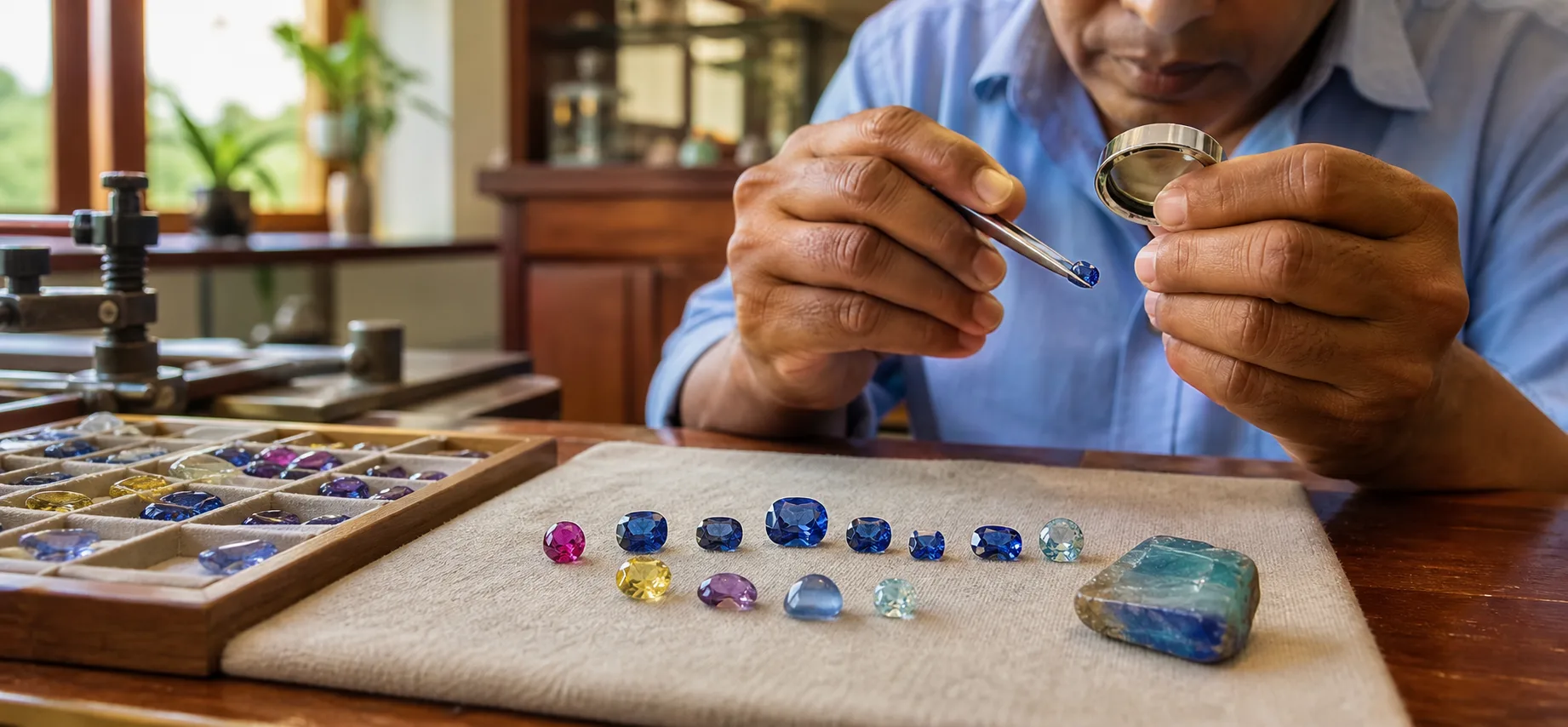
Long before travelers came to Sri Lanka for beaches and safaris, they came for stones. Arab traders called the island Serendib and carried its sapphires to the medieval world, and Greek and Roman records mention Ceylon gems as early as the second century BCE.
That history is not a museum piece. Sri Lanka remains one of the world's most important sources of fine sapphires today, and the gravel fields around Ratnapura still produce stones the way they have for centuries: dug by hand, washed in woven baskets, and traded in noisy morning markets.
For visitors, this creates a travel experience that very few countries can offer. In a single day you can stand at the edge of a working mine shaft, watch rough stones emerge from river gravel, see cutters shape them on traditional wheels, and hold a finished sapphire in a certified showroom.
It also creates a well-known risk. Sri Lanka's gem fame has bred an entire industry of tourist-targeted gem scams, from fake stones with fake certificates to elaborate street performances designed to steer you into commission-paying shops.
This guide is written for travelers asking the questions we hear most often: Is it worth buying gems in Sri Lanka? Can I visit a real mine? How do I know a stone is genuine? And can I legally take my purchase home? Here is everything you need to know in 2026.
Quick Summary
- Ratnapura, whose name literally means City of Gems, has been mined continuously for more than a thousand years
- Sri Lanka is world famous for blue sapphires, including the stone in the royal engagement ring first worn by Princess Diana
- Travelers can visit traditional pit mines, watch gem washing, and browse the lively morning gem market
- Gems can be bought safely from NGJA-registered dealers in Ratnapura, Colombo, Kandy, Galle, and Beruwala
- The most common tourist trap is a friendly stranger and a tuk-tuk leading you to a commission-paying gem shop
- Cut and polished gems bought legally with receipts can be taken home, but export rules apply to larger purchases