
LankaTrip Insights

5 min read

Sri Lanka: A Wildlife Paradise for Every Traveler

Learn how Sri Lanka combines elephants, leopards, whales, and beaches into one of the world’s most memorable wildlife trips.

Back to blog
Sri Lanka: A Wildlife Paradise for Every Traveler

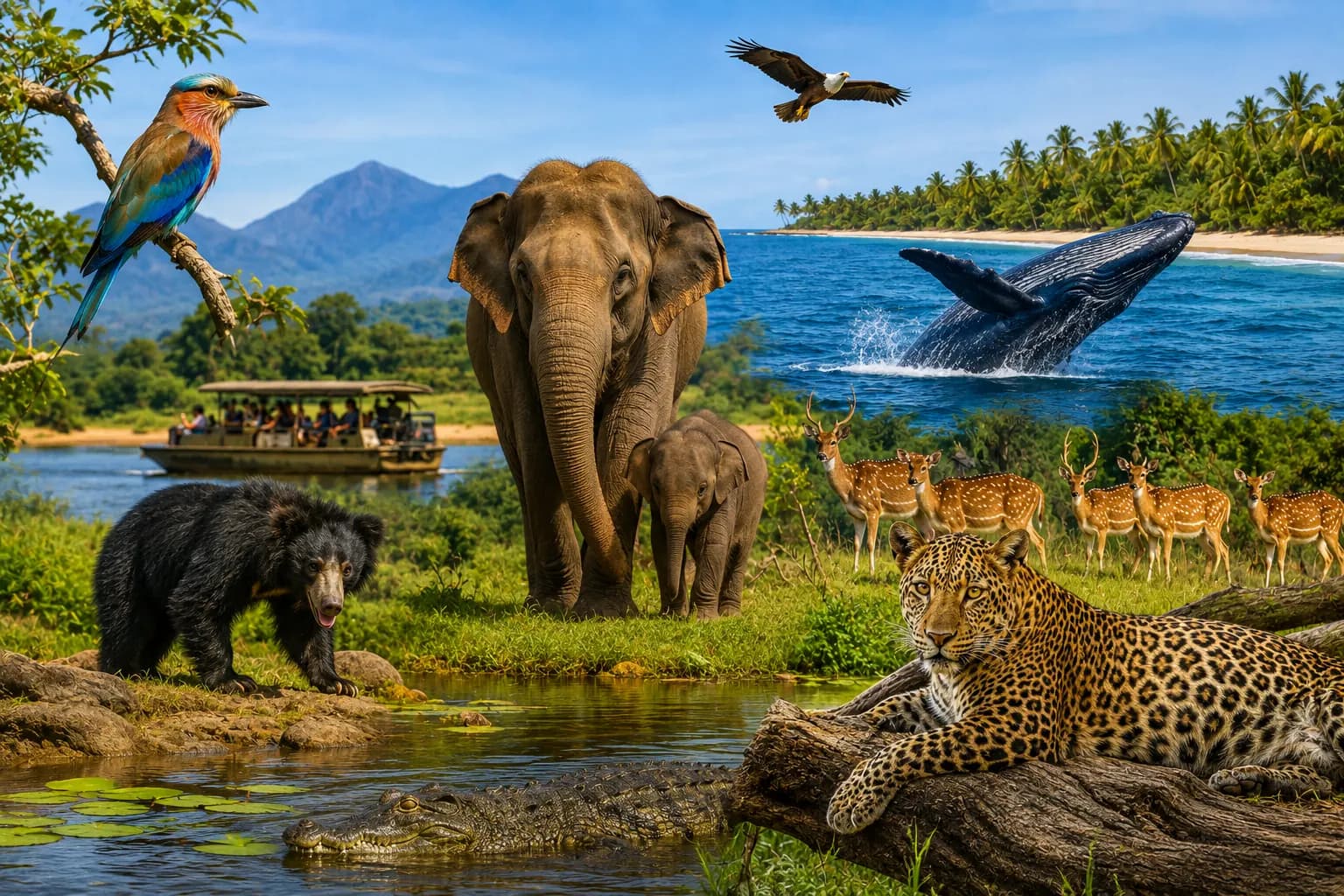
Sri Lanka packs an unusual amount of wildlife diversity into a small island: leopards and elephants inland, blue and sperm whales offshore, and one of Asia's last stands of primary rainforest in the south-west corner.

The distances are short enough that a single two-week trip can realistically combine a dry-zone safari, a whale-watching morning off Mirissa, and a rainforest walk in Sinharaja without feeling rushed.

This guide covers which parks suit which kind of traveler, when to go for each animal, and how to keep the experience ethical for the wildlife itself.

Quick Summary

  • Elephants, leopards and blue whales within a few hours of each other
  • Yala, Udawalawe, Wilpattu and Minneriya each suit a different kind of safari
  • Mirissa whale watching runs December to April
  • Sinharaja rainforest for birdlife and biodiversity beyond the safari parks
  • Family-friendly wildlife experiences with licensed guides

Wildlife and Beaches Together

Few destinations can match Sri Lanka's variety: you can see elephants and leopards on safari, then relax on a tropical beach the same day.

This close connection between wild landscapes and coastlines makes Sri Lanka especially rewarding for travelers with limited time. A route can combine Yala or Udawalawe with Tangalle, Mirissa, Weligama, or Galle without adding complicated internal flights.

It also means wildlife travel does not have to feel separate from the rest of the holiday. Safari mornings, seafood dinners, beach walks, and cultural stops can all sit naturally inside one itinerary.

Elephant safarisLeopard sightingsWhale watching

Best National Parks to Consider

Yala is Sri Lanka's best-known safari destination and is famous for leopard sightings, though it can be busy in peak periods. It suits travelers who want a classic safari experience with dramatic dry-zone scenery.

Udawalawe is one of the most reliable places to see elephants and is often a better fit for families or first-time safari visitors. The open landscapes make wildlife easier to spot, and travel times from the south coast are manageable.

Wilpattu offers a quieter, wilder feeling with forest tracks, natural lakes (villus), and a more remote atmosphere. It is a strong option for travelers who want fewer vehicles and do not mind a slower-paced safari.

Minneriya and Kaudulla, in the north-central dry zone, are known for 'the Gathering' — one of Asia's largest seasonal elephant congregations, when herds numbering in the hundreds converge on the reservoir shallows between roughly July and October as the water recedes.

YalaUdawalaweWilpattuMinneriya's elephant Gathering

Whale Watching off the South Coast

The waters off Mirissa sit close to a deep continental shelf, which brings blue whales and sperm whales unusually near to shore compared with most whale-watching destinations worldwide.

The main season runs from December to April, when seas are calmer on the south coast; sightings are possible but less reliable outside this window as conditions turn rougher with the south-west monsoon.

Boats generally leave Mirissa harbour early in the morning, before the wind picks up, and trips run three to five hours. Dolphins — usually spinner dolphins in large pods — are a common bonus sighting even on days without whales.

Blue whalesSperm whalesDecember–April seasonSpinner dolphin pods

Beyond Safari: Sinharaja and Birdlife

Sinharaja Forest Reserve, a UNESCO World Heritage rainforest in the island's south-west, holds a large share of Sri Lanka's endemic birds, amphibians and plants and rewards a slower, guided walk rather than a vehicle safari.

Bundala and Kumana national parks are the strongest options for birdlife specifically, with wetlands and lagoons that attract migratory waders alongside resident species — Kumana in particular is known among birders for its heronries.

A local guide matters more here than in the dry-zone parks: much of Sinharaja's wildlife is small, camouflaged or high in the canopy, and a guide's ear for calls finds far more than a self-guided walk would.

Sinharaja rainforestEndemic birdsBundala and Kumana wetlands

Responsible Wildlife Travel

The best wildlife experiences in Sri Lanka come from patience and respect. Choose licensed guides and operators who keep proper distance from animals, follow park rules, and avoid crowding sightings.

For whale watching, select operators known for responsible boat handling rather than simply the cheapest ticket. Ethical choices help protect the animals and usually create a calmer, better experience for travelers too.

Avoid attractions that allow direct handling, riding, or forced performances with wild animals. Sri Lanka's wildlife is at its best when seen in natural settings, with guides who understand both safety and conservation.

Licensed guidesEthical whale watchingNo animal handling

Travel Tips

  • Visit national parks with a licensed guide and a registered jeep operator.
  • Bring binoculars — many sightings, especially birds and leopards at rest, are distant.
  • Book whale-watching with reputable operators that limit boat numbers around a sighting.
  • Go for the earliest safari or boat departure available; animal activity drops sharply once the heat sets in.
  • Pack neutral-coloured clothing and a dry bag or rain cover — safari jeeps and whale-watching boats both leave you exposed to dust, spray and sudden showers.

Frequently Asked Questions

When can I spot blue whales?

Peak season is generally December to April off the south coast, when calmer seas make boat trips more reliable.

Which national park is best for a first safari?

Udawalawe is usually the easiest introduction — its open grassland makes elephants simple to spot, and it's a manageable distance from the south coast.

Is Yala or Udawalawe better for leopards?

Yala has the stronger leopard reputation and higher density, but it also draws more jeeps per sighting. Udawalawe leopard sightings are rarer but less crowded when they happen.

When is 'the Gathering' of elephants at Minneriya?

Roughly July to October, as the dry season lowers the reservoir and exposes grazing grass, drawing large elephant herds to the water's edge.

Do I need a guide for Sinharaja rainforest?

It's strongly recommended. Much of the reserve's wildlife is small, camouflaged or high in the canopy, and a local guide's knowledge of calls and trails finds far more than a self-guided walk.

Reader notes

Join the conversation

Share your question, tip, or travel experience for this guide.

Comments

0 comments

Loading...

Ready to turn inspiration into a Sri Lanka trip?

Use LankaTrip to plan your journey, connect with local guides, and make this itinerary a reality.

Need help planning?

Plan your Sri Lanka adventure

Plan my trip