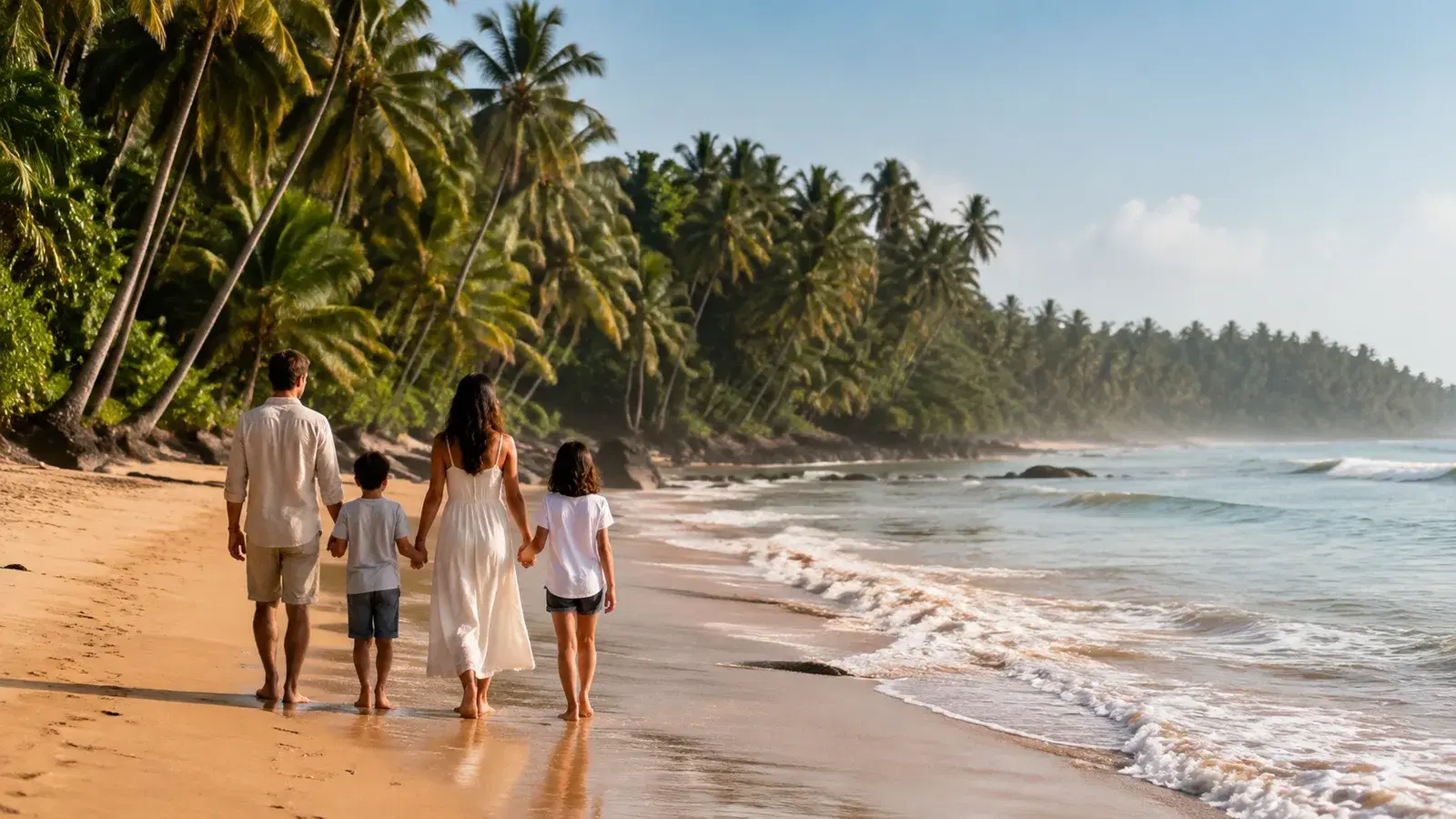
Sri Lanka is a genuinely good destination with children, and the reasons are structural rather than sentimental. The island is small, so you can put a beach, a rainforest, a safari and a mountain railway inside two weeks without internal flights. Children are welcomed almost everywhere in a way that is not performative. Costs are low enough that a private driver, which transforms family travel, is affordable rather than a luxury.
It also has a handful of specific problems that most family travel writing glosses over, because acknowledging them makes the destination sound harder than the headline promises.
There is no legal requirement for child car seats and most vehicles do not have them. Lifeguards are rare and the sea is more dangerous than it looks, seasonally and unpredictably. Drive times are consistently longer than distances suggest. And the country is currently in its worst dengue year in a decade, which changes the mosquito calculation for small children.
None of that makes Sri Lanka a bad choice. It makes it a destination that rewards planning and punishes improvisation, which is true of travelling with children generally.
This guide is written for the practical decisions: what to book, what to bring, what to skip, and which of the popular family attractions we would not take a child to. It names no businesses.
Quick Summary
- Every child needs their own ETA, including newborns; children under 12 are exempt from the processing fee but still require the authorisation
- There is no national legal requirement for child car seats, and rideshare and taxi drivers do not carry them
- ISOFIX anchors are rare and older vehicles may lack three-point rear belts; bringing your own seat is the reliable option
- Distances look short and drive times are long; three hours on a map is often five in practice
- Lifeguards are rare and beach safety is seasonal, not fixed: the same bay can be calm in January and lethal in July
- Children under 6 are free and 6 to 12 pay half at Central Cultural Fund heritage sites
- National park fees follow the same pattern, with a per-group service charge that makes family visits comparatively better value
- Nappies, wipes, formula and standard medicines are widely available in supermarkets and pharmacies in towns, less so rurally
- Sri Lanka is in a severe dengue year, which changes how seriously to take mosquito protection for children
- We would avoid elephant rides and most captive-elephant attractions entirely, and this guide explains why