LankaTrip Insights

16 min read

Whale Watching in Sri Lanka in 2026: Mirissa, Trincomalee, and How to See Blue Whales Ethically

Blue whales feed and travel off Sri Lanka's coasts nearly year-round, split between two seasons: Mirissa in the south from November to April, and Trincomalee in the east from roughly March to October. This 2026 guide covers the seasons, the species, real tour costs, what a trip is actually like, and the ethical rules that separate a responsible operator from a whale-chasing one.

Back to blog
Whale Watching in Sri Lanka in 2026: Mirissa, Trincomalee, and How to See Blue Whales Ethically

There are only a handful of places on the planet where you can eat breakfast on a beach, board a boat, and be watching a blue whale, an animal longer than a basketball court and heavier than any dinosaur, before lunch. Sri Lanka is one of them.

The reason is underwater geography. Off Mirissa in the south and Trincomalee in the east, the continental shelf drops into deep ocean startlingly close to land, and nutrient-rich waters along that edge concentrate the krill and squid that blue whales, sperm whales, and Bryde's whales feed on. The whales come to the food, and the food is close to shore.

The result is a whale watching industry with two alternating seasons that together cover most of the calendar: Mirissa from November to April, Trincomalee from roughly March to October, plus a third act at Kalpitiya in the northwest, where spinner dolphins gather in pods numbering in the hundreds.

It is also an industry with a well-documented problem. Rapid growth, especially at Mirissa, has produced peak-season mornings where a dozen or more boats converge on a single whale, and researchers have documented the stress this causes. The difference between a magical trip and a harmful one comes down almost entirely to which boat you step onto.

This guide covers the questions travelers ask us most: when is whale season, Mirissa or Trincomalee, what does it cost, what is the trip actually like, will I get seasick, and how do I make sure my money supports the boats doing it right? Here is everything you need for 2026.

Quick Summary

  • Sri Lanka is one of the world's most reliable places to see blue whales, with the deep ocean starting unusually close to shore
  • Mirissa in the south runs from November to April, with December to March the peak and sighting rates around ninety percent in season
  • Trincomalee in the east covers roughly March to October, taking over when the south coast closes for the monsoon
  • Kalpitiya in the northwest offers spectacular spinner dolphin superpods and sperm whale sightings from November to April
  • Shared boat tours cost roughly US$25 to 50 per person including breakfast, departing around 6:30 to 7:00 am and lasting three to five hours
  • Whale watching is regulated by Sri Lanka's 2012 sea mammal regulations: licensed boats, minimum distances of about 100 metres from whales, and an outright ban on swimming with them

Why Sri Lanka Is a Blue Whale Capital

The blue whale is the largest animal known to have ever existed, reaching lengths of around 30 metres, and for most of the twentieth century seeing one required serious expedition travel. Sri Lanka changed that calculus.

Around the island's south and east, the seabed plunges to true deep ocean within a short boat ride of the coast. Upwelling currents along this drop-off concentrate krill in vast quantities, and a population of blue whales feeds in these waters through much of the year, moving around the island with the monsoons rather than migrating to polar seas like most of their kind.

That behaviour is what makes Sri Lanka special: rather than a brief migratory window, the island offers two long, overlapping seasons on opposite coasts, and in the right months, sighting rates at Mirissa are commonly quoted around ninety percent.

Blue whales are the headline, but rarely the whole show. Sperm whales, the great deep-divers, appear in sociable pods, especially off Trincomalee and Kalpitiya. Bryde's whales turn up opportunistically, spinner dolphins ride bow waves in the hundreds, and sea turtles, flying fish, and occasionally orcas round out the cast.

For wildlife travelers, the pairing is unbeatable: nowhere else can you realistically see the largest land animal gathering (elephants) and the largest animal ever (blue whales) in the same small country, sometimes in the same week.

Deep ocean close to shoreResident, non-polar blue whales~90% peak-season sighting ratesSperm whales and dolphin superpodsElephants and blue whales in one trip

Mirissa: The Southern Season (November to April)

Mirissa, a beach town on the south coast between Galle and Matara, is Sri Lanka's whale watching capital and the most reliable and best-equipped place on the island to see blue whales.

The season runs from November to April, when the northeast monsoon leaves the southern seas calm; December to March is the heart of it, with the calmest mornings and the highest sighting rates. Outside these months the ocean turns rough and most reputable operators pause or advise against going.

Boats leave Mirissa Fisheries Harbour early, typically between 6:30 and 7:00 am, when seas are at their calmest, and trips last three to five hours depending on how quickly whales are found. Most tours include breakfast, water, and hotel pickup from the Mirissa and Weligama area.

Mirissa's location makes it effortless to combine with a southern itinerary: it sits about forty minutes from Galle Fort, next door to Weligama's surf beaches, and within reach of the whole southern beach belt, which shares the same November-to-April season.

One honest caveat: Mirissa's popularity is its weakness. On peak mornings, many boats can end up working the same stretch of water, and the worst of them race and crowd the whales. The section on ethical operators below matters more here than anywhere else on the island.

Season: November to AprilPeak: December to March6:30-7:00 am departures3 to 5 hour trips with breakfastCombines with Galle and Weligama

Trincomalee: The Eastern Season (Roughly March to October)

When the southwest monsoon closes Mirissa around May, the action moves diagonally across the island to Trincomalee, the east coast port city built around one of the world's great natural deep-water harbours.

Blue whales and sperm whales are seen off Trincomalee roughly from March to October, with different sources placing the sweet spot between March and August or May to September; either way, the middle of the year is the time, and the deep water lies only around 6 to 8 nautical miles offshore, about half an hour by boat.

Trincomalee's trump card is atmosphere. Compared with Mirissa's crowded peak mornings, the east coast scene is smaller and calmer, with fewer boats working the water, and on lucky days whales have even been spotted from headlands on land.

The surrounding coast sweetens the deal: the white-sand beaches of Uppuveli and Nilaveli, snorkelling at Pigeon Island National Park, and the Koneswaram temple on Swami Rock make Trincomalee a proper multi-day east coast stop rather than a single-activity detour.

For travelers already heading east for Arugam Bay's surf season, the pairing is natural: the same months that light up the east coast waves also open its whale waters, letting one trip cover both.

Season: roughly March to OctoberDeep water 30 minutes offshoreFewer boats than MirissaBlue and sperm whalesPairs with east coast beaches

Kalpitiya: Dolphin Superpods and Sperm Whales (November to April)

The third and least-known corner of Sri Lanka's marine wildlife triangle is Kalpitiya, a peninsula on the northwest coast a few hours north of Colombo.

Kalpitiya's signature spectacle is spinner dolphins, which gather offshore in superpods that can number in the hundreds, leaping and spinning around the boats in one of the most joyful wildlife displays anywhere on the island. The season runs from November to April, matching the southern calendar.

Whales appear here too: sperm whale pods pass through these waters, and blue whales are sighted less frequently than at Mirissa or Trincomalee but are far from unknown. Serious wildlife watchers treat Kalpitiya as a dolphin-first, whales-as-bonus destination.

Because Kalpitiya sees a fraction of Mirissa's visitor numbers, trips feel quieter and less industrial, and the peninsula doubles as Sri Lanka's kitesurfing capital, with a lagoon-and-ocean landscape entirely unlike the southern beach belt.

For a second-visit traveler, or anyone building a west coast itinerary around Wilpattu National Park just to the north, Kalpitiya slots in perfectly.

Spinner dolphin superpodsSeason: November to AprilSperm whales pass throughFar quieter than MirissaPairs with Wilpattu safaris

What a Whale Watching Trip Is Actually Like

The day starts early. Check-in at the harbour is typically around 6:30 am, so plan to stay in or near the departure town the night before; jumping out of a Galle hotel at 5:30 am to reach Mirissa is possible but painful.

Boats range from small vessels seating a handful of passengers to large double-decked ships carrying well over a hundred, and the choice shapes the experience: big boats are cheaper and more stable, small boats sit closer to the waterline and feel more intimate, and private charters give photographers control over positioning and pacing.

The ride out to the whale grounds can take anywhere from thirty minutes at Trincomalee to an hour or more from Mirissa, with tours sometimes heading as far as 20 kilometres offshore. Crews scan for the tell-tale blow, a column of spray visible from a great distance, then position the boat at legal distance and cut engines.

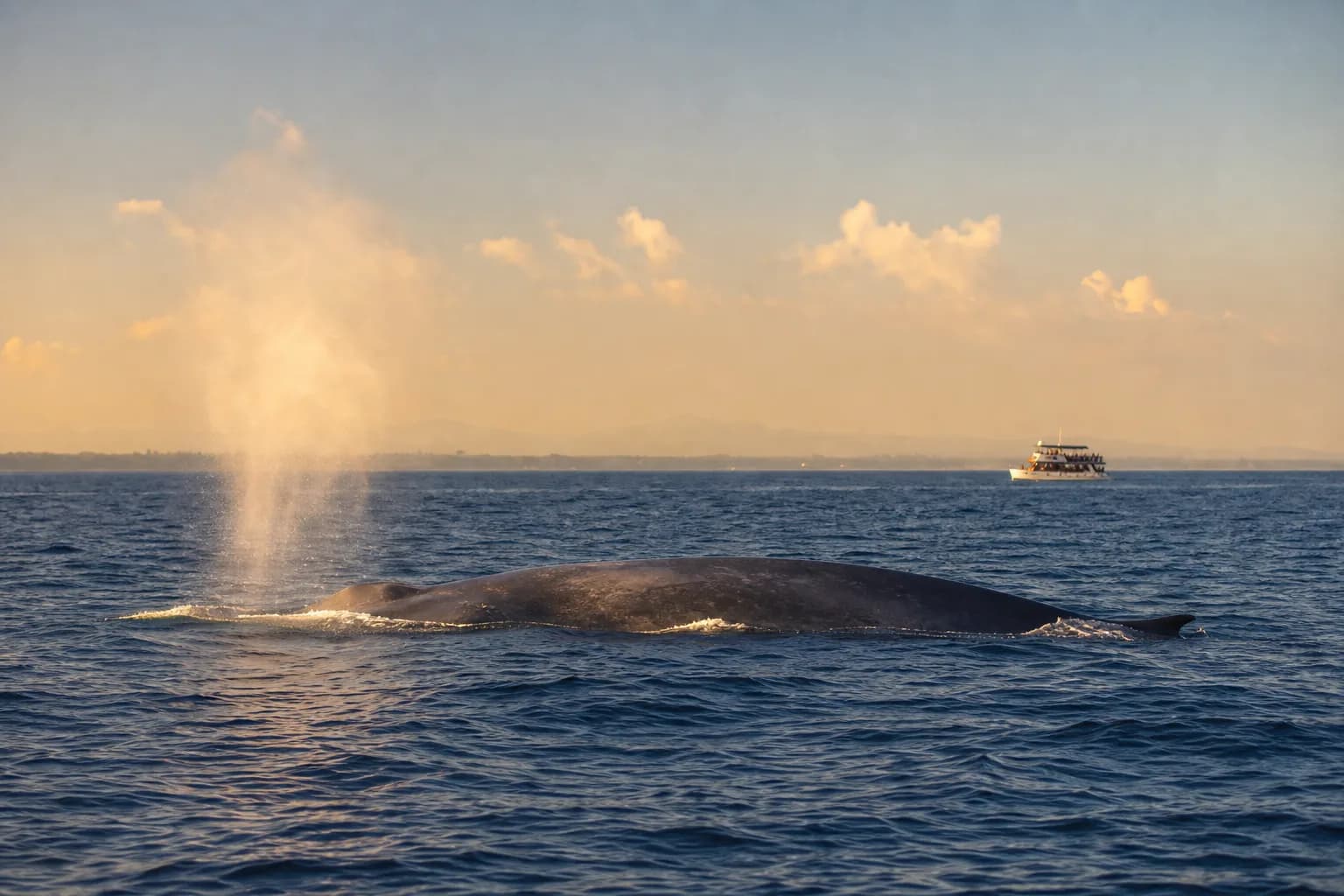
What you see of a blue whale is a sequence: the blow, a long rolling expanse of blue-grey back, the small dorsal fin, and then, if you are lucky, the moment every photographer waits for, the tail fluke rising clear of the water as the whale begins a deep dive. Sperm whales log at the surface between dives and fluke more reliably; dolphins simply put on a show.

Sightings are genuinely wild and genuinely unguaranteed. Most in-season trips at the main sites succeed, but some mornings the ocean stays empty, which is why many operators offer a free or discounted second trip after a no-sighting day; ask about this policy when booking.

Early harbour check-inBig boats, small boats, chartersThe blow, the back, the fluke3 to 5 hours at seaAsk about no-sighting policies

What Whale Watching Costs in 2026

Whale watching in Sri Lanka remains excellent value by world standards, where equivalent trips in many countries cost two to four times as much.

Shared boat tours at Mirissa typically run from around US$25 at the budget end to roughly US$45 to 50 for the better-equipped operators, generally including breakfast, water, hotel pickup from nearby towns, and sometimes extras like seasickness tablets. Trincomalee and Kalpitiya trips sit in a similar range, with dolphin-focused Kalpitiya outings often slightly cheaper.

Private charters and small-group speedboats cost meaningfully more, and here is the honest advice this guide is built around: the premium for a small, responsible operator, often 30 to 50 percent above the cheapest ticket, is the single best money you will spend on the experience. Cheaper mega-boats compete on price; better operators compete on how they behave around the whales.

Children usually travel at reduced rates, and licensed operators carry life jackets in all sizes; confirm child seats and jackets when booking with young kids.

Budget one buffer day if the sighting truly matters to you. Weather cancellations happen, no-sighting mornings happen, and travelers who book their boat for the last morning before a flight are the ones who go home with photos of empty ocean.

Shared tours ~US$25-50Breakfast and pickup includedPay more for responsible boatsReduced child faresBuild in a buffer day

How to Choose an Ethical Operator (This Is the Important Part)

Whale watching in Sri Lanka is governed by the Sea Mammals (Observation, Regulation and Control) Regulations of 2012, which require operators to be licensed, vessels to be registered with a qualified guide on board, and boats to keep minimum distances, commonly cited as around 100 metres from whales and 50 metres from dolphins, with closer encounters only when the animals themselves approach.

Swimming with, touching, or feeding whales is strictly prohibited in Sri Lankan waters. Any operator offering to put you in the water with a blue whale is offering something illegal, dangerous, and harmful; walk away, whatever their social media looks like.

The problem is enforcement. Researchers studying Mirissa's whales have documented boats racing to sightings, crowding animals, crossing their path of travel, and saturating the water with engine noise, all of which measurably stress animals that navigate and communicate by sound.

So the responsibility lands, in practice, on you. Before booking, ask three questions: Is the operator licensed for the current season? Do their boats keep the legal distance and cut engines near whales? Do they limit time with a single animal, with responsible operators keeping encounters to around thirty minutes before moving on?

On the water, judge what you see. A good captain approaches slowly from the side, never head-on, holds position and lets the whale set the terms, and leaves when the animal shows avoidance. If your boat races other vessels to a whale or boxes one in, do not tip, say why, and choose differently next time; reviews mentioning boat behaviour genuinely shape this industry.

None of this is meant to put you off. Done right, whale watching funds coastal livelihoods and gives these animals economic value alive rather than ignored, and conservation groups have worked with Sri Lankan operators for years to raise standards. Your booking is a vote; cast it well.

2012 regulations require licensing~100 m from whales, 50 m from dolphinsSwimming with whales is bannedAsk three questions before bookingYour booking shapes the industry

Seasickness, Sun, and What to Bring

The single most common regret on whale boats is not the missed fluke shot; it is spending three hours feeding the fish. The waters beyond the reef swell noticeably even on calm mornings, and travelers who never get carsick can still get seasick.

If you are even slightly prone, take motion-sickness medication before boarding, as directed on the packet, since it works far better preventively than after nausea starts. Eat a light breakfast, sit low and central on the boat where movement is least, keep your eyes on the horizon, and stay out in fresh air rather than in the cabin.

Sun is the second enemy. Three to five hours on open water at eight degrees latitude will burn through cloud cover, so bring reef-safe sunscreen, a hat that survives wind, sunglasses, and a light long-sleeve layer.

For photography, a zoom lens in the 200 to 400 millimetre range covers most encounters, a fast shutter speed handles the boat's movement, and a dry bag protects everything from spray. Binoculars transform the experience for non-photographers, especially for distant blows and dolphin pods.

Finally, bring patience and keep expectations wild. The whales owe nobody an appearance, and the mornings when the ocean makes you wait an hour and then lifts a nine-metre tail fluke against the sunrise are the ones people remember for the rest of their lives.

Take seasickness tablets before boardingSit low, watch the horizonReef-safe sunscreen and a hat200-400 mm lens for photosWild animals, wild patience

Building Whale Watching Into a Sri Lanka Itinerary

The beauty of Sri Lanka's whale calendar is that it aligns with the island's broader travel seasons, so the boats slot naturally into itineraries you would plan anyway.

In the November-to-April window, Mirissa sits in the middle of the classic southern route: Galle Fort, the Weligama surf beaches, southern coast beach time, and Yala or Udawalawe safaris are all within easy reach, and the whale morning costs you nothing but an early alarm.

In the May-to-October window, Trincomalee anchors an east coast swing that can include Arugam Bay's surf, the Cultural Triangle's ancient cities on the way east, and Pigeon Island's snorkelling, a route that still sees a fraction of the southern crowds.

Kalpitiya works best inside a west coast loop with Wilpattu National Park and Negombo, particularly for return visitors who have already done the southern classics.

Whichever coast you choose, the golden rule is the same: sleep in the departure town the night before, book the boat for early in your stay rather than the last morning, and leave one flexible day so weather or an empty ocean cannot steal the experience entirely.

Mirissa fits the southern classic routeTrincomalee anchors the east swingKalpitiya suits west coast loopsSleep near the harbourNever book the last morning

Travel Tips

  • Match the coast to your dates: Mirissa November to April, Trincomalee roughly March to October, Kalpitiya November to April
  • Sleep in the departure town the night before the early start
  • Book the boat early in your stay, never on your last morning
  • Take seasickness medication before boarding, not after symptoms start
  • Choose licensed operators and ask about approach distances and time limits before paying
  • Refuse any trip offering swimming with whales; it is illegal in Sri Lanka
  • Pay the premium for smaller, responsible boats over cheap crowded ones
  • Bring reef-safe sunscreen, a secure hat, sunglasses, and a light long-sleeve layer
  • Pack a zoom lens or binoculars; whales keep legal distances even from good boats
  • Eat a light breakfast and sit low and central if you are prone to motion sickness
  • Ask about free or discounted repeat trips after a no-sighting morning
  • Mention boat behaviour, good or bad, in your reviews; it genuinely shapes the industry

Frequently Asked Questions

When is the best time for whale watching in Sri Lanka?

It depends on the coast. Mirissa in the south runs from November to April, with December to March the peak. Trincomalee in the east covers roughly March to October. Kalpitiya's dolphin season runs November to April. Between the coasts, some part of Sri Lanka offers whale or dolphin watching in almost every month.

Can you really see blue whales in Sri Lanka?

Yes, and more reliably than almost anywhere else. Deep, nutrient-rich water lies unusually close to shore off Mirissa and Trincomalee, and a population of blue whales feeds around the island through much of the year. In peak season at Mirissa, sighting rates around ninety percent are commonly reported, though wild sightings are never guaranteed.

How much does whale watching cost in Sri Lanka?

As of 2026, shared boat tours run roughly US$25 to 50 per person, usually including breakfast, water, and pickup from nearby hotels. Private charters and small-group boats cost more. Paying 30 to 50 percent extra for a smaller, responsible operator is widely considered the best-value upgrade.

Mirissa or Trincomalee: which is better for whale watching?

They serve different months, so your travel dates usually decide. Within their overlap, Mirissa offers the most developed infrastructure and highest blue whale reliability but bigger crowds; Trincomalee offers a shorter ride to deep water, fewer boats, and a calmer atmosphere, plus strong sperm whale sightings.

What whales can you see in Sri Lanka?

Blue whales are the headline species, joined by sperm whales, especially off Trincomalee and Kalpitiya, and Bryde's whales seen opportunistically. Spinner dolphins appear in huge pods, and pilot whales, minke whales, orcas, turtles, and flying fish are among the occasional supporting cast.

Can you swim with whales in Sri Lanka?

No. Swimming with, touching, or feeding whales is strictly prohibited in Sri Lankan waters under the marine mammal regulations. Any operator offering in-water whale encounters is acting illegally; decline and book a licensed observation-only trip instead.

What time do whale watching tours start?

Early. Most boats depart around 6:30 to 7:00 am, when seas are calmest, with harbour check-in about thirty minutes before. Trips last roughly three to five hours depending on how quickly whales are found, which is why staying overnight in the departure town is strongly recommended.

Is whale watching in Sri Lanka ethical?

It can be, and your choice of boat decides it. Regulations require licensed vessels, onboard guides, and minimum distances of around 100 metres from whales and 50 metres from dolphins, but enforcement is imperfect and overcrowding is a documented problem at Mirissa. Choose licensed operators who keep distances, cut engines near animals, and limit encounter times, and avoid boats that race or crowd whales.

Will I get seasick whale watching?

Possibly; open-ocean swell affects many people who never get motion sick on land. Take seasickness medication before boarding, eat lightly, sit low and central on the boat, watch the horizon, and stay in fresh air. Some operators include seasickness tablets in the tour.

What should I bring on a whale watching trip?

Reef-safe sunscreen, a secure hat, sunglasses, a light long-sleeve layer, water, seasickness medication, and either binoculars or a camera with a zoom lens in the 200 to 400 millimetre range. A dry bag protects electronics from spray.

Reader notes

Join the conversation

Share your question, tip, or travel experience for this guide.

Comments

0 comments

Loading...

Ready to turn inspiration into a Sri Lanka trip?

Use LankaTrip to plan your journey, connect with local guides, and make this itinerary a reality.

Need help planning?

Plan your Sri Lanka adventure

Plan my trip