
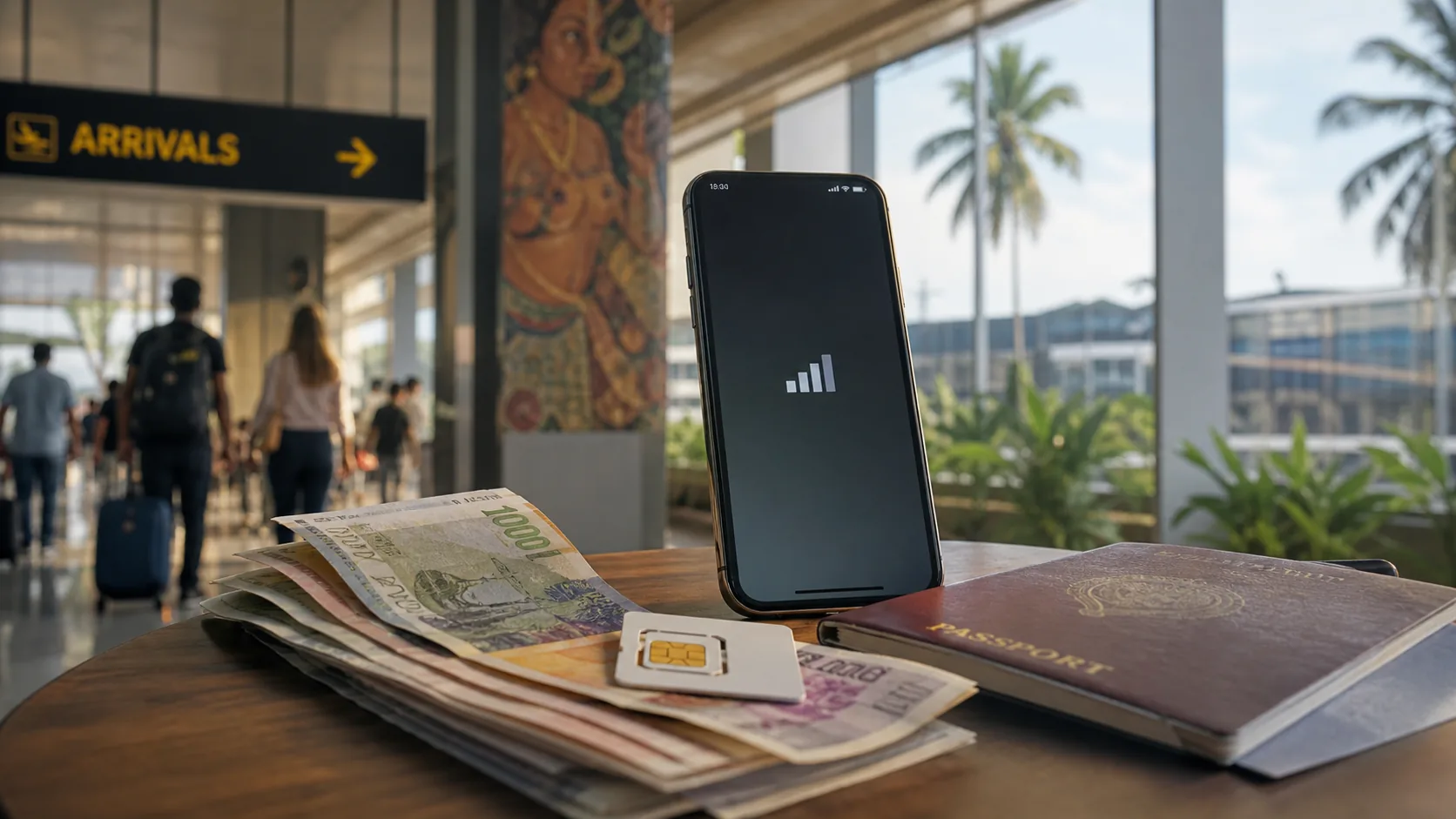
Every Sri Lanka trip begins with the same two practical questions, usually asked somewhere over the Indian Ocean: how will I pay for things, and how will I get online?
They matter more than they sound. Your ride-hailing app, offline maps, train timetable checks, accommodation messages, and translation tools all depend on data, while the tuk-tuk driver waiting outside arrivals and the roadside kottu shop three hours later both expect cash.
The good news is that Sri Lanka makes both easy and remarkably cheap. Tourist SIM packages with 20 to 50 gigabytes of data cost less than a beachside lunch, ATMs accepting foreign cards are everywhere on the tourist trail, and the whole setup can be completed in the airport arrivals hall before you even meet your driver.
The catch is a handful of small traps that quietly cost travelers money: dynamic currency conversion at ATMs, inflated SIM prices from unofficial resellers, assuming cards work everywhere, and running out of cash in regions where the nearest ATM is an hour away.
This guide covers the full arrival checklist — currency, cash, cards, ATMs, exchange rules, SIMs, eSIMs, coverage, and Wi-Fi — with current 2026 figures, so you land knowing exactly what to do in your first hour on the island.
Кратко
- Sri Lanka runs on the Sri Lankan Rupee (LKR), and everyday spending — tuk-tuks, markets, small eateries, guesthouses — is still largely cash
- Visa and Mastercard are widely accepted at hotels, supermarkets, and larger restaurants; American Express acceptance is limited
- ATMs are widespread and accept foreign cards, with local fees typically around LKR 300 to 500 per withdrawal and per-transaction limits that vary by bank
- Always choose to be charged in Sri Lankan Rupees at ATMs and card machines — declining dynamic currency conversion saves real money
- Tourist SIM packages from local operators cost roughly USD 4 to 8 for 20 to 50 GB with 30-day validity, sold at airport arrival counters with passport registration
- eSIMs installed before you fly cost more per gigabyte but activate the moment you land, with no queue or paperwork
- Mobile coverage is strong across the main tourist circuit; download offline maps before heading into the deep hill country
- You can bring up to USD 10,000 in cash without declaring it, and re-exchanging leftover rupees at departure is easiest with your original exchange receipts