LankaTrip 见解

23 分钟阅读

Ayurveda in Sri Lanka in 2026: How to Choose a Genuine Retreat and Avoid the Fake 'Ayurveda Spas'

Sri Lanka is one of the few countries where Ayurveda sits inside the national health system rather than beside it. But the word 'Ayurveda' is also painted on shopfronts that have nothing to do with medicine. This 2026 guide explains what an authentic programme involves, what it costs, and exactly how to check a centre before you book.

返回博客
Ayurveda in Sri Lanka in 2026: How to Choose a Genuine Retreat and Avoid the Fake 'Ayurveda Spas'

Most travelers arrive in Sri Lanka with a beach, a train ride and a rock fortress on the list. A surprising number leave having also booked something they never planned: two or three weeks lying on a wooden treatment table while a physician adjusts their diet, their sleep and their herbal prescriptions day by day.

Ayurveda is one of the strongest reasons repeat visitors return to the island, and one of the least well understood. Search results are dominated either by resort marketing or by wellness writing that treats the whole thing as an aesthetic — oil, flowers, a copper bowl, a beach.

The reality is more interesting and more practical. Sri Lanka is one of a small number of countries where traditional medicine is not a parallel tourist industry but an arm of the state health service, with its own government department, its own registered physicians, its own hospitals and its own pharmacopoeia drawn substantially from plants that grow nowhere else.

It is also a country where anyone can paint the word 'Ayurveda' on a wall. Sri Lankan newspapers, the Department of Ayurveda and the tourism authority have all publicly raised concerns about venues trading on the name without qualified staff or proper registration. Some of these are simply low-quality massage shops. Some are considerably worse.

This guide is written to close that gap. It covers what a genuine programme actually involves day to day, what it honestly costs, how long you really need, where the main Ayurveda regions are, and the specific questions that will tell you within two minutes whether you are talking to a clinic or a shopfront.

快速摘要

  • Ayurveda is part of Sri Lanka's official healthcare system, with a dedicated government department and degree-level medical training
  • A genuine programme starts with a physician consultation and a written, individual treatment plan, not a menu of massages
  • Full panchakarma normally needs 14 to 21 days; anything advertised as 'panchakarma' in three days is a marketing label
  • Realistic pricing runs from roughly USD 150 to 400 for a short introductory stay, USD 400 to 800 for a week, and USD 800 to 2,500 or more for 14 to 21 days
  • Sri Lankan authorities have repeatedly flagged unregulated venues using the Ayurveda name; registration checks matter
  • Ayurveda is complementary to, not a replacement for, conventional medical care — bring your prescriptions and your diagnoses

What Ayurveda Actually Is in Sri Lanka (And What It Isn't)

Ayurveda is a complete traditional medical system built around the idea that health is a state of balance, and that illness arises when that balance is disturbed. Sri Lankan practice draws on classical Ayurvedic texts alongside a local indigenous tradition often called Deshiya Chikitsa or Hela Wedakama, which developed on the island itself.

The framework most visitors encounter first is the dosha system. Three functional principles — vata, pitta and kapha — are understood to govern different processes in the body. A physician assesses your constitution and your current imbalance, and the treatment plan follows from that assessment rather than from a fixed package.

This matters practically. In a genuine centre, two guests who arrive on the same day and book the same 'programme' will receive different oils, different herbal preparations, different food and sometimes different therapies. If everyone on the property is getting the same treatment, you are in a spa.

Sri Lanka's national tourism body describes Ayurveda as the island's oldest and most holistic healing tradition, with programmes combining herbal treatments, medicated baths and massage alongside cleansing and revitalisation practices such as yoga, meditation and prescribed diets.

What Ayurveda is not: it is not a massage holiday, it is not a guaranteed cure for serious disease, and it is not a substitute for the medication you take at home. Reputable Sri Lankan physicians will say this themselves. Any centre that promises to cure a named chronic condition, or that advises you to stop prescribed medication, has told you everything you need to know about it.

A full traditional medical system, not a spa treatmentBlends classical Ayurveda with Sri Lanka's own Hela Wedakama traditionTreatment is individualised after a physician assessmentComplements conventional medicine, does not replace itIdentical treatment for every guest is a warning sign

Why Travelers Choose Sri Lanka Over India, Thailand or Bali

The most common question from first-time wellness travelers is why they should come here rather than to Kerala, Bali or northern Thailand. There are three honest answers.

The first is institutional. Ayurvedic medicine in Sri Lanka sits inside the national healthcare structure. There is a Department of Ayurveda under the Ministry of Health, state Ayurveda hospitals, degree programmes at national universities, and a registration system for physicians. Retreat doctors at established centres are trained clinicians, not weekend-certified wellness facilitators.

The second is botanical. The island's climate supports hundreds of medicinal plants used in traditional preparations, a number of which are endemic. Many established centres grow a proportion of their own herbs and prepare oils and decoctions on site, which is why serious guests often notice a difference in the medicines themselves.

The third is practical value and scale. Sri Lanka generally sits below comparable European or Balinese wellness pricing while offering clinical supervision that many budget options elsewhere do not. It is also small. You can complete a two-week programme and still see the Cultural Triangle, the hill country or the south coast without long internal flights.

The counterweight is honesty: because the sector is commercially attractive and only partly regulated at the spa end, the quality range within Sri Lanka itself is wider than in more tightly controlled markets. Choosing well matters more here than it would in a country with fewer options at both ends of the scale.

Ayurveda is embedded in the state health systemPhysicians hold recognised medical qualificationsHundreds of medicinal plants, many endemicStrong value against European and Balinese pricingQuality range is wide, so selection matters

Panchakarma Explained Honestly: What Actually Happens

Panchakarma is the flagship programme, and it is the one most misrepresented in marketing. The name refers to five principal cleansing procedures, and the process is structured in three phases rather than delivered as a single treatment.

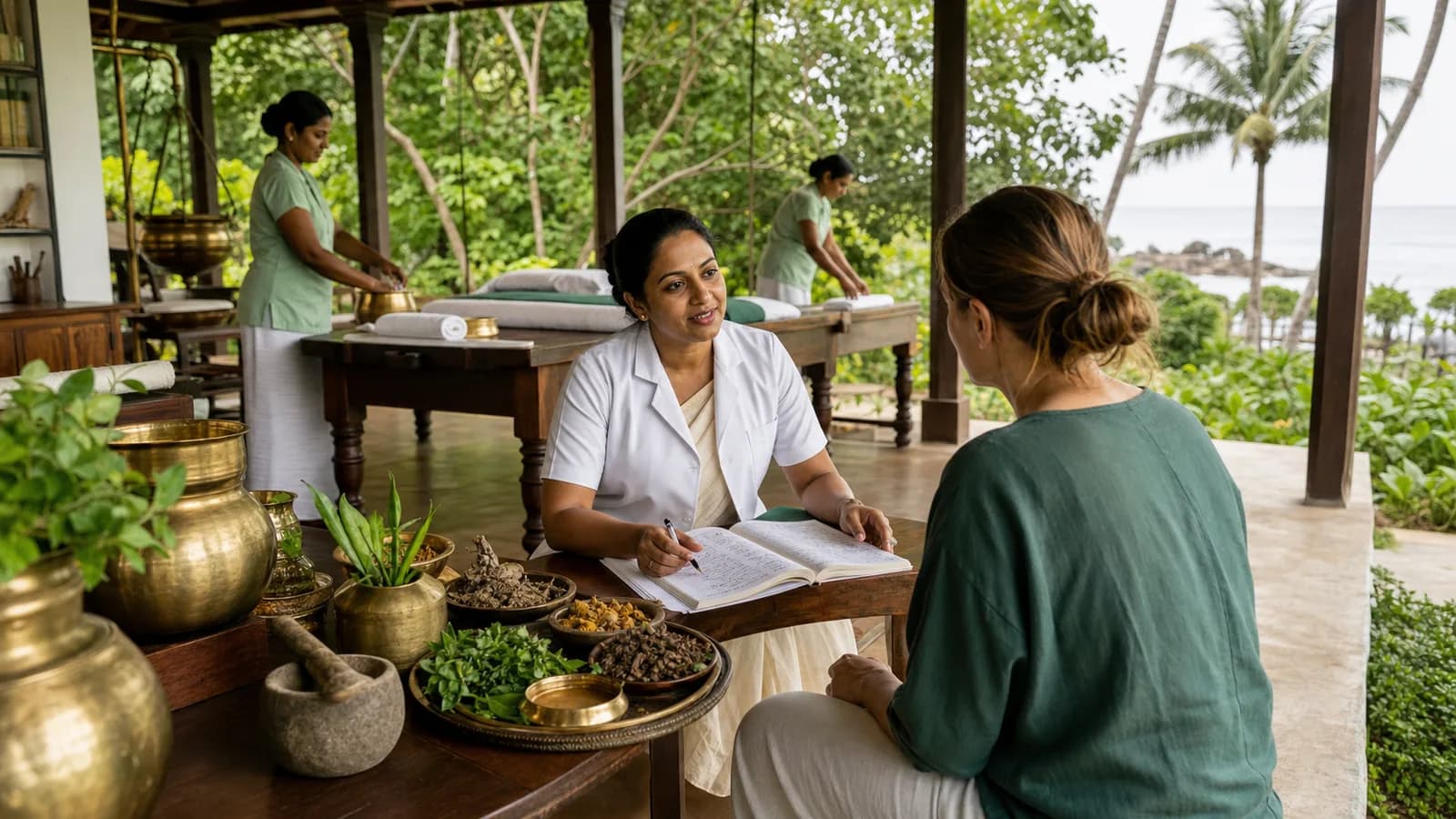
The first phase, purvakarma or poorva karma, prepares the body. This is where most of your visible treatment time goes: abhyanga, the warm medicated oil massage typically delivered by two therapists working in synchrony; swedana, herbal steam or sweat therapy; and internal oleation, which usually means drinking measured doses of medicated ghee. This phase is not a warm-up. It is the part that makes the rest safe.

The second phase, pradhana karma, is the main cleansing action. A physician selects from the five procedures — therapeutic emesis, purgation, medicated enema, nasal administration and blood-letting — based on your constitution and condition. Almost nobody receives all five. Many guests receive one or two.

The third phase, paschat karma, is the rebuilding period: a graduated diet, lighter treatments, rest and rejuvenation therapies that return the body to normal function. Skipping this phase is one of the more common shortcuts in short commercial packages, and it is the phase that determines how you feel a month later.

Durations quoted by practitioners vary. A full classical programme is generally described as needing 14 to 21 days, and several established Sri Lankan centres set 14 days as their minimum recommended stay. Some resort programmes describe shorter five to ten day panchakarma-style courses, extended for chronic conditions. What none of them describe is a genuine three-day panchakarma.

Be prepared for the middle of the programme to be uncomfortable. Fatigue, headaches, emotional flatness and disrupted sleep around days four to eight are commonly reported and are usually managed by the attending physician. A centre that does not warn you about this in advance is selling you a holiday, not a treatment.

Three phases: preparation, cleansing, rebuildingAbhyanga and swedana dominate the visible treatment timeFew guests receive all five main procedures14 to 21 days for a full classical programmeThe recovery phase is not optional

The Treatments You Will Actually Encounter

Beyond panchakarma, a handful of therapies appear on almost every Sri Lankan treatment plan. Knowing what they are makes the daily schedule far less mysterious.

Abhyanga is the foundational full-body oil massage, usually with warm medicated oil selected for your constitution. It is firm and methodical rather than relaxing in a Western spa sense, and it is often the longest single item on your daily card.

Shirodhara is the treatment most visitors have seen photographed: a continuous stream of warm oil poured across the forehead for a set period. It is prescribed most often for sleep disturbance, stress states and nervous-system complaints, not as a luxury add-on.

Herbal steam baths and medicated bath preparations follow oil therapies to help the body release what has been mobilised. Some centres use a traditional enclosed steam box; others use herbal poultices applied with heat.

Nasya involves medicated oils or powders administered through the nasal passages, typically for head, sinus and upper-respiratory complaints. Basti, medicated enema therapy, is a core panchakarma procedure and one of the more clinically significant.

Alongside the treatments sit the parts people underestimate: a prescribed diet, usually vegetarian and adjusted to your assessment, a fixed daily rhythm, herbal decoctions taken at set times, and typically yoga and meditation sessions. Guests who ignore the diet and slip out for a beer and a fish curry consistently report the weakest results.

Abhyanga: medicated oil massage, the daily foundationShirodhara: continuous oil stream for stress and sleepSwedana: herbal steam and heat therapyNasya and basti: clinical panchakarma proceduresDiet and daily rhythm are part of the treatment

What an Ayurveda Programme Really Costs in 2026

Pricing is one of the clearest signals of what you are buying, and the market has fairly consistent bands.

A short introductory Ayurveda stay of three to five days, with daily treatments, full board and yoga, typically starts somewhere around USD 150 to 400 in total depending on the property.

A week-long programme with daily treatments, all meals, yoga and accommodation commonly runs from roughly USD 400 to 800 at mid-range centres, with several established properties starting week-long programmes under USD 500.

Deeper 14 to 21 day panchakarma programmes generally sit between USD 800 and USD 2,500, driven mostly by accommodation standard and treatment intensity. Higher-end and internationally marketed resorts run well above this band, with 14-day programmes quoted above USD 2,000 and 28-day programmes approaching USD 4,000.

Nearly all reputable programmes are quoted as inclusive: accommodation, all meals, physician consultations, daily treatments, prescribed medicines, and usually yoga and meditation. If the price excludes the medicines or the doctor, treat the headline figure as incomplete.

Budget separately for airport transfers, laundry, any additional therapies, tips for therapists, and the excursions you will want in the second week when your energy returns. Also allow for the fact that a serious programme means no alcohol, which quietly reduces your overall trip cost.

One warning on the cheapest end. A three-day 'panchakarma detox' at a rock-bottom price is not a discounted version of a real programme. It is a different product wearing the same name.

3 to 5 days: roughly USD 150 to 4007 days: roughly USD 400 to 80014 to 21 days: roughly USD 800 to 2,500Premium resorts run well above these bandsCheck that medicines and consultations are included

How to Tell a Licensed Centre From a Tourist Massage Shop

This is the section that matters most, and it is worth being direct about why.

Sri Lankan authorities have been openly concerned about this for years. Reporting in the national press has documented that venues have been able to open using the Ayurveda name with nothing more than a local business registration, without holding licences from the Department of Ayurveda or the tourism authority. Officials have described untrained therapists, fraudulent certificates, and premises that raised health and hygiene concerns. Some venues operating under wellness branding have been the subject of police attention entirely unrelated to medicine.

The tourism authority requires visitor-facing spa and wellness centres to register and meet baseline standards including public liability insurance, fire safety certification, water quality reports and staff medical reports, and inspects before registration. Medical-grade Ayurvedic products are regulated separately by the Department of Ayurveda. A legitimate operation will have paperwork and will not be embarrassed to show it.

Use this checklist before you pay a deposit. First, is there a named, qualified Ayurvedic physician resident on site, and can you see their registration? Second, does the programme begin with an individual consultation and a written treatment plan? Third, are the medicines prepared or sourced from a recognised Ayurvedic pharmacy? Fourth, is the centre registered with the Sri Lanka Tourism Development Authority for visitor accommodation? Fifth, do they ask you about your medical history and current medication before confirming your booking?

Now the red flags. A centre that never mentions a doctor. A treatment 'menu' you order from like a restaurant. Marketing that leans on the appearance of the therapists rather than the qualifications of the staff. A promise to cure a serious named illness. Pressure to buy large quantities of herbal products to take home. Advertising that gives no verifiable physical address. Anyone offering 'special' or 'extra' services.

A simple practical test: email the centre and ask who your treating physician would be, what their qualification is, and whether the programme includes a written plan. A clinic answers in one paragraph. A shopfront changes the subject to pricing.

Confirm a registered physician is resident on siteInsist on an individual consultation and written planCheck tourism authority registration for the propertyTreat a restaurant-style treatment menu as a warningWalk away from any promise to cure a named disease

Where Sri Lanka's Ayurveda Regions Are

Ayurveda properties are not spread evenly across the island. Four broad areas account for most serious programmes, and each suits a different kind of visitor.

The west coast belt running roughly from Wadduwa and Kalutara south through Beruwala and Bentota is the historic core of the sector, and the closest to the international airport. Many of the longest-established centres and the highest concentration of long-stay European guests are here. Expect coastal garden properties, close transfer times and a well-worn routine.

The southern coast around Ahangama, Galle and Matara has grown quickly and tends to attract a younger, yoga-leaning clientele. Programmes here are more often combined with surf, yoga teacher training or shorter reset stays than with full clinical panchakarma.

The hill country around Kandy and further up towards Nuwara Eliya offers cooler air and a very different environment for treatment. Some physicians favour highland settings for particular conditions, and the temperature makes daily oil therapy considerably more comfortable for visitors from cold climates.

The inland and lagoon areas near Gampaha, Negombo and the western river systems host a number of quieter, more clinical centres that market less aggressively and rely heavily on returning guests. These are often the best value in the country and the hardest to find through search engines.

Season matters. The west and south coasts are at their best from roughly December to March. If you are travelling between May and September, hill country and east coast options avoid the southwest monsoon. Since most programmes keep you on one property for one to three weeks, matching the season to the region matters more than it would on a touring itinerary.

Wadduwa to Bentota: the historic Ayurveda beltGalle and the south: younger, yoga-oriented programmesKandy and the highlands: cooler air, clinical settingsNegombo and inland west: quiet, value-focused centresMatch your season to your region before booking

What a Typical Day Looks Like

Programmes vary, but a genuine residential schedule is remarkably consistent and remarkably early.

Most centres begin between 6.00 and 7.00 with yoga, pranayama or meditation, followed by a prescribed herbal drink. Breakfast is served early and is usually lighter and blander than guests expect, because the diet is part of the prescription.

The first treatment block generally falls mid-morning: abhyanga followed by steam, or whichever therapy your plan specifies for that day. Physicians often review guests briefly before or after this block, adjusting oils and medicines as the programme progresses.

Lunch is typically the main meal of the day, again individualised. Afternoons are deliberately quiet. Many centres schedule a second, lighter treatment such as shirodhara, a head and foot therapy or a herbal bath in the mid-afternoon, and expect rest in between.

Evenings bring another meditation or gentle yoga session, an early and light dinner, prescribed medicines and an early night. Lights out by nine or ten is normal and is treated as part of the therapy rather than as a curfew.

Two things surprise first-timers. The first is how little there is to do — the boredom is intentional and most guests stop noticing it by day four. The second is how much of the programme happens outside the treatment room, in the diet, the sleep and the rhythm.

Early starts with yoga and meditationPrescribed, individualised, usually vegetarian mealsMain treatment block mid-morningDeliberately quiet afternoonsEarly nights are part of the treatment

Who Ayurveda Suits, and Who Should Think Twice

An honest assessment saves money and disappointment.

Ayurveda tends to work well for travelers dealing with stress-related exhaustion, sleep disruption, digestive complaints, general fatigue, mild musculoskeletal pain, and the sense of being physically run down without a clear diagnosis. It also suits people who want a structured reset and are willing to hand over control of their diet and schedule for two weeks.

It suits solo travelers particularly well. Residential centres are among the easiest places in Sri Lanka to travel alone, with communal meals, a fixed routine and other guests on the same programme.

It suits less well for travelers who want flexibility, nightlife or a packed sightseeing itinerary. It is generally a poor fit for young children, and many centres set minimum ages. Couples where only one partner is in treatment often report friction, since the schedules and diets diverge sharply.

There are also genuine medical cautions. Panchakarma procedures are clinically active. Anyone who is pregnant, recently post-operative, undergoing cancer treatment, managing a serious cardiac or kidney condition, or taking medication with a narrow therapeutic window should discuss the programme with their own doctor at home before booking, and must disclose everything to the treating physician on arrival.

Bring a written list of your current medications and any recent diagnoses or test results. A good Sri Lankan physician will want to see them. Do not stop prescribed medication because a treatment plan suggests it, and treat any centre that encourages you to do so as disqualified.

Strong fit for stress, sleep, digestion and fatigueExcellent for solo travelersPoor fit for flexible or nightlife-focused tripsMedical clearance needed for several conditionsBring a written medication and diagnosis list

Combining Ayurveda With the Rest of Your Trip

Very few visitors want to spend an entire holiday on one property, and the sequencing matters more than people expect.

The strongest pattern is treatment first, travel second. Arriving directly from a long-haul flight into a structured programme, then touring afterwards, means you explore the island rested rather than depleted. It also avoids the mistake of arriving at a detox programme already exhausted from three weeks of buses and early trains.

The weaker pattern is squeezing a short programme onto the end of a busy itinerary. Five days of treatment after two weeks of touring is largely a massage holiday, which is a legitimate thing to want but should be priced and expected as such.

Practically, the west coast belt is close enough to the international airport for a same-day transfer, which makes a front-loaded programme easy to arrange. From there, the south coast, the hill country and the Cultural Triangle are all straightforward onward moves.

If you are running a full panchakarma, do not plan meaningful sightseeing during the programme itself. The middle phase is not the week to climb a rock fortress at dawn. Build your touring into the days after the programme ends, when the rebuilding phase has restored your energy.

One planning note that catches people out: the prescribed diet does not end the moment you check out. Most physicians give post-programme dietary guidance covering the following weeks. Ignoring it entirely on the first night out is common, and undoes more than guests realise.

Treatment first, sightseeing second, works bestWest coast centres are close to the airportDo not schedule hikes during the cleansing phaseShort post-tour programmes are relaxation, not detoxPost-programme diet guidance continues after checkout

Booking Well: Questions, Timing and Practicalities

Serious centres are booked months ahead in the December to March high season, particularly by returning long-stay guests from Europe. If you want a specific property for a 14 or 21 day programme in peak season, plan six months out.

Before booking, send one email containing five questions: who is the treating physician and what is their registration, is the programme individualised after consultation, are medicines and consultations included in the quoted price, what is the minimum recommended stay for your goal, and what is the cancellation and medical-withdrawal policy.

That last one matters. Occasionally a physician will advise against a planned procedure on assessment. A good centre will already have a policy for adjusting the programme without penalising you.

Confirm practical logistics too: airport transfer arrangements and cost, whether the property has a resident physician or a visiting one, whether treatments run on Poya days and public holidays, laundry arrangements for the volume of oil-stained clothing you will generate, and whether wifi is available or deliberately restricted.

Pack accordingly. Old, dark, loose cotton clothing you do not mind ruining with oil. Nothing tight. A warm layer for hill country centres. Modest clothing for any temple visits. Your medications in original packaging with a copy of the prescription. Your own supply of any specialist toiletries, since centres often ask you to stop using strongly scented products during treatment.

Finally, book directly with the centre where possible, or through an operator that will name the physician. If nobody in the booking chain can tell you who will be treating you, you have not yet found the right programme.

Book six months ahead for peak-season long staysAsk the five key questions before paying a depositConfirm the medical-withdrawal and cancellation policyPack old, loose, dark cotton clothingIf nobody can name your physician, keep looking

Travelling Responsibly Around Ayurveda

Ayurveda is living cultural and medical heritage, not a backdrop. A few habits make a real difference to how the sector develops.

Choose registered, physician-led centres even when an unregistered alternative is cheaper. Demand is the only meaningful pressure on the informal end of the market, and Sri Lankan practitioners have been asking for exactly this kind of discrimination from visitors for years.

Treat therapists professionally. They are trained healthcare workers, increasingly with formal vocational qualifications introduced specifically to raise standards. Tip fairly and directly at the end of a programme, and never treat a wellness centre as anything other than a clinical setting.

Ask before photographing treatment rooms, therapists, herb gardens or other guests. Many centres prohibit photography in treatment areas entirely, and guests in the middle of a detox programme rarely want to appear on someone else's feed.

Be careful with herbal products bought to take home. Buy only from the centre's own dispensary or a recognised Ayurvedic pharmacy, keep the packaging and documentation, and check your own country's import rules on herbal preparations before you fly. Some preparations that are entirely routine in Sri Lanka are restricted elsewhere.

Finally, be honest in your reviews. The single most useful thing a returning guest can do for the next traveler is to state plainly whether there was a physician, whether the plan was individual, and whether the centre delivered medicine or marketing.

Choose registered, physician-led centresTherapists are healthcare workers, not spa staffAsk before photographing anyone or any treatment areaBuy herbal products only from recognised sourcesWrite specific, honest reviews for the next traveler

旅行贴士

  • Book six months ahead for a long programme in the December to March high season
  • Ask for the treating physician's name and registration before paying any deposit
  • Bring your medications in original packaging with a copy of the prescription
  • Pack old, loose, dark cotton clothing that you do not mind staining with oil
  • Expect an energy dip and possible headaches around days four to eight
  • Do not plan hikes, early-morning sightseeing or long drives during the cleansing phase
  • Follow the prescribed diet completely, including no alcohol, for the results you paid for
  • Confirm whether treatments continue on Poya days and public holidays
  • Carry a warm layer if your centre is in the hill country
  • Check your home country's import rules before buying herbal products to take home
  • Ask permission before photographing treatment areas, therapists or other guests
  • Treat any promise to cure a serious named illness as a reason to cancel

常见问题

How long does a genuine Ayurveda programme need to be?

For a meaningful therapeutic effect, seven days is generally the practical minimum, and a full classical panchakarma is normally described as needing 14 to 21 days. Several established Sri Lankan centres set 14 days as their minimum recommended panchakarma stay. Shorter three to five day stays are worthwhile as a rest and introduction, but should not be expected to deliver a full detoxification.

How much does an Ayurveda retreat in Sri Lanka cost?

Broadly, a three to five day introductory stay starts around USD 150 to 400, a week-long programme runs roughly USD 400 to 800, and a 14 to 21 day panchakarma programme typically falls between USD 800 and USD 2,500. Premium and internationally marketed resorts price well above these bands. Most quotes include accommodation, all meals, treatments and medicines, but always confirm.

How do I know if an Ayurveda centre is genuine?

Check that a qualified, registered Ayurvedic physician is resident on site, that your programme begins with an individual consultation and a written plan, that the property is registered with the tourism authority, and that medicines come from a recognised Ayurvedic pharmacy. A restaurant-style treatment menu with no doctor involved is the clearest sign that you are looking at a spa rather than a clinic.

Is Ayurveda in Sri Lanka regulated?

The medical system is. There is a government Department of Ayurveda under the Ministry of Health, registered physicians, state Ayurveda hospitals and university-level training, and medical-grade Ayurvedic products are regulated. The spa and wellness end has historically been much more loosely controlled, and Sri Lankan officials and national media have repeatedly raised concerns about venues using the Ayurveda name without proper licensing or qualified staff.

Will panchakarma make me feel unwell?

Many guests report fatigue, headaches, disrupted sleep or low mood in the middle of a programme, typically around days four to eight. This is commonly described as part of the process and should be managed by the attending physician. A centre that does not warn you about this in advance, or that has no doctor available to respond to it, is not running a clinical programme.

Can Ayurveda replace my regular medication?

No. Ayurveda should be treated as complementary to conventional medical care, not as a replacement for it. Bring a written list of your medications and recent diagnoses, disclose everything to the treating physician, and never stop prescribed medication on the advice of a retreat. Any centre that encourages you to do so should be avoided entirely.

What is the best time of year for an Ayurveda retreat in Sri Lanka?

December to March suits the west and south coast Ayurveda belt, which is where most established centres are. If you are travelling between May and September, hill country and east coast options avoid the southwest monsoon. Because you will stay on one property for one to three weeks, matching season to region matters more than on a touring trip.

Is an Ayurveda retreat suitable for solo travelers?

Yes, and it is one of the easier ways to travel alone in Sri Lanka. Residential centres have communal meals, a fixed daily rhythm and other guests on similar programmes, which makes them sociable without requiring effort. Many centres also have a high proportion of returning solo guests.

Can I do Ayurveda and still see the rest of Sri Lanka?

Yes, and the best sequence is treatment first, travel second. Arriving from the airport into a programme and touring afterwards means you explore the island rested. Avoid scheduling significant sightseeing during the cleansing phase itself, and build your touring into the days after the programme ends.

Do I have to be vegetarian during the programme?

In most cases the prescribed diet is vegetarian or close to it, and is adjusted to your individual assessment rather than chosen by you. The diet is treated as part of the medical plan, not as a hotel meal option. Guests who follow it consistently report noticeably better results than those who do not.

读者笔记

参与讨论

分享你对这篇指南的问题、建议或旅行经历。

评论

0 条评论

加载中...

准备把灵感变成斯里兰卡之旅了吗?

使用 LankaTrip 规划行程、联系本地向导,把这份行程变为现实。

需要规划帮助?

规划你的斯里兰卡之旅

规划我的旅程