
LankaTrip Einblicke

15 Min. Lesezeit

Is Sri Lanka Safe to Visit in 2026? An Honest Answer for Foreign Travelers

Sri Lanka is one of the most-searched safety questions among travelers planning Asia trips in 2026. The short answer: yes, it is broadly safe, with the US advisory at Level 2 and tourist regions operating normally. This guide covers the honest details — advisories, scams, transport, health, solo female travel, and post-cyclone conditions.

Zurück zum Blog
Is Sri Lanka Safe to Visit in 2026? An Honest Answer for Foreign Travelers

Type Sri Lanka into any travel forum and one question appears more often than any other: is it actually safe to go right now?

It is a fair question. Over the past several years, international headlines have covered Sri Lanka's economic crisis, political change, and most recently Cyclone Ditwah, which struck in late November 2025 and caused serious damage in parts of the hill country.

Headlines, however, are not the same as conditions on the ground. In 2025 Sri Lanka recorded 2.36 million visitor arrivals — an all-time record — and in 2026 the government is targeting between 2.7 and 3 million, backed by a new free visa scheme for 40 countries.

The honest picture in mid-2026 is this: Sri Lanka is a stable, welcoming, and largely low-risk destination where the realistic concerns for travelers are the everyday ones — road safety, ocean currents, petty scams, and weather — rather than crime or unrest.

This guide goes region by region and risk by risk, drawing on current government advisories and post-cyclone recovery updates, so you can make your own informed judgment rather than relying on either scare stories or glossy reassurance.

Kurzüberblick

  • Sri Lanka is broadly safe for tourists in 2026, with the US State Department advisory at Level 2 and no major government warning against travel to the main tourist regions
  • A record 2.36 million visitors arrived in 2025, and the country is targeting up to 3 million in 2026
  • Violent crime against tourists is rare; the main risks are petty theft, scams, road accidents, and ocean currents
  • Cyclone Ditwah in late November 2025 damaged hill-country rail and some roads; trains from Colombo currently run as far as Rambukkana and the Nanu Oya to Ella and Badulla section operates in both directions, while the stretch between Rambukkana, Kandy, and Nanu Oya remains under repair
  • Colombo, the south coast, Kandy, Ella, Sigiriya, and the Cultural Triangle were largely unaffected or have fully recovered
  • Solo female travelers routinely visit Sri Lanka and generally report positive experiences with standard precautions
  • In the Northern and Eastern provinces, stay on marked roads and paths due to a residual landmine legacy in isolated pockets
  • Comprehensive travel insurance is strongly recommended for every visitor

What Government Travel Advisories Actually Say in 2026

The most useful starting point is what major governments formally advise their own citizens, because these advisories are updated continuously and err on the side of caution.

The US State Department currently rates Sri Lanka at Level 2, a category shared with much of Europe and most of South and Southeast Asia, which asks travelers to exercise increased caution rather than avoid the country.

The UK Foreign, Commonwealth and Development Office noted after the November 2025 cyclone that the main tourist areas near Colombo and along the south coast remained largely unaffected.

Australia's Smartraveller has similarly confirmed that most tourist destinations are operating as usual, while flagging that some hill-country infrastructure, including rail routes and certain roads around Kandy and Nuwara Eliya, is still being repaired.

No major government warns against travel to Colombo, Galle, Kandy, Ella, Sigiriya, or the south coast — the regions where the overwhelming majority of visitors spend their time.

The sensible practice is to read your own government's advisory in full before booking and again before departure, and to register with your embassy's traveler program if one is offered.

US advisory at Level 2UK notes main tourist areas unaffected by the cycloneAustralia confirms destinations operating as usualNo advisory against the main tourist circuitCheck your own government's advice before travel

Crime, Scams, and How to Avoid Them

Serious crime against tourists in Sri Lanka is genuinely rare, and most visitors experience nothing worse than persistent souvenir sellers.

The realistic risks are petty ones. Pickpocketing occurs in crowded places such as Colombo's Pettah market and on packed buses and trains, so keep valuables in front pockets or a secure bag and avoid displaying expensive jewellery or large amounts of cash.

The classic tourist scams are consistent and therefore easy to recognise once you know them. Gem scams, where a friendly stranger steers you to a shop selling overpriced or fake stones, are a long-running issue around Kandy and Colombo. Politely decline any unsolicited gem-buying opportunity — genuine dealers do not recruit customers on the street.

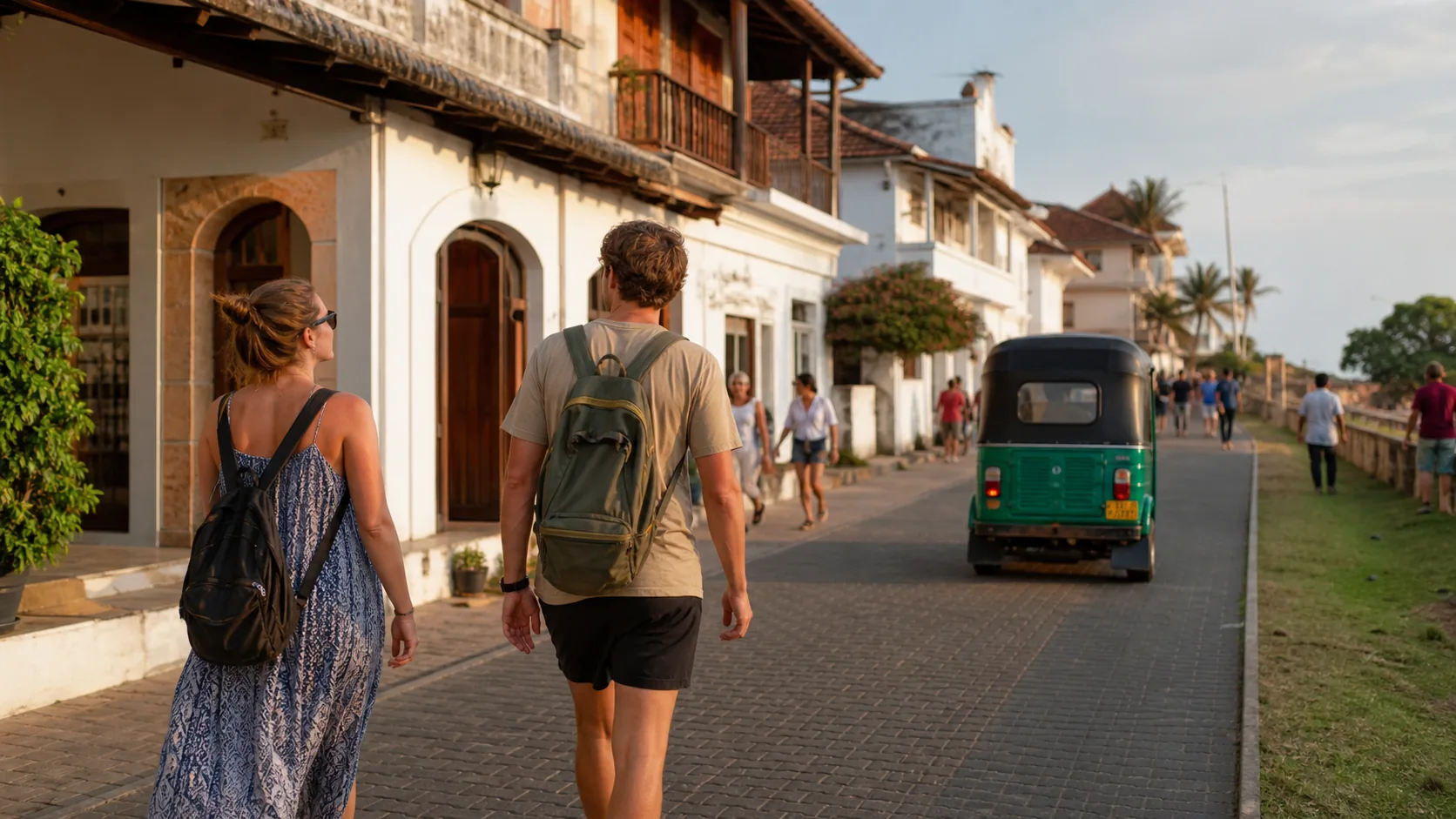
Tuk-tuk overcharging is the most common annoyance. Drivers may also claim your intended attraction is closed and offer to take you somewhere better, or insist on a stop at a shop or spice garden where they earn commission. Treat any such pitch as a signal to end the ride, and use a metered or app-booked tuk-tuk wherever possible.

At beaches and bars in party areas, watch your drink and be cautious with new acquaintances offering to arrange tours or transport at suspiciously good prices.

If something does go wrong, Sri Lanka maintains a dedicated tourist police service in the main visitor areas, and the nationwide police emergency number is 119. Report thefts promptly, as a police report is required for insurance claims.

Violent crime against tourists is rareWatch for pickpockets in markets and on transportDecline all street gem-buying offersUse app-booked or metered tuk-tuksPolice emergency number: 119

After Cyclone Ditwah: What Is Open and What Is Still Under Repair

Cyclone Ditwah struck Sri Lanka in late November 2025, triggering heavy rainfall, more than 150 landslides, flooding, and structural damage to bridges and culverts, with the hill country bearing the worst of it.

The recovery through 2026 has been substantial but uneven, and the most visible remaining impact for travelers is on the famous upcountry railway.

The Colombo to Kandy to Badulla line suffered severe landslide damage in its middle section. As of mid-2026, main-line trains from Colombo run as far as Rambukkana, and the scenic Nanu Oya to Ella to Badulla section — arguably the most beautiful stretch — reopened in June 2026 and operates normally in both directions, but the stretch between Rambukkana, Kandy, and Nanu Oya remains closed for repairs. All other routes on the network, including the coastal line, are running as usual.

In practice, travelers are bridging the gap by road: a common approach is to reach Kandy and Nuwara Eliya by van or car, then join the train at Nanu Oya for the spectacular run to Ella. Check the current line status shortly before your trip, as sections are reopening in phases.

Crucially, the destinations themselves are open. Sigiriya, Anuradhapura, Polonnaruwa, and the wider Cultural Triangle were not significantly affected, the south coast from Bentota to Tangalle was largely untouched, and Kandy, Nuwara Eliya, and Ella are all welcoming visitors.

Some rural hill-country roads remain rougher than usual, so allow extra travel time in the highlands and follow local guidance during heavy rain, when the landslide risk on steep slopes is always elevated.

Cyclone Ditwah hit in late November 2025Colombo trains run as far as RambukkanaNanu Oya to Ella rail reopened June 2026Rambukkana to Nanu Oya via Kandy still closedCultural Triangle and south coast largely unaffectedAllow extra time on hill-country roads

Road, Rail, and Transport Safety

The single most significant everyday risk for travelers in Sri Lanka is the road. Driving culture is assertive, buses move fast, roads are shared with pedestrians, cyclists, dogs, and the occasional elephant, and traffic accidents are far more likely to affect a visitor than crime is.

You can manage this risk sensibly. Choose reputable drivers and transfer services, avoid overnight road journeys where possible, insist on seatbelts where fitted, and never assume vehicles will stop at pedestrian crossings.

If you rent a scooter or ride in tuk-tuks frequently, wear a helmet on two wheels, and be aware that self-driving requires an international driving permit endorsed for Sri Lanka.

Trains are a slower but generally safe and wonderful way to travel. The main precautions are practical: hold on near open doorways, never lean out for photos on moving trains, and keep bags close in crowded unreserved carriages.

On water, take ocean conditions seriously. Currents and rip tides claim lives every year, safe swimming beaches change with the monsoon seasons, and many beaches have no lifeguards. Ask locally where it is safe to swim, obey red flags, and be especially careful with children.

For whale watching, boat trips, and water sports, choose licensed operators with proper life jackets rather than the cheapest offer on the beach.

Road accidents are the biggest practical riskUse reputable drivers and avoid night drivingHelmets essential on scootersNever lean out of moving trainsAsk locally about safe swimming and obey flags

Health, Food, and Water Safety

Sri Lanka poses no unusual health challenges for a prepared traveler, and pharmacies and private hospitals in main cities are of a good standard.

Drink bottled, filtered, or boiled water rather than tap water, and be sensible with ice from uncertain sources. Most hotels and restaurants catering to visitors use safe water and ice.

Sri Lankan food is one of the island's greatest pleasures, and eating at busy places with high turnover is the best insurance against stomach trouble. Ease into the spice levels gradually if you are not used to them.

Mosquito-borne dengue fever is present year-round, particularly during and after rains, so use repellent morning and evening, wear long sleeves at dusk, and choose accommodation with screens or nets in affected areas. There is no vaccine requirement for most visitors, but discuss routine vaccinations and dengue precautions with a travel clinic before you go.

The tropical sun is stronger than it feels in the highland cool. Use high-SPF sunscreen, hydrate constantly, and pace yourself on climbs like Sigiriya and Adam's Peak.

Comprehensive travel insurance covering medical evacuation is strongly recommended. Private hospital care in Colombo is good, but serious cases from remote areas may require transfer, and insurance turns a crisis into an inconvenience.

Drink bottled or filtered waterEat at busy places with high turnoverUse mosquito repellent against dengueRespect the tropical sun on climbsCarry comprehensive travel insurance

Is Sri Lanka Safe for Solo Female Travelers?

Sri Lanka is one of the most popular destinations in Asia for first-time solo female travelers, and the great majority report overwhelmingly positive experiences built on the helpfulness of local people.

That said, an honest guide acknowledges the realities. Staring can be common, and unwanted attention or harassment does occur, particularly on crowded buses and in nightlife areas, though serious incidents are rare.

Practical measures make a real difference: dress modestly away from beach resorts, avoid isolated beaches and unlit streets after dark, sit near families or other women on public transport, and use app-booked transport at night rather than street hails.

Many women choose well-reviewed guesthouses and homestays where hosts become a source of local knowledge and informal support, and joining day tours or group excursions for remote areas adds both safety and company.

Trust your instincts as you would anywhere. Sri Lanka's tourist trail is well-trodden, other travelers are everywhere in season, and help is rarely far away.

Families, couples, and older travelers will find the island equally manageable — Sri Lanka is frequently recommended as one of the easiest introductions to South Asia precisely because its tourist infrastructure is compact, friendly, and used to every kind of visitor.

Popular with first-time solo female travelersDress modestly outside beach areasUse app-booked transport at nightChoose well-reviewed guesthousesSerious incidents are rare but stay aware

Region-by-Region Safety Snapshot

Colombo and the west coast are the country's most policed and developed areas, with districts like Galle Face, Cinnamon Gardens, and Mount Lavinia reporting minimal incidents involving tourists. The main cautions are traffic and pickpockets in crowded markets.

The south coast — Galle, Unawatuna, Mirissa, Hikkaduwa, and down to Tangalle — has an excellent safety record, with tourist police patrolling the coastline. Ocean currents, not people, are the main hazard here.

The Cultural Triangle and central highlands, including Kandy, Sigiriya, Dambulla, Nuwara Eliya, and Ella, show no specific security concerns. In the hills, the practical issues are weather, slippery paths, leeches in wet season, and the ongoing rail repairs.

The east coast around Trincomalee and Arugam Bay is thriving, with Arugam Bay recording its highest-ever visitor numbers in early 2026. Standard beach-destination precautions apply.

The Northern and Eastern provinces, including Jaffna, are open, rewarding, and increasingly visited. Advisories note less-developed infrastructure and emergency services outside main towns, occasional localized protests, and a residual landmine legacy in isolated pockets — so stick to marked roads and paths and never wander into unmarked fields, forests, or overgrown ruins.

Wildlife deserves its own mention everywhere: keep a respectful distance from wild elephants, never feed monkeys, follow your safari driver's instructions inside national parks, and be cautious walking at night in rural areas where snakes are active.

South coast patrolled by tourist policeCultural Triangle fully open with no specific concernsEast coast enjoying record visitor numbersNorth: stay on marked roads and pathsRespect wild elephants and safari rules

Ten Practical Habits of Safe Travelers in Sri Lanka

Most safety in Sri Lanka comes down to a handful of habits rather than any special vigilance.

Keep digital and physical copies of your passport, ETA approval, and insurance documents separate from the originals.

Share your rough itinerary with someone at home and check in periodically, especially before remote hikes.

Carry a local SIM or eSIM so you always have data for maps, ride apps, and emergency calls; the general emergency number is 119 for police and 1990 for the Suwa Seriya ambulance service.

Use hotel safes for passports and spare cards, and carry only the cash you need for the day.

Withdraw money from ATMs attached to banks rather than standalone machines, ideally during daytime.

Agree every tuk-tuk fare before setting off, or better, book through an app with a fixed price.

Check the weather and sea conditions daily — monsoon patterns differ by coast, and conditions change fast in the hills.

Be respectful at religious sites, as cultural missteps around Buddhist imagery are among the few things that can create genuine legal trouble for visitors.

Finally, buy comprehensive travel insurance before you leave home. It is the single most effective safety measure available to any traveler.

Keep document copies separate from originalsEmergency numbers: 119 police, 1990 ambulanceUse bank-attached ATMs in daytimeAgree fares before every rideInsurance is the best safety net

Reisetipps

  • Read your own government's full travel advisory before booking and again before departure
  • Buy comprehensive travel insurance including medical evacuation
  • Save the emergency numbers 119 (police) and 1990 (ambulance) in your phone
  • Use app-booked or metered tuk-tuks and agree all other fares in advance
  • Decline every street offer involving gems, closed attractions, or special tours
  • Ask locally about safe swimming beaches and always respect red flags
  • Avoid overnight road journeys and choose reputable drivers
  • Stay on marked roads and paths in the Northern and Eastern provinces
  • Keep valuables minimal, split cash, and use hotel safes
  • Follow weather updates in the hill country, especially during heavy rain
  • Dress modestly at temples and cover shoulders and knees
  • Carry a local SIM or eSIM so you always have data and a working phone

Häufige Fragen

Is Sri Lanka safe for tourists in 2026?

Yes, broadly. The US State Department rates Sri Lanka at Level 2, most tourist destinations are fully operational, violent crime against visitors is rare, and a record number of tourists visited in 2025. The main practical risks are road accidents, ocean currents, petty theft, and scams — all manageable with normal precautions.

Is Sri Lanka safe after the 2025 cyclone?

The main tourist regions — Colombo, the south coast, the Cultural Triangle, Kandy, and Ella — were largely unaffected or have recovered. The most visible remaining impact is on the hill-country railway: trains from Colombo run as far as Rambukkana and the Nanu Oya to Ella section reopened in June 2026, while the middle stretch through Kandy remains under repair, so travelers bridge it by road. Other lines run normally.

Is Sri Lanka safe for solo female travelers?

Generally yes, and it is a popular first solo destination in Asia. Most women report very positive experiences. Standard precautions apply: dress modestly away from beaches, avoid isolated areas after dark, use app-booked transport at night, and choose well-reviewed accommodation.

What are the most common scams in Sri Lanka?

Gem-shop scams, tuk-tuk overcharging, drivers claiming attractions are closed to redirect you elsewhere, and commission stops at shops or spice gardens. All are avoidable: decline street gem offers, use ride-hailing apps, and verify opening hours yourself.

Is the Kandy to Ella train running in 2026?

Partially. After landslide damage from Cyclone Ditwah in late 2025, main-line trains from Colombo run as far as Rambukkana, and the Nanu Oya to Ella and Badulla section reopened in June 2026, running in both directions. The stretch between Rambukkana, Kandy, and Nanu Oya is still closed, so most travelers go to Nuwara Eliya by road and join the train at Nanu Oya. All other routes run normally. Check the latest status before your trip.

Is Sri Lanka safe for families with children?

Yes. Sri Lanka is widely regarded as one of the most family-friendly destinations in South Asia, with short travel distances, welcoming attitudes to children, and plenty of gentle activities. The key precautions are sun, sea currents, road safety, and mosquito protection.

Is it safe to visit Jaffna and the north?

Yes, the north is open and increasingly popular. Infrastructure and emergency services are less developed than in the south, and a residual landmine legacy exists in isolated pockets, so stay on marked roads and paths and avoid unmarked fields, forests, and overgrown ruins.

What emergency numbers should I know in Sri Lanka?

Dial 119 for police and 1990 for the Suwa Seriya ambulance service. Tourist police units also operate in the main visitor areas, and your hotel or guesthouse can help you reach them quickly.

Do I need travel insurance for Sri Lanka?

It is not always legally mandatory, but comprehensive travel insurance with medical evacuation cover is strongly recommended for every visitor. It is the single most effective protection against the trip-ruining costs of accidents or illness.

Leser-Notizen

Mach mit beim Gespräch

Teile deine Frage, deinen Tipp oder deine Reiseerfahrung zu diesem Guide.

Kommentare

0 Kommentare

Wird geladen...

Bereit, Inspiration in eine Sri-Lanka-Reise zu verwandeln?

Nutze LankaTrip, um deine Reise zu planen, lokale Guides zu finden und diese Route Wirklichkeit werden zu lassen.

Hilfe bei der Planung?

Plane dein Sri-Lanka-Abenteuer

Reise planen