LankaTrip Einblicke

17 Min. Lesezeit

Surfing in Sri Lanka in 2026: The Complete Two-Coast Season Guide from Arugam Bay to Weligama

Sri Lanka is one of the only countries on earth where the surf season never really ends: when the south coast goes flat, the east coast lights up. This 2026 guide breaks down both seasons, every major spot by skill level, real lesson and rental costs, and how to plan a surf trip around Arugam Bay, Weligama, Hiriketiya, and beyond.

Zurück zum Blog
Surfing in Sri Lanka in 2026: The Complete Two-Coast Season Guide from Arugam Bay to Weligama

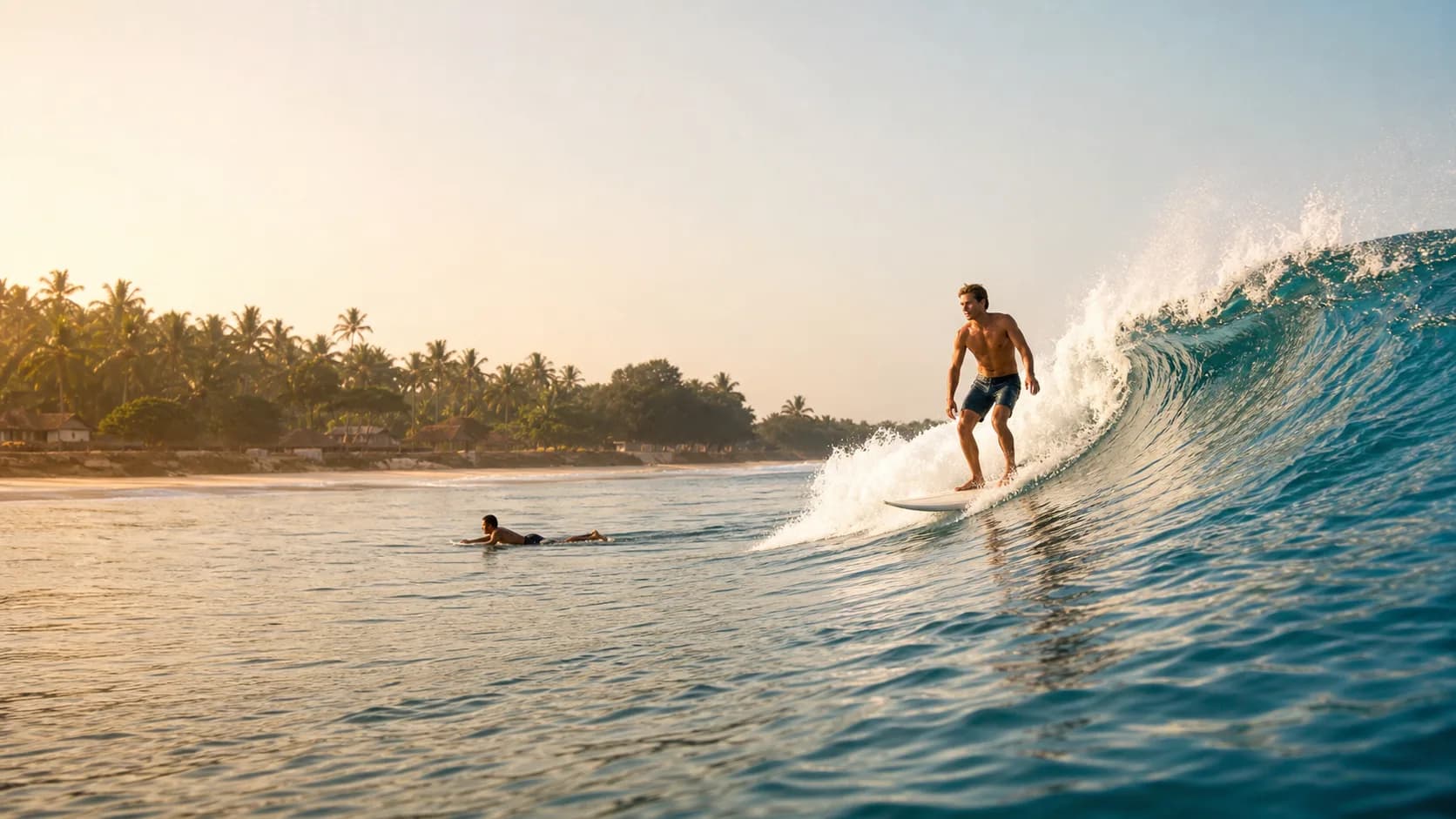
Most surf destinations have a season. Sri Lanka has two, and they take turns. When the southwest monsoon blows out the famous beaches of the south coast between May and October, the east coast around Arugam Bay wakes up with clean, long right-hand point breaks. When the northeast monsoon shuts the east down from November, the south coast switches back on for the northern-hemisphere winter.

The result is one of the very few countries on the planet where a surfer can land in any month and find warm, rideable waves somewhere on the island, usually within a few hours' drive of the airport.

It is also one of the cheapest and friendliest places on earth to learn. Weligama Bay, a wide sandy-bottomed beach break on the south coast, has become a global learn-to-surf capital, with dozens of schools, gentle rolling whitewater, and none of the reef cuts and heavy crowds that intimidate first-timers elsewhere.

At the other end of the spectrum, Arugam Bay's Main Point is a genuinely world-class wave, a long peeling right-hander that has drawn traveling surfers since the 1970s and now hosts World Surf League qualifying-level competition.

This guide answers the questions foreign surfers ask us most: when is the surf season, which coast should I choose, where should a beginner or an intermediate go, what does it all cost, and how do I plan the trip? Here is everything you need for a Sri Lanka surf trip in 2026.

Kurzüberblick

  • Sri Lanka has rideable surf every month of the year because its two coasts have opposite seasons
  • East coast season runs April/May to October, centred on Arugam Bay, with June to September the peak
  • South coast season runs November to April, spread across Weligama, Midigama, Ahangama, Hiriketiya, and Hikkaduwa
  • Weligama Bay's soft sandy beach break is one of the best places in Asia to learn, with group lessons from around US$15 to 25
  • Arugam Bay's Main Point serves rides of 200 metres and more on good days, and the town hosts international qualifying-level competition surfing
  • Water stays a warm 27 to 29 degrees, so boardshorts and a rash guard are all you need year-round

Two Coasts, Two Seasons: How Sri Lanka's Surf Calendar Works

Sri Lanka's surf geography is beautifully simple. The island sits in the path of consistent Indian Ocean swell, and its two monsoon systems alternate: the southwest monsoon roughly from May to September, and the northeast monsoon roughly from December to February.

Whichever coast is sheltered from the monsoon winds gets clean, groomed conditions. That means the south and west coasts, from Hikkaduwa down through Weligama to Hiriketiya, work best from November to April, when offshore mornings and steady swell make it the go-to zone for the European and North American winter.

The east coast, meaning Arugam Bay and its surrounding points, runs on the opposite clock: the season opens around April or May, peaks from June to September, and winds down in October. If you are reading this in July 2026, Arugam Bay is at its absolute best right now.

Water temperature barely changes: a bath-warm 27 to 29 degrees Celsius on both coasts, all year. Nobody brings a wetsuit to Sri Lanka; a rash guard for sun protection is the only upper-body kit you need.

The one mistake to avoid is mixing the coasts up. The south coast in July is stormy, onshore, and largely shut for surfing; Arugam Bay in January is a sleepy off-season town with many businesses closed. Match your dates to the right coast and the island rewards you; get it backwards and you will wonder what the fuss was about.

South coast: November to AprilEast coast: April/May to OctoberPeak Arugam Bay: June to September27 to 29 degree water year-roundNo wetsuit ever needed

Arugam Bay: Sri Lanka's Surf Capital

Arugam Bay is a single laid-back street of guesthouses, cafés, and surf schools on the east coast, and it is the undisputed jewel of Sri Lankan surfing. Surfers have been making the pilgrimage here since the 1970s, and the town regularly ranks among Asia's top surf destinations.

The star is Main Point, a long right-hand point break on the south side of town, walkable from most accommodation. On a good 4-to-6-foot day, a single wave can peel for more than 200 metres, a ride length that is genuinely rare anywhere in Asia. It suits confident intermediates and advanced surfers; beginners will find the rocks, the crowd, and the wave's power too much.

The surrounding coastline holds a full ladder of alternatives, nearly all of them right-handers. Pottuvil Point and Whiskey Point lie to the north, with Whiskey offering mellow, forgiving walls popular with surf camps and improvers. To the south, Peanut Farm delivers consistent waves with more space and a beautiful semi-remote setting, while Elephant Rock and Baby Point give beginners gentle sandy-bottomed options. Okanda, further south near the Kumana park boundary, is a powerful, remote wave strictly for experienced surfers, where wild elephants are a genuine sight on the drive in.

Timing within the season matters. June and July offer the sweet spot of consistent swell before the August crowds peak; May and October are quieter shoulder months with smaller waves that suit learners and improvers.

Arugam Bay is also more than a surf stop. Pottuvil Lagoon safaris, the Kumana bird sanctuary, and roadside elephant sightings make it one of the east coast's best all-round destinations, which is why most surfers who plan three nights end up staying five.

Main Point's 200-metre ridesWhiskey Point for improversPeanut Farm's consistencyBaby Point for beginnersJune and July sweet spot

Weligama: Where the World Learns to Surf

If you have never surfed before, Weligama Bay is the answer, and it is not close. This huge crescent of sand on the south coast serves up gentle, rolling whitewater over a soft sandy bottom, which means no reef cuts, no intimidating rocks, and endless room to fall off safely and try again.

The bay is lined with surf schools, many staffed by ISA-certified local instructors who grew up on these waves. Group lessons of around 90 minutes typically cost about US$15 to 25, private one-to-one sessions roughly US$20 to 40, and multi-lesson packages bring the per-session price down further.

Board rental is famously cheap: from around US$2 per hour on the beach, or roughly US$5 per day from the surf shops, with discounts for weekly hires. Most travelers do not bring a board for a learning trip; the rental fleet of soft-tops and mini-mals covers everything a beginner needs.

The learning curve here is fast. The waves are consistent and forgiving, sessions are cheap enough to do twice a day, and most committed beginners are riding green unbroken waves within a week. Lessons run mornings and late afternoons, when winds are lightest and the tropical sun is kindest.

Weligama itself is a working fishing town rather than a resort, which keeps it lively and affordable, with street food, fish markets, and a genuinely mixed crowd of locals and travelers. It also sits within a short tuk-tuk ride of the whole southern surf belt, which is the subject of the next section.

Soft sandy-bottom beach breakGroup lessons ~US$15-25Board rental from ~US$2/hourISA-certified local instructorsFast, safe progression

Beyond Weligama: The Southern Surf Belt from Hikkaduwa to Hiriketiya

The real magic of the south coast is density. Within roughly 20 kilometres of coastline, dozens of named breaks sit side by side, so surfers can rotate spots by the day depending on swell, wind, and crowd, all connected by cheap tuk-tuk rides along the coastal road.

Midigama, ten minutes from Weligama, is the improver's playground. Its famous Lazy Left offers a soft, slopey wall perfect for first reef experiences, while Rams delivers a hollower, more demanding right for advanced surfers. Several other reefs break within walking distance of the village.

Ahangama and the Kabalana area have become the progression heartland, where intermediates sharpen wave selection and turns on a rotation of reef points. This stretch has also grown into the south coast's café-and-coworking hub, popular with long-staying remote workers who surf at dawn and work by nine.

Hiriketiya, further east near Dickwella, is a postcard: a small horseshoe jungle bay with a left-hand point at one end and gentle beach-break whitewater at the other, meaning beginners and intermediates share one beautiful amphitheatre. Its popularity has exploded, so expect busy lineups in peak season.

Hikkaduwa, the historic west-coast surf town, rounds out the belt with reef peaks and the beach breaks of Narigama, plus the island's oldest surf culture. Mirissa, better known for its beach scene, adds a fun point wave and suits travelers balancing surf with nightlife and whale-season boat trips.

20 km of back-to-back breaksMidigama's Lazy Left and RamsAhangama for intermediatesHiriketiya's jungle horseshoe bayHikkaduwa's original surf culture

Which Spot Is Right for Your Level?

Complete beginners should base in Weligama in the November-to-April season, or around Whiskey Point, Baby Point, and Elephant Rock at Arugam Bay from May to October. All offer forgiving waves, sandy or gentle bottoms, and abundant instructors.

Improvers, meaning surfers who can catch green waves and want their first reef and point experience, do best rotating Midigama's Lazy Left, the mellower Ahangama reefs, and Hiriketiya's beach-to-point progression in the southern season, or Whiskey Point and small days at Elephant Rock in the east.

Intermediates get the best of the whole island. In the east season, Arugam Bay is close to perfect: the long point walls at Main Point on moderate days, Peanut Farm's consistency, and Pottuvil Point's length give you time to think, adjust, and improve mid-wave instead of merely surviving. In the southern season, the Ahangama-Midigama reef rotation plays the same role.

Advanced surfers should target Main Point at size, Rams at Midigama, and remote Okanda, and consider the quieter shoulder weeks when lineups thin out and the better waves go to those who hunt them.

Whatever your level, one honest note about crowds: Sri Lanka's secret is long out, and peak-season lineups at the famous breaks are busy. The reliable escape is to surf at first light, target shoulder months, or let a local surf guide take you to the lesser-known reefs between the named spots.

Beginners: Weligama or Whiskey PointImprovers: Lazy Left and HiriketiyaIntermediates: Arugam Bay pointsAdvanced: Main Point, Rams, OkandaDawn sessions beat the crowds

What a Sri Lanka Surf Trip Costs in 2026

Sri Lanka remains one of the world's most affordable quality surf destinations, though prices have crept up with its popularity, especially in the trendy Ahangama-Hiriketiya corridor.

Lessons and gear are the bargain. Budget roughly US$15 to 25 for a 90-minute group lesson, US$20 to 40 for private coaching, around US$2 per hour or US$5 per day for board rental, and packaged five-lesson deals at meaningful discounts. Surf guiding for experienced surfers, including transport between breaks, is widely available for a modest daily rate.

Accommodation spans the full range: backpacker surf hostels and simple guesthouses at budget prices, mid-range villas, and a growing class of genuinely excellent oceanside surf hotels where a sea-view room within walking distance of the waves can still be found around the US$80-a-night mark, often pool included.

All-inclusive surf camps bundle rooms, meals, daily lessons or guiding, and often yoga, with weekly packages on the south coast starting from roughly €430 to €500 and rising with comfort level. For solo travelers especially, camps solve accommodation, coaching, and social life in one booking.

Day-to-day living stays cheap: rice-and-curry lunches, fresh fruit, and tuk-tuk hops between breaks cost little, and the biggest variable in most surf trip budgets ends up being how fancy a room you want and whether you drink imported beer or local.

Group lessons US$15-25Boards from US$2/hourSea-view rooms around US$80Surf camps from ~€430/weekCheap daily living costs

Getting to the Surf: Logistics for Both Coasts

All international arrivals land at Bandaranaike International Airport (CMB) north of Colombo, and the two surf coasts pull you in opposite directions from there.

The south coast is the easy one. The Southern Expressway puts Weligama, Ahangama, and Midigama roughly two to two and a half hours from the airport by private transfer or expressway bus, and Hiriketiya about three. The coastal railway from Colombo Fort to Weligama and Matara is slower but scenic and extremely cheap.

Arugam Bay takes commitment: around six and a half to eight hours by road from the airport, whether by private transfer, or a combination of buses via Monaragala or Pottuvil. Many travelers break the journey with a night in Ella or a safari stop at Udawalawe, turning the transfer into part of the trip.

Once you arrive, tuk-tuks are the standard way to move between breaks; many long-staying surfers rent a scooter, which requires a valid license endorsement for Sri Lanka and a good honest look at your own two-wheel experience, since coastal-road traffic is lively.

Boards travel fine on the roof racks of tuk-tuks and transfer vans, and if you bring your own, most airlines flying into Colombo carry boards for a sports-equipment fee. For anything under an advanced shortboard quiver, though, renting locally is cheaper and easier than flying with gear.

South coast: ~2.5 hrs from CMBArugam Bay: 6.5-8 hrs by roadBreak the journey via EllaTuk-tuks between breaksRenting beats flying with boards

Surf Safety, Etiquette, and Respecting the Local Lineup

Sri Lankan waves are friendly by world standards, but the ocean still deserves respect. Beach breaks like Weligama carry occasional rips; ask instructors or lifeguards where to paddle out, and swim parallel to the beach if caught in a current rather than fighting it.

Reef and point breaks add rocks and urchins to the equation. Wear reef booties if your feet are soft, never dive head-first from your board in shallow water, and watch a lineup for ten minutes before paddling into it for the first time.

Sun is the most underestimated hazard. At eight degrees from the equator, two sessions a day will burn unprotected skin badly; a long-sleeve rash guard, zinc on the face, and shade at midday are non-negotiable.

Lineup etiquette follows the global rules: the surfer closest to the peak has priority, do not drop in, do not snake, paddle wide around the break rather than through it, and apologise when you get it wrong. Sri Lankan lineups are famously forgiving of honest beginners and famously unimpressed by entitled visitors.

Finally, remember whose waves these are. Local surfers, many of whom built the island's surf economy from nothing, share their breaks generously. Hire local instructors and guides, respect the ocean-facing communities, keep beaches clean, and give waves away now and then. Goodwill in a Sri Lankan lineup is repaid many times over.

Ask about rips before paddling outProtect feet on reef breaksEquatorial sun is fierceStandard priority rules applySupport local surf businesses

Building a Trip Around the Waves

One of Sri Lanka's great advantages over remote surf destinations is that the flat days are as good as the surf days, because the island's other attractions sit right behind the beach.

From the south coast surf belt, Galle Fort's UNESCO streets are twenty minutes from Weligama, Mirissa's whale-watching boats run in the same November-to-April window as the surf season, and the tea country hills of Ella are a scenic half-day away by train or road.

From Arugam Bay, the Pottuvil Lagoon mangrove safari, Kumana National Park's birdlife, the Muhudu Maha Viharaya coastal temple, and even day-trip access toward Yala's eastern reaches turn a surf trip into a full east coast experience.

Yoga has grown up alongside the surf on both coasts, with drop-in classes at most camps and studios for a few dollars, and the combination of two surf sessions and an evening stretch class has become the standard rhythm of a Sri Lankan surf day.

This is why we tell surfers to add days rather than trim them: the island punishes tight schedules and rewards slow ones. A two-week trip that mixes one coast's waves with trains, tea country, wildlife, and food will send you home planning the return before you have unpacked.

Galle Fort near the south breaksWhale season matches surf seasonLagoon safaris at Arugam BayCheap drop-in yoga everywhereSlow trips beat tight ones

Reisetipps

  • Match your coast to your dates: south and west from November to April, east from April/May to October
  • Book Arugam Bay accommodation early for June to September, especially weekends
  • Take lessons in the morning or late afternoon when winds are lightest
  • A long-sleeve rash guard and zinc sunscreen are essential at this latitude
  • Rent boards locally unless you are an advanced surfer with specific gear needs
  • Carry small cash for board rentals, tuk-tuks, and beach cafés
  • Watch any new lineup for ten minutes before paddling out
  • Wear reef booties at rocky points if you are not used to reef breaks
  • Consider shoulder months (May, October in the east; November, April in the south) for smaller crowds
  • Break the long Arugam Bay transfer with a night in Ella or a safari stop
  • Check that any scooter rental is matched by a valid license endorsement and travel insurance that covers riding
  • Respect local surfers and hire local instructors and guides wherever possible

Häufige Fragen

When is the surf season in Sri Lanka?

There are two. The south and west coasts, including Weligama, Midigama, Ahangama, Hiriketiya, and Hikkaduwa, work from November to April. The east coast, centred on Arugam Bay, runs from around April or May to October, with June to September the peak. Between the two coasts, Sri Lanka has rideable surf every month of the year.

Is Sri Lanka good for beginner surfers?

It is one of the best places in the world to learn. Weligama Bay offers gentle rolling waves over a soft sandy bottom with dozens of surf schools and ISA-certified instructors, and group lessons cost roughly US$15 to 25. In the east season, Whiskey Point, Baby Point, and Elephant Rock near Arugam Bay play the same beginner-friendly role.

How much do surf lessons cost in Sri Lanka?

As of 2026, expect around US$15 to 25 for a 90-minute group lesson and roughly US$20 to 40 for a private lesson, with multi-lesson packages discounted. Board rental runs from about US$2 per hour on the beach or around US$5 per day from surf shops.

What is the best surf spot in Sri Lanka?

For wave quality, Arugam Bay's Main Point is the island's signature break: a long right-hand point that can peel for more than 200 metres on a good day, best for intermediate and advanced surfers. For learning, Weligama Bay is the standout. The honest answer depends on your level and your travel month.

Do I need a wetsuit to surf in Sri Lanka?

No. Water temperatures stay around 27 to 29 degrees Celsius year-round on both coasts. Boardshorts or a swimsuit plus a rash guard for sun protection are all you need.

How do I get to Arugam Bay?

Arugam Bay is roughly six and a half to eight hours by road from Bandaranaike International Airport, via private transfer or buses through the hill country and Monaragala or Pottuvil. Many travelers break the journey with a night in Ella or a safari stop at Udawalawe, which turns the transfer into part of the trip.

Can I surf in Sri Lanka in July?

Yes, on the east coast. July sits inside Arugam Bay's June-to-September peak, with consistent swell at Main Point and the surrounding breaks. The south coast is in its monsoon off-season in July and is not the place to surf.

Should I bring my own surfboard to Sri Lanka?

Most travelers should not. Rental boards are cheap and plentiful at every surf town, covering soft-tops through performance shortboards. Bringing your own only makes sense for advanced surfers with specific equipment needs, and airlines flying into Colombo generally carry boards for a sports-equipment fee.

Is it safe to surf in Sri Lanka?

Generally yes. The main hazards are rips at beach breaks, rocks and urchins at reef points, strong equatorial sun, and crowded peak-season lineups. Ask instructors or lifeguards about conditions, watch a break before paddling out, protect yourself from the sun, and follow standard lineup etiquette.

Where should digital nomads base for a surf-and-work stay?

The Ahangama and Weligama stretch of the south coast has become the island's surf-coworking hub during the November-to-April season, with cafés, coworking spaces, and a rotation of breaks within a short tuk-tuk ride. In the east season, Arugam Bay offers a smaller but growing long-stay scene.

Leser-Notizen

Mach mit beim Gespräch

Teile deine Frage, deinen Tipp oder deine Reiseerfahrung zu diesem Guide.

Kommentare

0 Kommentare

Wird geladen...

Bereit, Inspiration in eine Sri-Lanka-Reise zu verwandeln?

Nutze LankaTrip, um deine Reise zu planen, lokale Guides zu finden und diese Route Wirklichkeit werden zu lassen.

Hilfe bei der Planung?

Plane dein Sri-Lanka-Abenteuer

Reise planen