
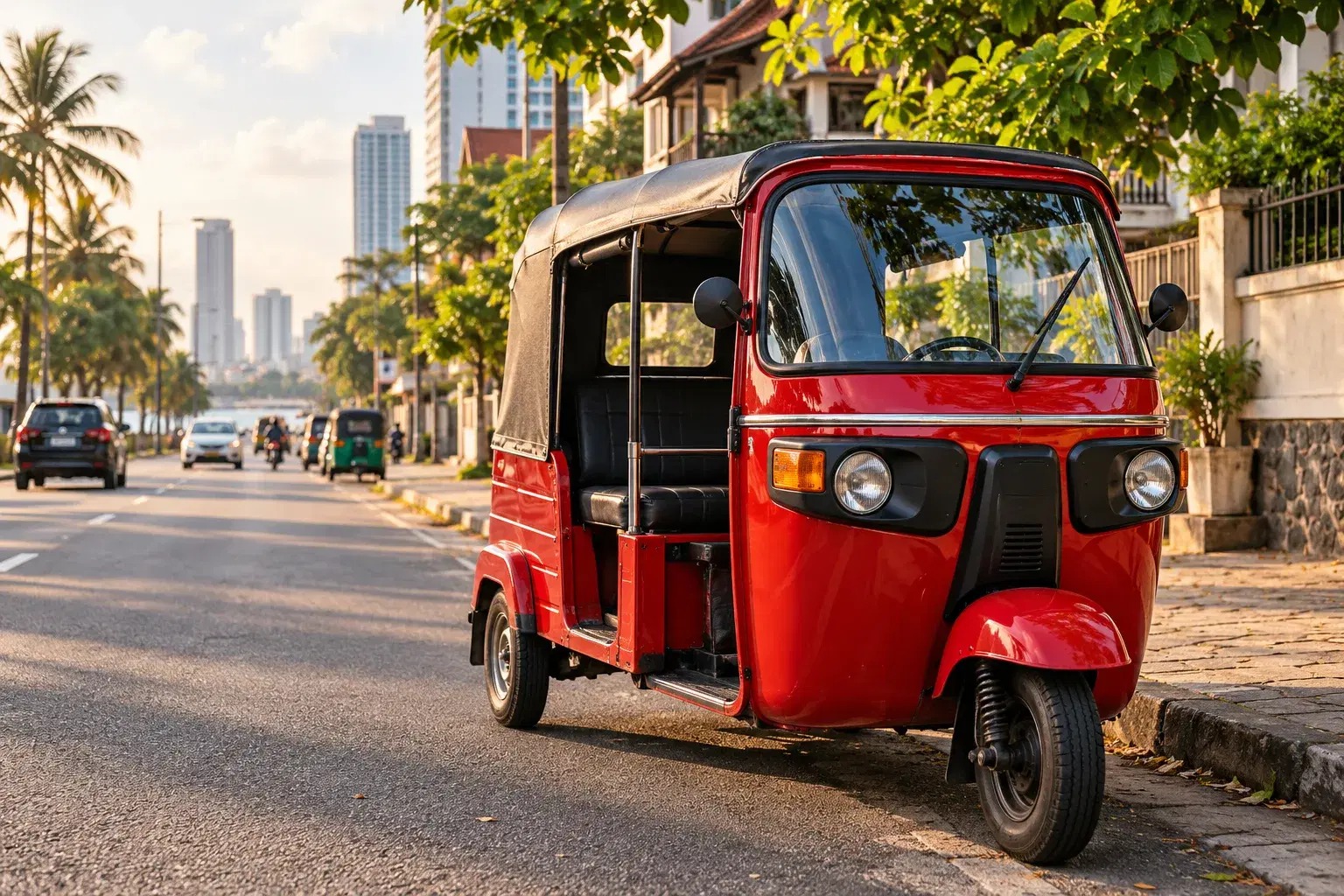
Sri Lanka is good value for most visitors, and the great majority of people you meet will be honest and kind.
But overcharging does happen, and Sri Lankan media and officials discuss it openly. Most of it is small, such as a tuk-tuk fare that is double the meter. Some of it is bigger, such as fake visa websites or gem shops selling glass.
The best protection is simple: know roughly what things should cost before you pay. This guide gives you the figures we could check against official sources and national news, and clear ranges where official prices do not exist.
We also explain what is not a scam. For example, foreigners paying more at Sigiriya is official government pricing. Knowing the difference saves you stress.
L'essentiel
- In Western Province, metered tuk-tuks were set at Rs 110 for the first kilometre and Rs 90 per kilometre after, from 24 March 2026
- Foreigners pay higher, official entry fees at many heritage sites; this is government policy, not a scam
- Apply for your ETA only on the official government website; fake sites charge extra
- Never pay cash to train staff for a seat or compartment access
- Agree on the price before any ride, tour or service starts
- The exchange rate in 2026 has been roughly Rs 300 to 330 per US dollar; check the current rate