
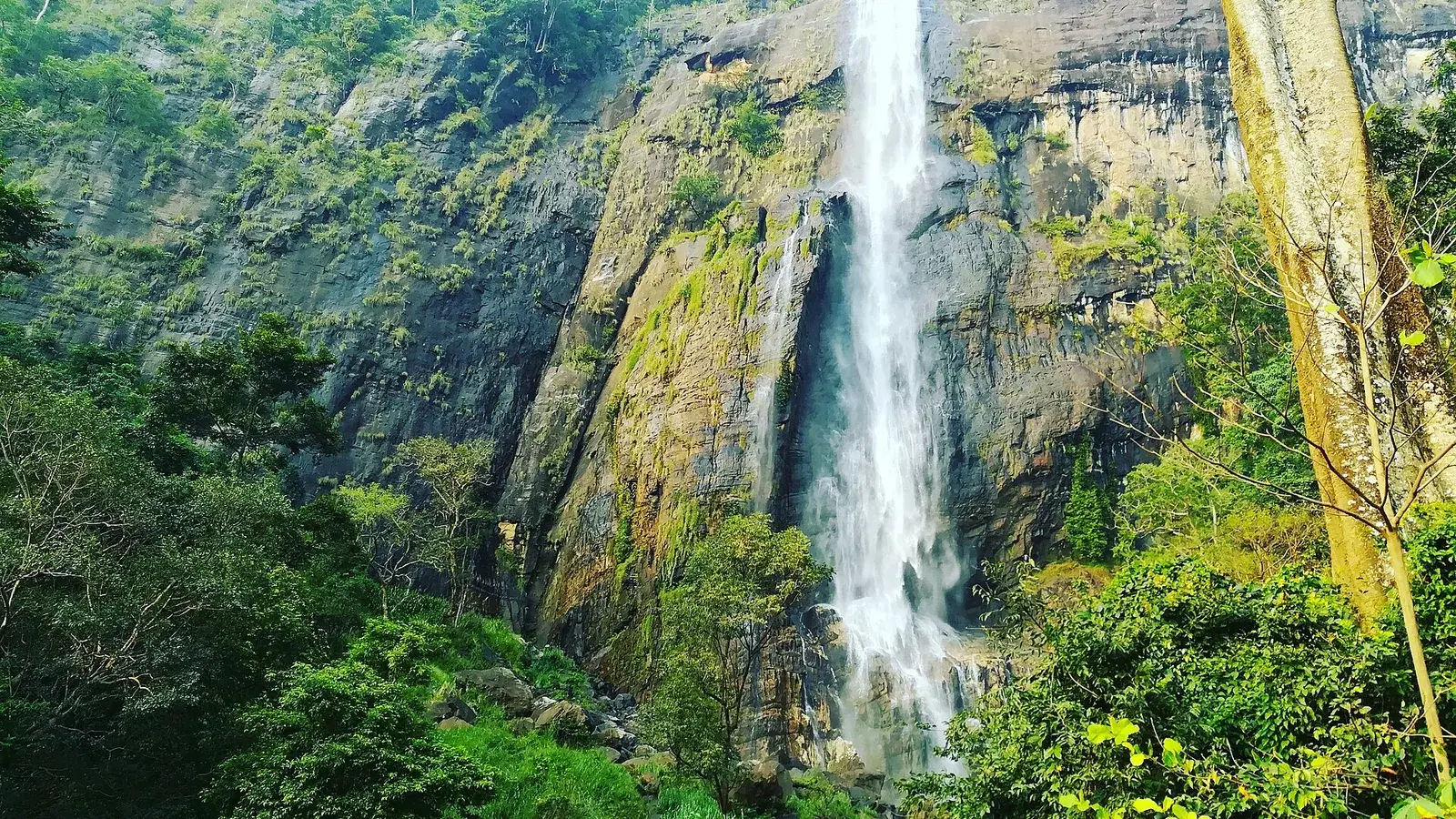
Sri Lanka is one of the most waterfall-dense countries on earth. The island's central massif catches both monsoons, and the water comes off the escarpments in more than three hundred named falls — some roadside, some requiring a serious walk, a handful genuinely world-class.
It is also a subject where published information is unusually unreliable, and in a way that matters.
Take Bambarakanda, the tallest. Most sources give it 263 metres; a detailed Sri Lankan waterfall index gives 241. Its world ranking appears as 299th on one page and 461st on another. Diyaluma is described almost everywhere as the second-highest in the country, and at least one careful index places a different cascade above it. These are not trivial differences, and nobody reconciles them because repeating a number is easier than measuring one.
Then there is the seasonality problem. A large number of guides recommend visiting waterfalls in the dry season, which is when they are easiest to reach and weakest. Others recommend the wet season, which is when they are spectacular and most dangerous. Both pieces of advice are given confidently and neither explains the trade-off.
And underneath all of it sits the thing that actually causes harm, which almost no waterfall article states plainly. People are not usually hurt at Sri Lankan waterfalls by the height of the drop. They are hurt because water level rises suddenly from rain that fell upstream, in a catchment they cannot see, often while the sun is out where they are standing. Pools that were calm become torrents. This has killed people.
What follows is an honest ranking of ten falls worth travelling for, with where they are, when they actually run, how hard they are to reach, and what to watch for.
Kurzüberblick
- Sri Lanka has well over 300 named waterfalls; this is a ranking of the ten most worth your time
- Published heights disagree substantially — Bambarakanda appears as both 263 m and 241 m across credible sources
- Its world ranking is given as both 299th and 461st depending on the database used
- Diyaluma is widely described as second-highest, though at least one detailed index ranks it third
- The strongest flow follows the wet months; the safest access is in drier periods
- Upstream rain is the real hazard — water levels rise with no warning at the fall itself
- Ravana Falls is the most accessible and the most crowded
- Bambarakanda is the tallest and among the least visited
- Several falls require steep, unmarked or slippery descents and are not the casual stops guides imply
- Leeches are common on wet-zone and highland approach trails