
Udawalawe National Park
A practical Udawalawe guide: current jeep and entrance prices, why this is Sri Lanka's most reliable elephant safari, the Elephant Transit Home's feeding times, and honest daily budgets.
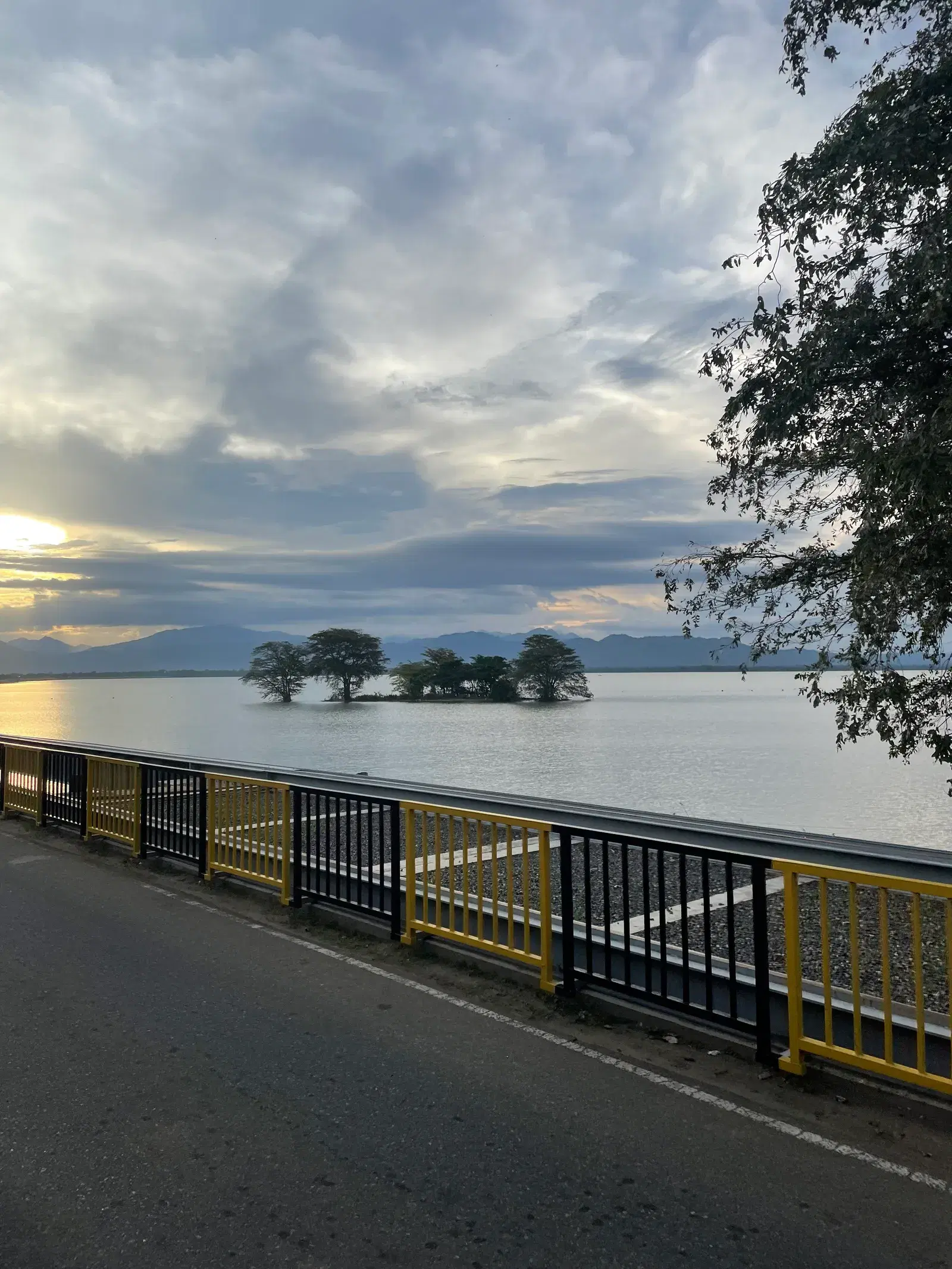
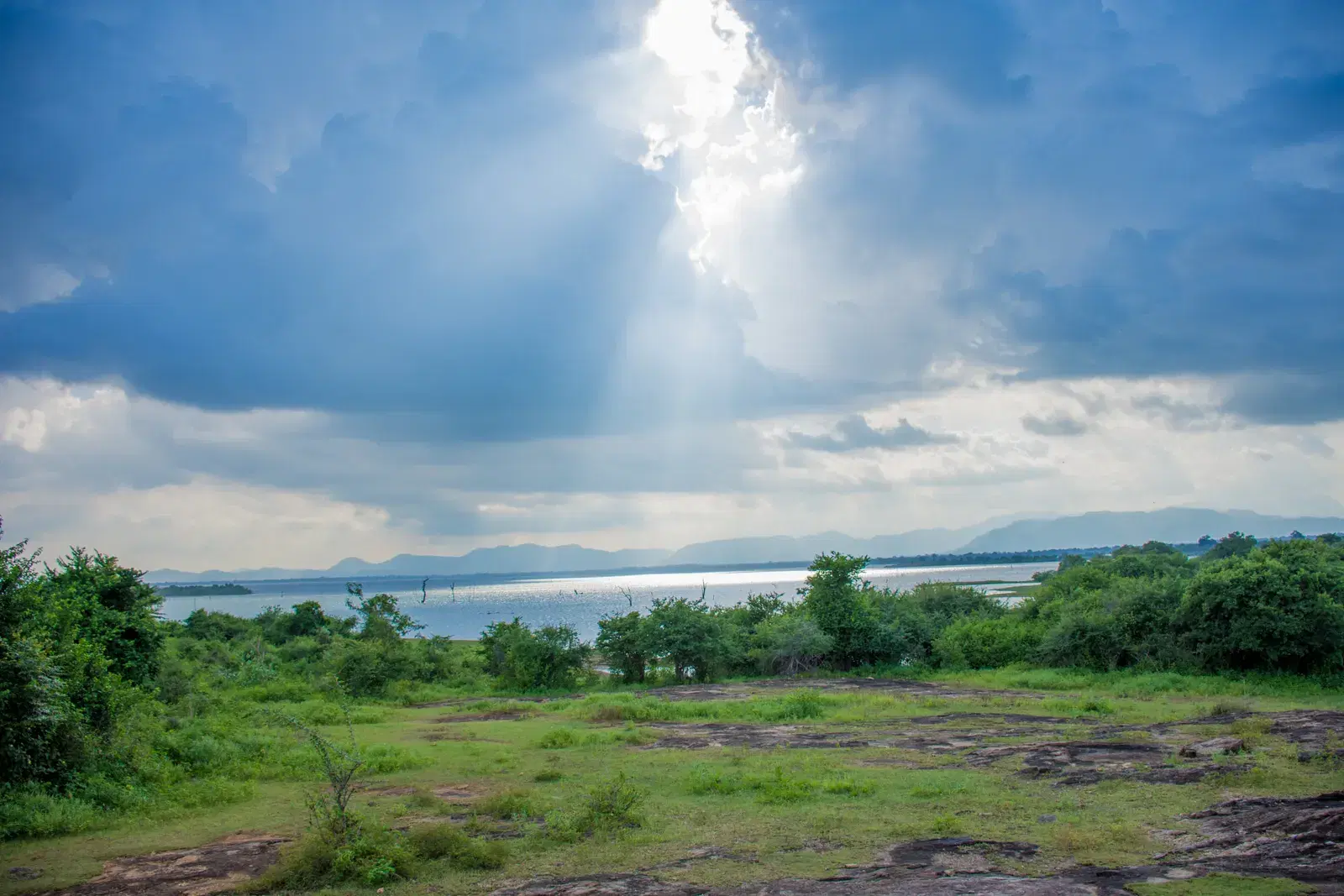
Udawalawe exists because of a dam, not in spite of one. The Walawe River was dammed in the early 1970s to create an irrigation reservoir for the surrounding dry zone, and the national park was gazetted in 1972 specifically to protect the wildlife displaced by that construction — a modern conservation response rather than a royal hunting ground turned reserve, which is the more typical origin story for Sri Lanka's parks. The reservoir itself is now the park's defining feature, drawing elephants to its shores in genuinely reliable numbers.
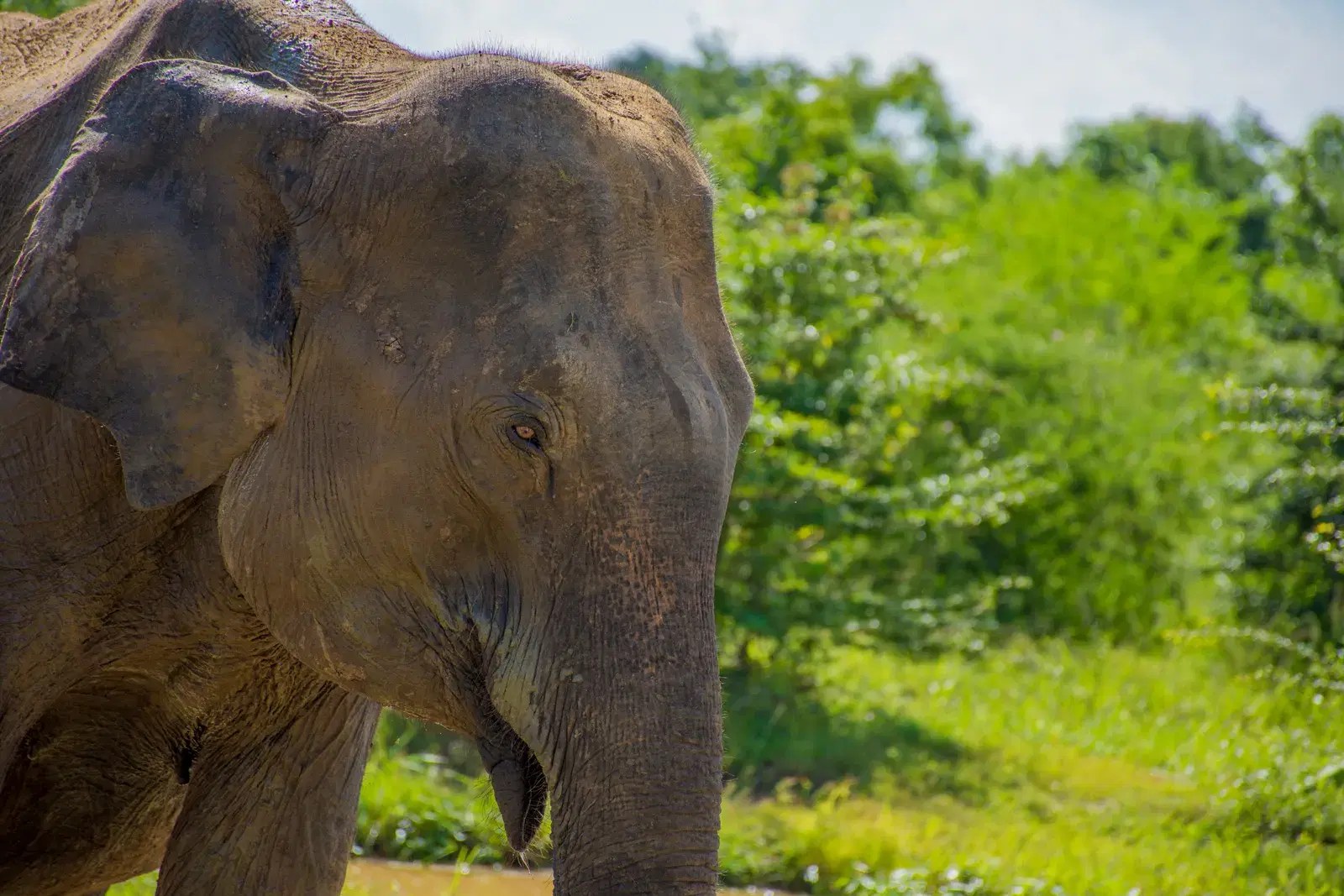
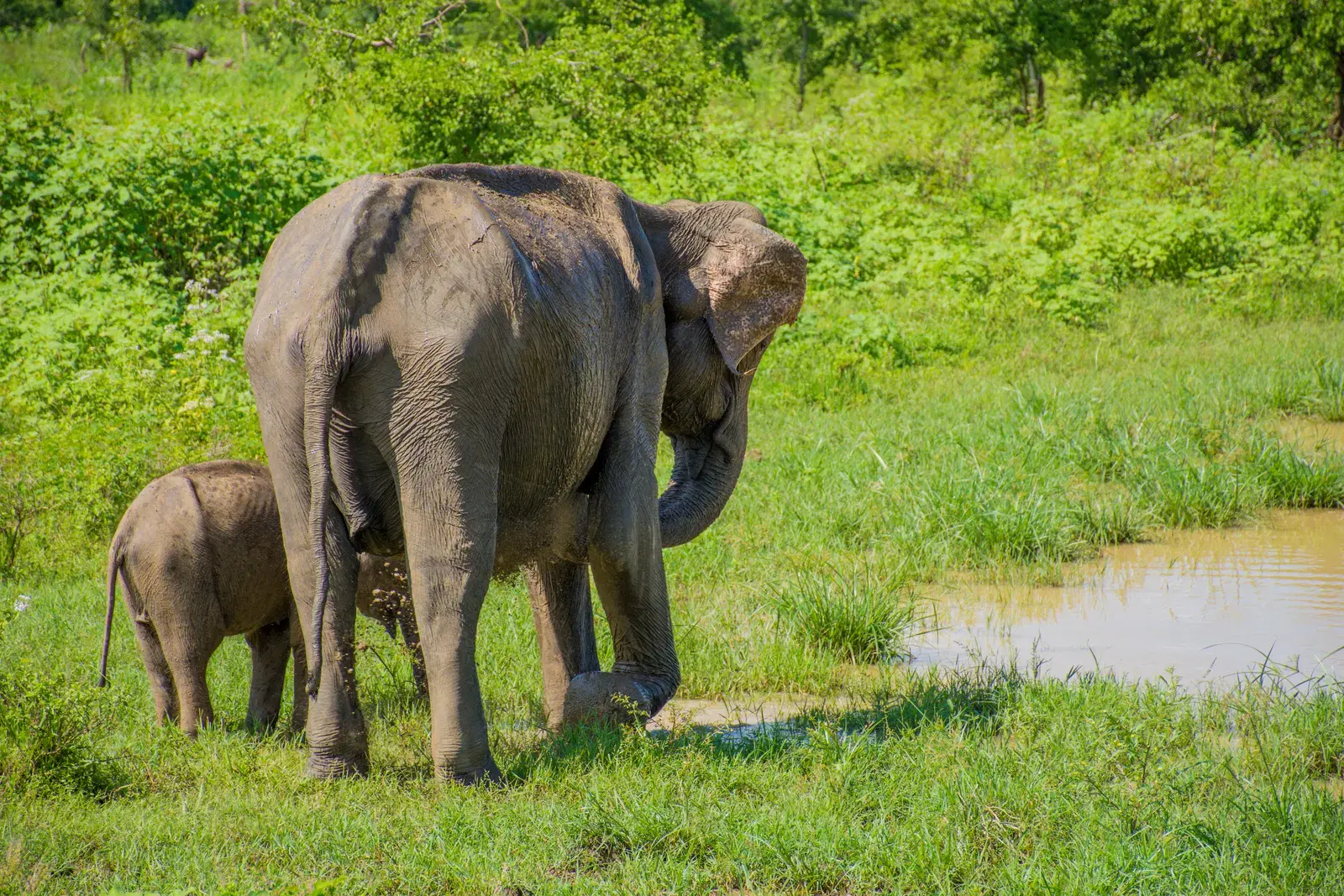
That reliability is the whole pitch. Where Yala's fame rests on leopards that require real luck to see well, Udawalawe's open grassland and scrubland around the reservoir make elephant sightings close to guaranteed — herds of 20 or more aren't unusual, and the park's more open terrain (compared to Yala's denser jungle) means you actually get to watch them for extended stretches rather than a fleeting glimpse.
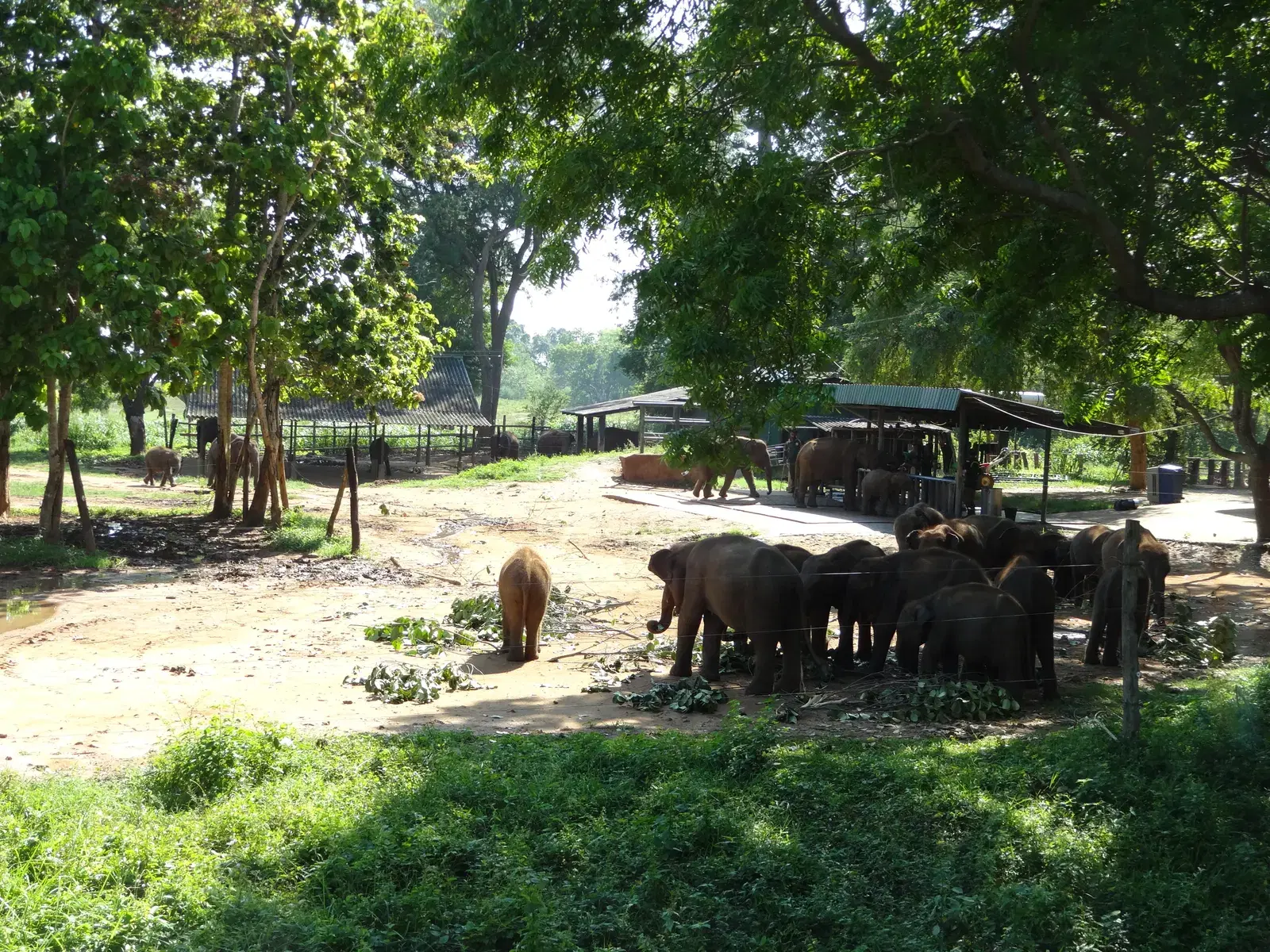
The park also sits next to the Elephant Transit Home, the first facility of its kind in the world, which rehabilitates orphaned and injured elephant calves before releasing them back into Udawalawe's wild population. Public feeding times let you watch bottle-fed calves up close from a viewing platform — a genuinely different, more hands-on wildlife experience than anything a jeep safari offers, and one that's directly tied to the park's own elephant population rather than a separate attraction bolted on nearby.
Most visitors treat Udawalawe as a half-day stop bolted onto a longer south-coast or hill-country itinerary, and that's a reasonable way to use it — but it holds up fine as an overnight destination too, particularly for travelers who want a genuinely relaxed, high-probability wildlife encounter without Yala's crowds or its more contested, luck-dependent leopard hunt.
Why go to Udawalawe National Park
- The most reliable elephant safari in Sri Lanka — open terrain and reservoir-side grazing make sightings close to guaranteed, unlike the more luck-dependent leopard hunt at Yala.
- The Elephant Transit Home, the world's first facility of its kind, lets you watch orphaned calves being rehabilitated and fed, a genuinely different experience from a jeep safari.
- It's less crowded than Yala, with a more open landscape that gives longer, clearer wildlife viewing per sighting rather than a brief glimpse through dense brush.
- It pairs naturally with a south-coast or hill-country loop — Mirissa, Tangalle, and Ella are all a few hours away by road.
How to get to Udawalawe National Park
From Ella — Private car or bus
About 100km, roughly 2 hours by private car. Public buses require a transfer at Wellawaya junction and take 3–4 hours total — the private car is worth the extra cost for the time saved.
From Mirissa / south coast — Private car
About 75km, roughly 2–3 hours by road, making it a workable add-on to a south-coast loop rather than a full separate destination.
From Yala — Private car
About 90km, roughly 1.5–2 hours by road — a common pairing for travelers wanting both parks on one trip.
From Colombo / Bandaranaike Airport — Private car
About 165–190km, roughly 3.5–4 hours by road via the Southern Expressway.
Best time to visit Udawalawe National Park
| Months | Rainfall | Crowds | Verdict |
|---|---|---|---|
| Year-round | Varies | Rises Dec–Mar | Unlike Yala, Udawalawe doesn't have an official closure season and elephant sightings are reliable throughout the year, since the reservoir keeps drawing them regardless of season. |
| Dec – Mar | Low | High (peak season) | The driest conditions and the busiest months — animals concentrate more predictably around the reservoir as smaller water sources dry up elsewhere in the park. |
| Apr – Sep | Rising | Medium | A genuinely reasonable time to visit, with fewer jeeps competing for the same sightings and still-strong elephant numbers given the year-round water source. |
| Oct – Nov | Highest | Low | Wetter conditions spread animals out more and can make roads harder going, but this is a minor factor here compared to how much it affects other parks. |
Things to do in Udawalawe National Park
Morning or afternoon jeep safari
Book an all-inclusive package where possible to avoid piecing together entrance fees and jeep hire separately. The open grassland around the reservoir means elephants are visible for much longer stretches than in denser parks — expect real, sustained sightings rather than a 30-second glimpse through foliage. Herds of 20 or more elephants are a genuine possibility, not an exceptional stroke of luck.
Elephant Transit Home
The world's first elephant transit home, established in 1995, rehabilitating orphaned or injured calves before releasing them back into Udawalawe's wild population — over 200 calves released since it opened. Visitors watch bottle-feeding from an elevated platform rather than interacting directly with the animals, which is the point: this is a rehabilitation facility working toward wild release, not a petting experience, and it's run that way deliberately.
Full-day safari
Worth it specifically for photography, covering both the morning and evening activity windows in one outing. Given how reliable elephant sightings already are here, most visitors get a genuinely satisfying experience from a single half-day safari instead.
Udawalawe Reservoir viewpoint
The dam and spillway are visible from outside the park boundary, giving useful context for why this specific landscape draws so much wildlife — worth a quick stop if you're already in the area rather than a dedicated trip.
Birdwatching
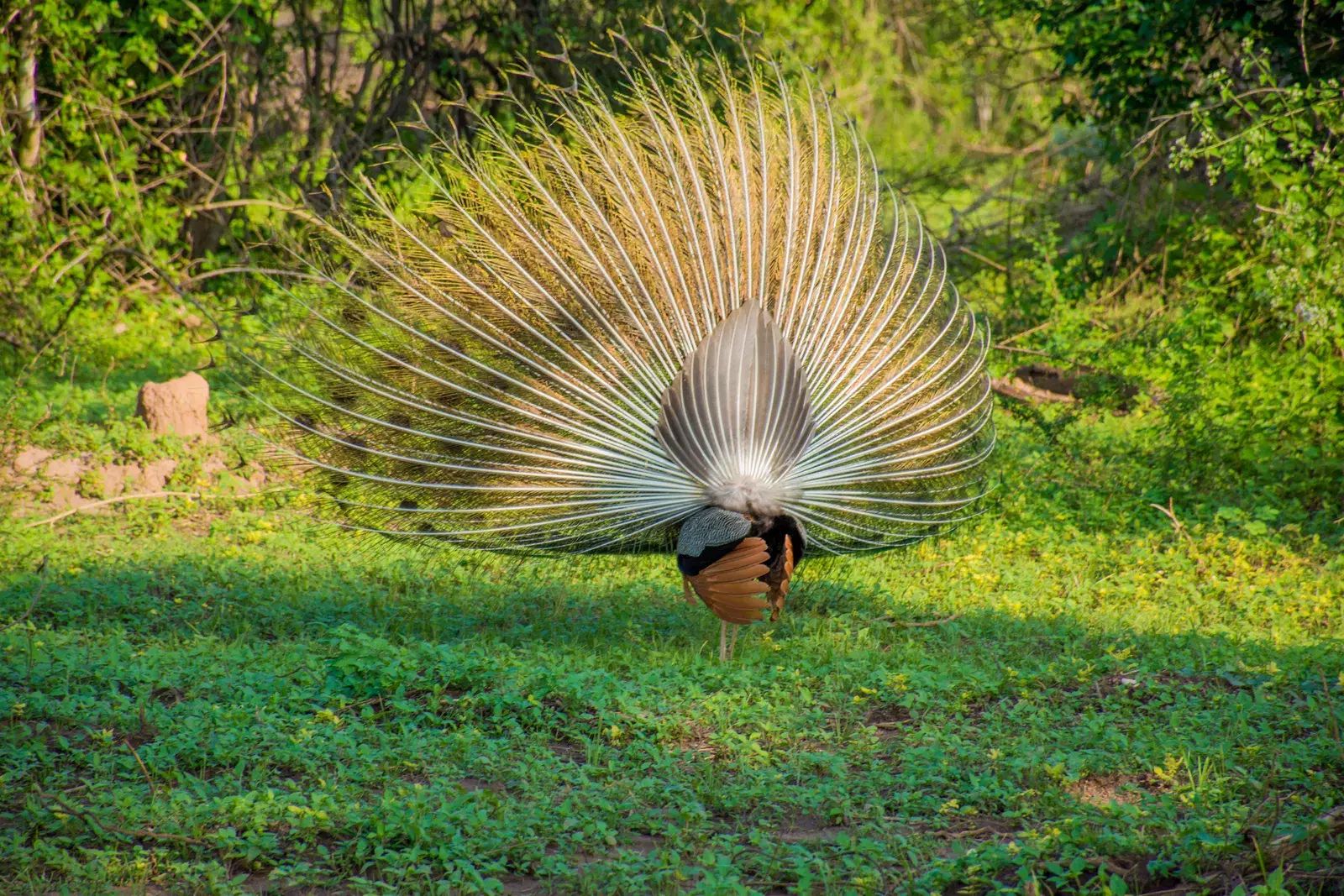
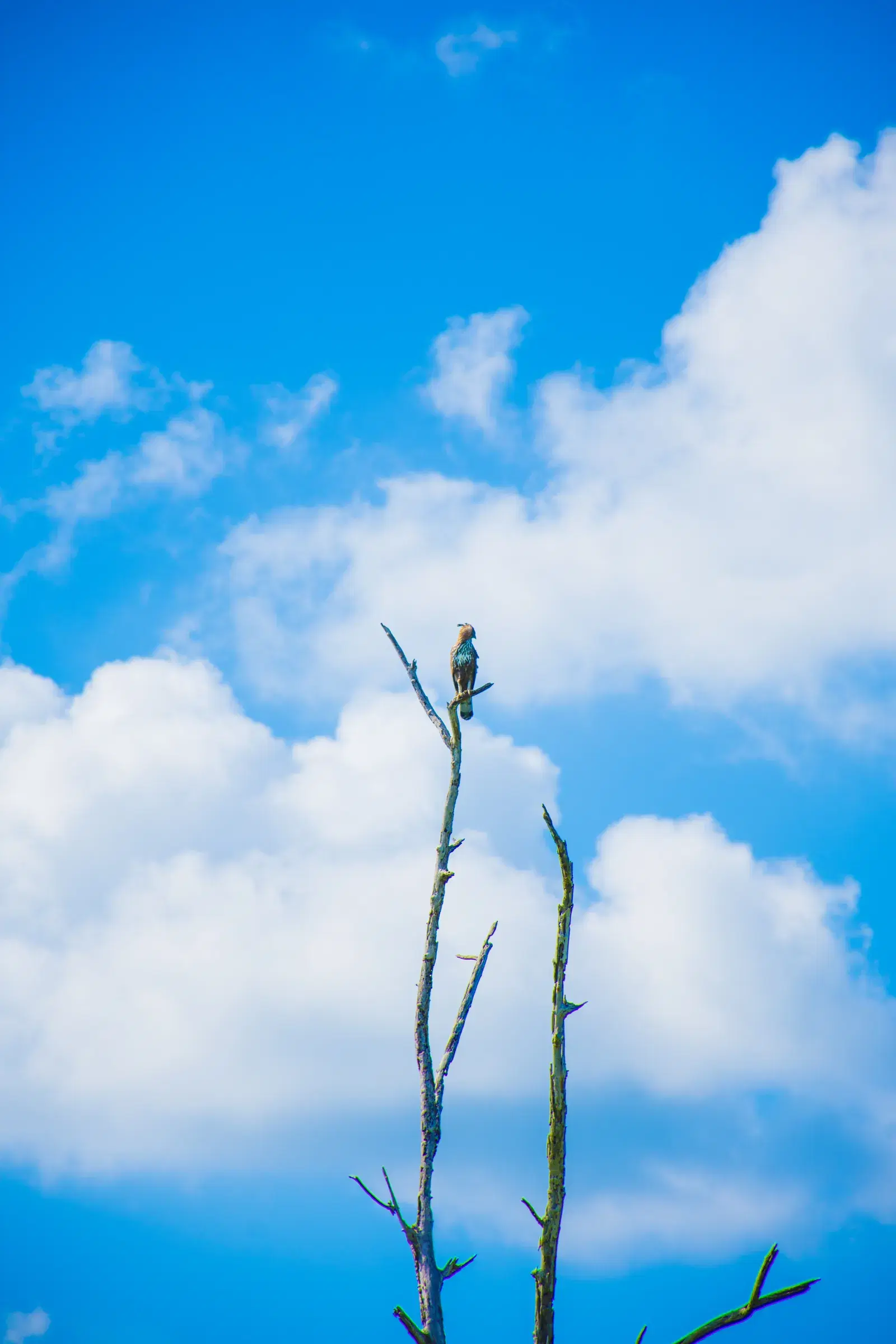
A genuinely strong secondary draw alongside the elephants — changeable hawk-eagles, Indian peacocks, and a wide range of waterbirds around the reservoir margins reward a guide who slows down rather than rushing between elephant sightings.
Where to stay in Udawalawe National Park
Budget — Near the park entrance
- Nature House or Private Organic House — Simple, friendly guesthouses with home-cooked meals, a short distance from the park.
Mid-range — Near the park entrance
- Kottawatta Village — A mid-range option with a pool, a comfortable step up without full resort pricing.
High-end — Katupilagama, near the park and Elephant Transit Home
- Kalu's Hideaway — Five acres of gardens, a pool, and butler service, with the Elephant Transit Home within 3km.
Where to eat in Udawalawe National Park
Hotel and guesthouse restaurants
Rice and curry buffet — most stays include or offer one
~LKR 1,000–2,000
Kalu's Hideaway restaurant
Indian and Sri Lankan menu
~LKR 2,000+
Local eateries near the park entrance
Simple rice and curry, made to order
~LKR 500–1,000
Getting around Udawalawe National Park
You won't self-drive inside the park — safaris run in licensed jeeps with a driver, arranged through your accommodation or a tour operator near the entrance.
The area immediately around the park entrance is small; most travelers arrange transport to and from Udawalawe as part of a broader itinerary rather than getting around locally day to day.
Book your safari the evening before rather than the morning of, particularly in peak season (Dec–Mar), to secure a good driver-guide.
What it costs — daily budget
| Tier | Per day (USD) | Per day (LKR) | Includes |
|---|---|---|---|
| Backpacker | $45–65 | ≈ LKR 13,500–19,500 | Budget guesthouse, one shared-jeep safari, the Elephant Transit Home, local meals. |
| Mid-range | $90–150 | ≈ LKR 27,000–45,000 | Mid-range guesthouse, an all-inclusive safari package, the Elephant Transit Home, restaurant meals. |
| Comfort | $180–350+ | ≈ LKR 54,000–105,000+ | High-end guesthouse stay, a private full-day safari with an experienced guide, all meals. |
Safety and scams in Udawalawe National Park
Udawalawe is low-risk in the personal-safety sense — the real risk factors are wildlife-related and operator-quality related, not crime.
Only use licensed jeeps and drivers; licensing exists specifically for animal-safety and driver-conduct standards.
Follow your guide's instructions around elephant distance strictly — herds here are genuinely large and close-range by international safari standards, and matriarchs with calves can react defensively if a jeep gets too close.
Sun exposure is a real factor on an open-terrain safari — the grassland here offers less shade than Yala's denser jungle sections, so sun protection matters even more.
At the Elephant Transit Home, follow staff instructions about viewing distance — this is an active rehabilitation facility, not a petting zoo, and keeping distance is part of what keeps the calves on track for a genuine wild release.
Hidden gems near Udawalawe National Park
- Birdwatching between elephant sightings — Most visitors focus entirely on elephants; a guide willing to slow down for the reservoir's birdlife adds a genuinely different dimension to the safari.
- The dam and spillway viewpoint — Free, outside the park, and gives useful context for the whole ecosystem that most day-trippers skip entirely.
- Off-peak safari sessions (Apr–Sep) — Fewer jeeps competing for the same elephant sightings, with year-round reliability that Yala's dry-season dependence doesn't offer.
- A second, later feeding time at the Transit Home — The mid-morning session draws the biggest crowds; a later feeding is often noticeably quieter for the same close-up view of the calves.
Suggested Udawalawe National Park itineraries
1 day
The essentials: Morning jeep safari, Elephant Transit Home at a midday feeding time, then travel on.
2 days
Day 1: Arrive, afternoon safari session.
Day 2: Morning safari, Elephant Transit Home feeding time, depart.
3 days (paired with Yala)
Day 1: Udawalawe morning safari, Elephant Transit Home.
Day 2: Travel to Yala, afternoon safari there.
Day 3: Second Yala safari focused on leopards, then depart.
Where to go next from Udawalawe National Park
Udawalawe National Park FAQ
How much does a Udawalawe safari cost?
Entrance runs around $42.50 USD per foreign adult, plus jeep hire commonly around $50 shared across your group. All-inclusive packages (entrance, jeep, guide) often run $90–150 USD per person depending on group size.
Is Udawalawe better than Yala for elephants?
Yes, generally — the open grassland around the reservoir makes elephant sightings more reliable and longer-lasting than in Yala's denser terrain. For leopards specifically, Yala remains the stronger choice.
What is the Elephant Transit Home?
The world's first facility of its kind, established in 1995, rehabilitating orphaned or injured elephant calves before releasing them back into Udawalawe's wild population. Visitors can watch public feedings from a viewing platform.
When is the best time to visit Udawalawe?
Unlike Yala, there's no official closure season here, and elephant sightings are reliable year-round thanks to the permanent reservoir. December to March is driest and busiest; April to September offers similar wildlife with fewer crowds.
How do I get from Ella to Udawalawe?
About 100km, roughly 2 hours by private car. Public buses require a transfer at Wellawaya junction and take 3–4 hours total.
How many days do I need at Udawalawe?
A single half-day safari genuinely delivers good elephant sightings given how reliable this park is. One full day, including the Elephant Transit Home, is enough for most travelers.
Can I combine Udawalawe with Yala?
Yes — the two parks are about 90km apart, roughly 1.5–2 hours by road, making a combined 2–3 day wildlife trip a common itinerary for travelers wanting both elephants and a shot at leopards.
Is Udawalawe crowded?
Less so than Yala, particularly outside December–March. The park's more open terrain also means crowding at a single sighting is less of an issue than at Yala's more concentrated, jungle-bound viewing spots.