
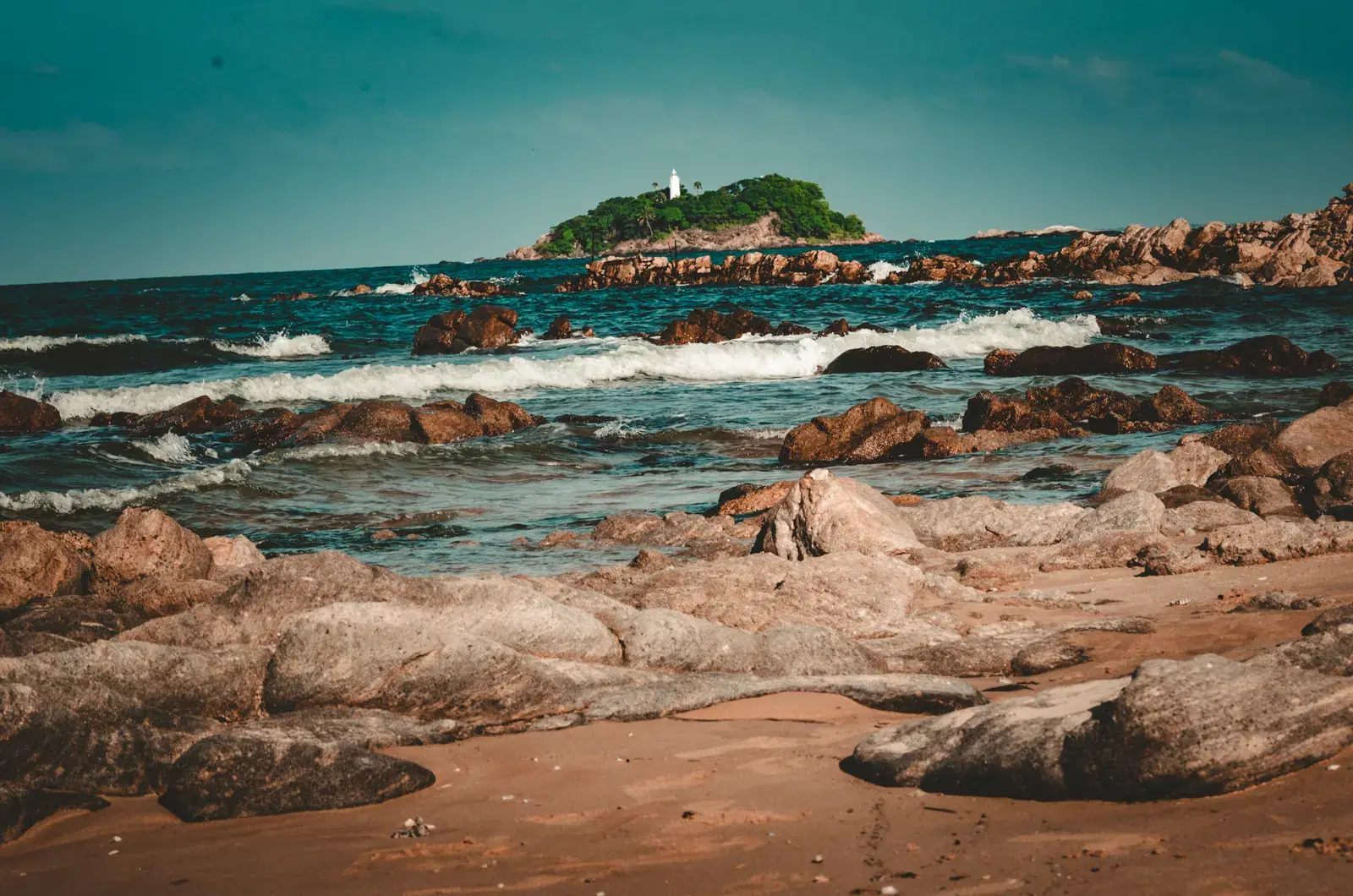
Arugam Bay
A practical Arugam Bay guide: the real May–October surf season window, named surf schools and lesson prices, Main Point and the other breaks, Kumana National Park, and honest daily budgets.
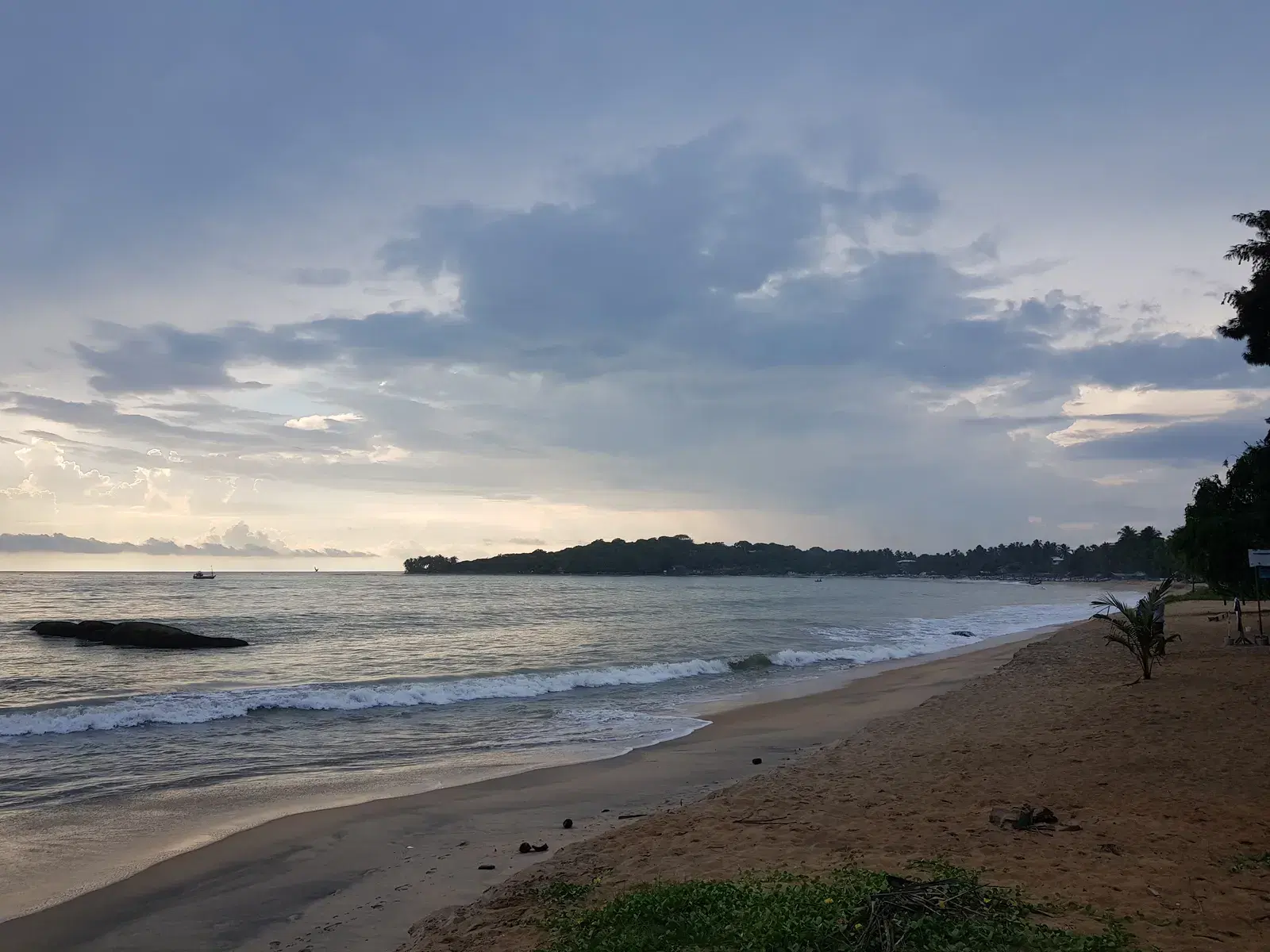
Arugam Bay is a one-season town that happens to own the calendar slot when the rest of Sri Lanka's coasts are having their worst weather. While the southwest monsoon is battering Mirissa and Unawatuna, the east coast is calm, dry, and — at Main Point — producing one of the best right-hand point breaks anywhere in the world.
It's a genuine surf town: small, laid-back, built around the swell rather than around sightseeing, with a season that runs roughly May to October and does not really work as a destination outside that window. Time your visit right and it's unmatched on the east coast; time it wrong and you'll find a quiet, slightly closed-down beach town with nothing much happening.
Surfers first found Arugam Bay in the 1970s, mostly Australians extending the era's hippie trail past Bali and Goa in search of quieter waves. Sri Lanka's civil war (1983–2009) badly interrupted that early momentum — a small stream of diehard surfers from Japan, Israel, and Europe kept coming during ceasefire windows and fleeing when fighting resumed, but the wider surf-tourism boom the break's quality deserved didn't really arrive until after the war ended. Arugam Bay and Hikkaduwa were the first two Sri Lankan surf spots to see consistent visitors again post-2009, and a 2011 World Surf League qualifying event here marked the point where the international surf world properly caught up with what local and diehard surfers had known for decades.
Why go to Arugam Bay
- Main Point is considered one of the best right-hand point breaks in the world — a long, workable wave good for intermediate surfers and genuinely exciting for advanced ones.
- It owns the May–September shoulder season: exactly when the west and south coasts are at their wettest, the east coast is calm and dry.
- A real, unpretentious surf-town atmosphere, distinct from the more polished south-coast beach towns.
- Kumana National Park nearby is a genuine, less-crowded wildlife alternative to Yala, strong for birdlife specifically.
How to get to Arugam Bay
From Ella — Private taxi
Roughly 3–4 hours by road, commonly $70–100 USD for the car — the most straightforward way to combine hill country and the east coast in one trip.
From Colombo — Train + taxi
The most economical non-driving option, though slow: roughly 7 hours combined, $95–130 USD, typically routed via the hill-country line and then a taxi for the final leg.
From Colombo / Bandaranaike Airport — Private car (direct)
A long day either way — expect 6–7 hours by road regardless of route, given Arugam Bay's position on the far east coast.
Best time to visit Arugam Bay
| Months | Rainfall | Crowds | Verdict |
|---|---|---|---|
| May – Jun | Low (east coast dry season begins) | Rising | The season opening — good waves, thinner crowds than peak, a strong choice if you want Main Point without the August rush. |
| Jul – Aug | Low | High (peak season, surf competitions) | The most consistent conditions of the year, and correspondingly the busiest — book accommodation and surf lessons ahead. |
| Sep | Low, transitioning | Medium | Still within season, generally with good waves and easing crowds — a strong late-season pick. |
| Oct | Rising toward transition | Low | The tail end of the season; conditions can still be good but grow less reliable as the month progresses. |
| Nov – Apr | High (northeast monsoon) | Very low | Outside the surf season — many businesses scale back or close. Not the right window for this specific destination. |
Things to do in Arugam Bay
Surf Main Point
A long, often hollow right-hander breaking on the south side of town, walkable from most accommodation. Genuinely one of the best point breaks in the region — intermediate surfers will get real, extended rides here, and it's crowded enough at peak times (July–August) that etiquette and patience matter.
Surf lesson (beginner)
Book with a named, established school rather than an informal beach tout — instructor quality varies a lot, and a bad first lesson can put someone off surfing for good. Whiskey Point and Baby Point are the more common beginner-friendly breaks; Main Point itself is not the place to start.
Whiskey Point and Peanut Farm
Whiskey Point (about 2km north) suits intermediate surfers and is less crowded than Main Point; Peanut Farm (about 5km south) is a quieter reef break, also intermediate-friendly. Good options if Main Point is too crowded or too advanced for where you're at.
Kumana National Park
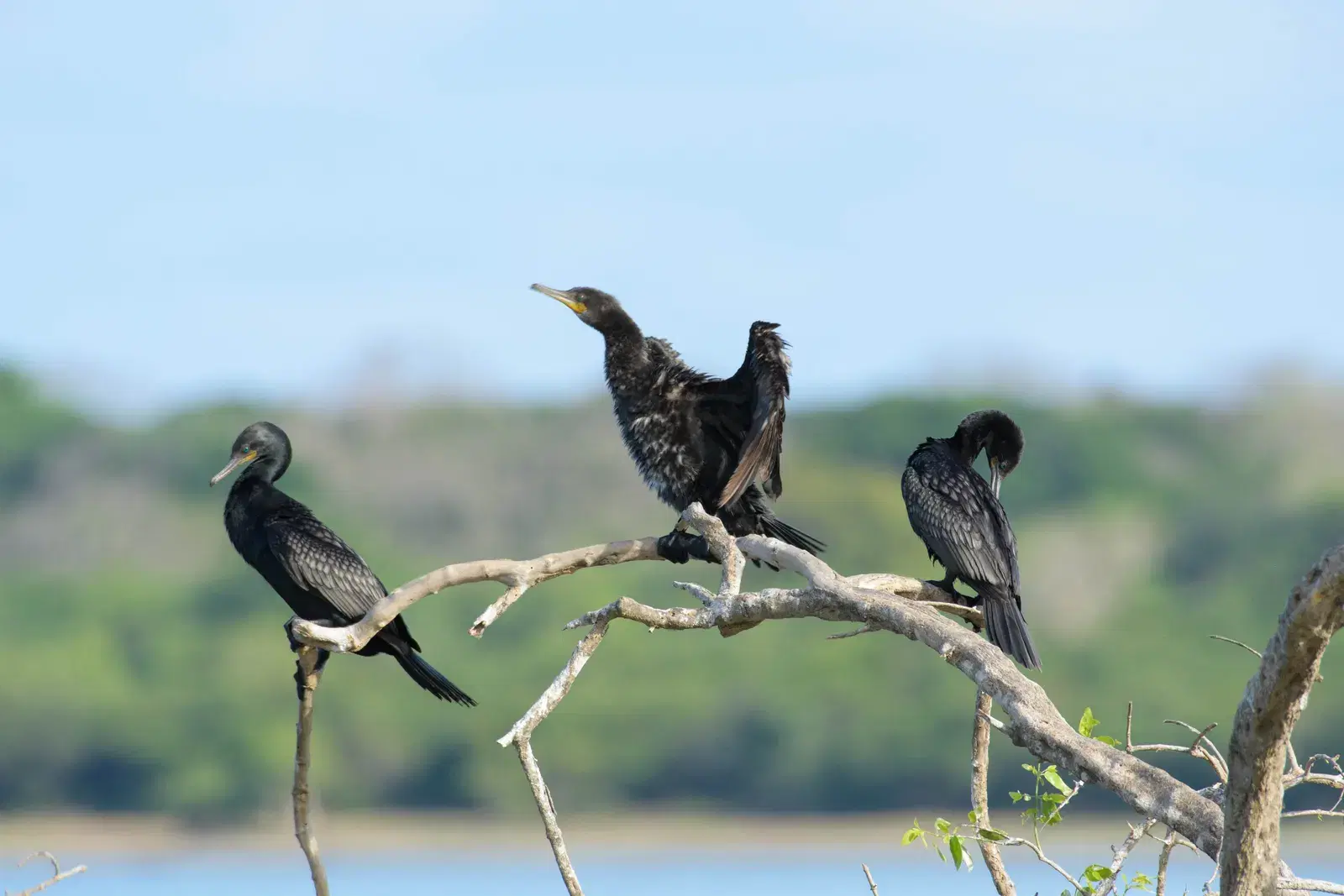
A genuine, less-crowded wildlife alternative to Yala — strong for birdlife specifically, with an estimated 30–40 elephants also present, plus deer, crocodiles, and peacocks. Stay in the vehicle around elephants (only exit if one is more than 60m away) and keep well back from the water's edge given the crocodile population. Go with an experienced local guide rather than attempting it independently.
Pottuvil Point and lagoon
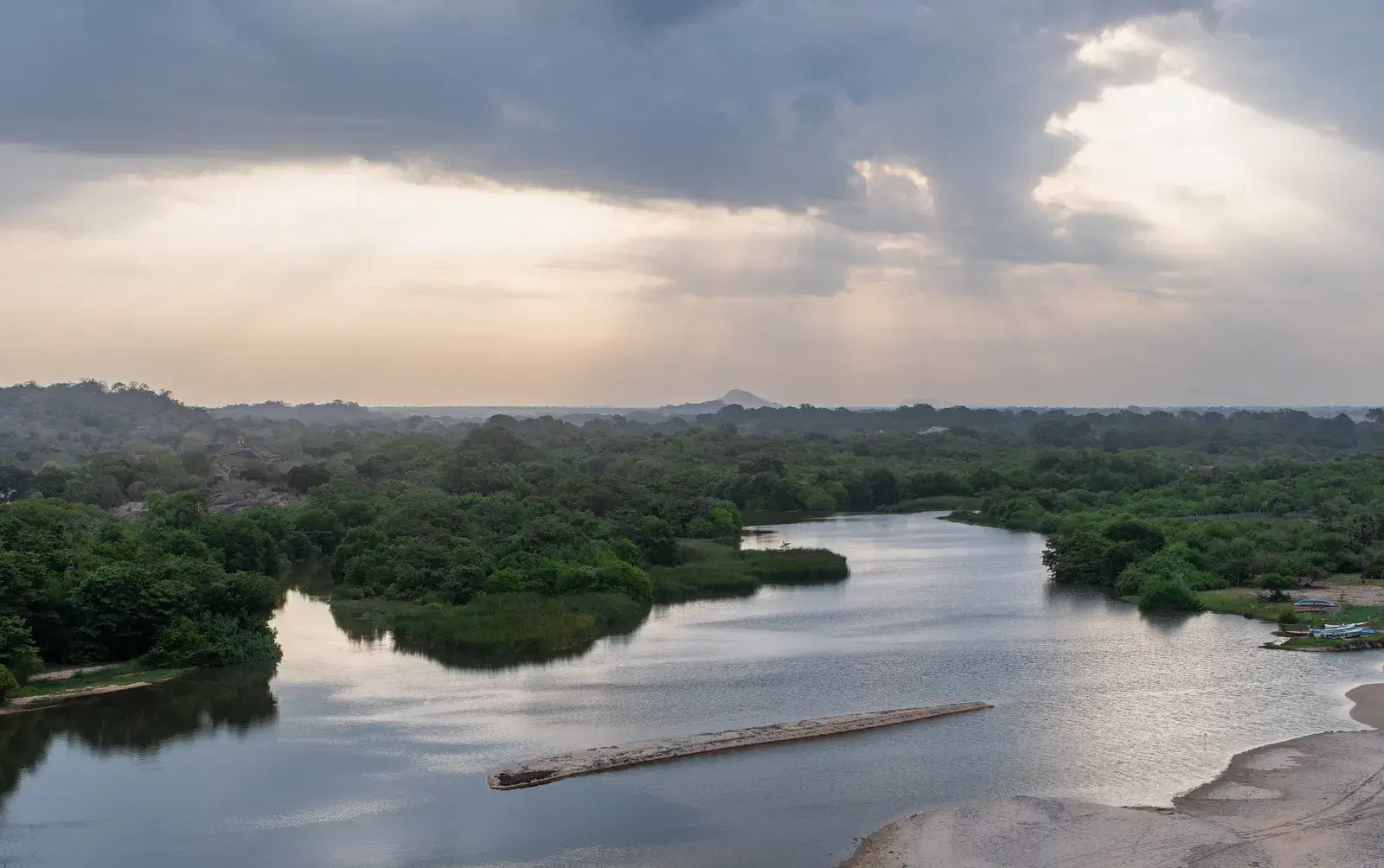
A quieter stretch north of the main surf breaks, with a lagoon worth a look if you want a slower, non-surfing activity during your stay.
Where to stay in Arugam Bay
Budget — Main strip near Main Point
- Sandy Beach Hotel — Strong reviews, private rooms from around $28, close to the main break.
Mid-range — Beach road
- Green Ocean Bay — About 100m from the beach, close to restaurants, on-site dining.
High-end — Outskirts
- Hideaway Resort — 14 well-decorated rooms, $53–155 range.
- Jetwing property in the area — A good base for both the surf breaks and Kumana National Park day trips.
Where to eat in Arugam Bay
Siam View Hotel (SVH)
Thai and Sri Lankan menu, seafood, live music most nights
~LKR 1,200–2,500
Ranga's Beach Hut
Jaffna-style set menu, communal seating
~LKR 800–1,500
Beachfront casual restaurants
Fresh seafood, rice and curry
~LKR 700–1,500
Getting around Arugam Bay
Arugam Bay's core strip is walkable — most accommodation, restaurants, and Main Point itself are within a comfortable walk of each other.
Tuk-tuks or scooter hire cover the outer breaks (Whiskey Point, Peanut Farm, Pottuvil) and Kumana National Park transfers.
Scooter hire is common here given the spread-out surf spots — roughly LKR 1,500–2,500/day — but only sensible if you're already comfortable riding on Sri Lankan roads.
What it costs — daily budget
| Tier | Per day (USD) | Per day (LKR) | Includes |
|---|---|---|---|
| Backpacker | $30–45 | ≈ LKR 9,000–13,500 | Budget guesthouse, board rental, local meals, occasional tuk-tuk. |
| Mid-range | $60–100 | ≈ LKR 18,000–30,000 | Mid-range guesthouse near the beach, restaurant meals, surf lessons, a Kumana safari. |
| Comfort | $130–250+ | ≈ LKR 39,000–75,000+ | Higher-end resort stay, private surf coaching, restaurant dining throughout, a private Kumana safari. |
Safety and scams in Arugam Bay
Arugam Bay is low-risk in the general crime sense; the real risk factors here are surf- and wildlife-related.
Main Point is a real, powerful point break — not a beginner wave. Start at Whiskey Point or with a certified school if you're new, and respect local surf etiquette in the water, especially during the crowded July–August peak.
At Kumana National Park, stay inside the vehicle around elephants and well back from water's edges given the crocodile population — go with an experienced guide rather than improvising.
The town genuinely quiets down (and some businesses close) outside the May–October surf season — don't plan a trip here in, say, January expecting the same infrastructure and atmosphere as August.
This is a more remote part of the island than the south coast, with fewer hospital and pharmacy options nearby — a reasonable travel insurance policy matters more here than in Colombo or Galle, given the combination of surfing (a genuine injury risk) and wildlife safaris.
Hidden gems near Arugam Bay
- Peanut Farm — A quieter reef break south of Main Point, good for intermediate surfers who want fewer people in the lineup.
- Pottuvil Point and lagoon — A slower, non-surfing side of the area most visitors skip entirely.
- Early season (May–June) — Good waves with noticeably thinner crowds than the July–August peak.
Suggested Arugam Bay itineraries
1 day
The essentials: Morning surf session at Main Point or Whiskey Point, afternoon rest, sunset and dinner at a beachfront restaurant.
2 days
Day 1: Surf lesson or session, afternoon at Peanut Farm or Whiskey Point.
Day 2: Morning Kumana National Park safari, afternoon recovery surf session if conditions allow.
3 days
Day 1: Surf lesson or first session at Main Point.
Day 2: Kumana National Park morning safari.
Day 3: A full surf day across Main Point, Whiskey Point, or Peanut Farm depending on conditions.
Where to go next from Arugam Bay

Arugam Bay FAQ
When is Arugam Bay's surf season?
Roughly May to October, with June–September as the peak window and July–August the most consistent (and busiest) months. Outside this window, conditions and town infrastructure both wind down significantly.
Is Main Point suitable for beginners?
No — it's a real, powerful point break better suited to intermediate and advanced surfers. Beginners should start at Whiskey Point or Baby Point, ideally with a certified instructor.
How much does a surf lesson cost?
Roughly $15–40 USD for a 1.5–2 hour lesson including board and rash guard, from a named, established school rather than an informal beach tout.
How do I get to Arugam Bay from Ella?
A private taxi takes roughly 3–4 hours and commonly costs $70–100 USD for the car.
Is Kumana National Park worth visiting instead of Yala?
It's a strong complementary choice — genuinely less crowded, particularly good for birdlife, with a smaller but real elephant population. It's not a direct leopard-safari substitute for Yala, but a worthwhile addition if you're already on the east coast.
How many days do I need in Arugam Bay?
Surfers often stay a week or more to make the most of the swell. As a shorter add-on to a broader itinerary, two to three days gives you at least one or two solid sessions plus a Kumana safari.
Do I need to bring my own surfboard?
No — board rental is cheap and widely available (roughly LKR 1,500–2,500/day), and most travelers rent locally rather than flying with a board.
Is Arugam Bay worth visiting outside surf season?
Generally no, as a standalone destination — many businesses scale back or close during the November–April northeast monsoon, and the town's whole rhythm is built around the May–October swell.
Is Arugam Bay suitable for non-surfers?
Yes, though it's genuinely built around the surf crowd. Kumana National Park, the lagoon, and the beach itself work fine for a non-surfing traveler, but expect the town's restaurants, bars, and general atmosphere to skew heavily toward the surf community, especially in peak season.
How crowded does Main Point get in peak season?
Genuinely crowded in July–August, with a busy lineup at popular tide and swell windows. Early morning sessions and the shoulder months (May–June, September) are noticeably calmer.
Is there an ATM in Arugam Bay?
Yes, though options are more limited than in larger towns — carry more cash than you think you'll need for a multi-day stay, since not every guesthouse or restaurant accepts cards.