
Dambulla
A practical Dambulla guide: current cave temple entrance fees and hours, what's actually inside the five caves, Popham's Arboretum, where to stay and eat, and honest daily budgets.
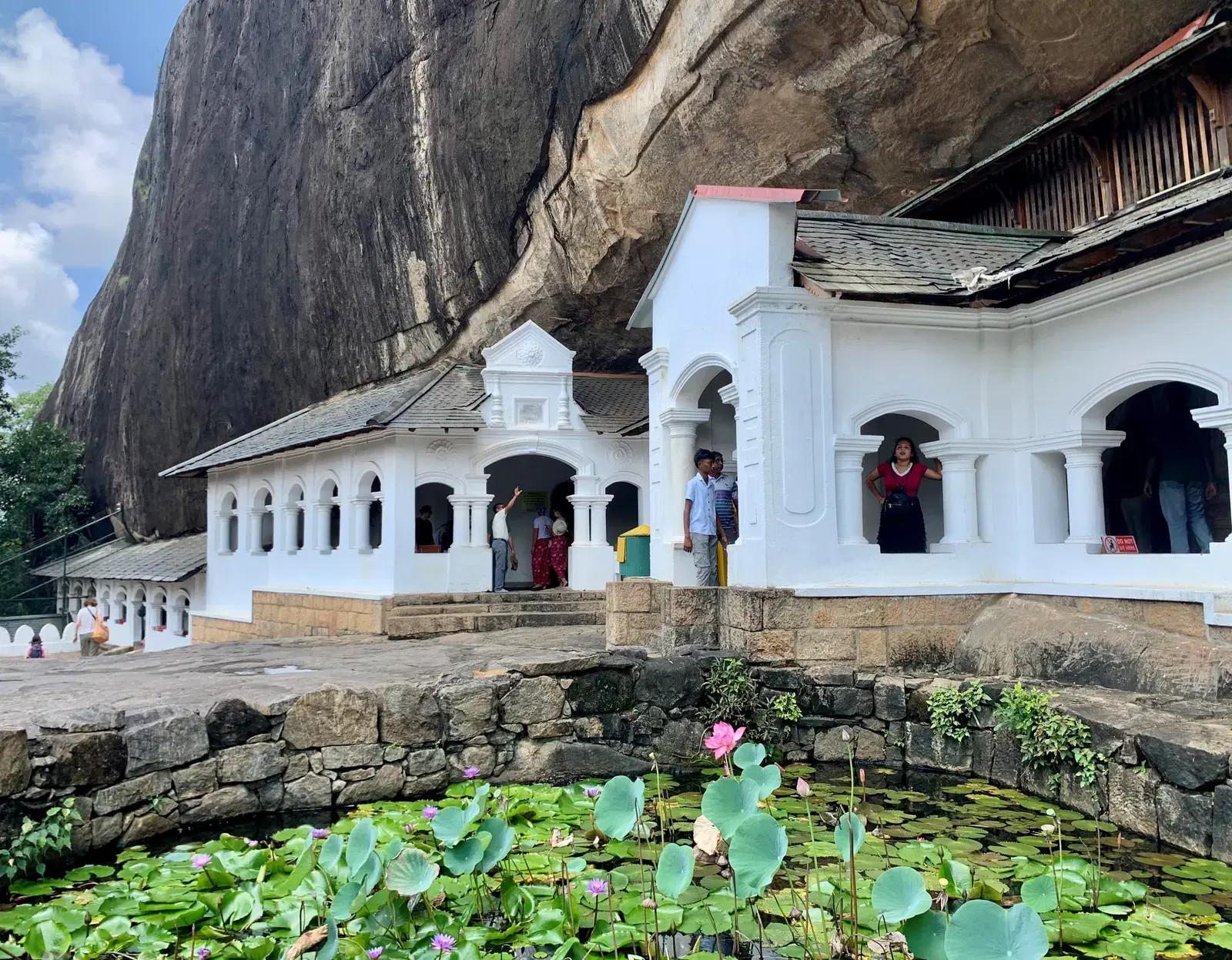
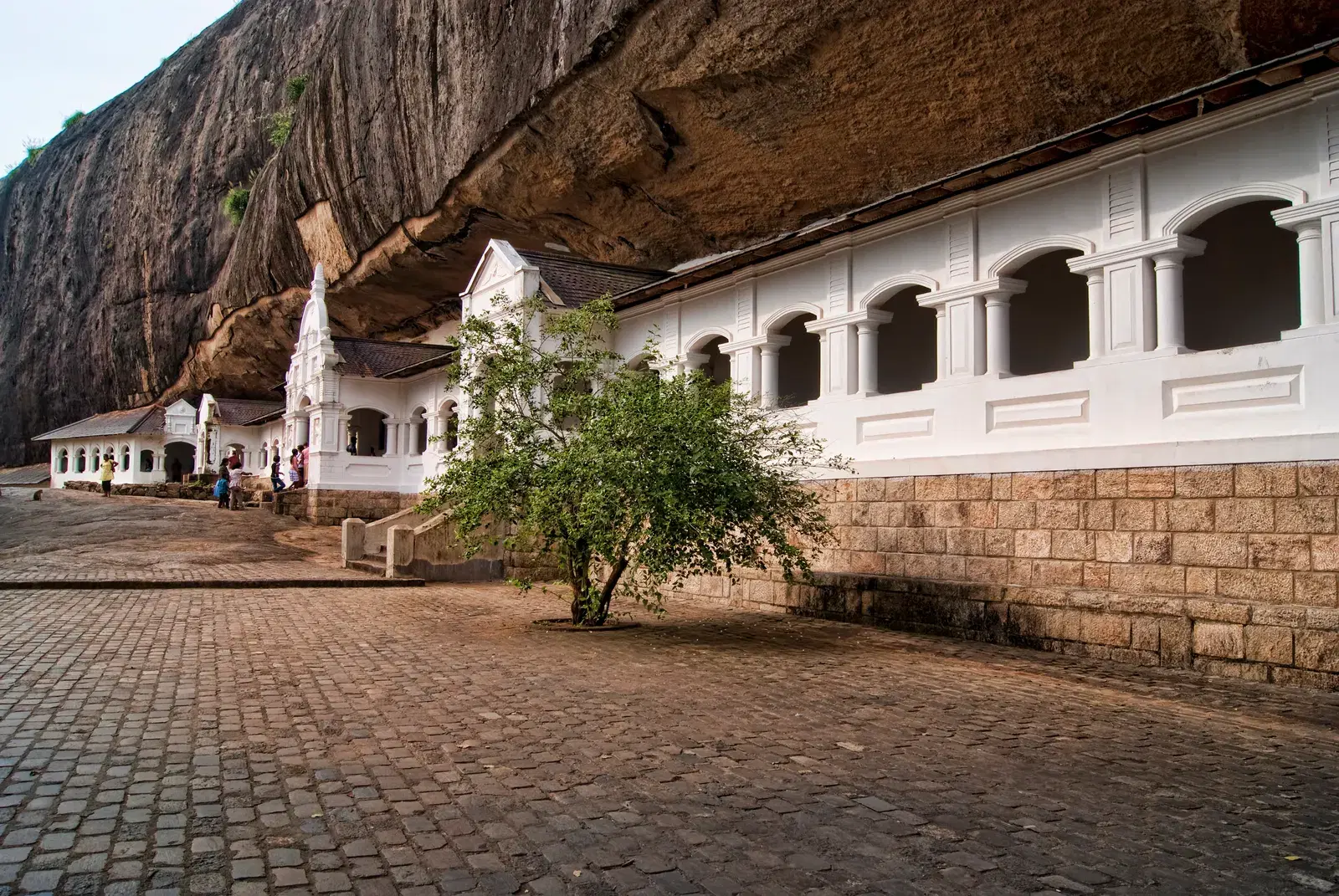
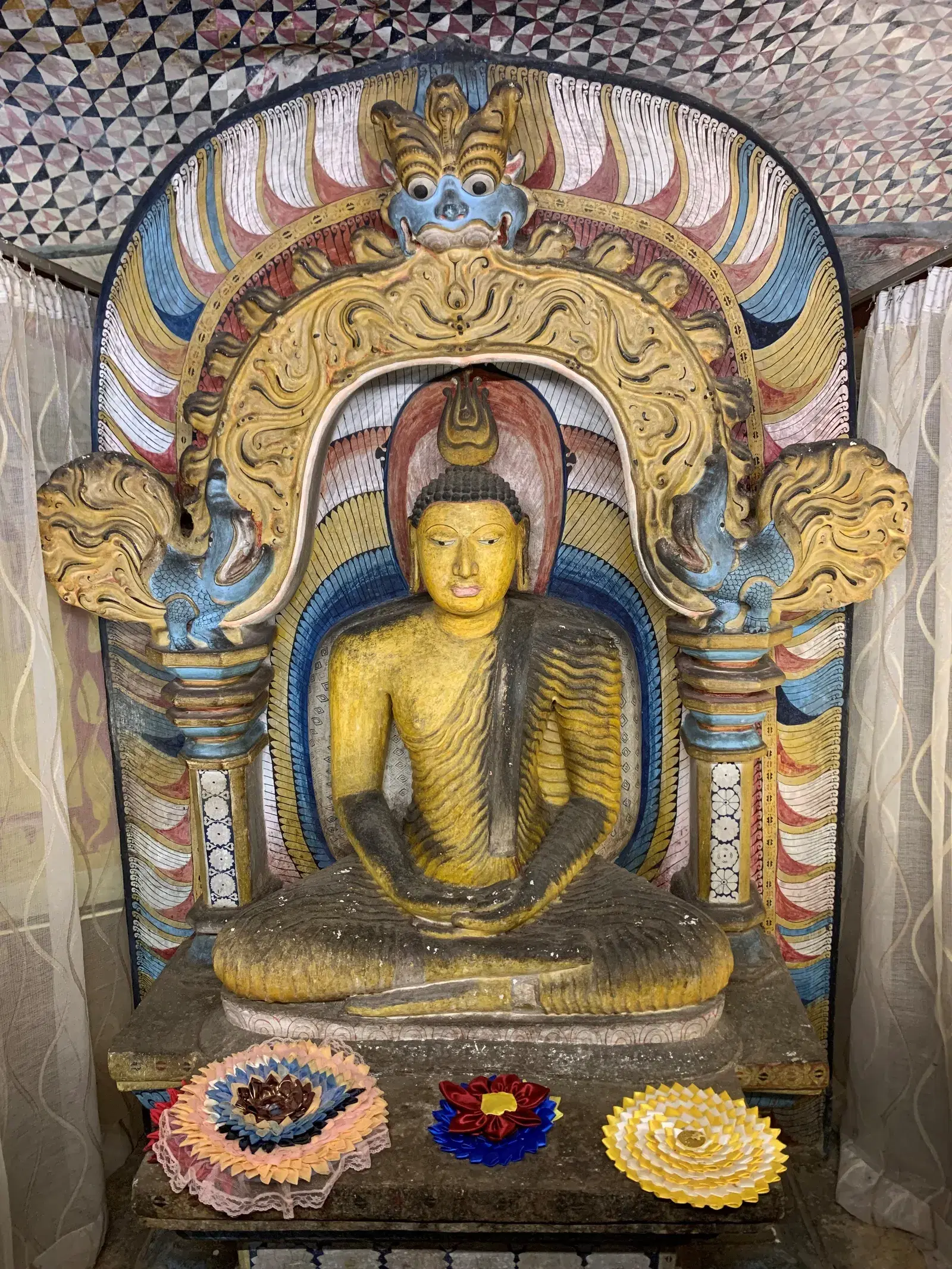
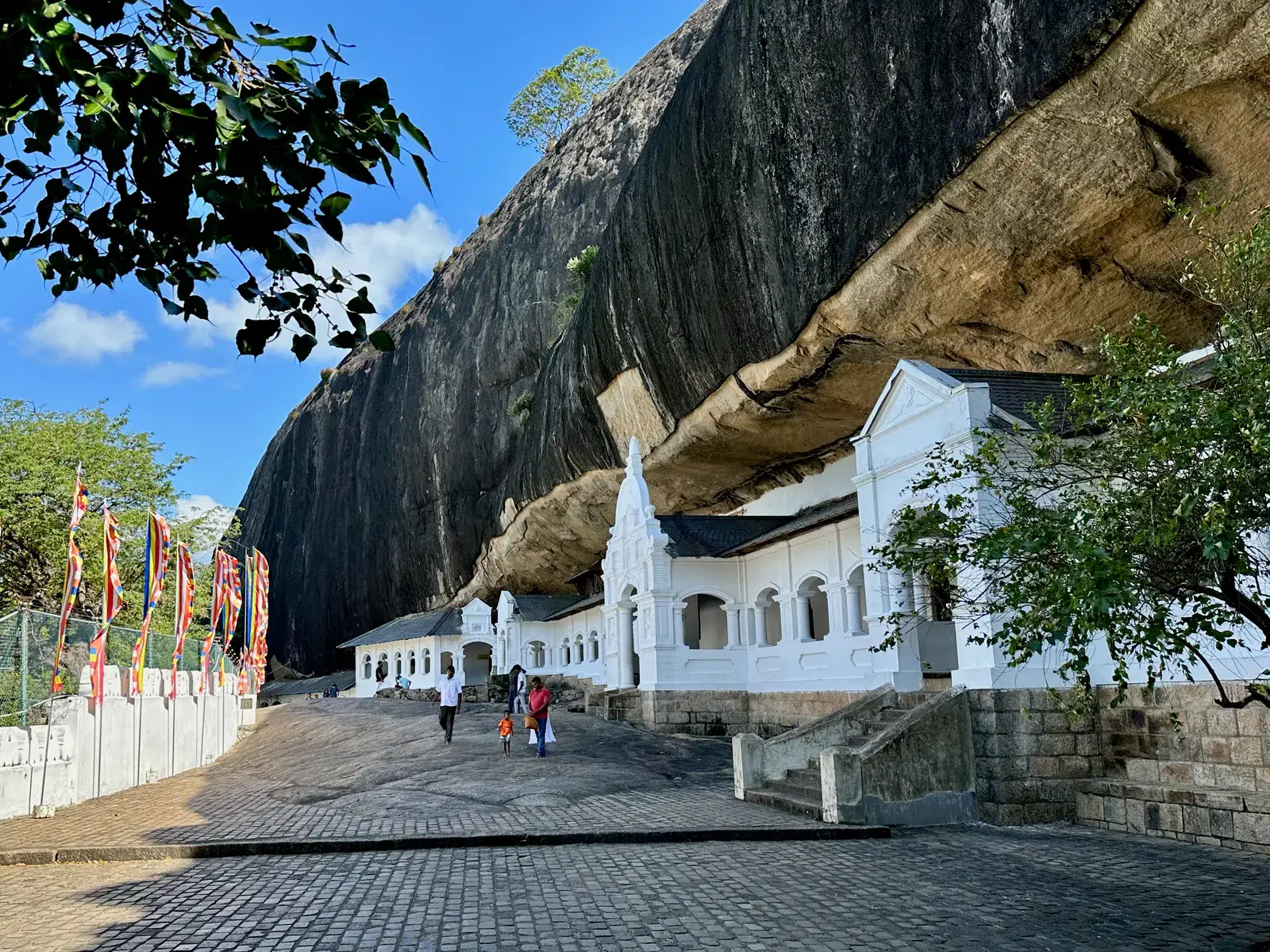
Dambulla is the cave temple most people drive past on the way to Sigiriya, which undersells it — this is the largest and best-preserved cave temple complex in Sri Lanka, five caves cut into a granite outcrop 160 metres above the surrounding plain, holding roughly 150 Buddha statues and ceilings entirely covered in painted murals rather than bare rock. It's also 2,000-plus years older than the story most visitors know it for.
The short version of that history: in the 1st century BCE, King Valagamba (also written Vattagamani Abhaya) took refuge in these caves for 14 years after being driven from the throne of Anuradhapura by South Indian invaders. When he retook power, he had the caves converted into a rock temple in gratitude — a monastic site that Sri Lankan kings kept adding to, cave by cave and mural by mural, for the next two thousand years.
The practical reality of visiting is a genuine climb in real heat, a wholesale fruit market next door that most tourists never notice, and a much cheaper, much less crowded arboretum a short drive away that almost nobody on a Sigiriya day trip bothers with. Pair it properly and you get more than the 45-minute photo stop most itineraries reduce it to.
Why go to Dambulla
- This is the largest and best-preserved cave temple complex in the country — five caves, around 150 Buddha statues, and ceilings entirely covered in centuries-old murals rather than the occasional painted panel.
- It's a genuine two-thousand-year-old pilgrimage site with a real founding story (a king hiding from invaders), not a reconstruction.
- It sits only 16km from Sigiriya, making it the natural pairing for a single Cultural Triangle day rather than a separate detour.
- Popham's Arboretum nearby is a legitimately interesting, almost entirely overlooked stop for anyone who wants a quieter counterpoint to the cave-temple crowds.
How to get to Dambulla
From Sigiriya — Tuk-tuk or local bus
About 16km, roughly 30 minutes. A tuk-tuk runs approximately LKR 1,000 (~$3); local buses via Inamaluwa Junction cost around LKR 50–100 and run roughly hourly. This is the standard pairing — most Cultural Triangle itineraries do both in one day.
From Kandy — Bus or private car
About 72km, roughly 2–3 hours by bus with a change, or under 2 hours by private car on a more direct route. Buses run regularly along this corridor since it's a major inter-town route, not a niche one.
From Colombo / Bandaranaike Airport — Private car or bus
About 148–150km. A private car takes roughly 3–3.5 hours via the expressway and A6; buses take longer, generally 4–5 hours with at least one change. There's no direct train to Dambulla — the nearest useful station is Habarana, a similar distance out as it is from Sigiriya.
From Anuradhapura — Bus or private car
About 70km, roughly 1.5–2 hours by road. A reasonable link if you're doing a wider Cultural Triangle loop that includes the ancient capitals.
Best time to visit Dambulla
| Months | Rainfall | Crowds | Verdict |
|---|---|---|---|
| Jan – Mar | Low | High (peak season) | Reliable dry weather for the climb, but also the busiest stretch — arrive at opening or late afternoon to avoid the worst of the heat and the crowds together. |
| Apr | Rising | High (local New Year) | Hot and busy with domestic travelers; go early. |
| May – Sep | Moderate, less monsoon exposure than the coasts | Medium | A reasonable shoulder season — the real limiting factor here is midday heat on exposed stone steps, which doesn't change much by month. |
| Oct – Dec | Rising toward the northeast monsoon | Low–Medium | Afternoon showers become more common; the stone steps get slippery when wet, so a morning visit is the safer bet in this window. |
Things to do in Dambulla
Climb to the Dambulla Cave Temple
Buy your ticket at the counter near the car park before starting the climb — the walk up is a genuinely steep set of stairs, roughly 10–15 minutes, and you don't want to discover you need to go back down for a ticket. The five caves increase in size and significance as you go, packed with reclining, seated, and standing Buddha statues under ceilings painted edge to edge — this is the real draw over Cave 1, which is smaller and often used as a warm-up by tour groups rushing to the bigger halls beyond it.
Cave 2 (Maharaja Vihara)
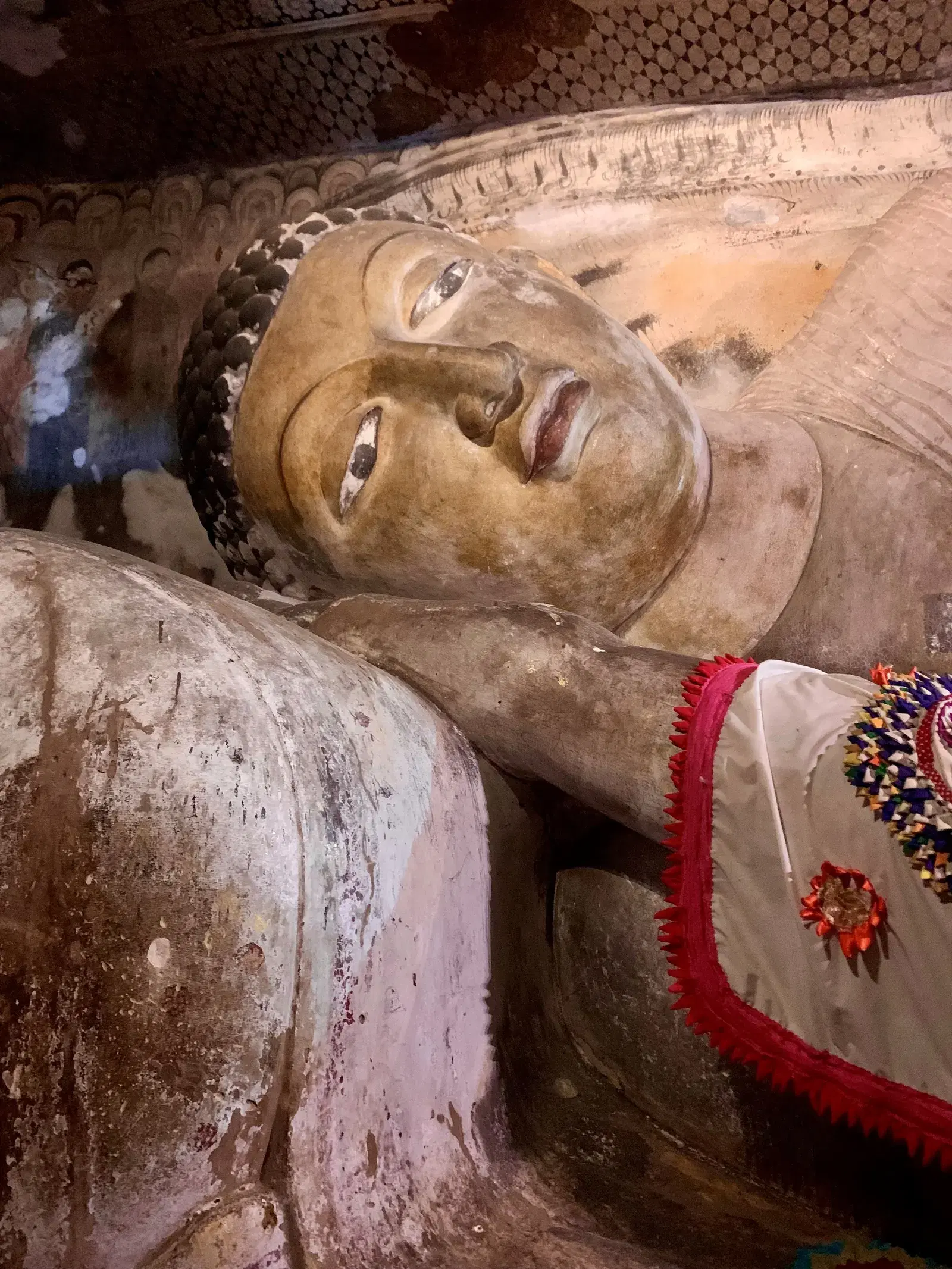
The largest and most important of the five caves, holding the majority of the site's statues and mural work, including scenes from the Buddha's life and Sri Lankan royal history painted across the entire ceiling. If you only have patience for one cave beyond a quick walkthrough, make it this one.
The Golden Temple at the base
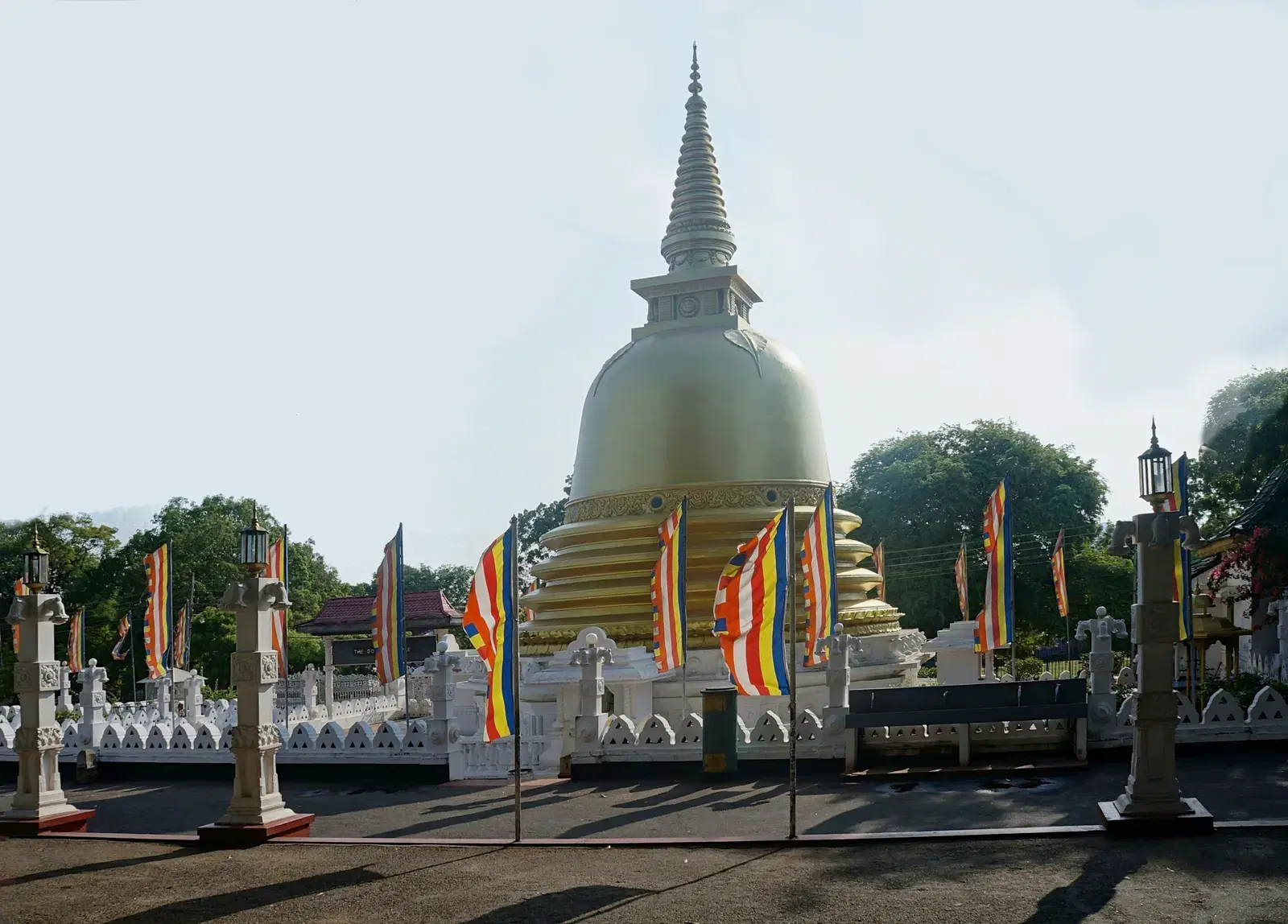
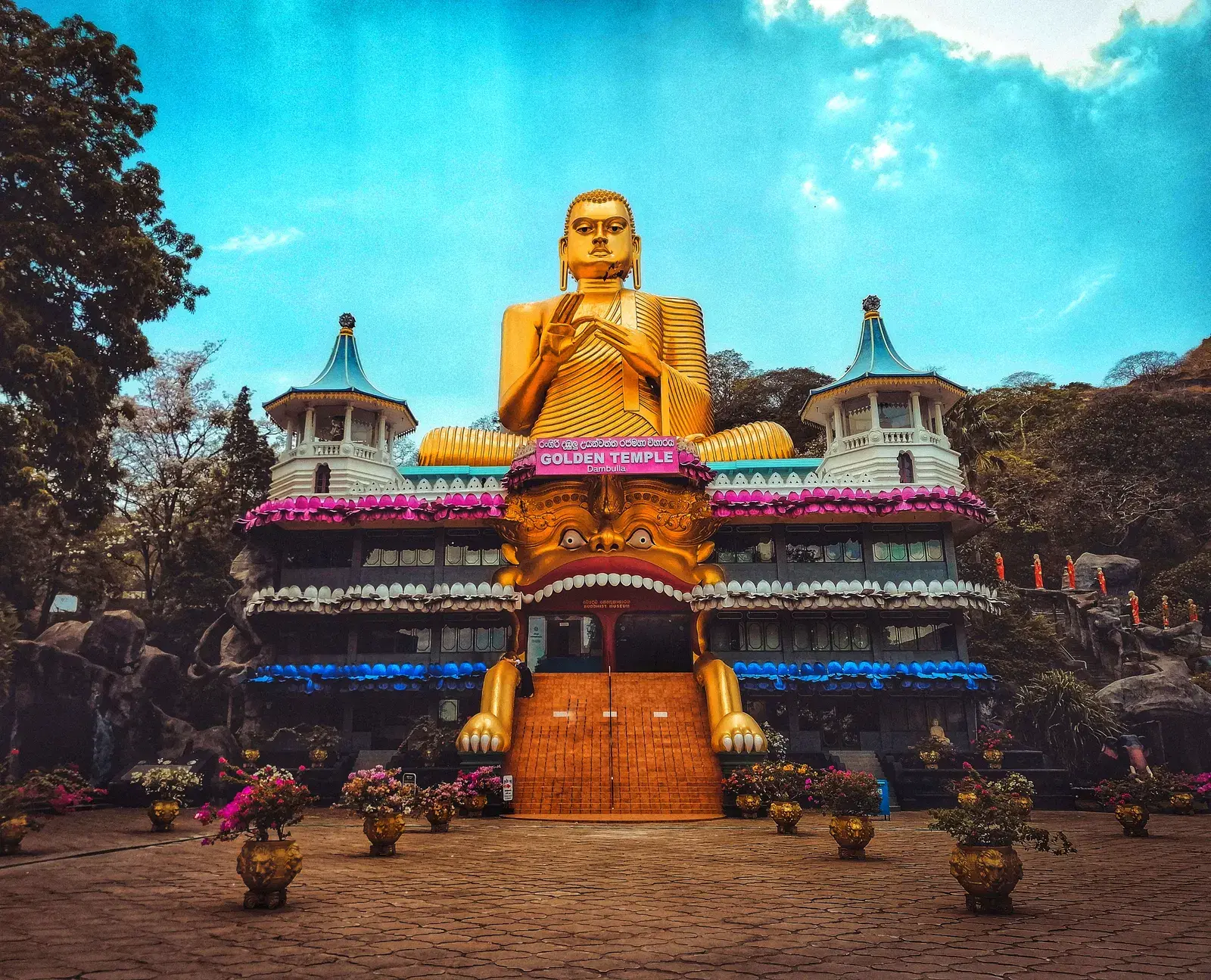
A modern addition at the foot of the rock, topped with a large golden seated Buddha statue that's become the site's most-photographed single image from the road below. There's a small museum here too. It's not historic — it dates from the 2000s — but it's free, air-conditioned in parts, and a reasonable spot to cool off before or after the climb.
View from the cave terrace
The terrace outside the caves gives a genuinely wide view over the surrounding plain, with Sigiriya's rock visible on the horizon on a clear day — a good five minutes of context for where you are in the Cultural Triangle before heading back down.
Popham's Arboretum
Sri Lanka's only dry-zone arboretum, established in 1963 by British planter Sam Popham on a patch of degraded scrubland to demonstrate that dry-zone forest could regenerate if managed correctly rather than cleared. It's now a genuinely mature forest with marked trails, and it runs night walks aimed at spotting the slender loris — a small, wide-eyed nocturnal primate that's much harder to see almost anywhere else. Almost nobody doing a Sigiriya day trip stops here, which is exactly the point.
Dambulla Dedicated Economic Centre (wholesale market)
The largest wholesale fruit and vegetable market in Sri Lanka, about 1km from the Golden Temple — two enormous halls of produce, trucks being loaded and unloaded, and zero tourist infrastructure of any kind. This is not a sight built for visitors, which is exactly why it's worth the short detour if you're an early riser: it's the single most honest look at how the country's produce actually moves, and it costs nothing to walk through.
Ibbankatuwa Megalithic Burial Site
A prehistoric cemetery roughly 5km southwest of town, dating to around 700–400 BCE — stone-lined graves, pottery, and iron tools that predate everything else on a typical Cultural Triangle itinerary by well over a thousand years. It's a niche stop, poorly signposted, and worth it specifically for travelers who want context on Sri Lanka before the Buddhist kingdoms rather than during them.
Rangiri Dambulla International Cricket Stadium
A genuine local point of pride — built in just 167 days in 2000 to bring international cricket to the Cultural Triangle, an unusual feat that locals will mention unprompted. Not worth a special trip unless a match happens to be on, but worth a glance if you're driving past.
Where to stay in Dambulla
Budget — Dambulla town
- Menara Green Inn — Simple, well-reviewed rooms from around $10–15/night — the standout budget pick in town.
Mid-range — Habarana / Dambulla outskirts
- Habarana Cinnamon Resort — A resort-style stay with a strong breakfast buffet, priced well below its actual feel; a short drive from both Dambulla and Sigiriya.
High-end — Kandalama / countryside
- Heritance Kandalama — A Geoffrey Bawa-designed hotel built directly into a rock face above Kandalama reservoir — genuinely one of the most architecturally significant hotels in Sri Lanka, not just a nice place to sleep.
- Jetwing Lake — Lake-facing rooms with a spa and pool, a comfortable base for both Dambulla and Sigiriya.
Where to eat in Dambulla
Golden Rainbow Restaurant
Rice and curry, located right next to the cave temple entrance
~LKR 800–1,400
Heritage Dambulla
Sri Lankan fish and vegetable curry with rice
~LKR 1,000–1,800
Golden Palace Restaurant
Rice and curry with a wide selection of dishes, large portions
~LKR 900–1,500
Rithu Restaurant
Family-run rice and curry
~LKR 700–1,200
Getting around Dambulla
Dambulla town itself is small and walkable, but the cave temple, the arboretum, and the economic centre are spread out enough that you'll want a tuk-tuk between them.
Tuk-tuks are the default way to reach the cave temple car park from most accommodation; agree the fare before getting in, as meters are rarely used here.
If you're combining Dambulla with Sigiriya in one day, it's usually cheaper to hire a tuk-tuk or driver for the half-day than to arrange separate one-way trips.
What it costs — daily budget
| Tier | Per day (USD) | Per day (LKR) | Includes |
|---|---|---|---|
| Backpacker | $25–35 | ≈ LKR 7,500–10,500 | Budget guesthouse, local meals, the cave temple ticket, short tuk-tuk hops. |
| Mid-range | $50–85 | ≈ LKR 15,000–25,500 | Resort-style mid-range stay, restaurant meals, cave temple plus one extra stop (arboretum or Ibbankatuwa), a half-day tuk-tuk hire. |
| Comfort | $140–280+ | ≈ LKR 42,000–84,000+ | A stay at an architecturally significant property like Heritance Kandalama, private driver for the day, all major site tickets. |
Safety and scams in Dambulla
Dambulla is low-risk in the usual crime sense — the real hazards here are heat and footing, not people.
The stone steps up to the caves get slippery when wet and are exposed to full sun with little shade; carry water and avoid the climb during the hottest midday hours if you can help it.
As at any Sri Lankan Buddhist site, dress modestly (shoulders and knees covered) and remove your shoes before entering the caves — bring a bag if you'd rather carry them than pay the storage fee.
Macaque monkeys are present around the site as they are at most Sri Lankan temple complexes; don't feed them and keep food out of sight rather than in an open bag.
Ticket touts near the car park sometimes imply a guide is required — one isn't, and any legitimate ticket comes only from the official counter.
Hidden gems near Dambulla
- Popham's Arboretum — A mature, quiet dry-zone forest almost nobody visits, with a real shot at spotting a slender loris on the night walk.
- Dambulla Dedicated Economic Centre — The country's largest wholesale produce market, with zero tourist infrastructure — go at dawn for the real thing.
- Ibbankatuwa Megalithic Burial Site — A 2,500-year-old cemetery most Cultural Triangle visitors have never heard of, let alone visited.
Suggested Dambulla itineraries
1 day (paired with Sigiriya)
The essentials: Cave temple in the early morning or late afternoon (avoid midday heat), Golden Temple at the base, then on to Sigiriya or back to your base.
2 days
Day 1: Cave temple in the morning, Golden Temple, afternoon rest through the heat.
Day 2: Early visit to the economic centre at dawn, Popham's Arboretum mid-morning, Ibbankatuwa in the afternoon if time allows.
3 days (Cultural Triangle base)
Day 1: Cave temple and Golden Temple.
Day 2: Day trip to Sigiriya (16km) for the rock fortress and Pidurangala.
Day 3: Popham's Arboretum, Ibbankatuwa Megalithic Burial Site, and a slower final afternoon.
Where to go next from Dambulla
Dambulla FAQ
How much does it cost to visit Dambulla Cave Temple?
LKR 2,000 (~$7) for foreign adults, with SAARC nationals paying roughly half that. A small shoe-storage fee applies separately at the base if you don't want to carry your shoes yourself.
How long does the Dambulla Cave Temple visit take?
Budget 45–75 minutes for the climb and all five caves, more if you linger over the murals in Cave 2, the largest and most significant of the five.
Is Dambulla worth visiting if I'm already going to Sigiriya?
Yes — the two are only 16km apart and most itineraries pair them in a single day. Dambulla's caves and murals are a genuinely different kind of sight from Sigiriya's engineering and frescoes, not a repeat of the same experience.
What should I wear to Dambulla Cave Temple?
Modest dress covering shoulders and knees, and be ready to remove your shoes before entering the caves — bring a bag if you'd rather carry them than pay the small storage fee.
Is the climb to Dambulla Cave Temple difficult?
It's a genuine set of stone stairs, roughly 10–15 minutes up, steep enough to notice in the heat but with no technical difficulty. It's exposed to full sun for most of the way, so timing and water matter more than fitness.
How do I get from Dambulla to Sigiriya?
About 16km, roughly 30 minutes by tuk-tuk (around LKR 1,000) or local bus via Inamaluwa Junction. This is the standard day-trip pairing for most Cultural Triangle itineraries.
Is there anything to do in Dambulla besides the cave temple?
Yes — Popham's Arboretum for a quiet dry-zone forest walk, the Dambulla Dedicated Economic Centre (the country's largest wholesale produce market) at dawn, and the Ibbankatuwa Megalithic Burial Site for a much older layer of history most visitors skip entirely.
How many Buddha statues are inside the Dambulla caves?
Around 150, spread across the five caves, alongside ceilings almost entirely covered in painted murals — one of the most complete collections of religious cave art anywhere in Sri Lanka.