
Anuradhapura
A practical Anuradhapura guide: current Sacred City entrance fees, the sites that ticket actually covers, cycling the ruins, the world's oldest documented tree, where to stay, and honest daily budgets.
Anuradhapura was Sri Lanka's first great capital, continuously occupied for well over a thousand years starting around the 4th century BCE, and it's the site where the scale of the country's ancient engineering actually lands — not a single ruin but an entire spread-out city of dagobas, monasteries, reservoirs, and bathing ponds, several of which rank among the largest brick structures ever built anywhere in the ancient world.
It's also, unlike Sigiriya, a place you tour by bicycle rather than on foot, because the sites are genuinely kilometres apart across what is now a mix of sacred precinct and ordinary working town. That changes the whole rhythm of a visit: less a single ticketed climb, more a half-day ride between monuments with a real town's traffic and heat to contend with along the way.
The single fact worth knowing before anything else: the Sri Maha Bodhi tree at the heart of the Sacred City was planted in the 3rd century BCE from a cutting of the tree the Buddha is said to have attained enlightenment under, and it's widely cited as the oldest human-planted tree in the world with a continuously documented planting date. Whatever else you see here, that tree alone is worth the trip.
Why go to Anuradhapura
- It's Sri Lanka's first capital and one of the great ancient Buddhist cities anywhere in Asia, not a single monument but a whole spread-out sacred city.
- Jetavanaramaya was, at 122 metres, the tallest stupa in the ancient world when it was built and the third-tallest structure on Earth at the time, after only the two great pyramids of Giza.
- The Sri Maha Bodhi tree is widely cited as the oldest continuously documented, human-planted tree in the world — a genuinely unique thing to stand in front of.
- Exploring it by bicycle among monks, pilgrims, and local families rather than tour buses gives it a working, lived-in atmosphere that Sigiriya's single-file summit queue doesn't have.
How to get to Anuradhapura
From Dambulla — Bus or private car
About 70km, roughly 1.5–2 hours by road. The most common way in if you're doing a wider Cultural Triangle loop that also takes in Sigiriya and Polonnaruwa.
From Colombo Fort — Train
About 165km, roughly 3.5–4.5 hours depending on the service. This is a genuinely long train day, but it's a comfortable and scenic way to arrive without driving.
From Colombo / Bandaranaike Airport — Private car or bus
About 165–200km depending on route. A private car takes roughly 4–4.5 hours; buses take longer and often require a change. Most travelers break this journey up via Kurunegala or combine it with Dambulla and Sigiriya rather than doing it in one push.
From Polonnaruwa — Bus or private car
About 100km, roughly 2 hours by road via Habarana. The natural pairing if you're covering both ancient capitals of the Cultural Triangle on one trip.
Best time to visit Anuradhapura
| Months | Rainfall | Crowds | Verdict |
|---|---|---|---|
| Jan – Mar | Low | High (peak season) | Reliable dry weather for a full day of cycling between sites — also the busiest and hottest-feeling stretch given the sun exposure. |
| Apr | Rising | High (local New Year) | Busy with domestic pilgrims and travelers around the holiday; expect the Sacred City to feel genuinely full. |
| May – Sep | Moderate, drier than the wet-zone coasts | Medium | A reasonable shoulder season — this is a dry-zone city, so heat rather than rain is the year-round limiting factor on a cycling day. |
| Oct – Dec | Rising toward the northeast monsoon | Low | Afternoon showers become more common; a morning start avoids most of the risk and the worst of the heat together. |
Things to do in Anuradhapura
Sri Maha Bodhi tree
A fig tree grown from a cutting of the original Bodhi tree in Bodh Gaya, brought to Sri Lanka in the 3rd century BCE and planted here — it's commonly cited as the oldest tree in the world with a continuously documented planting date. It's a genuinely moving, low-key site: a working shrine surrounded by golden railings, not a museum piece. Go early morning if you want it before the pilgrim crowds build.
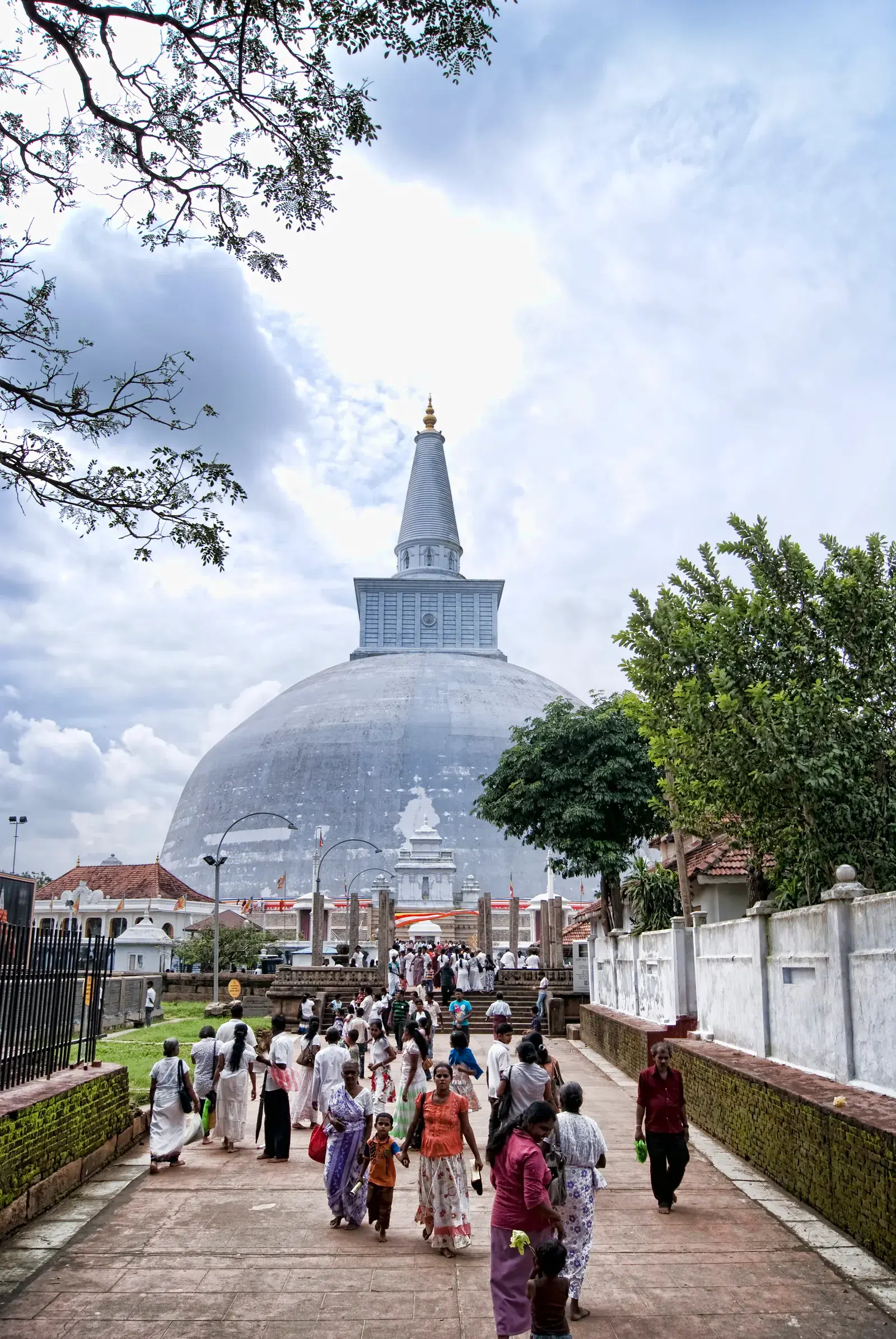
Ruwanwelisaya
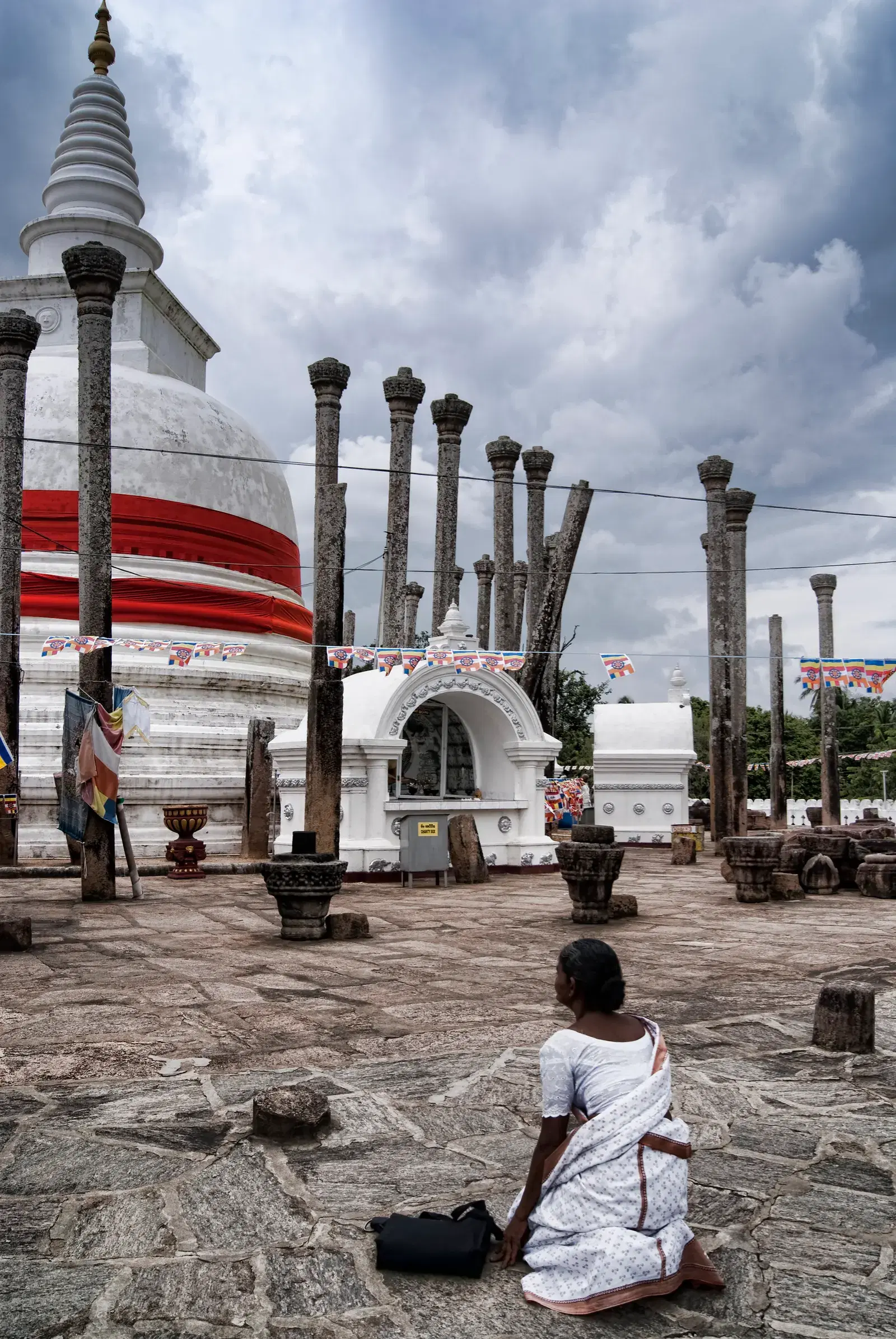
A vast white-domed dagoba, one of the largest stupas in Sri Lanka, built by King Dutugemunu in the 2nd century BCE and still an active place of worship today — you'll see monks and pilgrims circling it barefoot at any hour. The scale is the point here; walk the full circumference rather than viewing it from one angle.
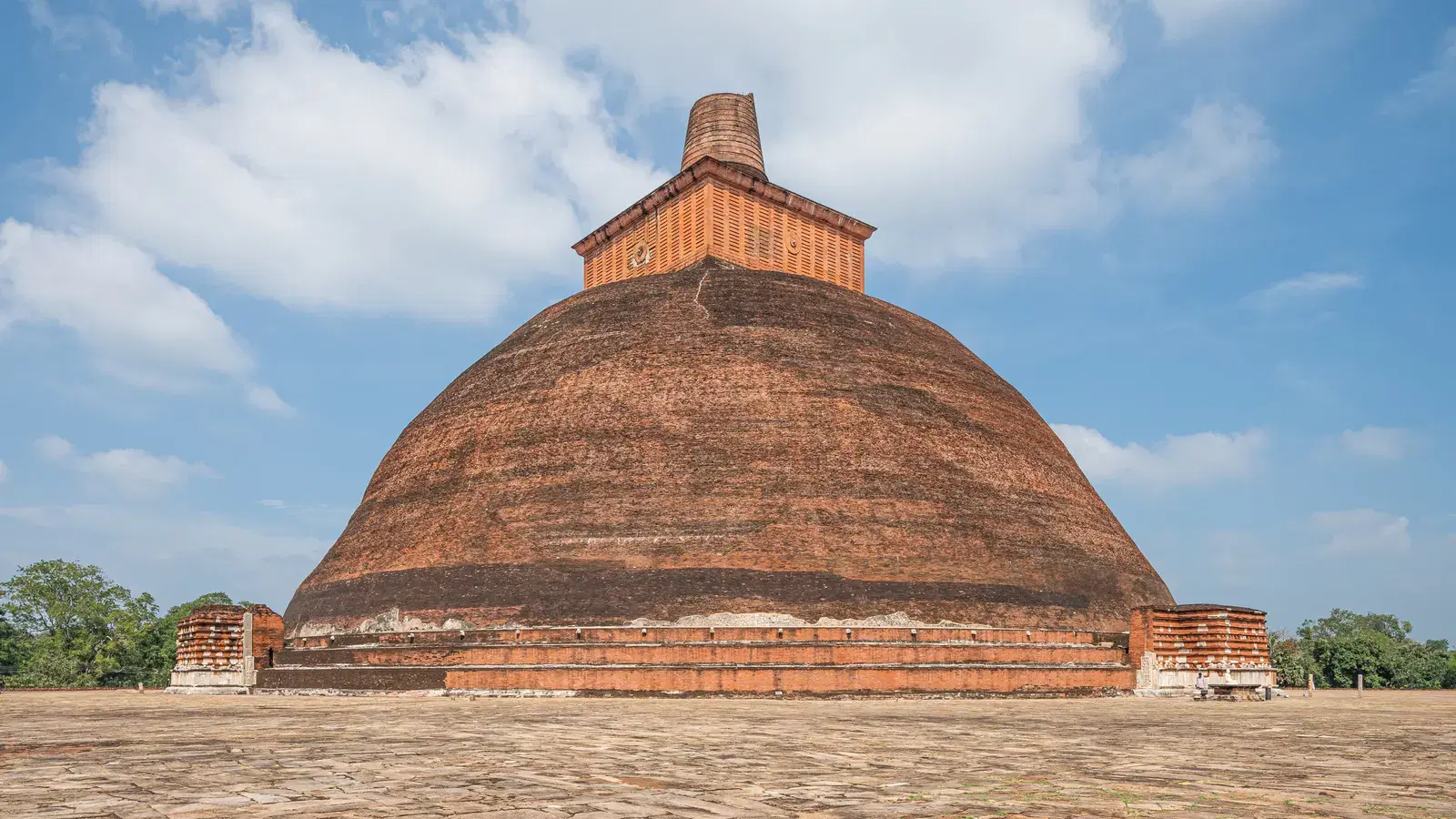
Jetavanaramaya
Built in the 3rd century CE by King Mahasena, this brick stupa originally stood 122 metres tall — the tallest stupa in the ancient world and, at the time, the third-tallest structure on the planet after the two great pyramids of Giza. Even at its current, partially eroded height of around 70 metres, the sheer volume of brick involved (reportedly enough to build a wall from London to Edinburgh, according to a commonly cited estimate) is hard to grasp standing next to it.
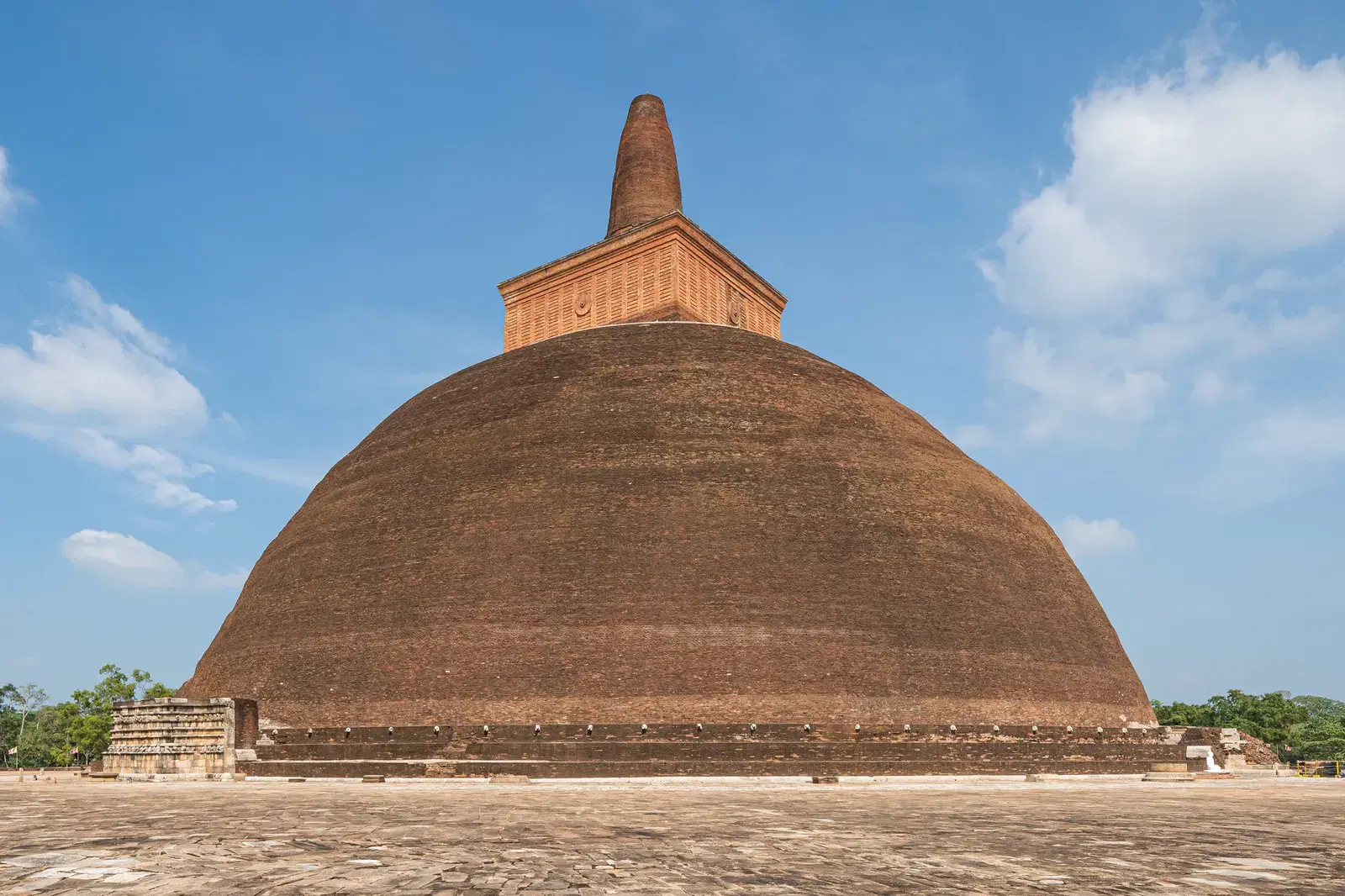
Abhayagiri Dagoba and monastery complex
A second enormous stupa complex, historically home to a monastic university that once housed thousands of monks and drew scholars from across Asia. The surrounding grounds — bathing ponds, carved guard stones, and moonstones at the entrances — reward slower exploration by bike rather than a single stop at the dagoba itself.
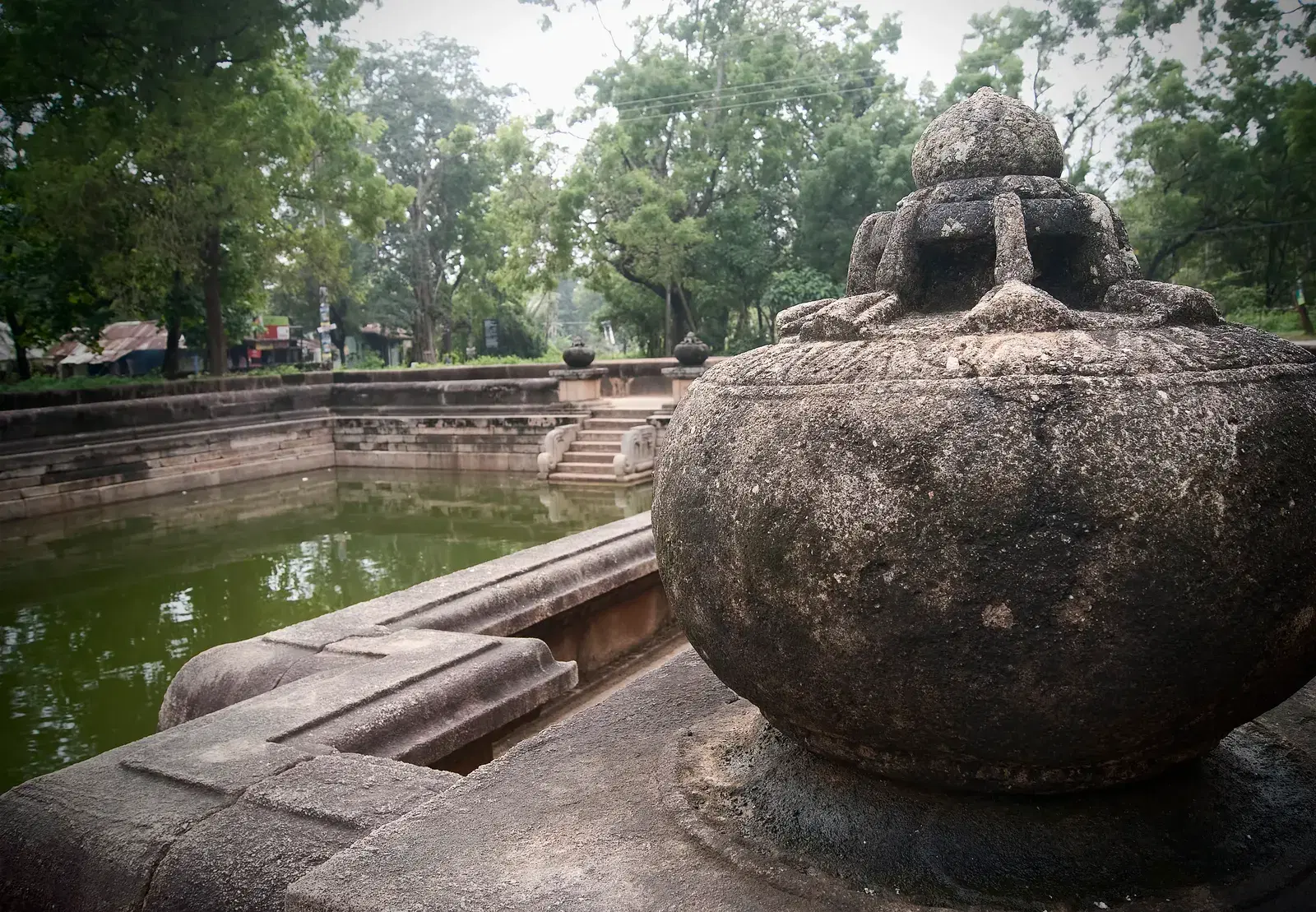
Kuttam Pokuna (Twin Ponds)
Two elegantly carved bathing pools built for the monks of Abhayagiri, connected by an underground water-filtration system that was genuinely sophisticated engineering for its era. It's one of the most photogenic single stops on the circuit and usually one of the quieter ones.
Thuparamaya
Said to be the first dagoba built in Sri Lanka, dating to the 3rd century BCE, and traditionally believed to enshrine the Buddha's collarbone relic. It's smaller and easier to take in at a glance than Ruwanwelisaya or Jetavanaramaya, and a good stop to understand what the earliest stupas here looked like before they scaled up dramatically.
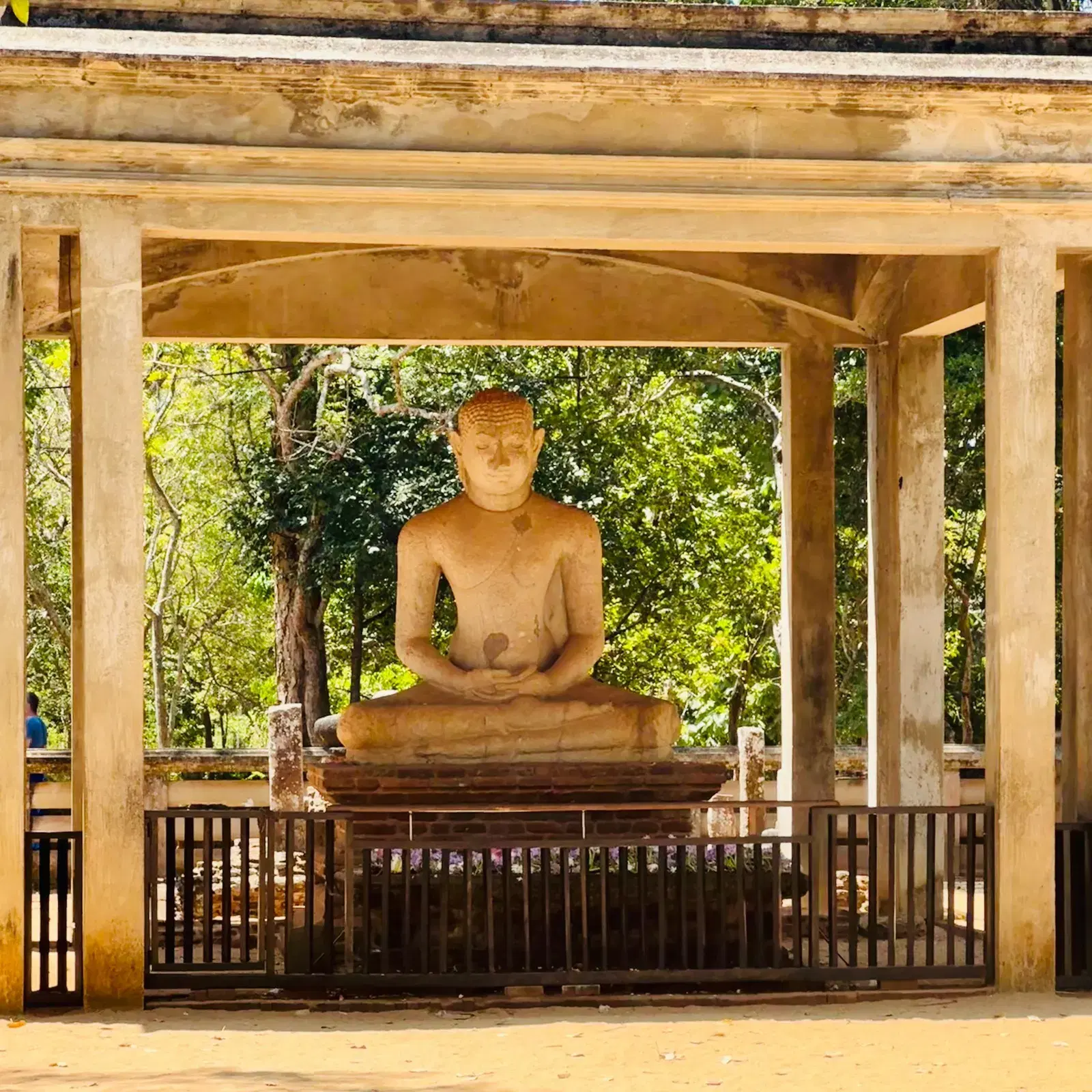
Samadhi Buddha statue
A serene seated Buddha statue carved from granite around the 4th century CE, regarded as one of the finest examples of ancient Sri Lankan sculpture anywhere. It's a brief stop, but worth slowing down for — this is one of the most reproduced Buddha images in the country for a reason.
Isurumuniya Rock Temple
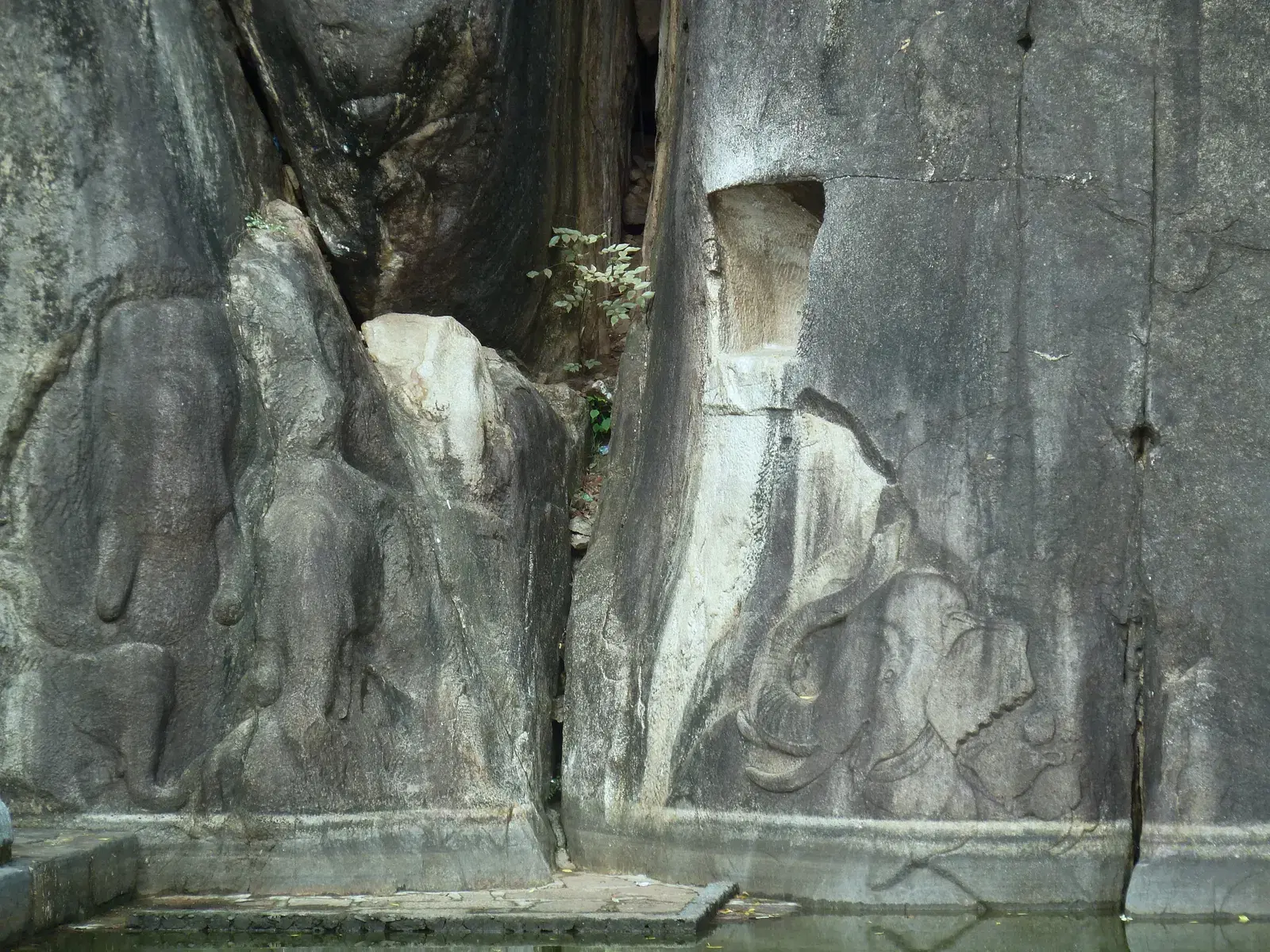
A rock temple built into a granite outcrop by a tranquil pond, famous for its carved reliefs, including the so-called "Isurumuniya Lovers" carving, one of the most celebrated pieces of ancient Sinhalese stone art. The elephant carvings at the pond's edge and the small museum add real context beyond the main sculpture.
Cycling the ancient city
The genuinely right way to see Anuradhapura — the core sites cover roughly 10km of actual riding, but with stops, that's a full half-day. Walking or arranging a tuk-tuk for the whole day both work, but a bicycle gets you the same unhurried, monk-and-pilgrim atmosphere the site was built for, at a fraction of the cost of a guided tour.
Where to stay in Anuradhapura
Budget — Anuradhapura town
- Guesthouses around the town centre — From roughly $17–27/night; the standard, no-frills base for exploring the Sacred City by bike or tuk-tuk.
Mid-range — Puttalam Road / near the Sacred City
- Palm Garden Village Hotel — A large grounds-and-villas property with a pool and Ayurvedic centre, a comfortable step up without full luxury pricing.
High-end — Countryside outside town
- Uga Ulagalla — A converted 19th-century manor house set on a private estate of former paddy fields, with standalone villas, each with a private pool — one of the more distinctive high-end stays in the Cultural Triangle.
Where to eat in Anuradhapura
Hotel and guesthouse restaurants
Rice and curry buffet — most stays include or offer one
~LKR 900–1,800
Local rice-and-curry shops around the town centre
Made-to-order local dishes
~LKR 500–900
Uga Ulagalla's Liyawela Restaurant
Sri Lankan and international menu, estate-grown produce where possible
~LKR 3,000+
Getting around Anuradhapura
The Sacred City sites are genuinely spread out — several kilometres between the furthest points — so walking the whole circuit isn't realistic in the heat. A bicycle is the standard, and best, way to get around.
Tuk-tuks are a reasonable alternative if cycling doesn't appeal; agree a half-day or full-day rate rather than paying per short hop between sites.
Anuradhapura town itself, where most accommodation and restaurants sit, is separate from the Sacred City precinct — expect a short ride between where you sleep and where you sightsee.
What it costs — daily budget
| Tier | Per day (USD) | Per day (LKR) | Includes |
|---|---|---|---|
| Backpacker | $30–45 | ≈ LKR 9,000–13,500 | Budget guesthouse, local meals, the Sacred City ticket, a day's bicycle hire. |
| Mid-range | $60–100 | ≈ LKR 18,000–30,000 | Mid-range hotel with pool, restaurant meals, Sacred City plus Isurumuniya tickets, a guided cycling tour. |
| Comfort | $180–350+ | ≈ LKR 54,000–105,000+ | A private-villa estate stay, private driver-guide for the day, all site tickets, dining at your property. |
Safety and scams in Anuradhapura
Anuradhapura is low-risk in the usual crime sense — the real practical hazards are heat and traffic, not people.
This is a working town with real vehicle traffic between the Sacred City sites; cycling is genuinely pleasant within the sacred precinct itself but requires normal road awareness on the connecting roads.
As at any active Buddhist site, dress modestly (shoulders and knees covered) and remove your shoes and hats before entering the dagoba platforms — the stone and sand around some stupas gets genuinely hot underfoot at midday, so time your barefoot stretches for morning or late afternoon.
Toque macaques and grey langurs are common around the ruins; don't feed them and keep food out of sight.
Carry more water than feels necessary — this is a dry-zone city, and a half-day of cycling between exposed monuments adds up faster than it seems.
Hidden gems near Anuradhapura
- Isurumuniya's elephant carvings and pond — Most visitors go straight for the famous Lovers relief and miss the quieter pond-side carvings around it.
- Cycling at first light — Before the day heats up and before most tour groups arrive — the same route, a completely different, quieter atmosphere.
- Twin Ponds' underground filtration system — Easy to walk past as "just a pool" without appreciating that it was a genuinely engineered water system, not a simple bathing tank.
Suggested Anuradhapura itineraries
1 day
The essentials: Sri Maha Bodhi and Ruwanwelisaya in the morning, Jetavanaramaya and Abhayagiri by midday, Isurumuniya and Twin Ponds in the cooler late afternoon.
2 days
Day 1: Full cycling circuit of the Sacred City: Sri Maha Bodhi, Ruwanwelisaya, Thuparamaya, Jetavanaramaya, Abhayagiri, Twin Ponds.
Day 2: Isurumuniya and the Samadhi Buddha statue at an unhurried pace, museum visits, a slower final afternoon.
3 days (Cultural Triangle loop)
Day 1: Full Sacred City cycling circuit.
Day 2: Isurumuniya, Samadhi Buddha, and a day trip to nearby Mihintale, the hill where Buddhism was first preached in Sri Lanka.
Day 3: Travel on to Polonnaruwa or Dambulla to continue the Cultural Triangle loop.
Where to go next from Anuradhapura
Anuradhapura FAQ
How much does it cost to visit Anuradhapura's Sacred City?
Around $25–30 USD for foreign adults, covering most of the major stupas and monastic sites within the Sacred City boundary. Isurumuniya and Mihintale are ticketed separately. Confirm the current rate before you go, as fees are periodically revised.
Do I need a bicycle to see Anuradhapura, or can I walk?
You can walk, but the main sites are genuinely kilometres apart, and it's a hot, dry-zone climate — a bicycle (roughly $8–12/day) is the standard and most comfortable way to cover the full circuit in a half-day.
What is the Sri Maha Bodhi tree?
A fig tree grown from a cutting of the original Bodhi tree in India, planted here in the 3rd century BCE — it's widely cited as the oldest continuously documented, human-planted tree in the world, and it's free to visit.
How tall was Jetavanaramaya originally?
122 metres — the tallest stupa in the ancient world when it was built in the 3rd century CE, and the third-tallest structure on Earth at the time, behind only the two great pyramids of Giza.
How many days do I need in Anuradhapura?
One full day covers the core Sacred City sites by bicycle. Two lets you add Isurumuniya and a slower pace; three allows a side trip to Mihintale, where Buddhism was first introduced to Sri Lanka.
How do I get from Dambulla to Anuradhapura?
About 70km, roughly 1.5–2 hours by bus or private car — the most common route if you're combining it with the rest of the Cultural Triangle.
Is Isurumuniya included in the Sacred City ticket?
No, it's ticketed separately, along with Mihintale. Both are worth the extra small fee if you have the time.
What should I wear to visit Anuradhapura's temples?
Modest dress covering shoulders and knees, and be ready to remove shoes and hats at the dagoba platforms — the stone and sand can get genuinely hot underfoot at midday, so plan barefoot stretches for cooler hours.