
Sigiriya
A practical Sigiriya guide: current entrance fees and hours for the rock fortress, whether to also climb Pidurangala, real wasp and monkey safety warnings, where to stay, and honest daily budgets.
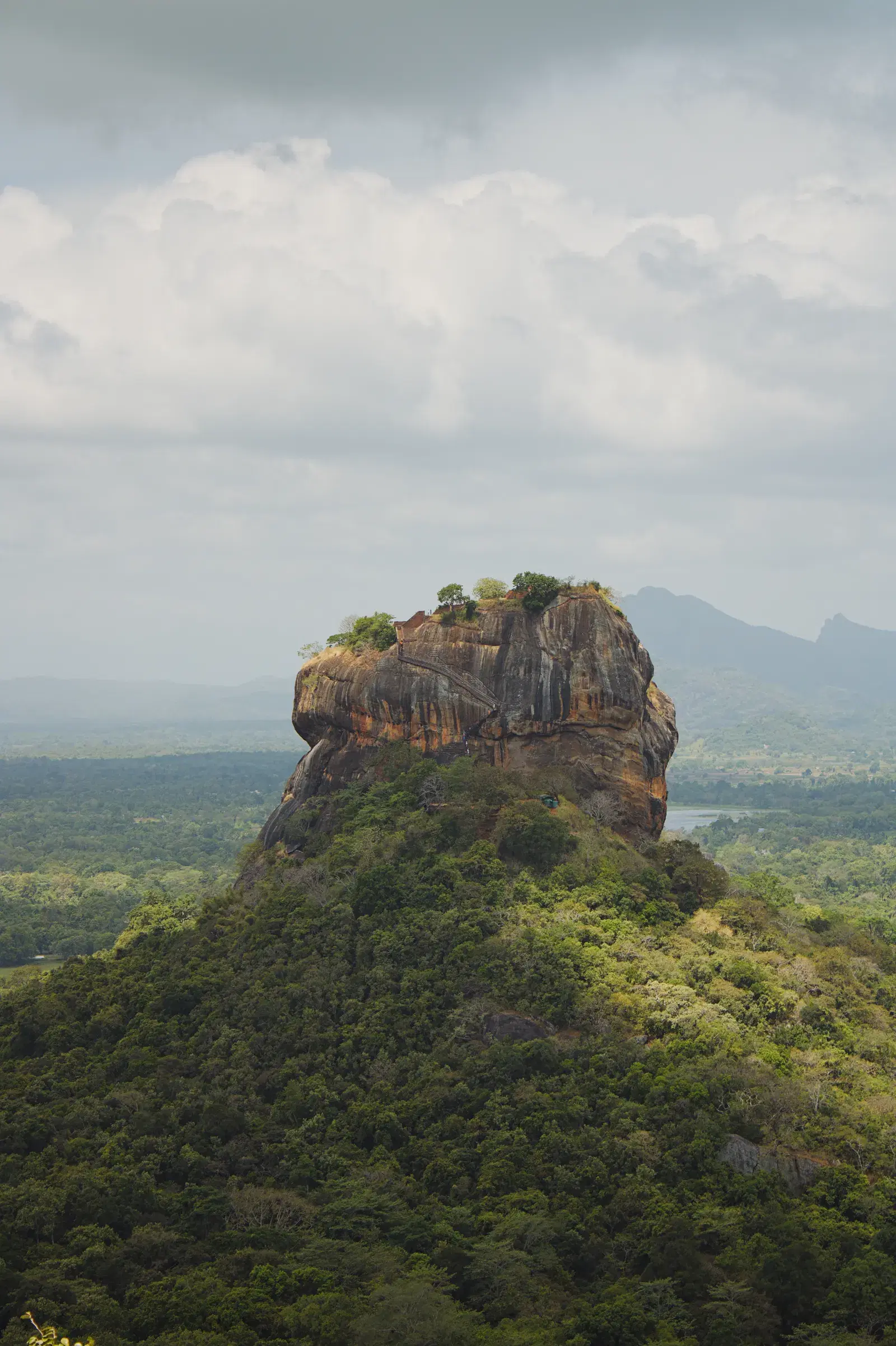
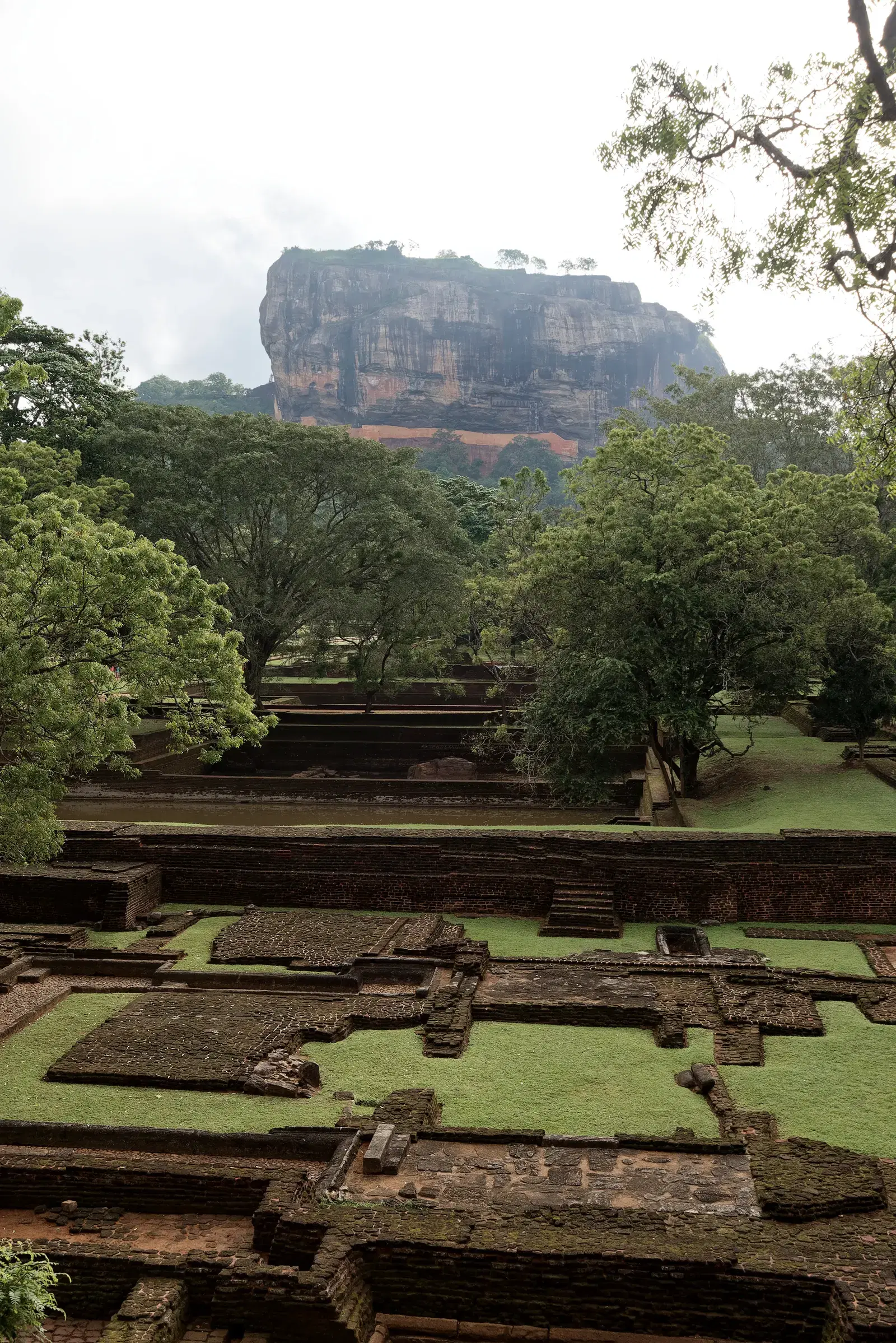
Sigiriya is the single most-recognized image of Sri Lanka, and it's a rarer thing than that headline suggests: a UNESCO site that's genuinely worth the ticket price. A 5th-century king built a palace on top of a 200-metre volcanic plug, and what's left — the lion's-paw gateway, the mirror wall, the water gardens, the frescoes of the "Sigiriya damsels" — earns the climb even if you've already seen the postcard version a hundred times online.
The catch is that it's expensive by Sri Lankan standards, it's genuinely strenuous in the heat, and most people do it wrong: they climb Sigiriya itself and skip Pidurangala, the rock across the valley that gives you the view Sigiriya can't give you of itself. Do both if you can manage two climbs in one visit.
Why go to Sigiriya
- It's the country's most iconic single sight, and — unusually for a place this famous — it holds up in person.
- Sigiriya's frescoes and lion's-paw gate are unlike anything else on a typical Sri Lanka itinerary; this isn't another temple or beach.
- Pairing it with Pidurangala Rock (a short drive away) gets you both the monument and the view of the monument, in a single half-day.
- It sits inside the Cultural Triangle alongside Dambulla and Polonnaruwa, so it slots naturally into a 2–3 day ancient-cities loop.
How to get to Sigiriya
From Dambulla — Tuk-tuk or local bus
Only 16km, about 30 minutes. A tuk-tuk runs roughly LKR 1,000 (~$3); local buses via Inamaluwa Junction run about LKR 50–100 and leave roughly hourly. This is the easiest short hop if you're basing yourself in Dambulla for the Cultural Triangle.
From Kandy — Direct bus
About 91km, roughly 2–4 hours depending on the bus and traffic. Direct buses exist for around LKR 120; you'll be dropped near the main entrance, a 10–15 minute walk from the ticket office.
From Colombo / Bandaranaike Airport — Private car or bus
About 170km from Colombo. A private car takes roughly 3.5–4 hours via toll roads; buses (change at Dambulla, e.g. routes toward Trincomalee or Anuradhapura) take longer, around 5 hours. There's no direct train to Sigiriya itself — the nearest station is Habarana, about 15km away, served by a single daily train from Colombo Fort (roughly 5–6 hours, LKR 480–600).
Best time to visit Sigiriya
| Months | Rainfall | Crowds | Verdict |
|---|---|---|---|
| Jan – Mar | Low | High (peak season) | Best visibility and driest steps for the climb — also the busiest. |
| Apr | Rising | High (local New Year) | Hot and crowded; go at opening time if you're here now. |
| May – Sep | Moderate, less monsoon exposure than the coasts | Medium | A reasonable shoulder season, though midday heat on the exposed rock face is the real limiting factor year-round. |
| Oct – Dec | Rising toward the northeast monsoon | Low–Medium | Afternoon showers are common; climb in the morning and keep an eye on the sky — the metal staircases get slick and are closed in heavy rain. |
Things to do in Sigiriya
Climb Sigiriya Rock Fortress
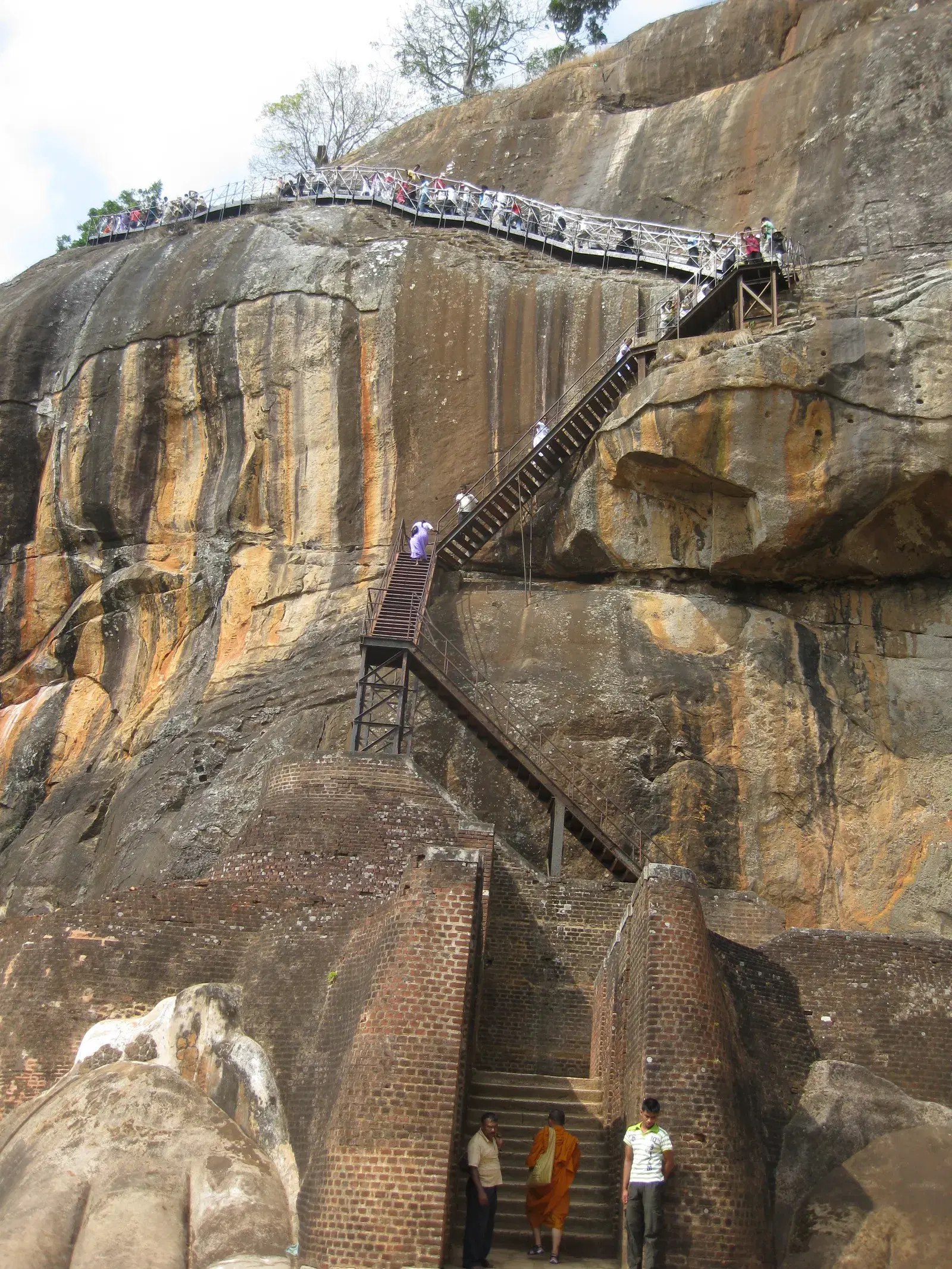
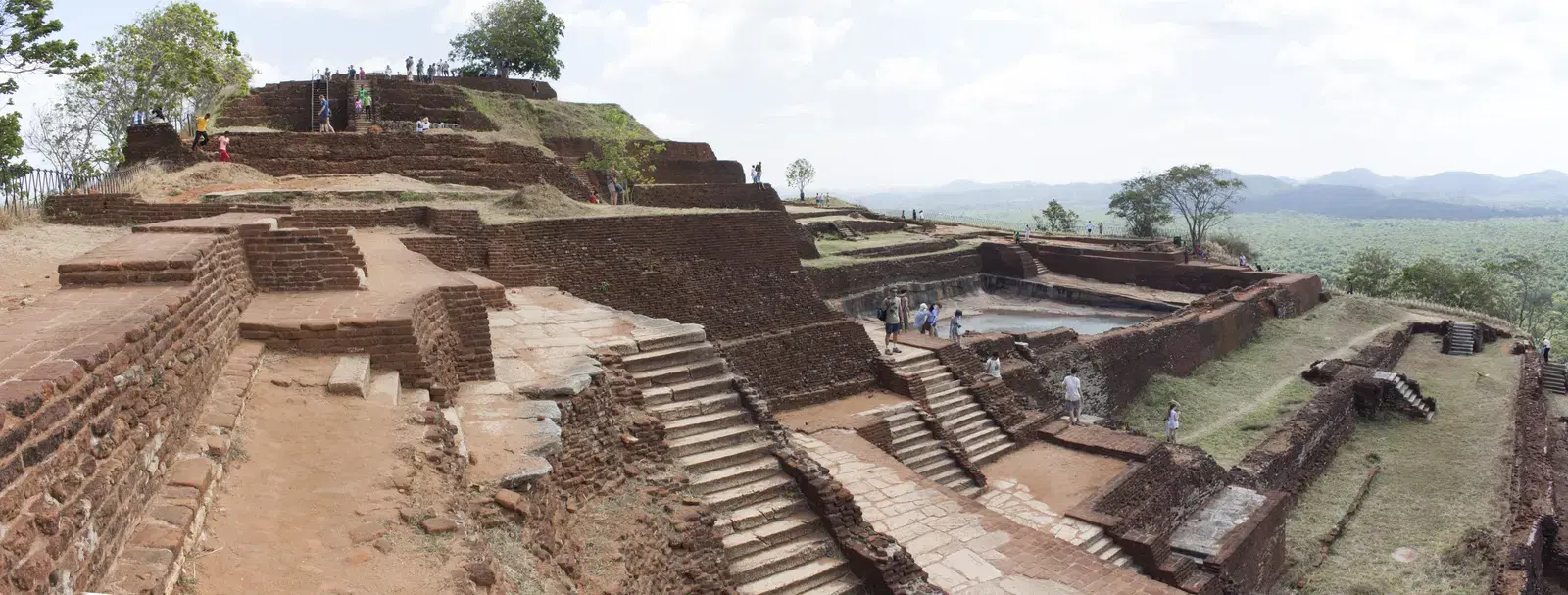
The full route takes you through the water gardens, up past the mirror wall and frescoes, through the lion's-paw gateway, and onto the summit ruins. It's a real climb — steep metal stairs with open drops in sections — and genuinely not for anyone with a serious fear of heights. Go early: by 9–10am the narrow stair sections back up into slow-moving queues in full sun.
Pidurangala Rock
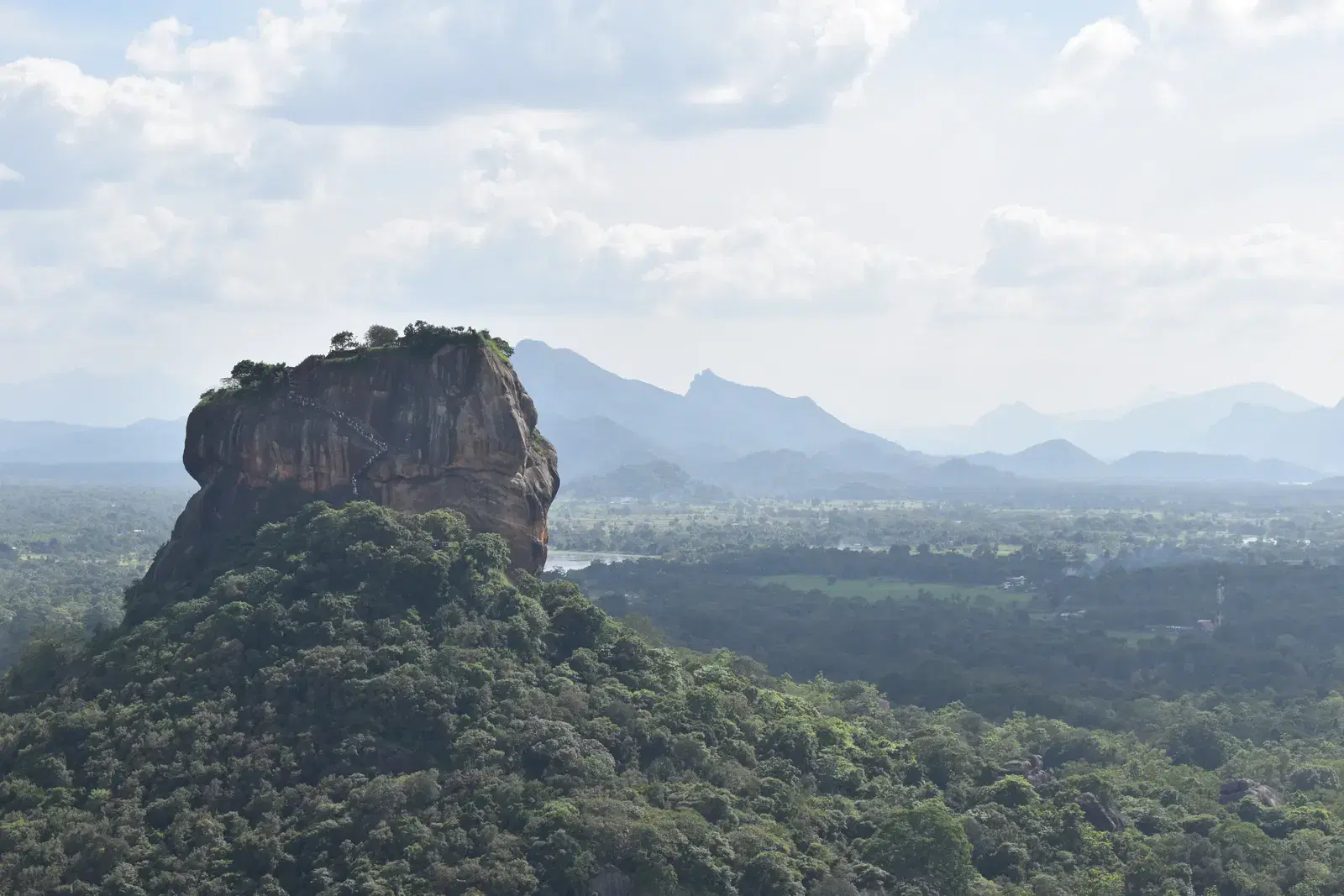
The rock facing Sigiriya across the valley, and the only place you actually get the classic wide shot of the fortress rising out of the jungle. The path is rougher and less engineered than Sigiriya's — some scrambling over boulders near the top — but it's shorter, cheaper, and for photography purposes arguably the better of the two. Sunrise here, before the day's heat, is the standout time slot.
Sigiriya frescoes (the "heavenly maidens")
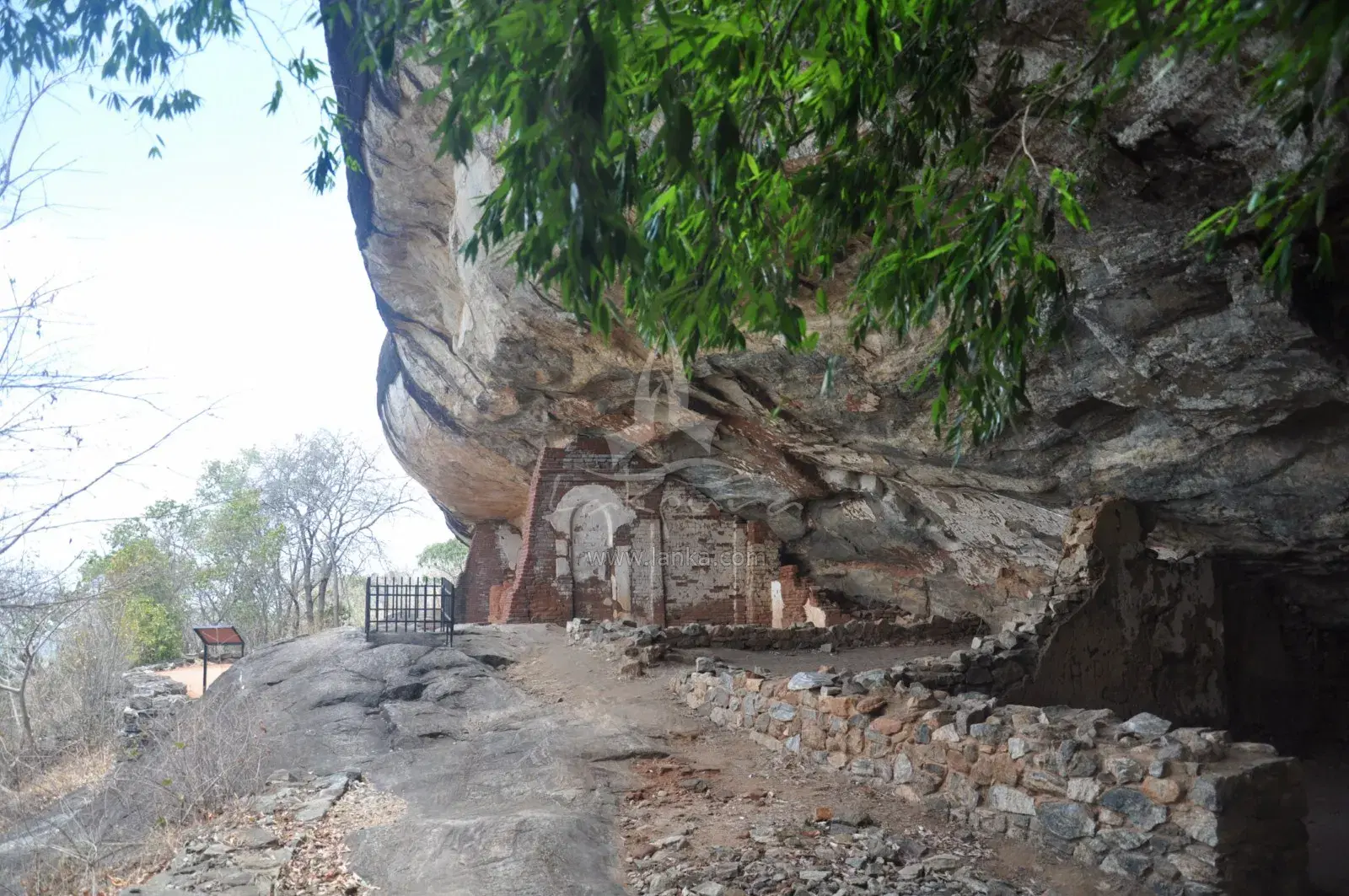
A sheltered gallery of 5th-century paintings, remarkably preserved given the age and exposure. Photography is restricted in the gallery itself in some periods — follow on-site signage. Worth pausing for even if you're pushing to beat the heat further up.
Water gardens and Sigiriya Museum
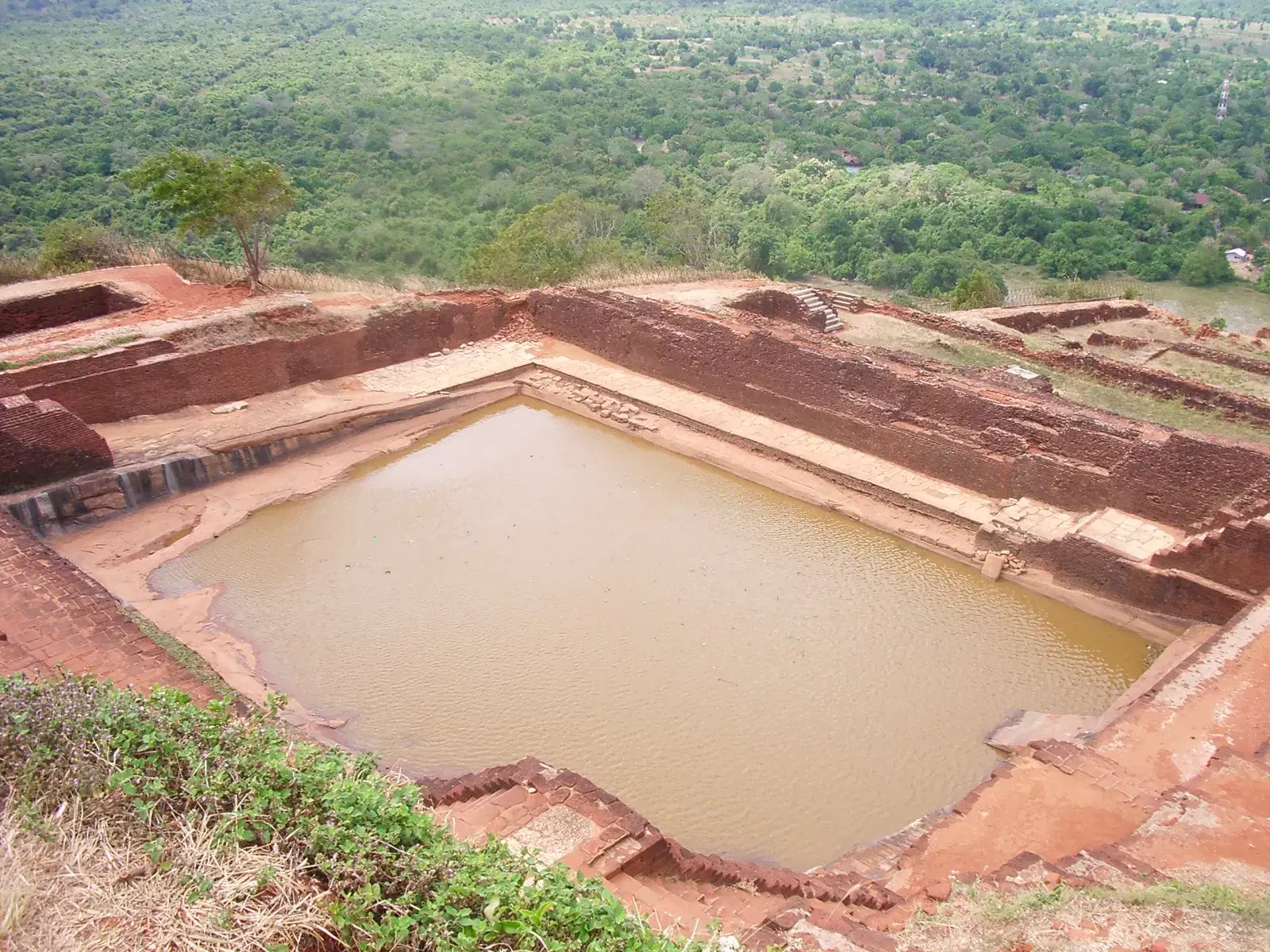
The symmetrical water gardens at the base are genuinely impressive hydraulic engineering for their age and easy to rush past on the way to the climb — worth 10 minutes even if you're saving your energy for the rock. The small on-site museum gives useful context on the frescoes and the site's history if you go before the climb rather than after.
Dambulla Cave Temple (paired day trip)
Not in Sigiriya itself, but close enough (16km) that most people combine the two in one day. Five cave temples cut into a rock face, packed with Buddha statues and ceiling paintings — a different register of "impressive" than Sigiriya's engineering, worth doing as a pair rather than choosing one.
Village and lake cycling tour
A lower-key alternative for a second day in the area: cycling through rural villages and rice paddies near Sigiriya, sometimes combined with a bullock-cart ride or traditional lunch. Book through your guesthouse — quality varies noticeably between operators.
Minneriya or Kaudulla National Park safari (seasonal)
Famous for "the Gathering" — elephant herds congregating around the reservoir, at its best roughly August–October (check current conditions, as it depends on water levels). Outside that window you'll still likely see elephants, just in smaller numbers. A worthwhile add-on if you have a third day in the area.
Where to stay in Sigiriya
Budget — Sigiriya village, walking distance to the entrance
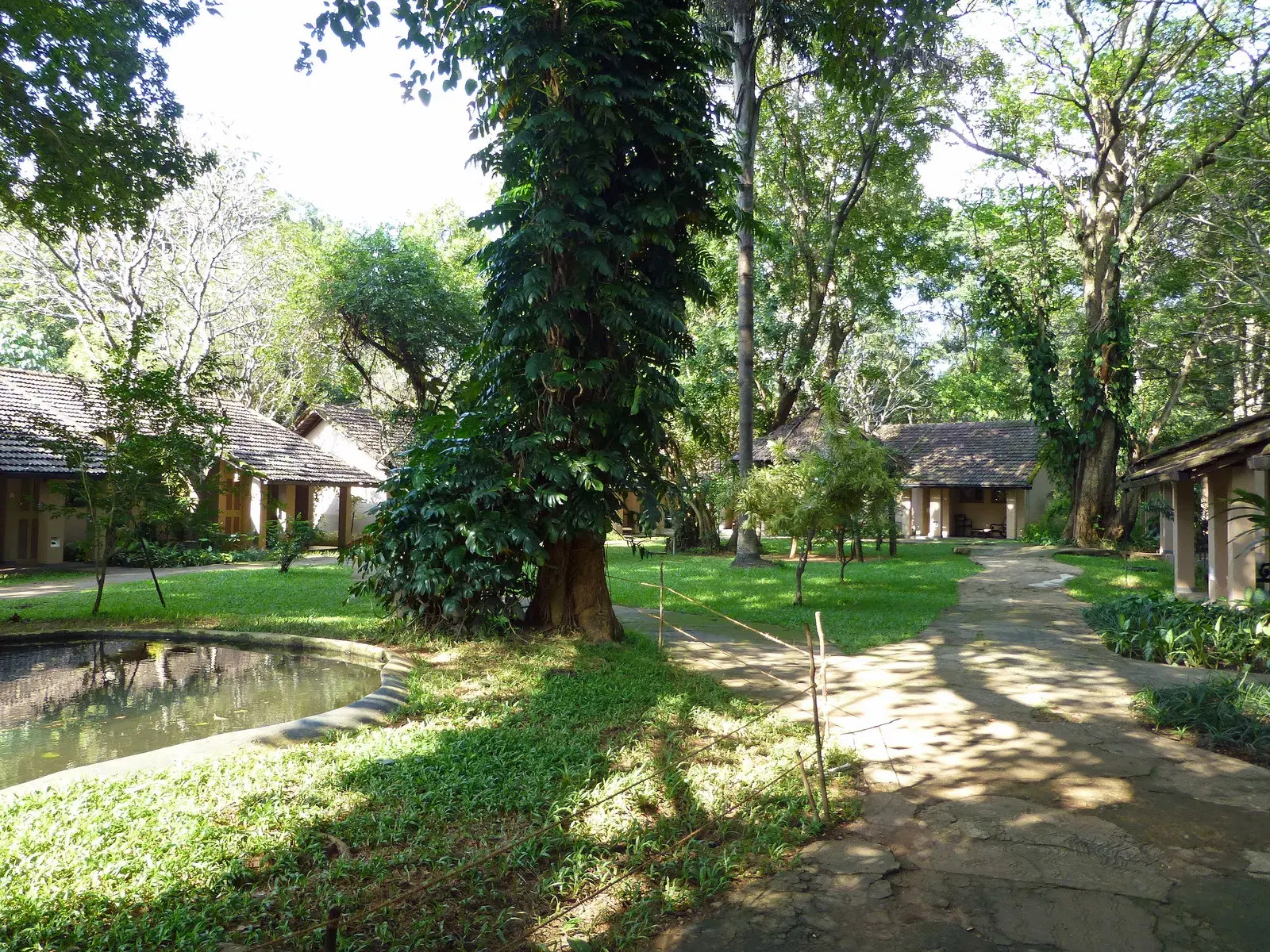
- EKHO Sigiriya — Boutique-style rooms a short walk from the rock entrance, garden setting.
- Serenity Sigiri Resort — Guesthouse with on-site restaurant, from around $29/night.
Mid-range — Around Sigiriya village and toward Habarana
- Hotel Sigiriya — One of the best pools in the area, with a direct view of the rock.
High-end — Countryside around Sigiriya
- Jetwing Vil Uyana — Eco-luxury stilted villas over a man-made wetland; a genuinely different kind of stay for this area.
- Sigiriya King's Resort — The top pick if a direct, unobstructed view of Lion Rock from your room matters to you.
Where to eat in Sigiriya
Hotel/guesthouse restaurants
Rice & curry buffet — most stays include or offer one
~LKR 1,000–2,500
Liyon Rest
Made-to-order local dishes
~LKR 800–1,400
Jetwing Vil Uyana's restaurant
Farm-to-table Sri Lankan and international menu
~LKR 3,000+
Getting around Sigiriya
Sigiriya is a small, rural area — there's no real independent café/restaurant strip like you'd find in Ella or Mirissa. Most travelers eat where they sleep, or arrange a tuk-tuk to a specific recommended spot.
Tuk-tuks are the standard way to get between your accommodation, the rock, Pidurangala, and Dambulla. Agree the fare upfront; a return trip to Pidurangala from most Sigiriya-village guesthouses runs roughly LKR 500–1,000.
If you're doing Dambulla and Sigiriya as a paired day, it's usually cheaper to hire a tuk-tuk or driver for a half-day than to arrange separate one-way trips.
What it costs — daily budget
| Tier | Per day (USD) | Per day (LKR) | Includes |
|---|---|---|---|
| Backpacker | $35–50 | ≈ LKR 10,500–15,000 | Budget guesthouse, local meals, the Sigiriya ticket amortized over your stay, tuk-tuks for short hops. |
| Mid-range | $70–110 | ≈ LKR 21,000–33,000 | Mid-range hotel with pool, mix of guesthouse and restaurant meals, Sigiriya + Pidurangala + Dambulla tickets, a half-day tuk-tuk or driver hire. |
| Comfort | $150–300+ | ≈ LKR 45,000–90,000+ | Boutique or eco-luxury stay, private driver for the day, all major site tickets, a safari add-on. |
Safety and scams in Sigiriya
Sigiriya itself is low-risk in the usual crime sense — the real hazards here are physical, not criminal.
Wasps are a genuine, signposted hazard on the rock, particularly near the fresco gallery, where large hives sometimes hang from overhangs. If you see a warning sign or hear staff asking for quiet, actually stay quiet — attacks are rare but have happened, and in rare cases the summit route is closed for safety when a hive is active.
Monkeys (macaques) are common around the gardens and stairs, and at Pidurangala specifically the resident troop has a reputation for grabbing bags and food. Don't feed them, keep food out of sight, and hold bags close rather than swinging them loosely.
The climb itself is the other real risk factor: steep open-sided metal staircases, slick when wet, and a serious undertaking in full midday sun. Carry more water than feels necessary, and reconsider the climb in heavy rain rather than pushing through.
Ticket touts and "guide required" claims near the entrance are common low-level friction — an official guide is not required, and tickets are only legitimate through the CCF counter or official e-ticket site.
Hidden gems near Sigiriya
- Sigiriya Museum before the climb — Most visitors skip it or do it after and are too tired to absorb it — go first for context.
- Village cycling routes — Rural Sigiriya beyond the rock itself is quiet, rarely covered in typical itineraries.
- Kaudulla over Minneriya — When both parks have elephants, Kaudulla is often noticeably less crowded than the more famous Minneriya.
Suggested Sigiriya itineraries
1 day
The essentials: Climb Sigiriya at opening time (7am) to beat both heat and crowds, then Pidurangala in the late afternoon for the classic view back at the fortress, ideally near sunset.
2 days
Day 1: Sigiriya at opening time, water gardens and museum, afternoon rest through the midday heat.
Day 2: Sunrise at Pidurangala, then Dambulla Cave Temple as a paired half-day trip.
3 days
Day 1: Sigiriya at opening time, museum and water gardens.
Day 2: Sunrise Pidurangala, afternoon village cycling tour.
Day 3: Morning or afternoon safari at Minneriya or Kaudulla, plus Dambulla Cave Temple if timing allows.
Where to go next from Sigiriya
Sigiriya FAQ
How much does it cost to visit Sigiriya?
Roughly $30 USD for foreign adults, with a SAARC-national discount of about 50%. The exact figure is set daily by the Central Cultural Fund against the exchange rate — confirm the current rate at eservices.ccf.gov.lk before you go.
Should I climb Sigiriya or Pidurangala, or both?
Both if you have the time and stamina for two climbs. Sigiriya has the historical site and frescoes; Pidurangala gives you the iconic view of Sigiriya itself, which you can't get from on top of Sigiriya.
How long does the Sigiriya climb take?
Budget 2.5–3.5 hours round trip including the water gardens and frescoes, more if you're moving slowly in the heat or queuing behind other visitors.
Is Sigiriya safe to climb?
Yes for most visitors, but it's a genuine climb with steep, open-sided metal staircases — not suitable if you have a serious fear of heights, and best avoided in heavy rain when the steps get slick.
Are the wasps at Sigiriya dangerous?
Attacks are rare but real; there are signposted zones near the fresco gallery. Follow posted warnings and staff instructions to stay quiet in marked areas.
Do I need a guide to climb Sigiriya?
No, an official guide isn't required. Be wary of touts near the entrance implying otherwise.
What's the best time of day to climb?
As close to opening (7am) as you can manage — you'll beat both the worst heat and the mid-morning crowd buildup on the narrow stair sections.
Can I visit Sigiriya as a day trip from Kandy or Colombo?
From Kandy, yes — it's about 2–4 hours each way, making a long but doable day trip. From Colombo it's a harder ask at 3.5–4 hours each way; an overnight nearby is more comfortable.