Polonnaruwa
A practical Polonnaruwa guide: current ancient city entrance fees, the Gal Vihara rock-cut Buddhas, cycling the ruins around Parakrama Samudra, where to stay, and honest daily budgets.
Polonnaruwa was Sri Lanka's second great capital, taking over from Anuradhapura in the 11th century and reaching its peak under King Parakramabahu I in the 12th — and it's a more compact, more manageable ancient city than its predecessor, which makes it the better choice if you only have time for one. Everything sits within a single archaeological park you can genuinely cover by bicycle in half a day.
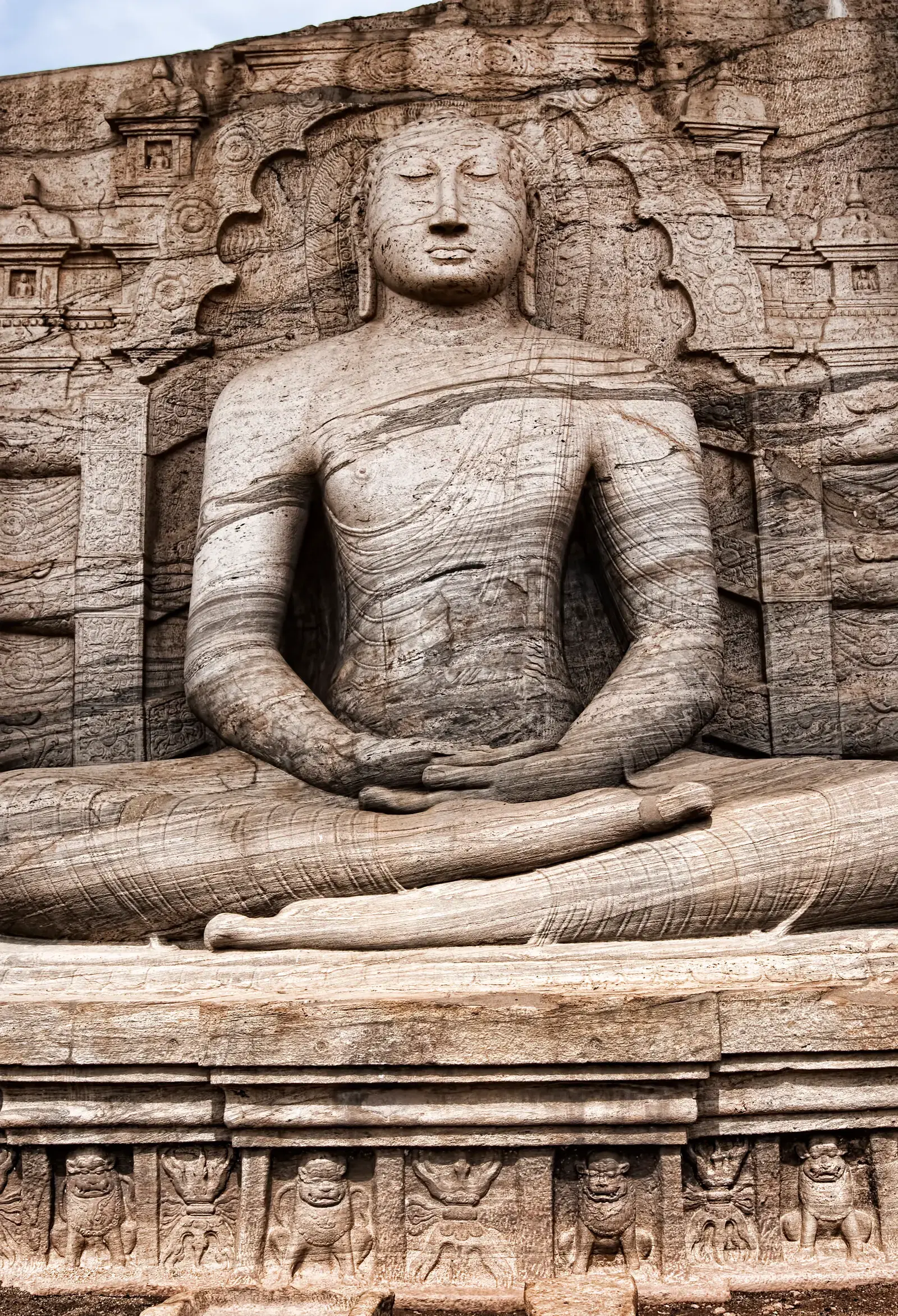
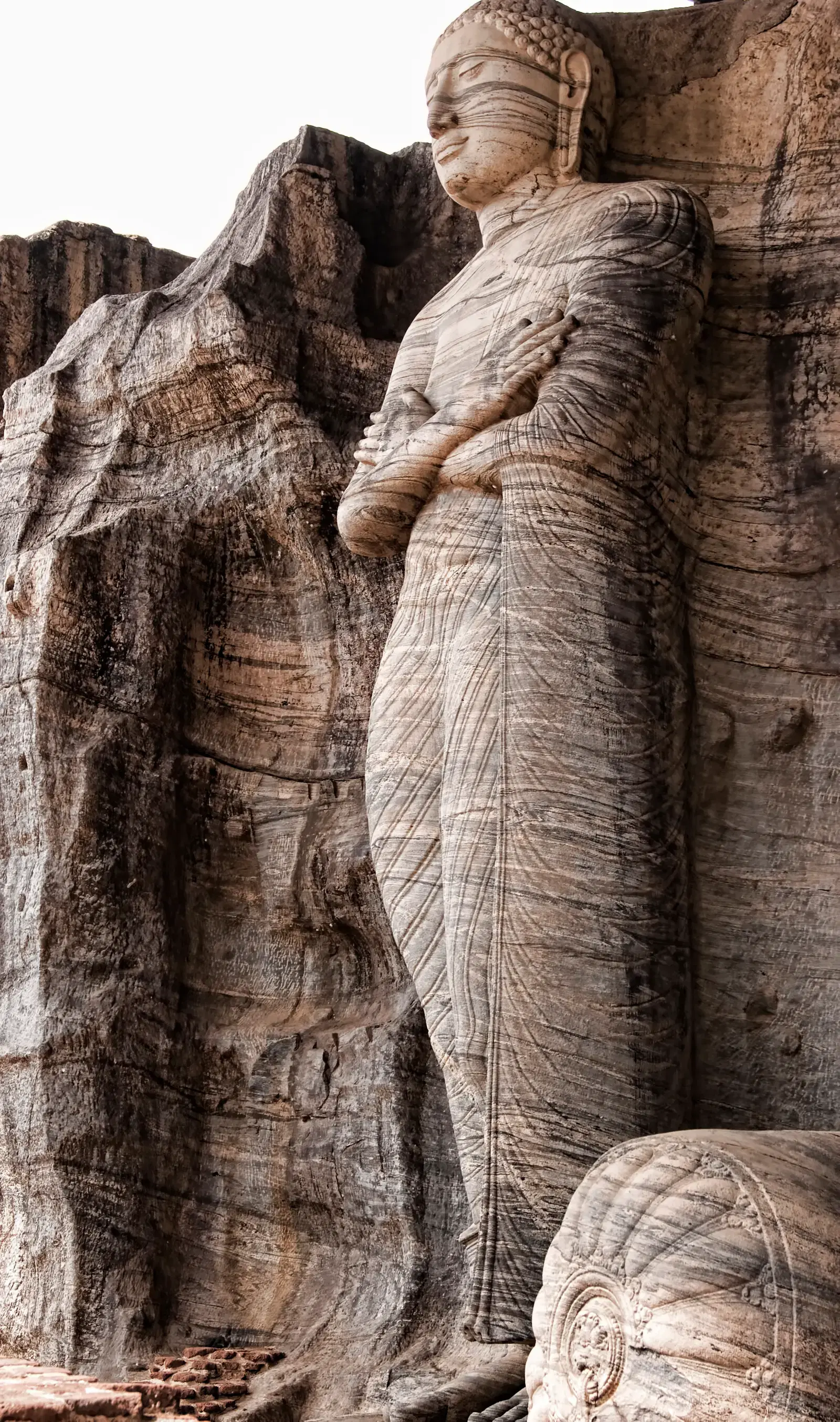
The single site that makes the whole trip worth it is Gal Vihara: four Buddha statues carved directly into one continuous granite outcrop in the 12th century, including a reclining figure over 14 metres long that's regularly cited as one of the largest and finest Buddha sculptures anywhere in South or Southeast Asia. Photographs of it circulate constantly online; almost none of them prepare you for the scale in person.
The other thing worth knowing before you go: Parakramabahu I's most famous line, still quoted at the site today, was reportedly "not even a little water that comes from the rain must flow into the ocean without being made useful to man." The vast reservoir he built to make good on that, the Parakrama Samudra, still irrigates the surrounding region today, nine centuries later — a genuinely working piece of ancient infrastructure, not a ruin.
Why go to Polonnaruwa
- Gal Vihara's four rock-cut Buddha statues, carved from a single granite outcrop in the 12th century, are among the finest surviving examples of ancient Buddhist sculpture anywhere in the region.
- It's more compact than Anuradhapura — a single archaeological park you can cover thoroughly by bicycle in half a day rather than a full one.
- The Royal Palace ruins and the Quadrangle give a real sense of a functioning medieval capital, not just religious monuments.
- Parakrama Samudra, the enormous reservoir built by King Parakramabahu I, is still in active use nine centuries later — a rare case of ancient engineering you can see actually working rather than just admire as a ruin.
How to get to Polonnaruwa
From Dambulla — Bus or private car
About 68km, roughly 1.5–2 hours by road via Habarana. The standard route if you're combining Polonnaruwa with the rest of the Cultural Triangle.
From Sigiriya — Private car or tuk-tuk
About 65–70km via Habarana, roughly 1.5 hours. A reasonable day-trip pairing if you're based in Sigiriya and want both ancient capitals without changing accommodation.
From Anuradhapura — Bus or private car
About 100km, roughly 2 hours by road. The natural pairing if you're touring both of Sri Lanka's ancient capitals on one loop.
From Colombo / Bandaranaike Airport — Private car or bus
About 216km, roughly 4–5 hours either way. Most travelers reach Polonnaruwa via Dambulla or Sigiriya rather than driving here directly from Colombo.
Best time to visit Polonnaruwa
| Months | Rainfall | Crowds | Verdict |
|---|---|---|---|
| Jan – Mar | Low | High (peak season) | Reliable dry weather for a full day of cycling — also the busiest and hottest-feeling stretch given the sun exposure across the open ruins. |
| Apr | Rising | High (local New Year) | Busy with domestic travelers around the holiday period. |
| May – Sep | Moderate, drier than the wet-zone coasts | Medium | A reasonable shoulder season — this is a dry-zone city, so heat rather than rain is the year-round limiting factor. |
| Oct – Dec | Rising toward the northeast monsoon | Low | Afternoon showers become more common; a morning start avoids most of the risk. |
Things to do in Polonnaruwa
Gal Vihara
Four Buddha statues carved directly into a single granite rock face in the 12th century under King Parakramabahu I: a large seated figure, a smaller seated figure inside a carved cavity, a standing figure, and a reclining figure over 14 metres long, among the largest and finest Buddha sculptures in the region. Go slowly here — the detail in the carving, especially the reclining figure's expression, is worth more time than the average visitor gives it.
The Quadrangle (Vatadage and Hatadage)
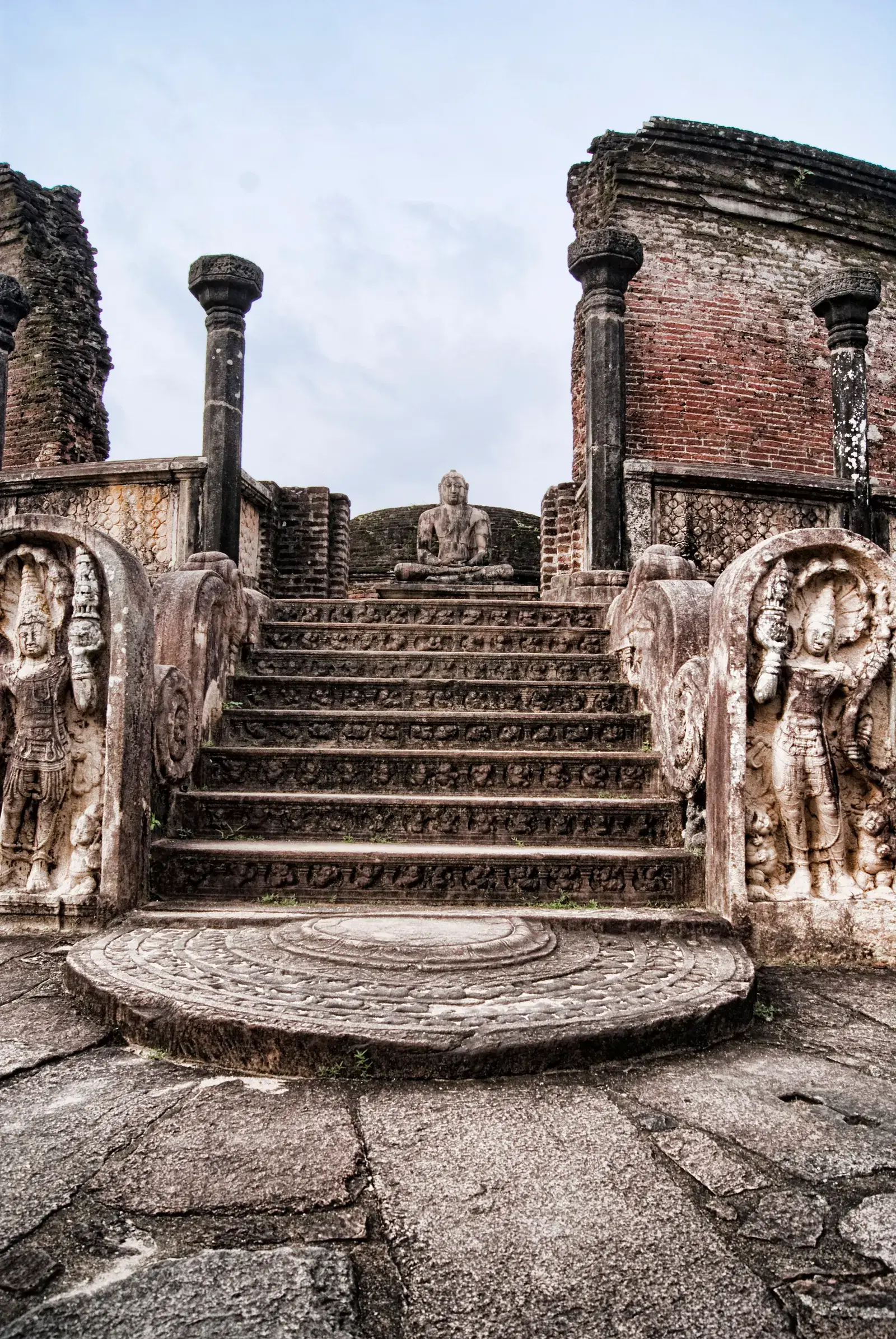
A cluster of the site's most refined religious architecture packed into one compact terrace. The Vatadage — a circular relic house with concentric stone platforms and finely carved guard stones and moonstones — is the standout single structure in Polonnaruwa after Gal Vihara. The Hatadage and Atadage nearby were built to house the sacred Tooth Relic before it moved to Kandy centuries later.
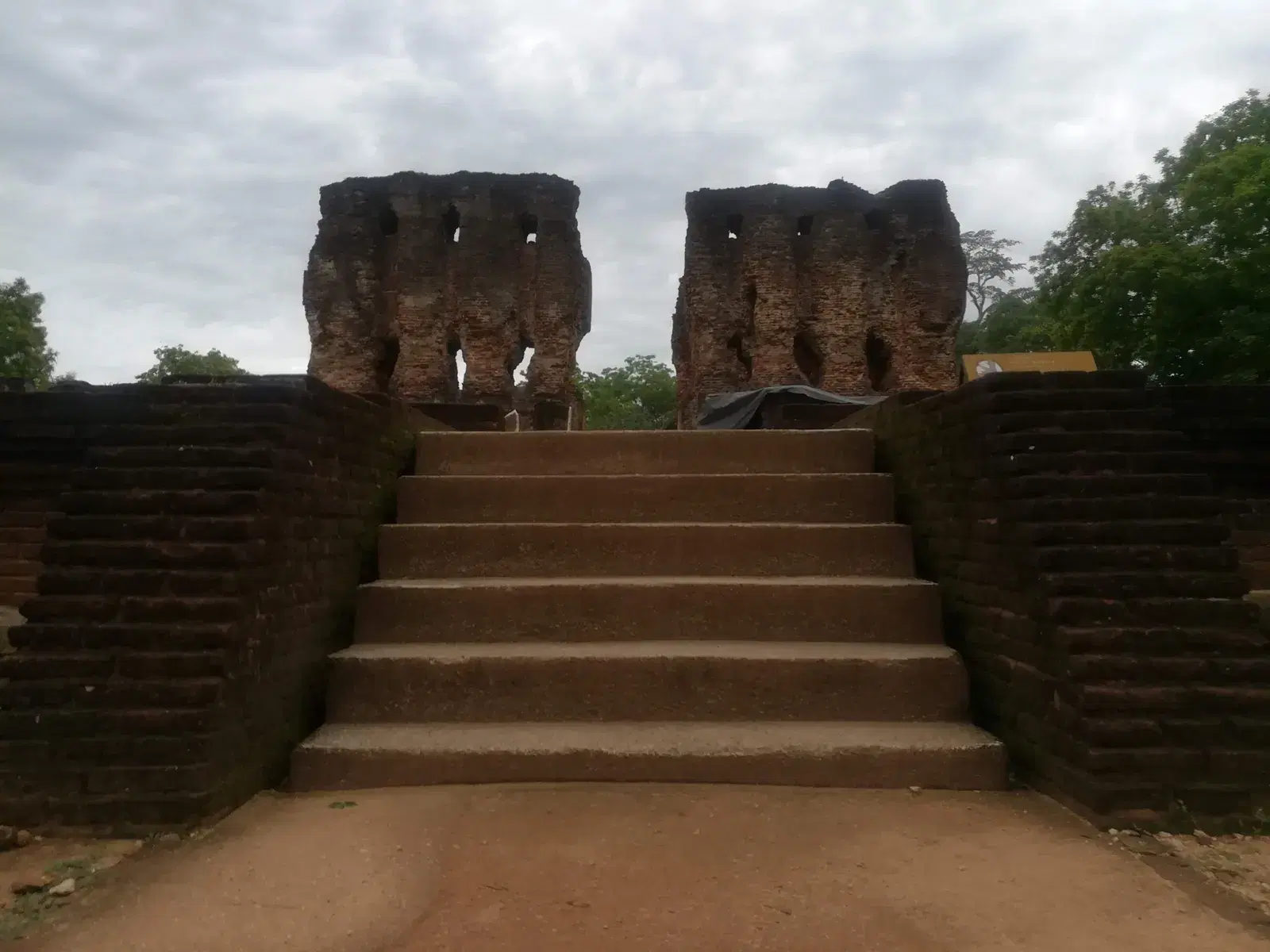
Royal Palace ruins
The remains of King Parakramabahu I's seven-storey palace — only the lower brick walls survive, but they're thick enough and extensive enough to give a genuine sense of the building's original scale. This is the best spot on the circuit for picturing Polonnaruwa as a working royal capital rather than a purely religious site.
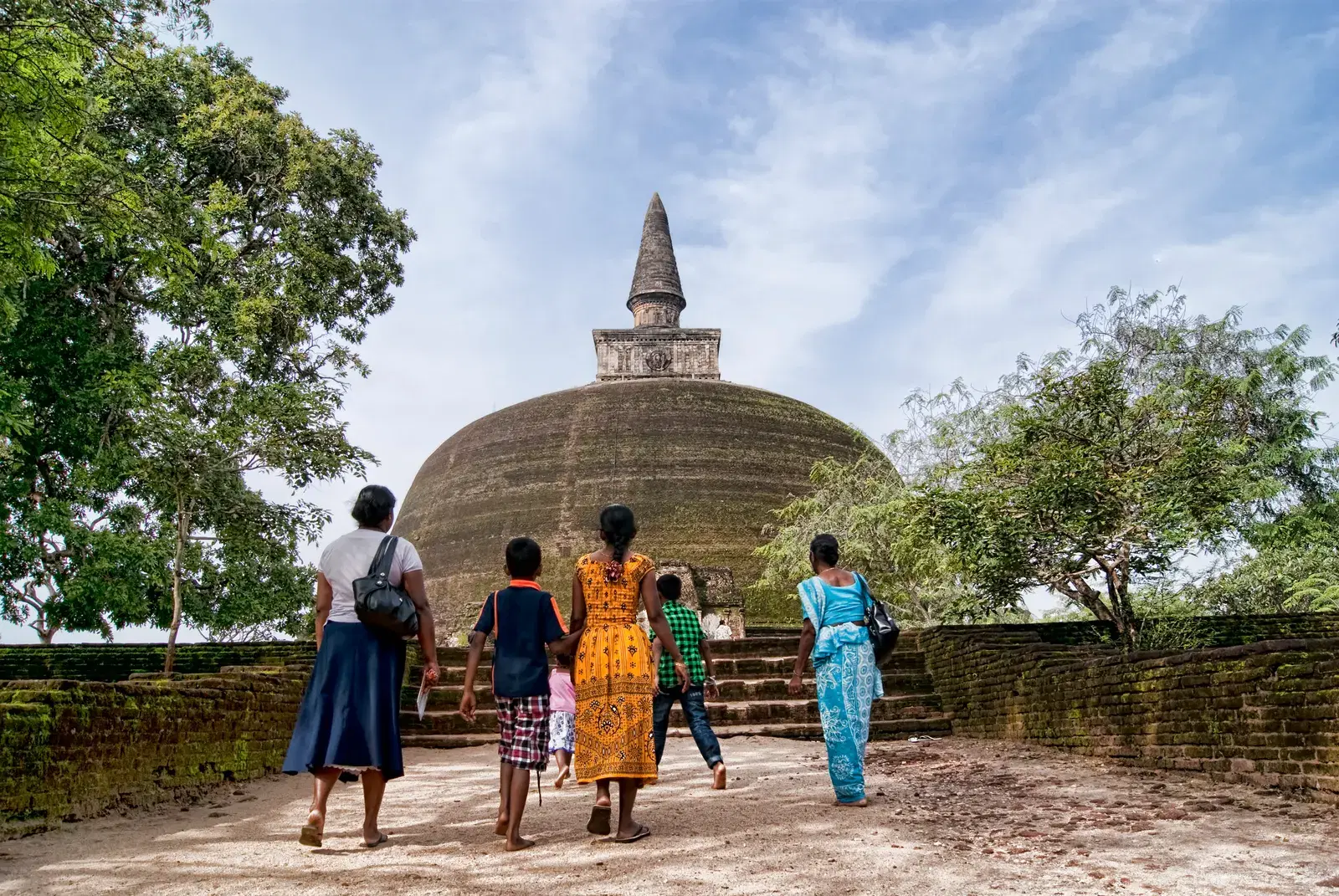
Rankoth Vehera
The largest stupa in Polonnaruwa, built by King Nissanka Malla in the late 12th century in deliberate imitation of the great stupas of Anuradhapura. It's a straightforward, calm stop after the denser cluster of the Quadrangle — good for a slower circuit around the base.
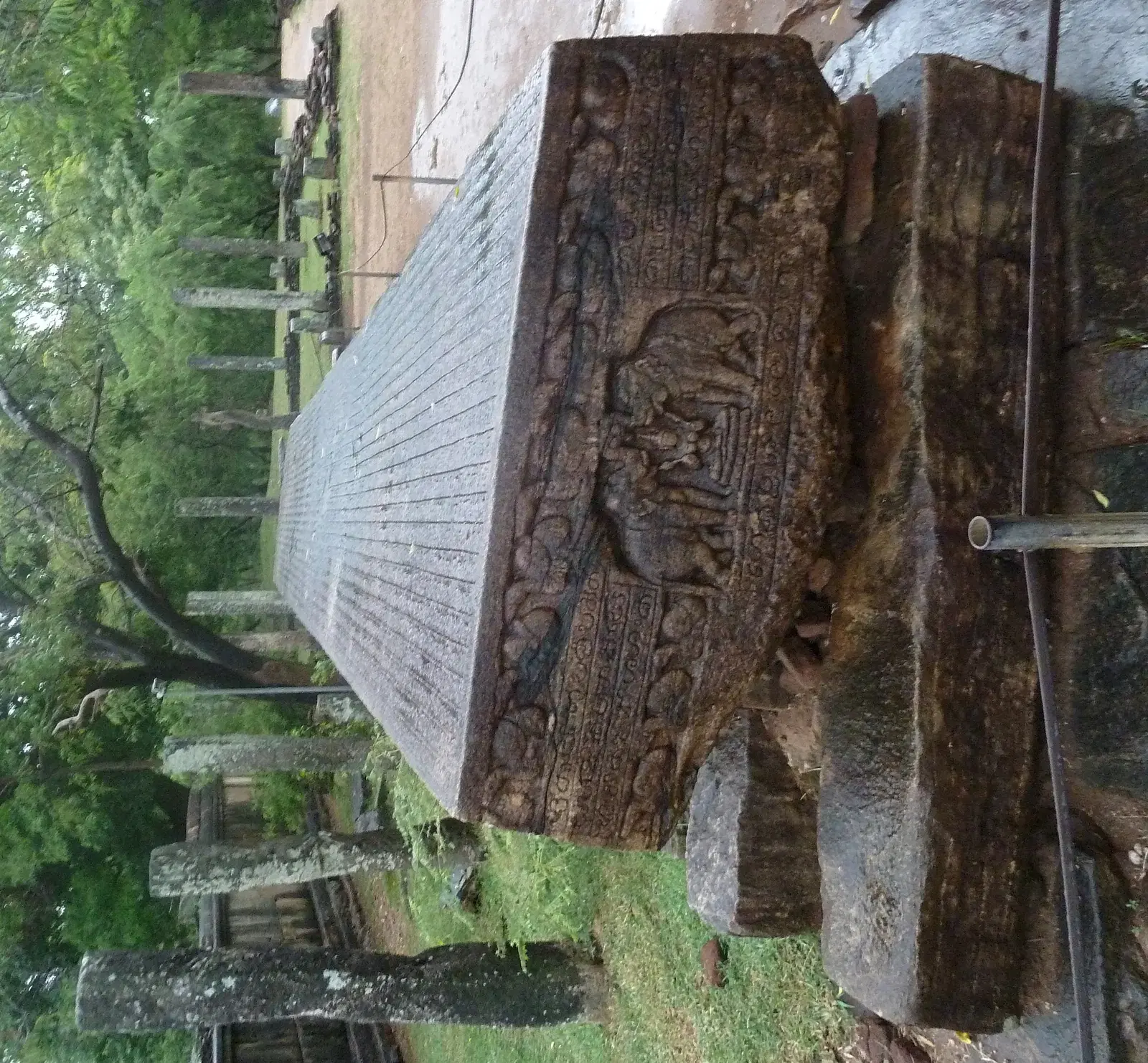
Gal Potha (the Stone Book)
A single slab of granite roughly 9 metres long, reportedly dragged nearly 100km from Mihintale, carved with a lengthy inscription detailing King Nissanka Malla's achievements. It's an odd, specific thing to see in person — a king's résumé literally set in stone — and easy to miss if you're moving quickly through the Quadrangle area.
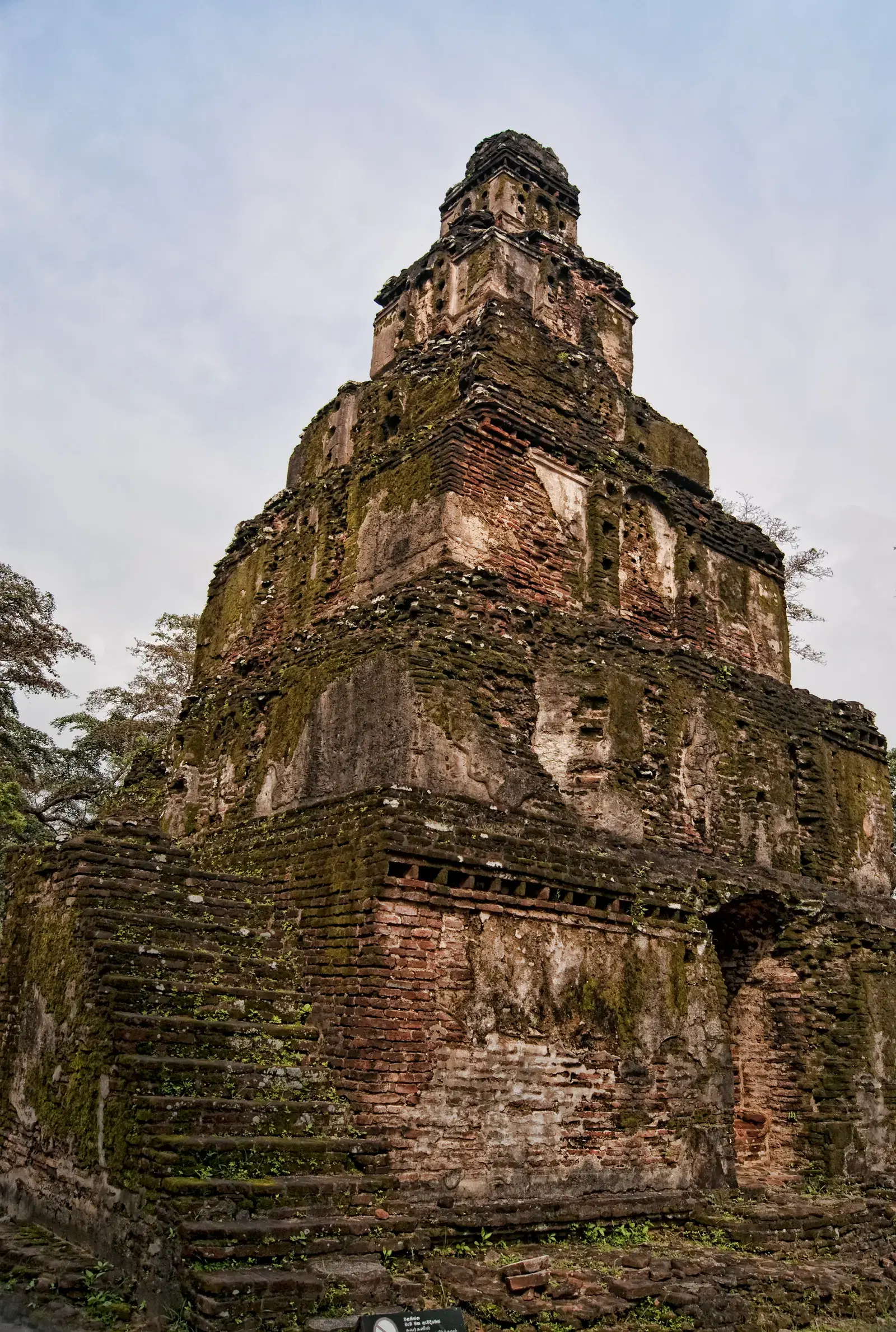
Satmahal Prasada
A stepped, pyramid-like brick structure unlike anything else on the site, with architectural echoes of Southeast Asian temple design that make its exact original purpose still debated among historians. Worth a quick stop specifically because it looks so different from everything around it.
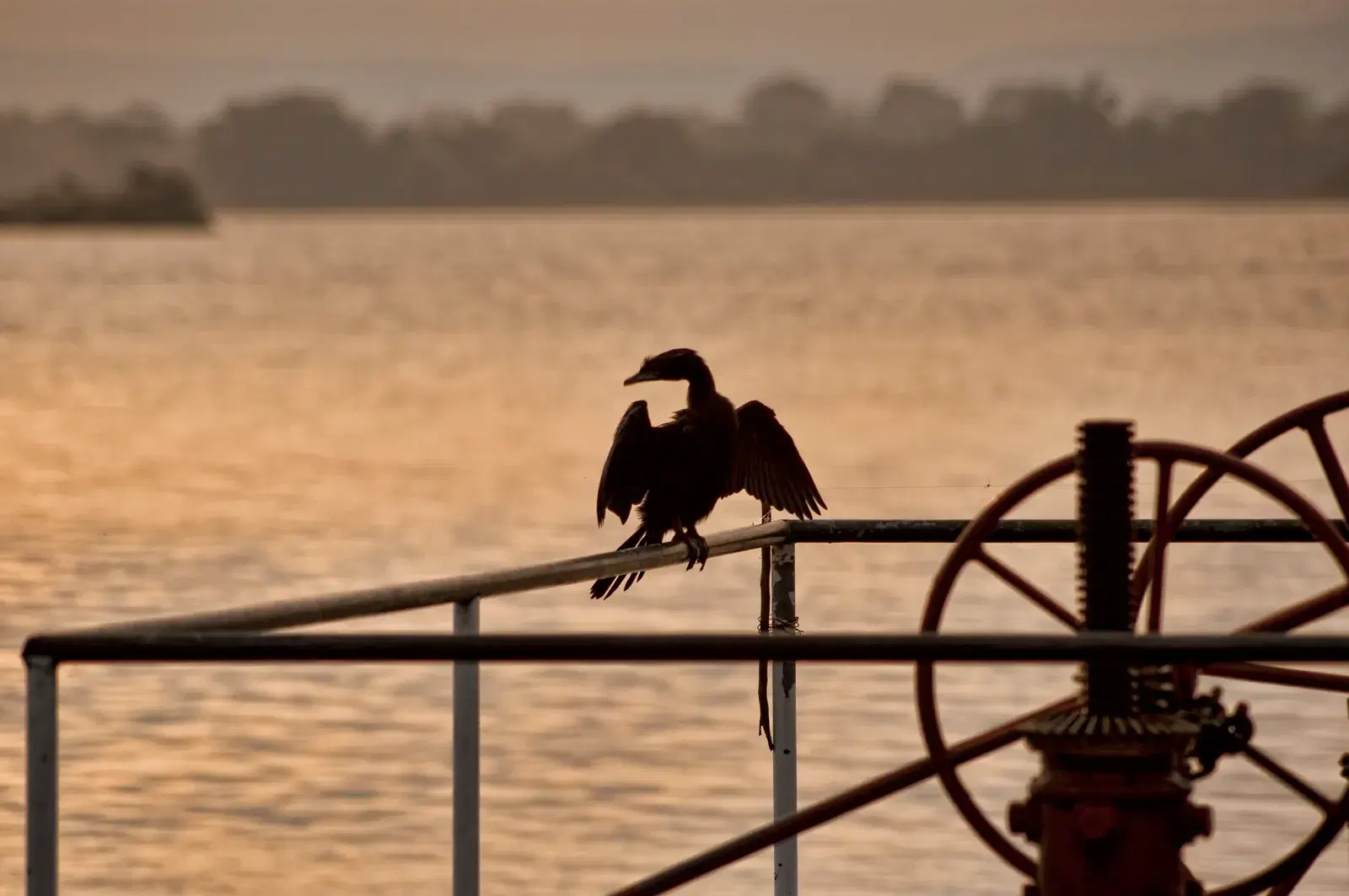
Parakrama Samudra
The vast reservoir built by King Parakramabahu I to irrigate the surrounding dry zone, still in active agricultural use nine hundred years later. Sunset from the bund near town is a genuinely good, free way to end a day of cycling around the ruins, with the water backdrop making it one of the more scenic spots in the Cultural Triangle.
Cycling the ancient city
Polonnaruwa is genuinely more compact than Anuradhapura, and a bicycle is still the right way to see it — flat terrain, shaded stretches between monuments, and a layout that rewards a loop rather than backtracking by tuk-tuk. Rent at the stalls near the entrance rather than through a hotel for a noticeably cheaper rate.
Where to stay in Polonnaruwa
Budget — Polonnaruwa town / New Town
- Guesthouses around New Town — From roughly $10–20/night; the standard base for cycling the Ancient City.
Mid-range — Near the archaeological park
- Mid-range hotels near the Ancient City entrance — Around $20–40/night in high season, walkable or a short ride from the ruins.
High-end — Lakeside, by Parakrama Samudra
- Deer Park Hotel — A lakeside property directly on Parakrama Samudra, with cycling around the ruins offered on-site — a genuinely scenic high-tier base.
Where to eat in Polonnaruwa
Hotel and guesthouse restaurants
Rice and curry buffet — most stays include or offer one
~LKR 900–1,800
Local rice-and-curry shops in New Town
Made-to-order local dishes
~LKR 500–900
Deer Park Hotel restaurant
Sri Lankan and international menu with lake views
~LKR 2,000+
Getting around Polonnaruwa
The Ancient City is a single archaeological park, flat and compact enough to cover fully by bicycle in a morning or afternoon — this is genuinely the standard way to see it, not just an option.
Bicycle hire stalls cluster near the main entrance; agree the daily rate before you set off, and check the brakes and tyres before paying.
Tuk-tuks are the fallback if cycling doesn't appeal, though the loop is short enough that most visitors find a bike more pleasant and considerably cheaper.
New Town, where most accommodation and restaurants sit, is a short ride from the Ancient City entrance rather than immediately adjacent to it.
What it costs — daily budget
| Tier | Per day (USD) | Per day (LKR) | Includes |
|---|---|---|---|
| Backpacker | $25–40 | ≈ LKR 7,500–12,000 | Budget guesthouse, local meals, the Ancient City ticket, a day's bicycle hire. |
| Mid-range | $55–90 | ≈ LKR 16,500–27,000 | Mid-range hotel, restaurant meals, the Ancient City ticket, a half-day guided cycling tour. |
| Comfort | $150–280+ | ≈ LKR 45,000–84,000+ | Lakeside hotel stay, private driver-guide for the day, dining at your property. |
Safety and scams in Polonnaruwa
Polonnaruwa is low-risk in the usual crime sense — the real practical hazards are heat, footing, and monkeys, not people.
Toque macaques and grey langurs are genuinely common throughout the archaeological park; don't feed them, and keep food zipped away rather than in an open bag or basket on your bicycle.
As at any active or historic Buddhist site, dress modestly (shoulders and knees covered) and remove your shoes at the stupa and statue platforms — the stone gets hot underfoot at midday, so time barefoot stretches for morning or late afternoon.
Cycling on the park's internal roads is genuinely pleasant, but stay aware of the occasional vehicle and other cyclists, especially around the busier Quadrangle and Gal Vihara access points.
Carry more water than feels necessary — this is a dry-zone city, and a half-day of cycling between exposed monuments adds up faster than expected.
Hidden gems near Polonnaruwa
- Satmahal Prasada — A genuinely unusual stepped structure most visitors walk straight past between the bigger-name sites.
- Parakrama Samudra at sunset — A free, scenic way to close out the day that most day-trippers skip because they've already left for Dambulla or Sigiriya by then.
- The Gal Potha stone inscription — A specific, strange artefact — a king's achievements literally carved into a 9-metre slab — easy to miss in the Quadrangle's denser cluster of monuments.
Suggested Polonnaruwa itineraries
1 day
The essentials: Royal Palace and the Quadrangle in the morning, Gal Vihara by midday, Rankoth Vehera and a sunset stop at Parakrama Samudra to close.
2 days
Day 1: Full cycling circuit: Royal Palace, the Quadrangle, Gal Vihara, Rankoth Vehera, Satmahal Prasada.
Day 2: A slower return to Gal Vihara and the Quadrangle for photography in better morning light, sunset at Parakrama Samudra.
3 days (Cultural Triangle loop)
Day 1: Full Ancient City cycling circuit.
Day 2: Day trip to Sigiriya or Dambulla via Habarana.
Day 3: Travel on to Anuradhapura to complete the two-ancient-capitals loop.
Where to go next from Polonnaruwa
Polonnaruwa FAQ
How much does it cost to visit Polonnaruwa's Ancient City?
Around $30 USD for foreign adults (SAARC nationals pay less), covering the Royal Palace, the Quadrangle, Gal Vihara, and the other major monuments within the archaeological park. Confirm the current rate before you go.
What is Gal Vihara?
A group of four Buddha statues carved directly into a single granite rock face in the 12th century, including a reclining figure over 14 metres long — widely regarded as one of the finest examples of ancient Buddhist sculpture anywhere in the region.
Is Polonnaruwa better than Anuradhapura?
They're different rather than better or worse. Polonnaruwa is more compact and easier to cover thoroughly in half a day; Anuradhapura is older, larger, and includes the Sri Maha Bodhi tree. If you can only visit one, Polonnaruwa's Gal Vihara alone makes a strong case for it.
Do I need a bicycle to see Polonnaruwa?
You don't strictly need one, but it's the standard and most pleasant way to cover the site — flat terrain, shaded stretches, and rental stalls right at the entrance for roughly $5–10/day.
How many days do I need in Polonnaruwa?
One full day covers the Ancient City comfortably by bicycle. Two lets you return to Gal Vihara and the Quadrangle for better light and a slower pace.
How do I get from Sigiriya to Polonnaruwa?
About 65–70km via Habarana, roughly 1.5 hours by private car or tuk-tuk — a workable day trip if you're based in Sigiriya.
What is Parakrama Samudra?
A massive reservoir built by King Parakramabahu I in the 12th century to irrigate the surrounding region — it's still in active agricultural use today, nine centuries later, and free to view from the shore.
Are there monkeys at Polonnaruwa?
Yes, toque macaques and grey langurs are common throughout the site. Don't feed them and keep food out of sight, particularly if you're cycling with anything in an open basket.