
Hatton & Nallathanniya (Adam's Peak)
A practical guide to climbing Adam's Peak (Sri Pada) from Nallathanniya: the night climb for sunrise, the famous shadow phenomenon, real costs, where to stay, and honest daily budgets.
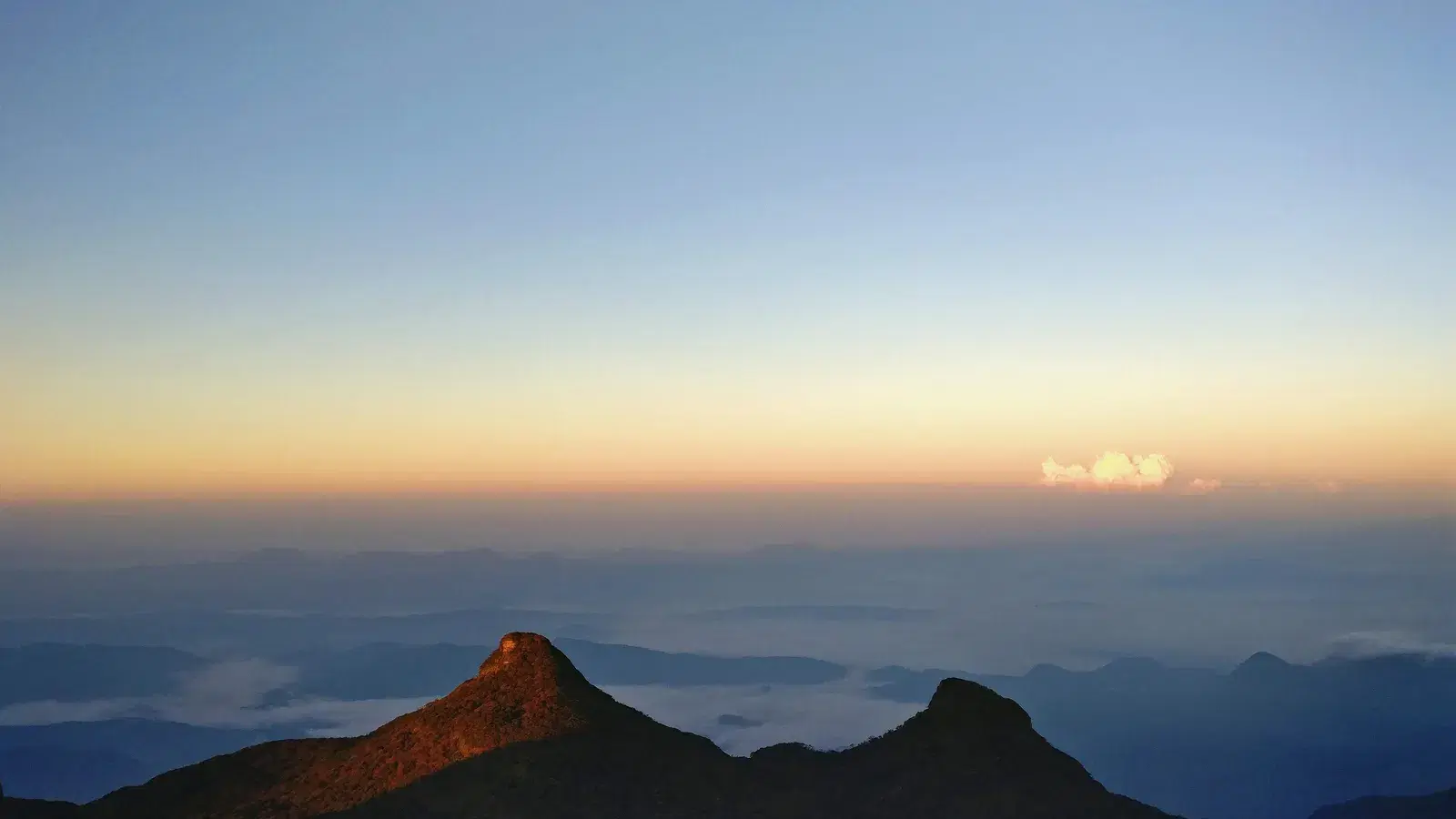
Adam's Peak — known locally as Sri Pada, or "sacred footprint" — is a 2,243-meter conical mountain that is one of the most important pilgrimage sites in Sri Lanka, venerated simultaneously by Buddhists, Hindus, Muslims, and Christians, each attributing the rock-carved footprint at its summit to their own tradition: the Buddha's footprint, Shiva's, Adam's first step after being cast from Eden, or St. Thomas's. That shared reverence across four religions, all climbing the same mountain in the same pre-dawn darkness, is genuinely unusual and gives the climb an atmosphere unlike any other hike in the country.
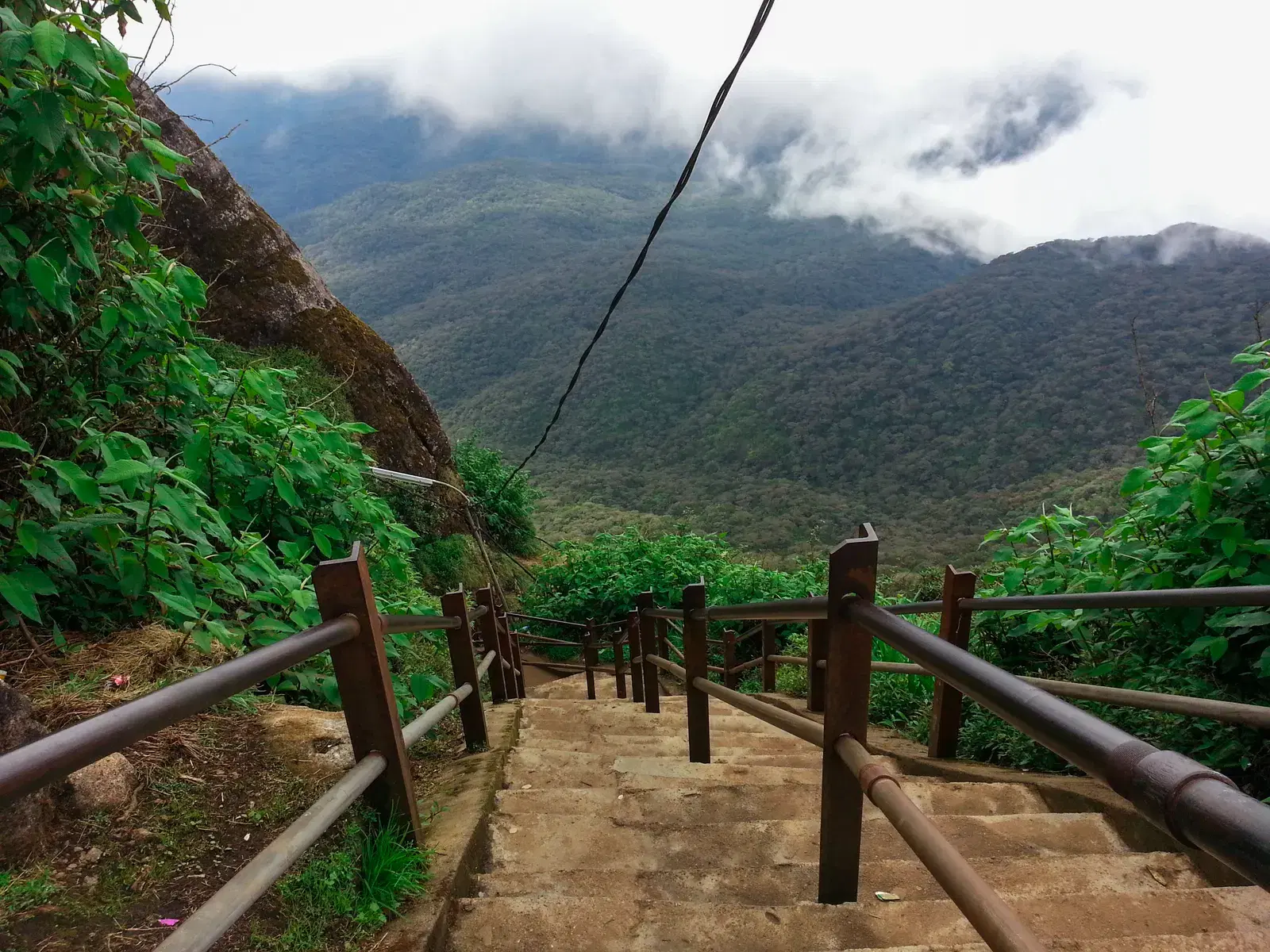
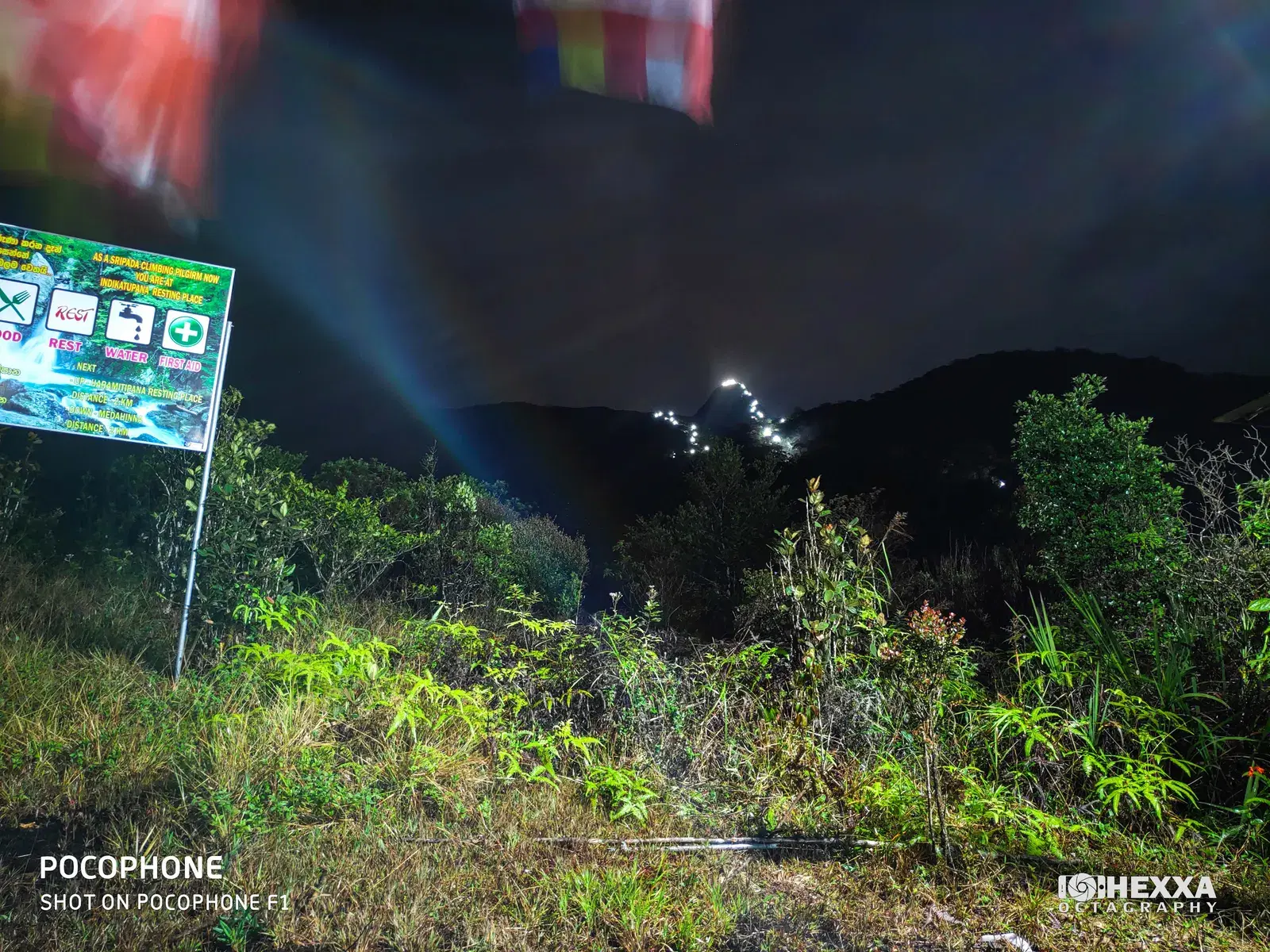
The standard climb is a night ascent: most pilgrims and travelers start between 2am and 3:30am from Nallathanniya, the small town at the mountain's base, in order to reach the summit before sunrise. The trail is a continuous stone staircase of roughly 5,200 steps, illuminated for its entire length by strings of lights that make the night climb both practical and, from a distance, genuinely beautiful — a glowing line snaking up the dark mountainside, dotted with small tea shops selling hot tea and snacks to climbers along the way.
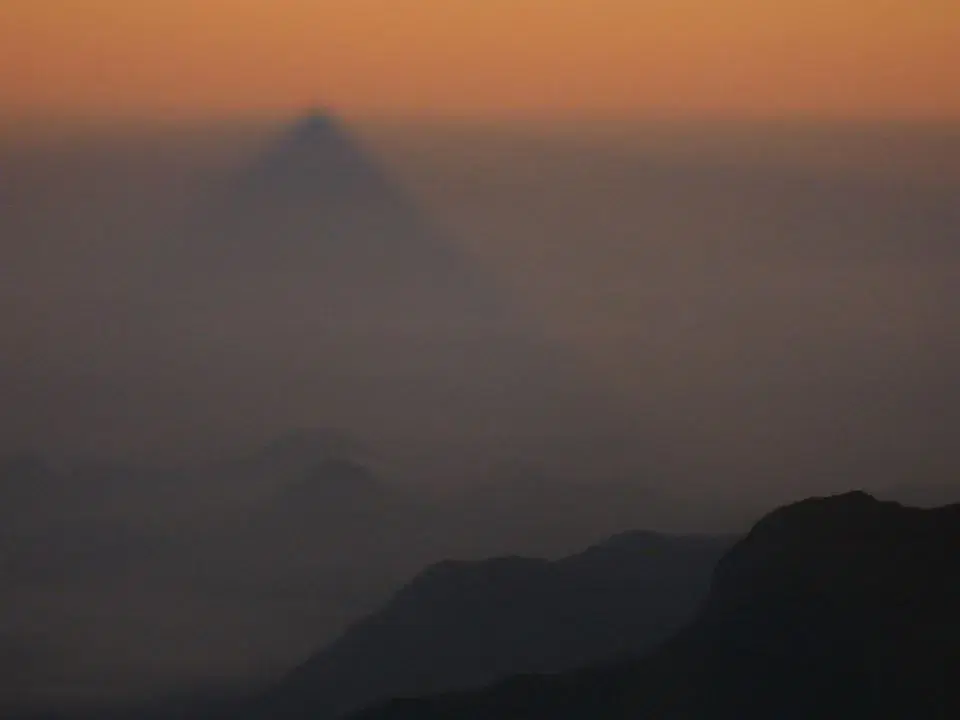
The reward at the top, beyond the sunrise itself, is the mountain's famous shadow phenomenon: as the sun rises, Adam's Peak casts a near-perfect triangular shadow across the clouds and landscape to the west, a striking optical effect caused by the mountain's unusually symmetrical conical shape. It only lasts a few minutes and only appears under the right atmospheric conditions, which adds a small element of luck to an otherwise fairly reliable trip.
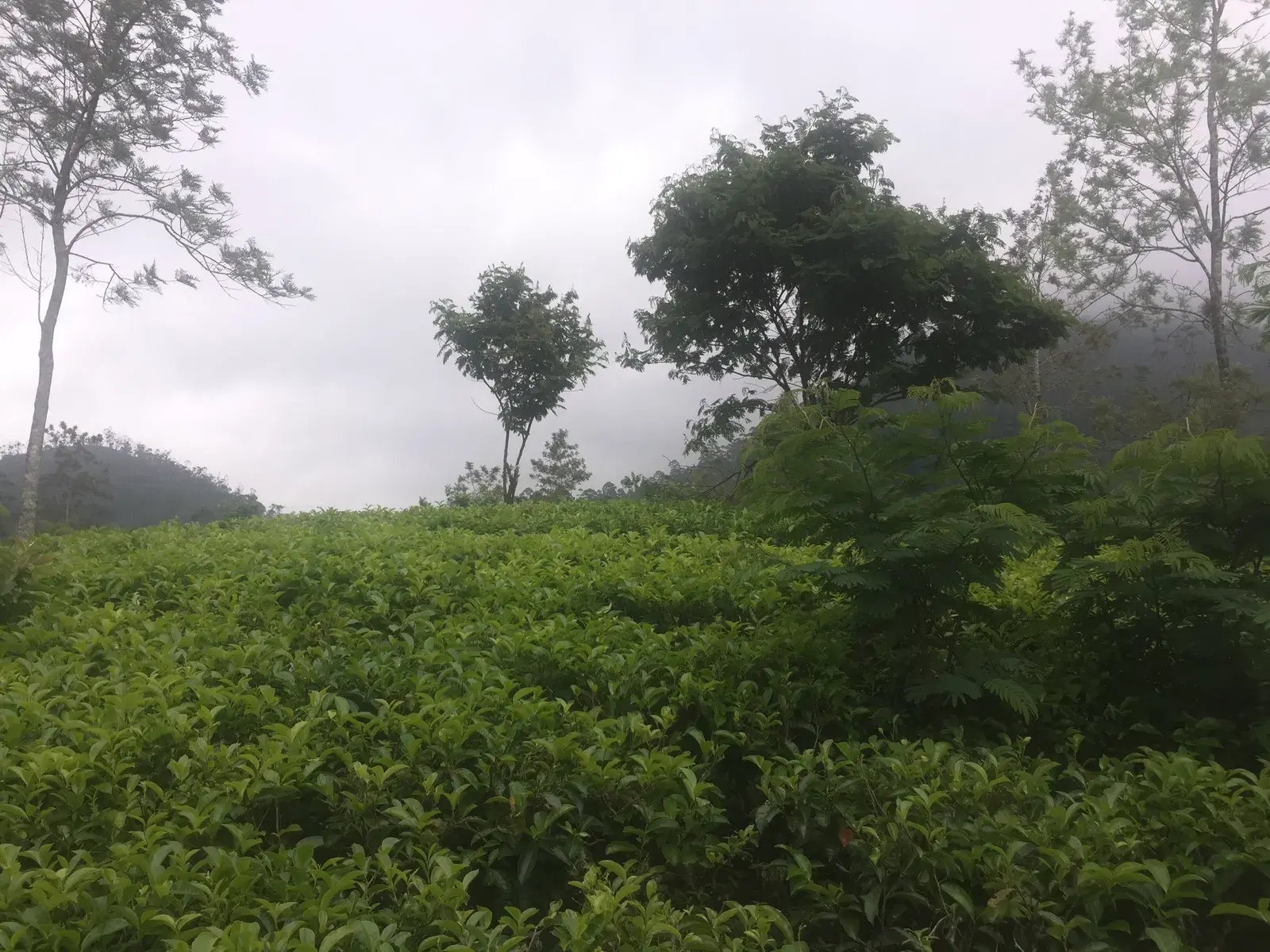
The pilgrimage season runs roughly from Poya Day in December through the Vesak festival in May, during which the trail is busiest, most festively lit, and most crowded with genuine religious pilgrims rather than tourists — climbing during this season is a markedly different, more communal experience than climbing in the off-season, when the trail is quieter but some of the tea shops and lighting may be reduced. Hatton, the larger town nearby with better transport connections, is the practical gateway for reaching Nallathanniya, and the surrounding hills are blanketed in tea plantations that make the wider area worth a slower look beyond just the mountain itself.
Hatton itself grew up almost entirely around the tea industry brought by British colonial planters in the 19th century, and the demographic makeup of the area — with a large Hill Country Tamil population descended from indentured laborers brought over from South India to work the estates — gives the town a distinct character from the Sinhalese-majority hill stations like Nuwara Eliya not far away. The estates surrounding Hatton produce some of Sri Lanka's most highly regarded high-grown tea, and several working factories in the area offer tours that pair well with a pilgrimage trip if you have an extra day to spare before or after the climb itself.
Why go to Hatton & Nallathanniya (Adam's Peak)
- Adam's Peak is revered by four major religions simultaneously, creating a night-climb atmosphere of shared pilgrimage that's genuinely unlike anywhere else in Sri Lanka.
- The mountain's triangular shadow phenomenon at sunrise is a rare and striking natural optical effect caused by its unusually symmetrical shape.
- The illuminated overnight staircase climb is achievable by reasonably fit travelers without technical hiking experience, with tea shops along the way for rest and refreshment.
- The surrounding Hatton area sits amid dramatic tea plantation scenery, worth combining with the climb itself.
How to get to Hatton & Nallathanniya (Adam's Peak)
From Nuwara Eliya — Private car or hired driver
About 45 km, roughly 2-2.5 hours on winding mountain roads to Nallathanniya, the base town for the climb.
From Kandy — Train to Hatton, then bus or tuk-tuk
Train to Hatton takes roughly 3-4 hours on the scenic hill line; from Hatton, it's a further 30-45 minutes by bus or tuk-tuk to Nallathanniya.
From Colombo — Private car or hired driver
About 130 km, roughly 4-4.5 hours — most travelers time this to arrive in Nallathanniya in the late afternoon or evening before a pre-dawn climb.
From Ella — Train to Hatton, then bus or tuk-tuk
Train journey of roughly 3-4 hours to Hatton, followed by a 30-45 minute onward trip to Nallathanniya.
Best time to visit Hatton & Nallathanniya (Adam's Peak)
| Months | Rainfall | Crowds | Verdict |
|---|---|---|---|
| Dec. – May (pilgrimage season) | Generally lower | Highest, especially around Poya and Vesak | The full pilgrimage experience — trail fully lit, tea shops open, a genuinely festive and communal atmosphere, but also the most crowded, especially on weekends and Poya days. |
| Jun. – Nov. (off-season) | Higher, southwest monsoon affects the region | Much lower | A quieter, more solitary climb, but with real risk of rain, mist obscuring the sunrise and shadow phenomenon, and fewer amenities open along the trail. |
Things to do in Hatton & Nallathanniya (Adam's Peak)
The night climb to the summit
The main event: roughly 5,200 stone steps, fully illuminated, climbed overnight by a mix of religious pilgrims and travelers. The steady stream of small tea shops along the route sell hot tea, noodles, and snacks, and the shared, quiet determination of everyone climbing together in the dark is a big part of what makes this more than just a strenuous hike.
The sacred footprint shrine
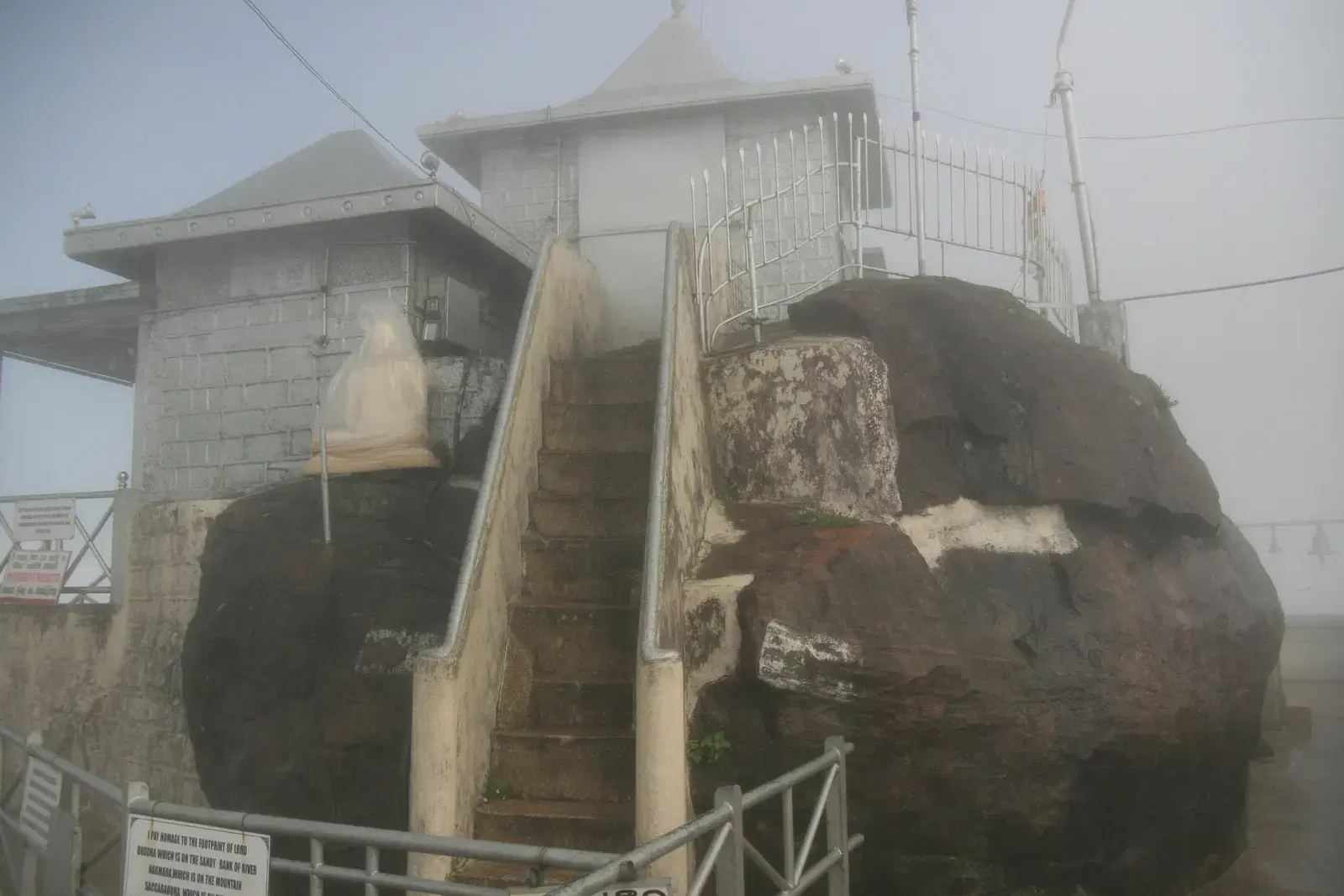
The rock-carved footprint at the summit, housed in a small shrine, is the object of veneration for all four religious traditions associated with the mountain. Expect a respectful but often crowded scene around sunrise as pilgrims queue to pay respects.
The shadow phenomenon at sunrise
As the sun rises, the mountain casts a near-perfect triangular shadow onto the clouds and landscape to the west — a striking effect of the peak's unusually symmetrical shape. It requires clear conditions to appear well, so treat it as a bonus rather than a guarantee.
Tea plantation scenery around Hatton
The hills surrounding Hatton are blanketed in tea estates, offering classic highland Sri Lankan scenery worth a slower look if you're not rushing straight back down the mountain after the climb.
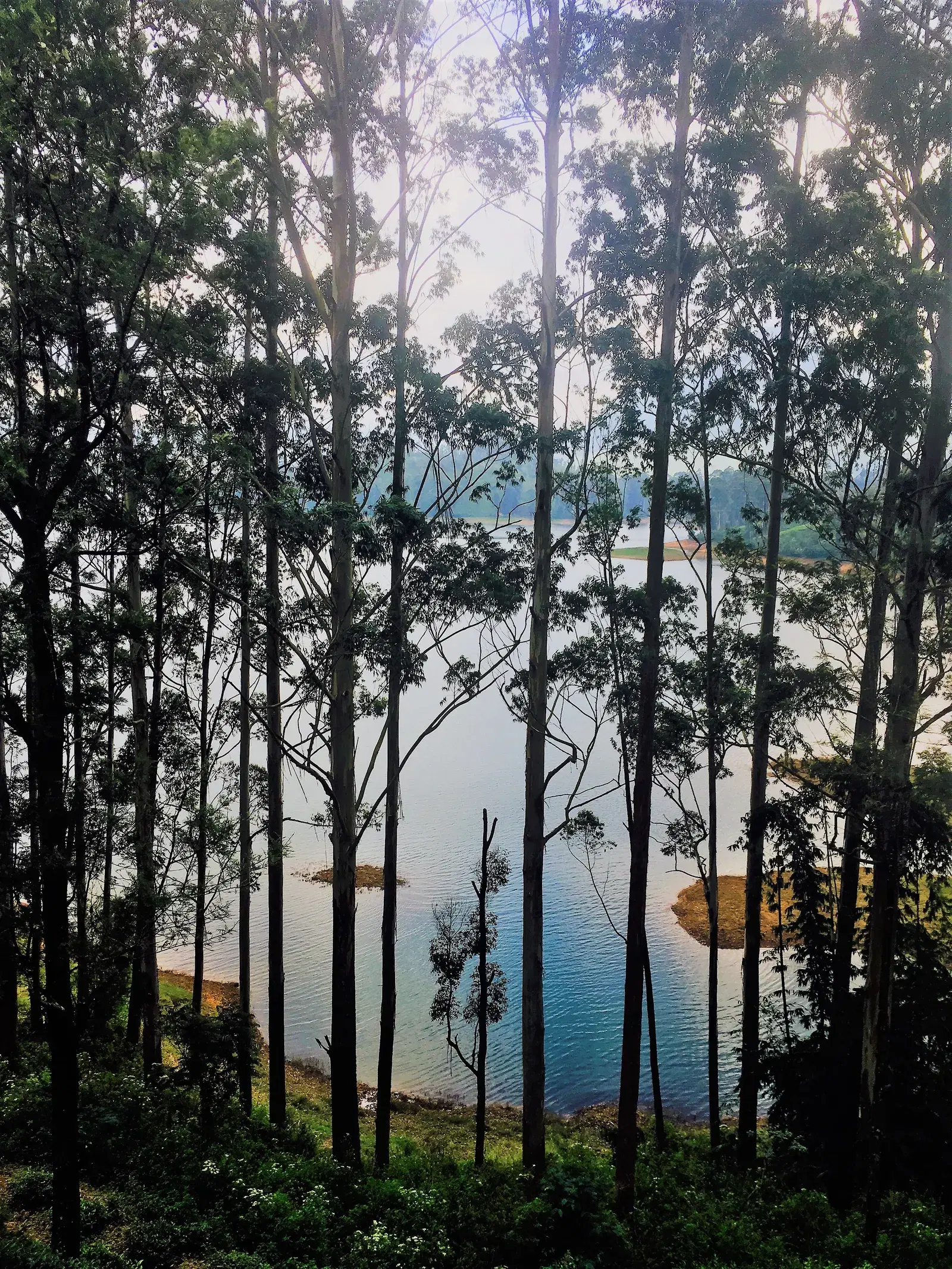
Maskeliya Reservoir
A scenic reservoir passed on the drive between Hatton and Nallathanniya, worth a brief stop for photos of the surrounding hills reflected in the water.
Where to stay in Hatton & Nallathanniya (Adam's Peak)
Budget — Nallathanniya
- Nallathanniya guesthouses — Simple rooms geared toward pilgrims and climbers, often with an early wake-up service, roughly $15-25/night.
Mid-range — Nallathanniya or Hatton
- Mid-range guesthouses and small hotels — A comfortable step up, still positioned for an easy pre-dawn start.
High-end — Hatton area tea estates
- Tea estate bungalows and boutique hotels — Upscale accommodation set among the surrounding tea plantations, better suited to combining the climb with a slower highland stay.
Where to eat in Hatton & Nallathanniya (Adam's Peak)
Trailside tea shops
Hot tea, instant noodles, and simple snacks along the climb
~100-400 LKR per item
Nallathanniya guesthouse meals
Simple Sri Lankan meals, often pre-arranged for an early departure
~500-1,200 LKR
Hatton town restaurants
Sri Lankan rice and curry
~400-900 LKR
Getting around Hatton & Nallathanniya (Adam's Peak)
Nallathanniya itself is small and walkable; the climb begins right from the town.
Getting between Hatton and Nallathanniya requires a bus, tuk-tuk, or private car — there's no train directly to the base town.
Most guesthouses in Nallathanniya offer or can arrange an early wake-up and simple breakfast pack for the pre-dawn start.
What it costs — daily budget
| Tier | Per day (USD) | Per day (LKR) | Includes |
|---|---|---|---|
| Backpacker | $20-30 | ≈ 6,000-9,000 LKR | Budget guesthouse in Nallathanniya, trailside snacks, no additional transport needed for the climb itself. |
| Mid-range | $40-70 | ≈ 12,000-21,000 LKR | Comfortable guesthouse or small hotel, meals included, transport between Hatton and Nallathanniya. |
| Comfort | $100-200 | ≈ 30,000-60,000 LKR | Tea estate bungalow or boutique hotel stay, private driver, guided climb if desired. |
Safety and scams in Hatton & Nallathanniya (Adam's Peak)
The steps can be crowded and slow-moving during pilgrimage season — pace yourself and expect the climb to take longer than the trail markers might suggest during peak periods.
Bring warm layers; the summit is cold before dawn even though the base is a comfortable highland temperature, and this catches a lot of climbers off guard.
The steps are uneven in places and can be slippery when wet — sturdy footwear with good grip matters more here than on most Sri Lankan walks.
Start the climb with enough time buffer — rushing near the top in the dark, especially during crowded periods, increases the risk of missteps on the stairs.
Hidden gems near Hatton & Nallathanniya (Adam's Peak)
- The tea shops themselves — Beyond simply being rest stops, they're a genuine slice of the shared pilgrim culture of the climb — strike up a conversation with a fellow climber over tea and you'll often hear why this mountain matters to them specifically.
- Maskeliya Reservoir at golden hour — Most visitors pass it in the dark on the way to a pre-dawn climb and never see it in daylight on the way back.
- The off-season climb — Quieter, cooler in a different way, and with a real chance of having long stretches of the staircase to yourself — though with higher odds of missing the shadow phenomenon to cloud cover.
- A working tea factory tour near Hatton — Most climbers head straight to the mountain and skip the tea factories entirely, missing an easy, genuinely interesting look at how the estates surrounding the town actually operate.
Suggested Hatton & Nallathanniya (Adam's Peak) itineraries
1 night
Core visit: Arrive in Nallathanniya in the afternoon, rest, begin the climb around 2:30am, reach the summit for sunrise, descend by mid-morning.
2 days
Day 1: Arrive via Hatton, explore tea plantation scenery and Maskeliya Reservoir, settle into Nallathanniya for an early night.
Day 2: Pre-dawn climb to the summit for sunrise, descend, rest in the afternoon before onward travel.
Where to go next from Hatton & Nallathanniya (Adam's Peak)
Hatton & Nallathanniya (Adam's Peak) FAQ
What time should I start climbing Adam's Peak?
Most climbers start between 2:00am and 3:30am from Nallathanniya to reach the summit before sunrise, allowing 3-5 hours for the ascent depending on fitness and crowd levels.
How many steps are there to the top of Adam's Peak?
Roughly 5,200 stone steps, fully illuminated for the entire overnight climb.
What is the shadow phenomenon at Adam's Peak?
Shortly after sunrise, the mountain casts a near-perfect triangular shadow onto the clouds and landscape to the west, caused by its unusually symmetrical conical shape — it requires clear conditions and lasts only a few minutes.
When is Adam's Peak pilgrimage season?
Roughly from Poya Day in December through the Vesak festival in May, when the trail is busiest, most festively lit, and most crowded with religious pilgrims.
Is the Adam's Peak climb difficult?
It's achievable for reasonably fit travelers without technical hiking experience, though the sheer number of steps, potential crowding, and pre-dawn cold make it more strenuous than the distance alone suggests.
Why is Adam's Peak significant to multiple religions?
A rock-carved footprint at the summit is venerated by Buddhists, Hindus, Muslims, and Christians alike, each attributing it to a different figure — the Buddha, Shiva, Adam, or St. Thomas — making it a uniquely shared pilgrimage site.
What should I bring for the climb?
Warm layers for the cold summit, a headlamp or flashlight, sturdy footwear with good grip, and water — trailside tea shops sell hot drinks and snacks along the way.
What is Hatton known for besides Adam's Peak?
Hatton is a working tea town, built up around British colonial-era plantations and home to a large Hill Country Tamil community descended from South Indian estate laborers — several nearby factories offer tours of the high-grown tea production the region is known for.